REVIEW · CAIRO
Cairo Day Tour to Memphis Sakkara & Dahshur Pyramids
Book on Viator →Operated by Emo Tours Egypt · Bookable on Viator
That other pyramids day is the smartest way to beat the Giza crush. This tour links Memphis, Saqqara, and Dahshur into one smooth outing with door-to-door transport and a guide who helps you read what you’re seeing. What I like most is the focus on places after Giza, and the fact you’re not stuck figuring out logistics on your own—snacks and soft drinks even get handled. One thing to keep in mind: entrance fees aren’t included, and some parts of the day can feel shopping-adjacent if you’re not careful with your time.
I also like how the plan is built around real walking space and short museum-style stops, not a marathon. You’ll hit the Step Pyramid area at Saqqara, plus key Old Kingdom structures like the pyramids of Unas and Teti, then finish at Dahshur for the Bent and Red Pyramids. The main drawback I’d watch for is guide-to-guide variation—some English can be tough, and a few drivers have tried to nudge extra spending at certain stops.
In This Review
- Key things to know before you go
- The value play: why this tour feels like a smart bargain
- Morning logistics from your hotel pickup (and how to reduce stress)
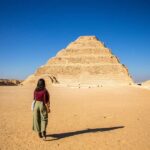
- Stop 1: Saqqara access zone and the Step Pyramid of Djoser
- Stop 2: The Pyramid of Unas and Pyramid Texts (why this stop matters)
- Stop 3: Pyramid of Teti and the Saqqara lineup feel
- Memphis: ancient capital vibes without the full-day headache
- Dahshur: Bent and Red Pyramids, the desert payoff
- The “included snacks” detail that actually matters
- Shop stops and tourist-trap risk: how to handle it like a pro
- Guide quality: what to expect from the human part of the tour
- Who this tour fits best (and who might want a different plan)
- Practical tips you can use immediately
- Should you book this Cairo day tour?
- FAQ
- What is the approximate duration of the Cairo day tour?
- Where does pickup happen?
- Is this tour private or group-based?
- What’s included in the price?
- Are entrance fees included?
- Is lunch included?
- Can I go inside the pyramids?
- Is mobile ticketing available?
- Is tipping required?
- Is cancellation free?
Key things to know before you go
- You’re going beyond Giza: Memphis + Saqqara + Dahshur in one day gives you a bigger picture of Egypt’s pyramid story.
- Pickup and door-to-door transport: Private A/C vehicle from your Cairo or Giza hotel keeps the day from turning into a taxi hunt.
- Snacks are part of the deal: Pepsi, bottled water, and chips help you power through the morning.
- Entrance fees are extra: Basic area tickets are included only in limited form; you’ll still pay if you want specific sites or interiors.
- Expect optional stops: Papyrus, perfume, rugs, or similar stops can show up—treat them as optional and set your pace.
- Some tours feel very small: It’s set up as a private tour/activity, so you may end up with just your group and your driver.
The value play: why this tour feels like a smart bargain
At about $8 per person, the headline value is the transport. A private, A/C vehicle plus hotel pickup and drop-off for a full morning is usually what costs the most in Cairo. Here, the price is low enough that you should spend your money on the parts you really care about—especially entry tickets and whether you want to go inside any pyramids.
Also, the itinerary is designed around sites that many people skip. Giza is iconic, but it’s busy and repetitive if you’ve already looked at pyramids elsewhere. Saqqara and Dahshur are older, weirder, and frankly more interesting if you like how architecture evolved over time.
Just go in with eyes open: the tour includes guiding and snacks, but entrance fees, lunch, and tipping are separate. And like many Cairo day trips, you may see add-on stops that are more about local commerce than archaeology. If you’re firm and time-aware, you can still protect your sightseeing hours.
You can also read our reviews of more tours and experiences in Cairo.

Morning logistics from your hotel pickup (and how to reduce stress)
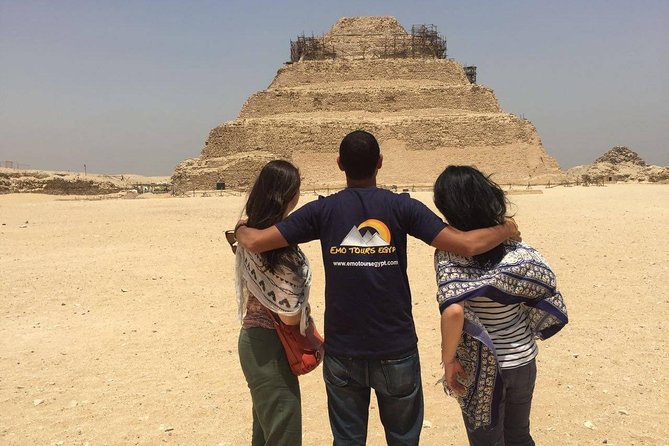
The day starts early—around 8:00 am pickup—from Cairo or Giza hotels. The benefit is simple: you don’t waste time negotiating rides or figuring out how to connect between sites.
Expect a private A/C vehicle and a companion who helps keep the day on track. A few names came up in guidance and driving experiences—Salah, Somaya, Noha, Hossam, Michael, Mustafa, Beshoy, and Mohammad Ali. If any of these names are available when you book, it’s worth requesting them, especially if you care about a smoother explanation during the drive.
Two practical tips for you:
- Bring cash for entry fees and any shop stops you choose to accept.
- If you’re sensitive to language, note that some guides have clearer English than others, so you may want to bring your own quick questions in advance (like what dynasty you’re looking at or what makes the Step Pyramid different).
Stop 1: Saqqara access zone and the Step Pyramid of Djoser
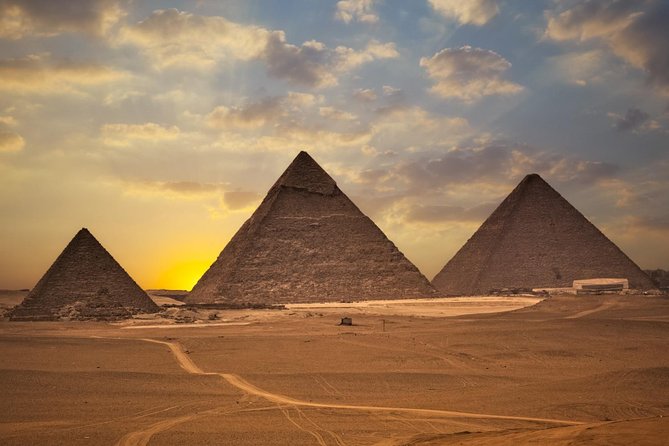
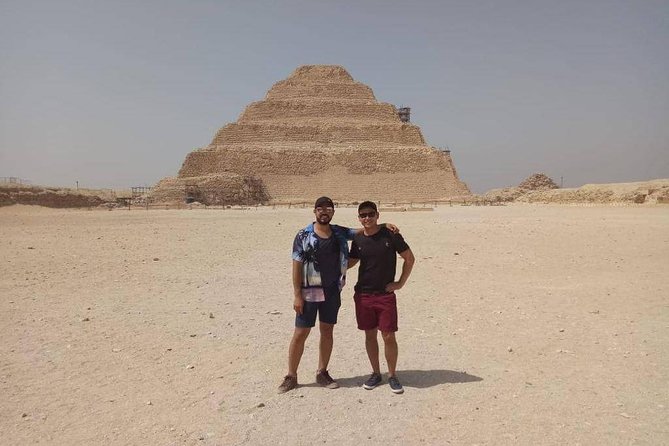
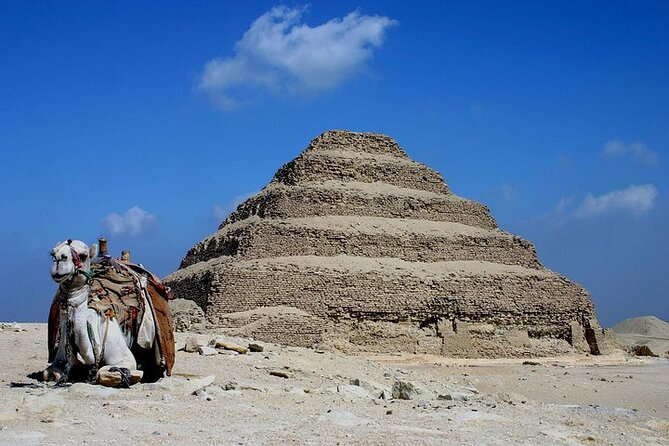
After pickup, the first real archaeological focus is Saqqara and the Step Pyramid area of Djoser. This is one of the big reasons people love Saqqara: it’s where the pyramid idea starts looking like the world’s version of pyramids, not just stone building blocks.
What you’ll do here is mostly about getting oriented. You’re looking at structures that represent an important step in pyramid evolution—from earlier forms toward the more recognizable pyramid shape. The feeling is different from Giza. It’s less like a single mega-photo moment and more like a whole landscape of monuments.
A drawback to plan around: Saqqara is a large area. You’ll get a slice of it. If you’re the type who wants to read every wall inscription like it’s a novel, you may want to buy more time by selecting specific paid entries when offered.
Stop 2: The Pyramid of Unas and Pyramid Texts (why this stop matters)
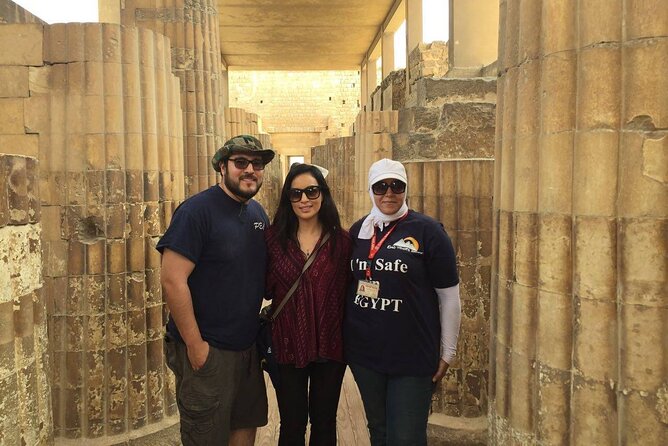
Next comes the Pyramid of Unas, one of the most significant structures at Saqqara because of what’s inside it. Unas’ pyramid is associated with the Pyramid Texts—funerary spells carved into subterranean chambers. Even if you don’t go deep into the inscriptions, this is a key shift: it’s the start of a tradition where texts inside royal tombs become part of the afterlife story.
You’ll have limited time here (think about short, timed viewing), so the smart move is to choose what you want most:
- Exterior viewing if you want photos and a quick scan of the site
- More focused interior time if you’re chasing the “this is why it’s famous” moment
Also, interior access can be tiring and claustrophobic depending on the conditions and your comfort level. If you’re prone to anxiety in tight spaces, you might prefer sticking to what you can see without going inside.
Stop 3: Pyramid of Teti and the Saqqara lineup feel
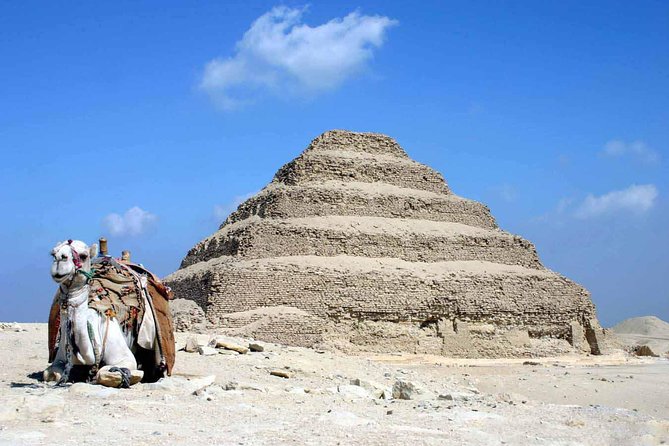
The Pyramid of Teti is another Old Kingdom highlight. It’s less about one single gimmick and more about the satisfaction of seeing multiple pyramids in the same day—each one showing different choices in design and context.
In the same Saqqara stretch, you may also stop for additional structures such as the Mastaba of Ti, which includes scenes of daily life and has two serdabs (enclosed spaces related to statues and worship). These smaller tomb elements are often where you get the “human” side of the site—life, work, and rituals—rather than just royal stone.
This is a good part of the day to slow down a bit and look at how the tombs relate to each other. Saqqara is not just “pyramids.” It’s a whole necropolis with layers of meaning, and the short stops can still be rewarding if you stay curious.

Memphis: ancient capital vibes without the full-day headache
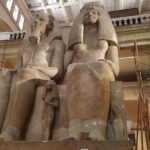
Then you’ll head to Memphis, the ancient capital. This is where you’ll see major pieces like the colossal statue of Ramses II and the Alabaster Sphinx. Memphis dates back to around 3100 B.C., and it’s the kind of stop that reminds you Egypt’s history isn’t stacked neatly on one timeline. It’s layered.
Memphis is often a stress reliever in a day like this because it tends to feel more open and photo-friendly than the most dense parts of Saqqara. You also get a change of scenery between sites, which matters because the morning is a lot of stone and sun.
Important reality check: some of the “added extras” can appear here too—like stops connected to crafts and paper goods. If you’re not interested, you can politely keep your focus on the actual monuments and ask to move on when sightseeing time matters most.
Dahshur: Bent and Red Pyramids, the desert payoff
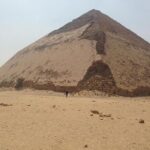
The biggest late-morning/early-afternoon payoff is Dahshur, a royal necropolis about 40 km south of Cairo on the Nile’s West Bank. Dahshur is known for several pyramids, especially the Bent Pyramid and the Red Pyramid.
Why people get excited: these are among the oldest and best-preserved pyramids, and they feel rawer and more connected to the desert than the Giza plateau experience. You’re also looking at a site where design experiments are part of the story—especially with the Bent Pyramid.
If you want the interior experience, know that going inside the Red and Bent Pyramids can be physically demanding. You may need stamina, and you should take your comfort level seriously. The upside is that it can be unforgettable in a very practical way: you suddenly understand the scale and constraints that builders worked with.
If you’re short on time, do not skip the exterior views. Even without interiors, Dahshur is special because it’s about form, not just the fact that it’s old.
The “included snacks” detail that actually matters
You’ll get a simple snack pack: Pepsi, bottled water, and chips. In Cairo heat, that’s not a small thing. It helps you avoid the early-cycle hunger that makes you grumpy and slower, and it reduces the temptation to grab expensive snacks from random stops.
One caveat: a few experiences noted that water on the van wasn’t always immediately available, and Ramadan timing sometimes changed shop hours. So if you’re traveling during any religious holiday period, bring a little buffer (like an extra bottle) just in case.
Shop stops and tourist-trap risk: how to handle it like a pro
This tour can include stops such as papyrus production, perfume/palace-style shops, a flower cotton store, and Memphis handmade carpets. Some people find these interesting as cultural context; others feel they eat into monument time.
Here’s the trick: treat these stops as options, not obligations.
- Ask how long each stop will take.
- If you’re not shopping, say so early and request a direct return to sightseeing.
- If your guide pushes too hard, you can still keep the day on rails by staying polite but firm.
A couple of experiences also mentioned rug and spice shops, plus more pressure for spending. That’s not “bad” by default—it’s just how Cairo day trips sometimes work. You’ll enjoy this more if you go in with a shopping mindset that’s either focused (you want one item) or closed (you want none).
Guide quality: what to expect from the human part of the tour
The tour is set up with guiding, and that can make the difference between looking at pyramids as photos versus understanding why each one exists.
The good news is that many guides and drivers got praised for doing exactly what you want: keeping the day smooth, helping you with tickets, and taking you in the right order. I saw examples where drivers like Salah were friendly and explained things on the ride, while Somaya handled planning well and introduced extra local discoveries when time allowed.
But there’s variation. At least one experience pointed out English that was hard to follow, and another suggested that some guides were pushing spending more than explaining history. That doesn’t mean the tour is bad—it means your experience depends on who’s at your side.
If you care about explanations, bring curiosity. Ask one or two pointed questions at the start:
- What makes this pyramid different from Giza?
- Why are texts important at Unas?
- What should I look for at Dahshur?
Who this tour fits best (and who might want a different plan)
This is a strong fit if you:
- Want more than just Giza in one day
- Like the “evolution” idea: how tomb shapes and royal funerary traditions changed
- Prefer private transport over group logistics
- Appreciate a built-in snack and door-to-door convenience
You might not love it as much if you:
- Hate time spent in shops and want pure monument time
- Are extremely sensitive to tight spaces and fear going inside
- Expect a long, uninterrupted lecture for every stop (the day is short, so pacing is part of the design)
Practical tips you can use immediately
A few simple moves will make your day easier:
- Wear sun protection and shoes with solid grip. Saqqara and Dahshur involve walking on uneven paths.
- If you want to go inside any pyramid, ask about the ticket type and plan for physical effort.
- Decide ahead of time if you want interiors. Reviews emphasized how tiring that can be, especially at Red and Bent.
- Keep small cash ready for entrance fees and optional extras.
Should you book this Cairo day tour?
Book it if your goal is a value-packed, low-stress route that expands your pyramid story beyond the usual Giza checklist. With hotel pickup, private A/C transport, and snack support, it’s a practical way to see a lot without wasting hours on logistics.
Think twice if you want a day that is purely archaeology with zero shopping stops, or if you’re counting on deep, perfectly clear English throughout. In those cases, you should message your operator with your preferences before you go, and be ready to protect your time once you’re on the ground.
If you do book: go in firm about your priorities, and focus on the three big payoffs—Step Pyramid context at Saqqara, Pyramid of Unas’ afterlife texts idea, and Dahshur’s Bent and Red desert drama. That combination is exactly why this day feels worth it.
FAQ
What is the approximate duration of the Cairo day tour?
The tour is about 5 hours approximately, running from around 8:00 am to roughly 13:00.
Where does pickup happen?
Pickup is offered from your hotel in Cairo or Giza.
Is this tour private or group-based?
It is set up as a private tour/activity, meaning only your group will participate.
What’s included in the price?
The tour includes private A/C transfers, hotel pickup and drop-off, snacks (Pepsi, bottled water, and chips), and guiding.
Are entrance fees included?
No. Entry fees are not included, though basic area access may be covered in limited form. You’ll likely need to pay for specific sites and any optional interior access.
Is lunch included?
Lunch at local restaurants (for example, koshari) is optional, not included.
Can I go inside the pyramids?
You may be able to, but it depends on the specific pyramid and the entrance tickets you purchase, since entrance fees are not included.
Is mobile ticketing available?
Yes, mobile tickets are listed as a feature.
Is tipping required?
Tipping is listed as not included.
Is cancellation free?
Yes. You can cancel up to 24 hours in advance for a full refund.