REVIEW · CAIRO
Allinclusive Half DayPrivateTour Giza PyramidsSphinx Ticke Lunch
Book on Viator →Operated by Sofy · Bookable on Viator
The pyramids feel calmer with a driver and guide. This half-day private visit to the Giza Pyramids and Sphinx is built for people who want fewer headaches and more looking. You get a guide, an air-conditioned private car, and a tight route that helps you dodge the stress that can come with going solo.
I love the door-to-door transfers and the fact that you’re not squeezed into a shared ride with random stops. I also like the guided pacing: you move from Khufu’s Great Pyramid to Khafre’s and Menkaure’s pyramids, then finish at the Sphinx with time that feels realistic for photos and reading the details.
One consideration: the info on ticket coverage is slightly inconsistent. Some notes say admission isn’t included, while the package list mentions area tickets—so before you go, confirm exactly what your booking includes for your specific date.
In This Review
- Key things I’d bet on before you book
- Why private transfers make Giza feel less stressful
- The 4-hour plan: Khufu to Sphinx, with time you can actually use
- Inside the Great Pyramid of Khufu: what to expect from a guided visit
- Khafre’s Pyramid: limestone, height, and that surviving top detail
- Menkaure’s Pyramid: smaller than the rest, and made with limestone plus red granite
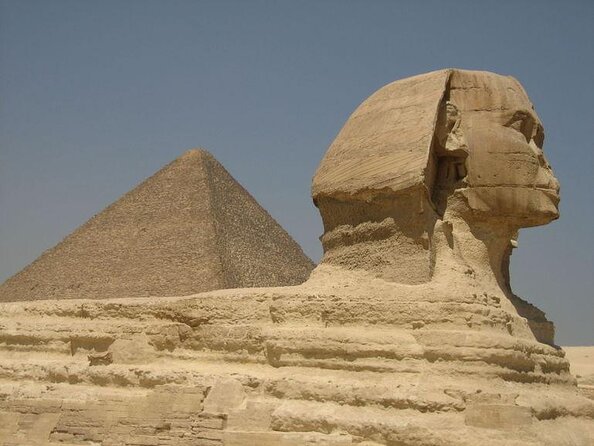
- The Great Sphinx: lion body, human head, and a guard’s job
- Lunch at a local restaurant: a real break from the usual site-food scramble
- Price and value: what you’re paying for at $25 per person
- The kind of guide experience this tour is known for
- Who this half-day private Giza tour suits best
- Should you book this private Giza half-day tour?
Key things I’d bet on before you book
- Two-way private hotel transfers save you from Cairo’s usual parking, waiting, and “helpful” offers
- A clear half-day route with set time at each stop (2h Khufu, 30m Khafre, 1h Menkaure, 30m Sphinx)
- An English guide is included, and you can choose other languages for an extra charge
- AC private car + snacks (water and juice) keep the day from turning into a sweaty hurry-up
- Lunch is included with choices like beef, kofta, or grilled chicken
- A VIP, private group setup means it’s just your group, not a shuffle through the site
Why private transfers make Giza feel less stressful
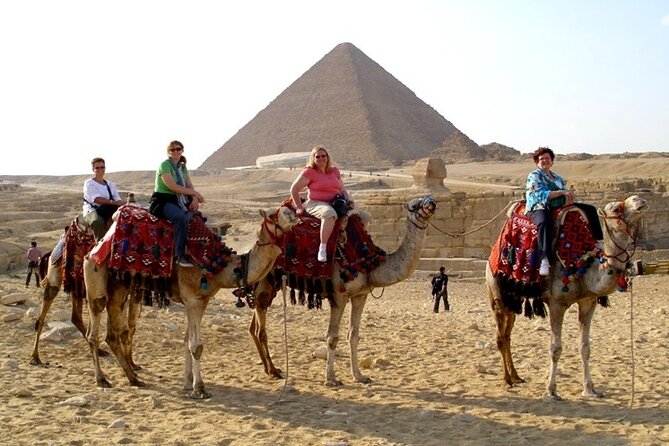
Independent Giza days can turn into a sport: taxis hunt for fares, touts try to steer you, and you end up spending mental energy on logistics instead of the monuments. This tour is designed to strip that away. You get picked up and returned to your hotel with a private car, so you spend your time thinking about stone giants—not negotiating your way across the day.
The other big practical win is how the tour is paced. You’re not wandering the site on your own, trying to guess what’s worth your attention first. Instead, you follow a plan that puts the Great Pyramid first, then the other pyramid stops, then the Sphinx. When you’re there for only half a day, order matters.
You also get flexibility: departure times are offered to match different schedules. That’s helpful if you want cooler lighting for photos or you just don’t function well at certain hours.
A few more Cairo tours and experiences worth a look

The 4-hour plan: Khufu to Sphinx, with time you can actually use
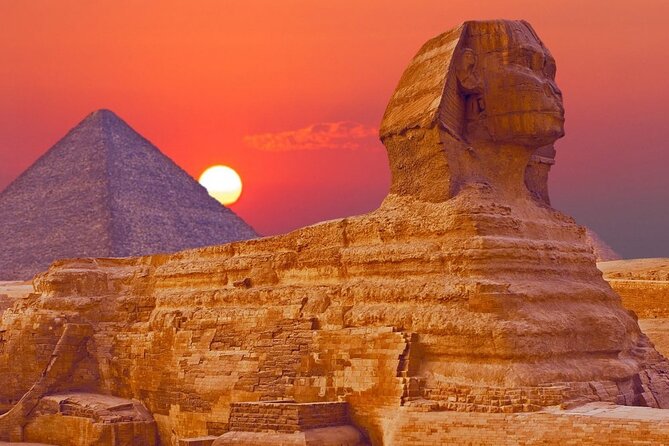
This is roughly a 4-hour experience, built around four stops. The durations are straightforward and give you a sense of what you’ll get:
- Great Pyramid of Khufu (Cheops): about 2 hours
- Khafre’s Pyramid: about 30 minutes
- Pyramid of Menkaure: about 1 hour
- Great Sphinx: about 30 minutes
That split is smart. Two hours at Khufu means you’re not rushing through the most famous structure. Then you get shorter, focused visits at the other pyramids. Ending with the Sphinx also works because it lets you connect what you’ve just seen—especially the role of Khafre.
Also, this is a private tour with only your group participating. That matters in Giza, where crowds and friction can build fast. Even if the site is busy, your guide can steer your movement and explain what you’re seeing without waiting for strangers.
Inside the Great Pyramid of Khufu: what to expect from a guided visit
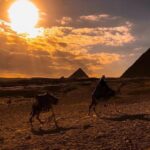
Khufu’s Great Pyramid (Cheops) is the one people picture first—and for good reason. It’s described as the highest pyramid in Egypt and built in the Old Kingdom, around 2580–2560 B.C., using limestone. Even before you learn any details, you’ll notice how the scale changes your sense of distance.
With a guide, you don’t just look. You understand what you’re looking at. A good guide will help you connect the pyramid’s size and materials to the building ambition behind it. In this tour, you get around two hours at this stop, which is enough time to slow down and not treat it like a photo kiosk.
Why this stop is worth the time: Khufu’s pyramid sets the benchmark for everything in the Giza complex. If you’ve got only half a day, starting here prevents the common “I saw the pyramids but didn’t really understand them” problem.
One practical note: the info you receive mentions that admission/tickets are not always included in the way you might expect. So keep an eye on what you’ve been told during booking for entry to the area where you’ll spend your time.
Khafre’s Pyramid: limestone, height, and that surviving top detail
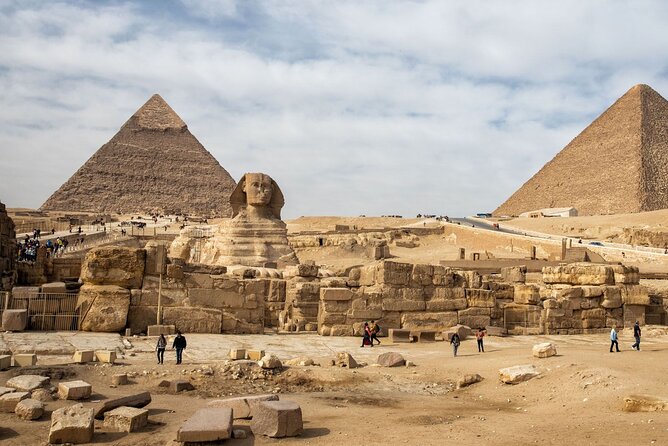
Next comes Khafre’s Pyramid. This one is described as about 134 meters high, built with limestone, and famous for a distinctive feature: the top has been conserved. That surviving upper section helps you grasp the pyramid’s original shape more clearly than you’d get from a fully worn down structure.
You’ll spend about 30 minutes here—short compared to Khufu, but not random. It’s long enough for the basics: orientation, what makes Khafre’s version stand out, and the visual link to the Sphinx later. Khafre also matters because the Sphinx is connected to him in the tour’s explanation.
Drawback? If you’re the type who can happily read every sign and linger for photos, 30 minutes may feel tight. But the tradeoff is that you’re still getting a balanced route without losing the rest of the day to one stop.
Menkaure’s Pyramid: smaller than the rest, and made with limestone plus red granite
Then you’ll move to the Pyramid of Menkaure (Mykerinos). This is described as the smallest pyramid in the Giza area, around 65 meters high. The materials are also part of what makes it interesting: it’s described as limestone with red granite.
That “smaller” label can fool people. Smaller doesn’t mean less impressive—it often means the design and materials stand out in a different way. The guide’s framing helps you see Menkaure’s pyramid as part of the same royal complex logic, not just a sidebar.
You get about one hour at this stop, which is a nice middle ground between the long Khufu visit and the quick Khafre stop. If you like having time to think and ask questions, Menkaure is where that usually happens.

The Great Sphinx: lion body, human head, and a guard’s job
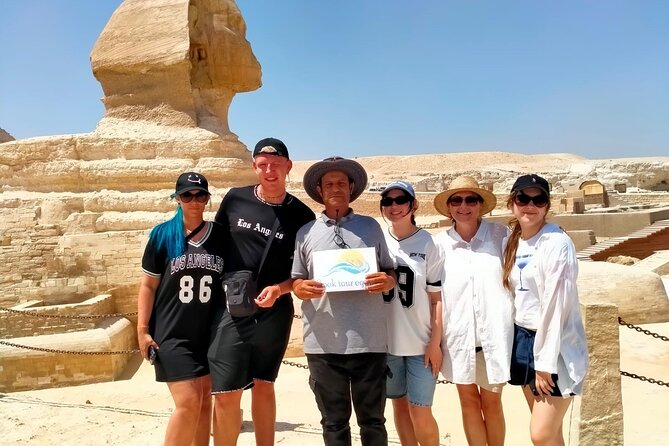
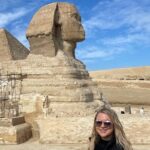
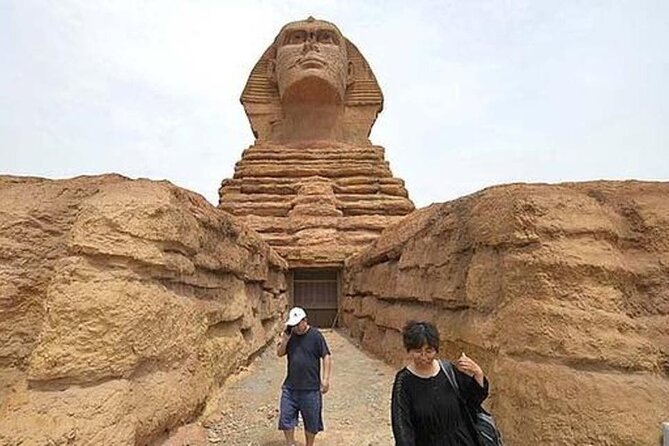
Finish at the Great Sphinx, described as built by King Khafre as a guard. The classic features are front and center: a lion body and a human head, with symbolism explained as intelligence and power.
You’ll have about 30 minutes here. That’s enough time to take in the proportions and listen to the guide’s interpretation without rushing you out immediately. Ending at the Sphinx is also a good rhythm choice: you go from man-made mountains of stone to a single figure that ties the complex together in meaning.
If you’re hoping to stay longer, plan to treat the half-day tour as the foundation. Use the time you have well by choosing one or two viewpoints for photos, then focus on the explanation. The Sphinx is the kind of monument where the story is half the experience.
Lunch at a local restaurant: a real break from the usual site-food scramble
Half-day tours sometimes skip the food details, but this one includes lunch at a local restaurant. You also get snack support during the tour: water and juice.
The lunch options listed are practical and familiar—beef, kofta, or grilled chicken. That’s the kind of choice that helps you eat without turning your afternoon into a food search mission.
This matters more than it sounds. When you’re walking around Giza in the heat, fatigue sneaks up. A proper sit-down meal at the right time keeps you from getting cranky or making rushed decisions for the rest of the day.
Add in the air-conditioned private car, and you get an overall feeling of care. It’s not just sightseeing—it’s comfort management.
Price and value: what you’re paying for at $25 per person
The price is listed at $25.00 per person, and that’s where the value math gets interesting. For that cost, you’re getting:
- a private tour setup
- an expert English guide
- a private air-conditioned car
- door-to-door transfers
- lunch plus water and juice
- taxes and services
- a package that includes area tickets (with some conflicting notes, so confirm)
In other words, this price isn’t just for walking around with a guide. You’re also paying for the friction-reduction: no need to manage taxis back and forth, fewer chances to get steered into unwanted stops, and smoother timing across four monuments.
Potential drawback on value: the information about admission/tickets is inconsistent. Since the tour duration is short, you really don’t want surprise costs or confusion at the gate. Before you go, confirm the exact ticket situation tied to your booking. If entrance fees truly are included as area tickets, you’ll feel the value immediately.
Language note: English is listed as free, while other languages (Spanish, Italian, French, German, Russian, Chinese, or other languages) come with an extra charge. If you want a specific language, check the add-on before your day.
The kind of guide experience this tour is known for
The feedback highlights reliability and flexibility. One standout example: Giustino, an Italian-speaking guide mentioned in a review, was described as highly prepared and kind, and he even took beautiful photos for the group. That’s the sort of detail that makes a private tour feel worth it—someone who not only explains, but also helps you capture the moment without turning it into chaos.
The “private VIP visit” format also matters. Even if you’re not aiming for a luxury vibe, fewer people changing pace with you makes the explanation clearer and the walking more efficient.
If you’re picky about photos, ask your guide where you should stand for the best angles at each stop. Your guide should be able to help you plan shots without wasting time.
Who this half-day private Giza tour suits best
This is built for people who want the big sights without the stress. It’s also a solid match if you:
- want an English explanation with a real guide rather than guessing on signs
- hate dealing with taxi friction and touts
- only have a short time in Cairo and need structure
- prefer a private group rather than a crowded scramble
Most travelers can participate, and service animals are allowed. If you’re traveling as a couple, family, or small group, the private format gives you breathing room in a place that can feel intense.
One thing to consider: this is a half-day. If you’re the type who wants to climb inside structures or spend long hours at one monument, you might feel the time limit. The tradeoff is you’ll see the core highlights in a calm, managed way.
Should you book this private Giza half-day tour?
If you’re going to Giza and you want the day to feel controlled, I think this is a good bet. The combo of door-to-door private transfers, an English guide, included lunch, and a structured route makes it easier to enjoy the monuments instead of wrestling with logistics.
I’d still do one quick check before booking: confirm the exact details on admission/area tickets for your date, since the notes mention tickets in conflicting ways. Once you’ve got that straight, the value at $25 per person looks strong for a private, guided half-day with comfort built in.
If your priority is a calm visit with guided context and fewer hassles, book it. If your priority is maximum time at fewer spots, you may want a longer itinerary instead.