REVIEW · CAIRO
4- Hours Private Guided Tour to Coptic Cairo with Lunch
Book on Viator →Operated by Deluxe Tours Egypt · Bookable on Viator
Old Cairo can get confusing fast with this route. I love the door-to-door pickup and the way a private guide keeps the story clear, from the Hanging Church crypt to the bigger map of faith in Egypt. One thing to consider: it is a tight half-day, so if you like to linger in churches and read every corner, you may wish you had more time.
This 3 to 5 hour private tour in Cairo focuses on Christian heritage in Coptic Cairo, with a stop at the old Jewish landmark of Ben Ezra Synagogue and then a look at the Mosque of Amr Ibn Al-As. You also get lunch included at a local spot, with Egyptian favorites like koshary and a vegetarian option, plus bottled water along the way.
In This Review
- Quick highlights before you go
- A stress-free half-day in Old Cairo with pickup and a private guide
- Coptic Cairo and Fort Babylon: the neighborhood logic that makes it click
- The Hanging Church and the crypt under St. Sergius and Bacchus
- Ben Ezra Synagogue: the oldest Cairo temple story and its lost-in-plain-sight documents
- Mosque of Amr Ibn Al-As: oldest mosque claims and the Fustat origin point
- Lunch at a local Egyptian restaurant: koshary and vegetarian-friendly comfort
- Timing, comfort, and what to expect in 3 to 5 hours
- Price and value: what $53 buys you (and why private helps here)
- Who this Coptic Cairo tour is best for
- Should you book this tour?
- FAQ
- How long is the tour?
- Is this a private tour?
- Does the price include lunch and entrance tickets?
- Will I be picked up from my hotel?
- Which sites are visited?
- Is lunch vegetarian-friendly?
- What if the weather is bad?
Quick highlights before you go
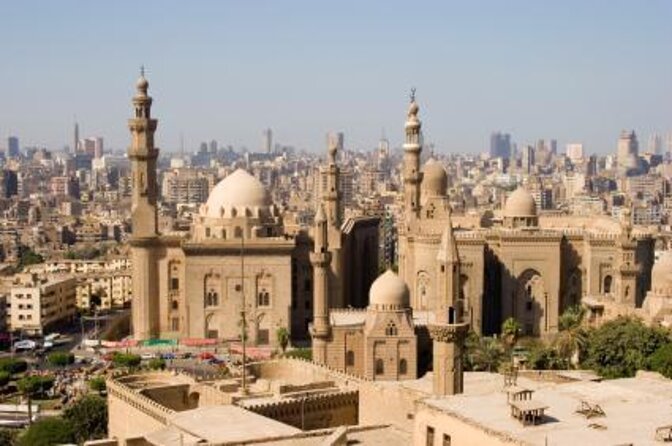
- Door-to-door pickup in Cairo or Giza so you skip the stressful start and get straight into Old Cairo
- The Hanging Church setting atop the Roman Fortress of Babylon, where the elevated ground tells its own story
- St. Sergius and Bacchus area and the crypt connection people talk about when they visit
- Ben Ezra Synagogue and why it matters to both Jewish and world history (including the document cache)
- Amr Ibn Al-As and Fustat as a link point between early Islam and older civilizations
- Lunch included with Egyptian comfort food, including vegetarian-friendly choices
A stress-free half-day in Old Cairo with pickup and a private guide
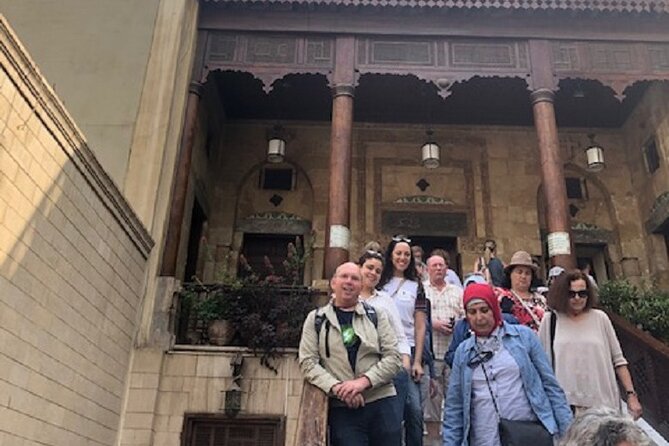
Old Cairo is not the place where you want to wing it. The streets can feel like a maze, and getting the order right matters. This private tour helps you get your bearings fast by starting with hotel pickup and ending with drop-off back where you began in Cairo or Giza.
Your guide drives the pacing, so you do not spend time hunting for entrances or trying to translate what you are looking at. And you benefit from a real conversation: guides such as Nashat and Nevin are described as helpful, flexible, and ready to answer questions on the spot. That is a big deal in historic areas where the signs can be limited and the details matter.
The private format also means you can ask to slow down at the moments that grab you—like the church architecture or the small, hard-to-see features. The trade-off is simple: the whole tour is only about 3 to 5 hours, so you will likely move on before you feel fully done with every stop.
You can also read our reviews of more guided tours in Cairo

Coptic Cairo and Fort Babylon: the neighborhood logic that makes it click
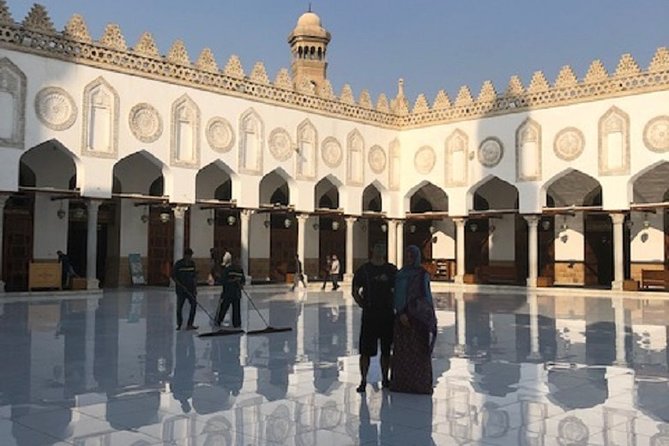
Coptic Cairo is the name people give to a dense pocket of Christian sites in Old Cairo, built around older remains—especially the fort known as Babylon. The area grew in the centuries between the decline of Egypt’s pharaonic religion and the arrival of Islam, when Christianity had a major presence.
What you’ll feel here is layering. This is not one era standing alone. Instead, you walk through a timeline where Roman-era walls, early Christian worship, and later Islamic history occupy the same general space. Even if you are not a church-history superfan, that “same geography, different faith eras” idea helps you understand why these stops are grouped the way they are.
Practical note: Coptic Cairo is compact, but it can be hectic, and the tour structure keeps you moving with purpose. You will see how the area is organized around the fortress foundations, and why so many important sites cluster here rather than being scattered around the city.
If you care about heritage beyond the headlines, this opening stop sets up the rest. If you only want iconic photos and short explanations, you might feel there is more talk than you expected—though the guide is there to tailor to your questions.
The Hanging Church and the crypt under St. Sergius and Bacchus
This is the signature stop. The Church of the Virgin Mary—better known as the Hanging Church—earns that nickname because of its location. It was built atop the walls of the 4th century BC Roman Fortress of Babylon. The fortress remains are still visible around the area, and the church’s elevated position is part of the visual punch.
There is also a key detail that helps you understand why it looks different today: the ground level has risen by more than 30 feet over the centuries, largely from accumulated trash and dust. In other words, the Hanging Church originally towered above its surroundings, and modern visitors stand lower than those early worshippers likely did.
The experience becomes even more meaningful with the crypt connection tied to the Church of St. Sergius and Bacchus. You are taken to the crypt area where some believe Mary, Joseph, and Jesus rested. Even if you approach the story from a historical rather than purely religious lens, the point is that the site has long served as a focal point for belief and pilgrimage.
Time-wise, this stop is short—about 30 minutes for admission at this part of the visit—so you may not see everything at a slow crawl. Still, with a guide, you get the “what am I looking at and why does it matter” answers that turn a quick visit into something memorable.
Ben Ezra Synagogue: the oldest Cairo temple story and its lost-in-plain-sight documents
Next comes a different religious thread: Ben Ezra Synagogue, described as the oldest Jewish temple in Cairo, dating to the 9th century AD. Like many synagogues in the region, it is treated primarily as a historic site today after the departure of nearly all of Egypt’s significant Jewish community in the 1950s following the founding of Israel and the Free Officers’ Revolution.
What makes Ben Ezra especially compelling is the documentary treasure associated with the synagogue. After a major discovery in the 19th century, a large cache of documents from the synagogue’s treasury was found. These records tracked the history and transactions of Cairo’s Jewish community since the 11th century—considered among the most complete accounts of medieval Jewry anywhere.
Today, those documents are held at Cambridge University in England. That detail matters because it turns a visit to a small, local historic site into a connection with global scholarship. You are not just looking at an old building; you are touching part of a paper trail that survived centuries and later moved into academic collections.
The visit time here is also brief—about 30 minutes—so treat it like a focused stop. Look for the context your guide provides: how the synagogue fits into Cairo’s long story of community life, not only religious worship.
Mosque of Amr Ibn Al-As: oldest mosque claims and the Fustat origin point
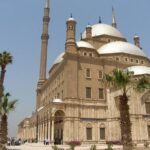
After the Christian and Jewish stops, the tour pivots to early Islamic history at the Mosque of Amr Ibn Al-As. This site is tied to Amr Ibn Al-Aas, a major figure because he helped introduce Islam to Egypt. He founded a new city north of the Roman fort of Babylon called Fustat, and the mosque marks the spot of that founding area.
One detail you should know before you expect a medieval structure: the mosque has been renovated several times, and none of the original structure remains today. So what you see is a layered reminder, not a perfectly preserved original from the earliest period.
Still, the mosque is credited as the oldest mosque in Egypt and in the entire continent of Africa. Islam arrived in Egypt in 640 AD with Amr Ibn Al-Aas of the Rashidun Caliphate, just a couple decades after the religion was born, during a time of rapid expansion.
This stop is about perspective. It helps you see how the same physical geography that hosted earlier Christian majority life also became part of the Islamic shift. If you’re interested in how civilizations overlap in one city, this is one of the most practical “bridge” moments on the tour.
You can also read our reviews of more private tours in Cairo



Lunch at a local Egyptian restaurant: koshary and vegetarian-friendly comfort
You finish with lunch included, and that is not just a free meal token. Lunch time helps you reset your energy, especially in Old Cairo where the day can feel dense even without heavy walking.
The food described includes Egyptian favorites such as koshary—made from a mix of macaroni, rice, and lentil with tomato sauce and additional toppings. The tour also explicitly notes vegetarian food options, which is a big help if you travel with dietary limits.
What I like about including lunch here is that it keeps the pacing smooth. You do not have to negotiate restaurants while tired or worry about finding something open at the right time. A private guide can also steer you toward a place that works with the tour schedule.
One note: lunch is included, but it sounds like it is designed around classic Egyptian comfort foods rather than a fine-dining experience. If you want a culinary deep dive with multiple courses and lots of menu flexibility, you may find this is more about simple, local satisfaction than a food festival.
Timing, comfort, and what to expect in 3 to 5 hours
This is meant to be a half-day. The full experience runs about 3 to 5 hours, with admission times listed for each major site and guided movement between them. In practice, that means you should expect a structured route where each stop gets focused attention rather than hours of wandering.
You also get bottled water, which matters in Cairo for comfort and sanity. The tour includes private transportation, so you are not squeezing into shared cars while trying to stay oriented.
If you are the type who loves detail, keep this in mind: the entrances and site viewing portions are timeboxed (about 30 minutes per key site after the first stop). The guide can answer questions, but you still have to work within the schedule.
Finally, this experience requires good weather. If weather turns rough, you should expect a different date or a refund option.
Price and value: what $53 buys you (and why private helps here)
At $53 per person, this tour is positioned as good value because it bundles several costs that add up fast on your own. You are paying for a private guide, private transportation, hotel pickup and drop-off, bottled water, entrance fees, and the lunch.
Most importantly, you are not paying to “see a site” only—you are paying for someone to connect the dots across Christian, Jewish, and early Islamic heritage in one route. When you are dealing with places that have layers and symbolism, that interpretive work can be the difference between a quick look and a visit that sticks with you.
A private format also protects your time. Door-to-door pickup in Cairo or Giza can be the difference between starting on time or losing half your day to transit confusion and ticket lines.
One consideration: because it’s private, the exact value can feel different depending on your group size. The pricing you see is per person, and there are mentions of group discounts, so if you can travel with others, the shared logistics often make it even more practical.
Who this Coptic Cairo tour is best for
I think this tour fits best when you want heritage with context and minimal stress.
You’ll likely enjoy it if:
- You like religious history, especially how different communities overlap in one city
- You want a guided route through Old Cairo without getting stuck at the wrong entrance
- You appreciate a clear story told in plain language by a guide who answers questions
- You want lunch handled for you, including vegetarian options
You might want to rethink if:
- You plan to spend lots of extra time on your own in each site after the guided portion ends
- You are only here for fast photo stops and do not need explanations
If you’re pairing this with other Cairo highlights, treat it as the “heritage” day that rounds out the big monuments. It’s a different flavor of history, more human-scale than the massive outdoor sites.
Should you book this tour?
Yes—if your goal is to experience Coptic Cairo with order, context, and a schedule that does not waste your energy. The biggest strength is the combo of door-to-door pickup, a private guide, and the focused route through the Hanging Church area, Ben Ezra Synagogue, and the Mosque of Amr Ibn Al-As—plus lunch.
Book it especially if you want your time to feel guided rather than improvised. If you crave an all-day slow stroll through every corner, you may want a longer option. For a half-day plan with admissions and lunch taken care of, this one is a sensible pick.
FAQ
How long is the tour?
The tour runs about 3 to 5 hours (approx.).
Is this a private tour?
Yes. It is private, so only your group participates.
Does the price include lunch and entrance tickets?
Lunch is included, and entrance fees to the sites are included as well.
Will I be picked up from my hotel?
Yes. Hotel pickup and drop-off are included, with pickup from hotels in Cairo or Giza.
Which sites are visited?
The tour includes Coptic Cairo, the Hanging Church, the Ben Ezra Synagogue, and the Mosque of Amr Ibn Al-As.
Is lunch vegetarian-friendly?
Yes. Vegetarian food is available, and lunch includes Egyptian items like koshary.
What if the weather is bad?
The experience requires good weather. If it is canceled due to poor weather, you will be offered a different date or a full refund.