REVIEW · CAIRO
10 Day Egypt Wonders of the Pharaohs Cairo & Alexandria & The Nile & Abu Simbel
Book on Viator →Operated by Look at Egypt Tours · Bookable on Viator
Egypt hits you fast, and this trip strings it together. You start with Giza icons, roll through Cairo’s top sites, then cruise the Nile to Luxor and Abu Simbel, finishing with a full day in Alexandria.
I love two things most: the trip handles the moving parts for you, from pickup/transfer to domestic flights, so you spend more time looking and less time figuring out. I also love the long-form pace of a 4-night luxury Nile cruise with full board, plus an onboard Galabeya party that makes the trip feel like more than a checklist.
One consideration: some days are long and packed, especially the Abu Simbel day and the Alexandria excursion. If you’re sensitive to heat, walking time, and early starts, plan your energy accordingly.
In This Review
- Key highlights worth circling
- Giza, Sphinx, Saqqara, and Memphis: the day Egypt teaches scale
- Cairo’s Egyptian Museum, Khan el-Khalili, and Mosque of Muhammad Ali: where stories get personal
- Luxor Temple and Karnak: seeing how power repeats itself in stone
- West Bank highlights: Valley of the Kings, Hatshepsut, and Colossi of Memnon
- Kom Ombo and Temple of Horus: the Nile cruise builds context, not just comfort
- Abu Simbel and Philae: the UNESCO story behind the spectacle
- Alexandria day trip from Cairo: Roman engineering, catacombs, and a library you can’t ignore
- Price and logistics: what $2,850 buys you when everything has to line up
- Who should book this Pharaohs Adventure-style itinerary
- Should you book this 10-day Egypt Wonders of the Pharaohs trip?
- FAQ
- How long is the tour?
- Where does the tour start?
- What’s included in the price?
- Are domestic flights included?
- What meals are included?
- Does the tour include the Nile cruise?
- Are tickets and entry fees included?
- Do I need to budget for tipping?
- What’s the usual booking timeline?
- What is the cancellation refund window?
Key highlights worth circling
- Giza + Saqqara + Memphis in one go, so you compare pyramid beginnings and royal scale
- Egyptologist guidance across Cairo, Luxor, Aswan-area temples, and the Nile cruise experience
- Nile cruise stays (4 nights) with full board, giving you real downtime between big sites
- Abu Simbel and Philae as two temple contrasts: monumental cut-stone spectacle and UNESCO rescue history
- Alexandria day trip that hits Roman, Christian-era, and classical-Egyptal layers in one long day
Giza, Sphinx, Saqqara, and Memphis: the day Egypt teaches scale
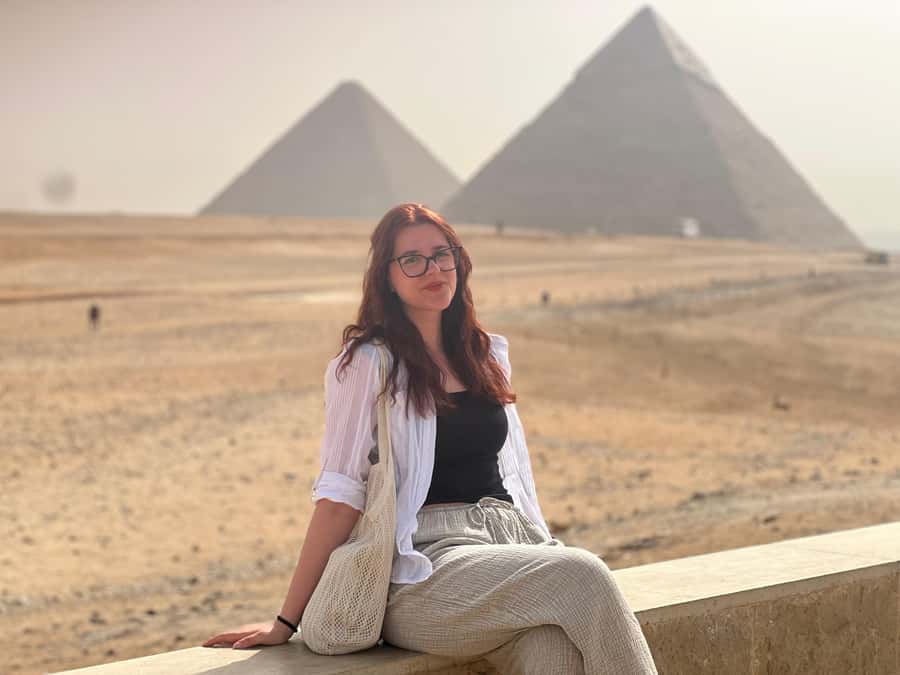
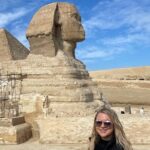
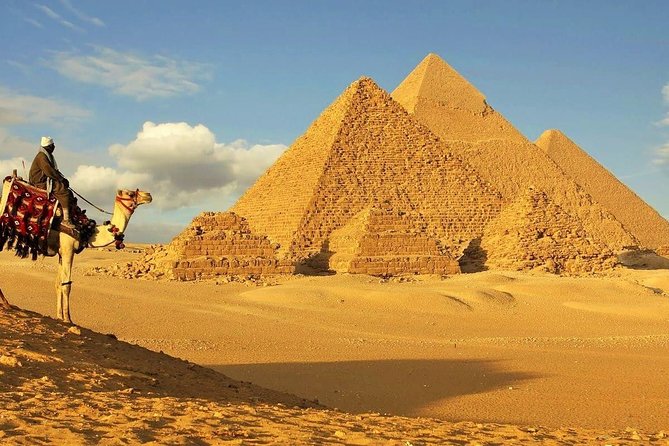
The first real test of Egypt is Giza. Even if you think you know what the pyramids look like from photos, you don’t. From the Giza plateau, the scale lands in a way that feels physical. The Great Sphinx at the base of the plateau is the perfect warm-up too. It’s not just a statue. It’s a massive presence that makes the whole area feel ancient in every direction you look.
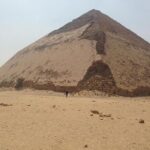
This day is also smart because you don’t stop at Giza. You continue on to Saqqara for the Step Pyramid of Djoser. Compared to Giza, the Step Pyramid feels like an origin story. You’re not just seeing royal power; you’re seeing a stage in how pyramid design evolved. That context changes how you view every stone you later see in Egypt.
Next comes Memphis and Sakkara. Memphis was once a key capital area, and it gives you a sense of Egypt as a living system, not only a set of tombs. You’ll see highlights like major statuary and remnants tied to rulers, including references to a large Ramses II statue and the alabaster sphinx associated with Queen Hatshepsut. Even if ruins never look exactly like the postcards, they do help connect the dots between pharaohs, cities, and monuments.
Practical tip: wear shoes you can walk in for hours. The ground can be uneven, and you’ll want to keep your pace steady rather than stopping every few minutes for photos.
You can also read our reviews of more tours and experiences in Cairo.


Cairo’s Egyptian Museum, Khan el-Khalili, and Mosque of Muhammad Ali: where stories get personal
Cairo is where Egypt becomes specific. You see the artifacts that turn names into faces—especially around King Tutankhamen. The Museum of Egyptian Antiquities (the Egyptian Museum) is the anchor here. The collection is huge, and what you’ll see during a visit is a representative slice, not everything in storage. Still, it’s the kind of stop where you come away feeling like you understand the stakes behind the pyramids and tombs.
Then the tour shifts from marble and glass to people and noise: Khan el-Khalili. This is a major souk in historic Islamic Cairo, and it’s a great place to reset your brain after museum time. You’ll get an easy introduction to the texture of everyday Cairo—shops, bargaining energy, small streets, and the sense that the market is still part of local life, not only for tourists.
After that, you move toward the Mosque of Muhammad Ali and the Citadel area. The Citadel of Cairo has medieval roots tied to Salah ad-Din and later Egyptian rulers, and it’s tied to centuries of government and residence. The mosque sits on top of that story like a visual summary: different era, same city, different kind of power.
Practical tip: bring cash for small purchases in the bazaar if you want souvenirs, snacks, or spices. Also, carry a light layer. Museums and indoor spaces can feel cooler than the street.
Luxor Temple and Karnak: seeing how power repeats itself in stone
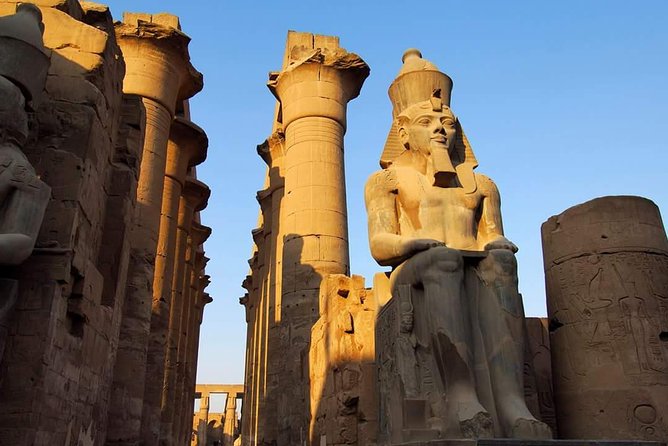
When your trip gets to Luxor, you start seeing the Nile as a corridor of culture. The first Luxor stop is Luxor Temple on the east bank, a large complex built around 1400 BCE. This temple has a southern sanctuary feel to it, and walking through it gives you a sense of how Egyptians built spaces that guide your movement and attention.
Then you go to Karnak. Karnak is the type of site where the mind struggles to measure it. It’s vast, dedicated primarily to Amun, and it spans from as early as 2000 BC. The scale isn’t just bigger than other temples. It has a compounding effect. Columns, halls, and walls all create a rhythm that makes you feel small in a helpful way—like the stone is doing the talking.
What I like for you: this is the kind of itinerary flow that prevents temple fatigue. You get one temple that feels like a strong centerpiece first, then Karnak’s complexity follows. By the time you leave Karnak, you’ll understand why this area is so famous.
West Bank highlights: Valley of the Kings, Hatshepsut, and Colossi of Memnon
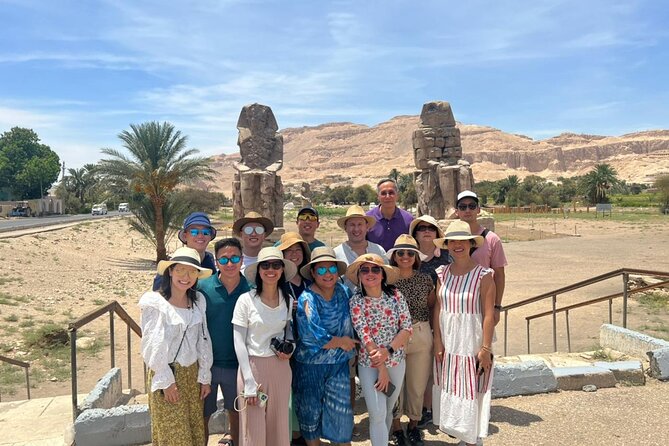
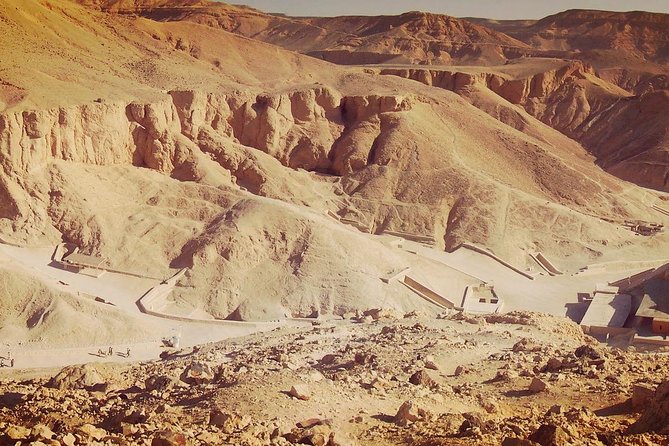
The West Bank is where the trip turns dramatic. You’ll visit the Valley of the Kings, a burial ground for New Kingdom pharaohs. This is the area tied to Tutankhamen’s tomb, discovered almost intact in 1922. The ticket structure matters here: you typically visit three of the tombs on site, and Tutankhamen’s tomb is not included with that standard ticket.
That detail matters for expectations. The tombs you visit can be impacted by tourism levels and humidity over time, and the practical reality is that the experience will vary from tomb to tomb. Still, the overall feeling is powerful. You’re looking at a whole system of royal burial design, not only one famous chamber.
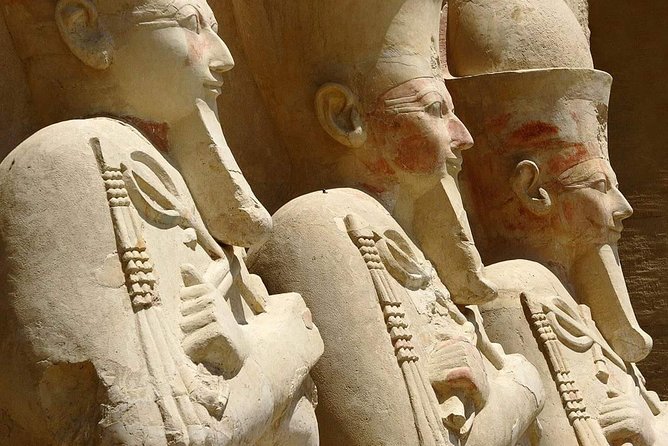
Next is the Temple of Hatshepsut. This temple is linked to a ruler who acted in unusual ways by the standards of the era. You’ll hear the story of Hatshepsut and how her reign followed her brother-husband, with the political fallout coming later. Even if you don’t love every historical detail, the main takeaway lands when you see the temple itself: this wasn’t a small side project. It was a statement.
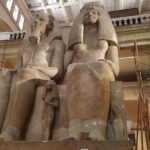
Then you finish with the Colossi of Memnon—two massive stone statues of Amenhotep III. They’ve stood for thousands of years, and that kind of longevity gives you perspective. You’re not just touring sites. You’re standing next to monuments that have been watching the Nile long before modern maps existed.
Practical tip: plan for shade breaks. These sites can be hot, and a little pacing keeps the day enjoyable rather than exhausting.
Kom Ombo and Temple of Horus: the Nile cruise builds context, not just comfort
Your Nile cruise nights aren’t just for sleep. They’re for rhythm. Between Cairo and the West Bank, cruising adds breathing space, and the itinerary layers temple visits with travel time that feels less rushed than train-hopping.
On the cruise days around Aswan-area temples, you’ll visit the Temple of Kom Ombo. This is an unusual double temple tied to two sides of worship: the crocodile god Sobek and a set of other deities associated with Hathor and Khonsu. It’s a good reminder that ancient Egypt wasn’t only one storyline. It was many, overlapping.
Then you go to the Temple of Horus. It’s known as one of the best-preserved monuments in Egypt, and desert sand helped protect it, filling parts of the site after a cult ban. That preservation effect makes it feel atmospheric in a way modern structures rarely do. Here, you’re reading history through survival.
One more thing: you’re on a cruise with full board for the 4-night portion. That means you’re not constantly hunting for meals. It’s a quality-of-life win, especially when your days are packed with sites and travel.

Abu Simbel and Philae: the UNESCO story behind the spectacle
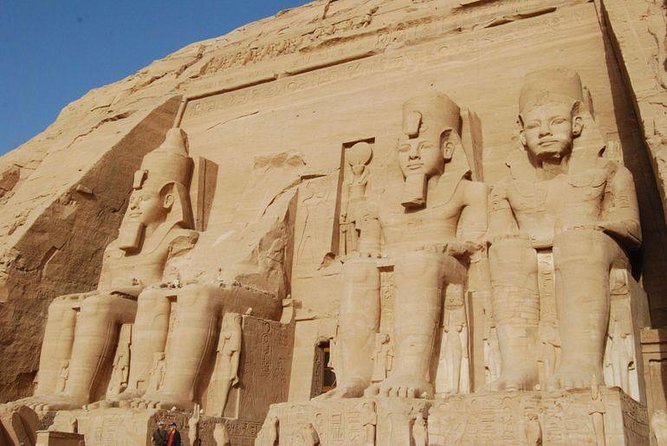
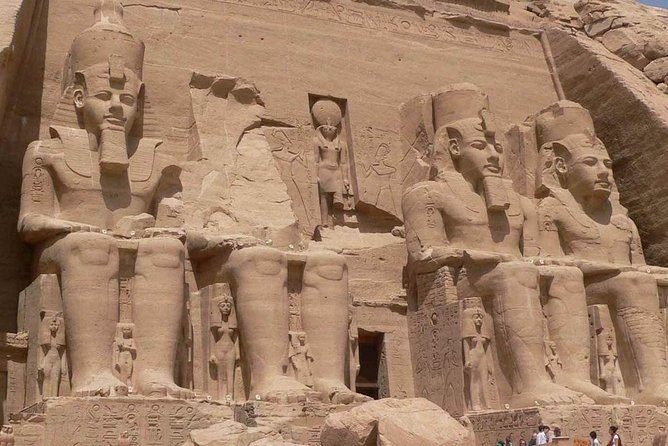
Abu Simbel is the day many people dream about before they even buy the trip. The Abu Simbel Temple Complex is made of two massive rock temples, cut into stone and set in Nubia near the border area with Sudan. It’s about 230 km southwest of Aswan, and it’s far enough that the day feels like a mini expedition.
The payoff is the sheer scale and the specific craftsmanship of rock-cut architecture. Even if you only know Abu Simbel from photos, seeing it in person changes how you understand Egyptian building ambition. This isn’t just impressive. It feels engineered for permanence.
After that, you’ll visit Philae. This is where the trip adds a different kind of drama: it’s a UNESCO rescue story. You cross the Nile by motorboat to reach the island, and you see temples dedicated to the cult of Isis. The key point is how the temples were saved from flooding risks linked to the Aswan High Dam. The complex was transferred block by block to Agilika Island so visitors can still walk among its columns today.
Why this matters for you: it makes Egypt feel like a shared heritage that people worked hard to preserve. That adds depth to your photos and helps your brain hold the monuments as part of a living global story, not only an ancient one.
Alexandria day trip from Cairo: Roman engineering, catacombs, and a library you can’t ignore
On your Alexandria day, you’ll do a long push: Pompey’s Pillar, Roman catacombs, a lunch stop, the Qaitbay Citadel area, and then Bibliotheca Alexandrina.
Pompey’s Pillar is built to honor Emperor Diocletian at the end of the 4th century. It’s tied to earlier temple remains, and you can feel how Alexandria has layered eras on top of each other. Then you visit the catacombs, described as the largest Roman cemetery with three levels cut into rock. That kind of underground visit is a different mood than Egypt’s sunlit temples, and it’s a good reset.
After lunch at a local restaurant, you visit Qaitbay Citadel, built on the site where Alexandria’s ancient Lighthouse once stood. Finally, you reach Bibliotheca Alexandrina, which connects the city’s ancient learning image with a modern symbol of study.
This is one of those days where you’ll want to treat it like a marathon: hydration, comfortable clothing, and a willingness to accept a packed schedule. It’s a lot, but it’s also a satisfying way to close the Egypt story with a different regional identity.
Price and logistics: what $2,850 buys you when everything has to line up
At $2,850 per person, this isn’t a cheap trip. The value is in what’s included and what that inclusion prevents you from doing yourself.
You get:
- 5 nights at a 5-star Cairo hotel
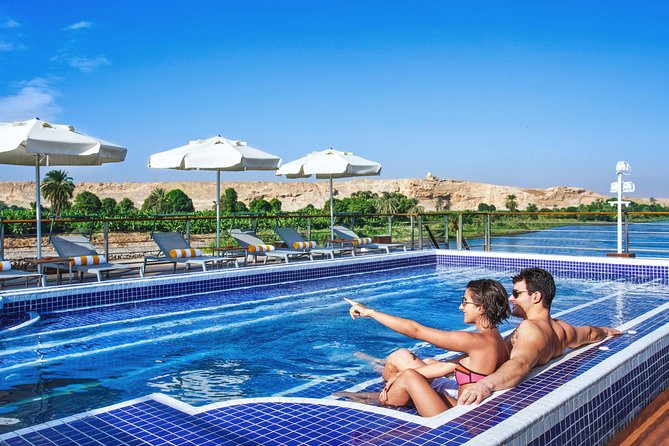
- 4 nights on a luxury Nile cruise with full board
- domestic flights in Egypt (Cairo–Luxor–Aswan–Cairo)
- an Egyptologist guide
- round-trip private transfers
- key site admissions listed as included
- meals included across the trip (breakfasts, plus lunches and dinners)
In plain terms, you’re paying for coordination. Egypt can be logistically tricky: internal flights, long drives, and timed entry at big sites. This tour’s design keeps those moving pieces handled. The cruise also changes the cost equation compared with doing everything by land, because you’re getting a full hotel stay plus meals plus onboard programming.
From the reviews I read, the logistics side is a major theme. People were happy that pickup and transportation ran smoothly, that guides made the trip easy to navigate, and that communication was handled clearly. I also saw specific guide names pop up, like Hannah in Cairo and Remon on the Nile, which suggests this company isn’t only passing through generic attendants. On top of that, some reviews mention a tour manager available around the clock, plus the team responding promptly when small plan changes happened.
My balanced take: the price is justified if you want a guided, high-coordination experience. If you love total independence and want to manage flights and ticketing yourself, you could probably build a cheaper version. But it won’t feel as simple.
Who should book this Pharaohs Adventure-style itinerary
This tour makes the most sense for you if:
- you want a guided overview of Egypt’s biggest monuments without the planning stress
- you like moving with a group pace, especially on high-demand sites
- you want a true Nile cruise component instead of only day trips
- you’re okay with long, active days like Abu Simbel and Alexandria
It’s also a strong pick for first-time international travelers who want someone to manage the practical stuff on the ground. Several reviews emphasize feeling safe, informed, and cared for through transfers and guide attention.
Should you book this 10-day Egypt Wonders of the Pharaohs trip?
If you want Egypt’s highlights with low friction, I’d say yes. The mix is well thought out: Giza and Saqqara teach pyramid context, Cairo handles museums and city energy, Luxor and the West Bank deliver the royal tomb experience, and the Nile cruise gives you a real break between temple days. Then you end with Abu Simbel and Alexandria, which broadens the story beyond just one region.
If your ideal trip is slow, quiet, and you hate long travel days, you might find the schedule demanding. The fix is simple: get up early, pace yourself at stops, and don’t try to “do everything” in every photo moment. Let your guide set the flow.
If you tell me your travel month and your walking comfort level, I can also help you decide whether this pace fits you.
FAQ
How long is the tour?
It runs for about 10 days.
Where does the tour start?
It starts in Cairo, with pickup and transfer to your hotel on the first day. Start time is 8:00 am.
What’s included in the price?
The package includes 5-star Cairo hotel nights, a 4-night luxury Nile cruise with full board, a qualified Egyptologist guide, round-trip private transfers, and listed meals. Domestic flights are included too.
Are domestic flights included?
Yes. The trip includes flights from Cairo to Luxor, Luxor to Aswan, and Aswan back to Cairo.
What meals are included?
Breakfast is included each day on the schedule, with lunch and dinner also included on specific days listed in the package details.
Does the tour include the Nile cruise?
Yes. It includes 4 nights on a luxury Nile cruise.
Are tickets and entry fees included?
Admissions are listed as included for the major stops described in the itinerary.
Do I need to budget for tipping?
Tipping for the guide and drivers is not included.
What’s the usual booking timeline?
On average, it’s booked about 90 days in advance.
What is the cancellation refund window?
You can cancel up to 6 days in advance for a full refund, 50% refund for cancellations made 2–6 days in advance, and no refund if you cancel less than 2 days before the start time.