REVIEW · CAIRO
visit Egypt for 8 days 7 nights
Book on Viator →Operated by Magnificat Tours · Bookable on Viator
Eight days in Egypt, expertly paced. You get the big Cairo icons up front, then settle into a Nile cruise and a Cairo hotel base while guided visits move you city to city without guesswork.
What I like most is how guides handle the details. Guides like Ahmed Ossman are described as attentive and professional, and the vibe is friendly—one guest even called out the way he uses Family to bring everyone together. Second, I love that you’re not just seeing sites; you’re seeing them in the right order, with organized timing for places that otherwise eat your whole day.
One thing to consider: days can feel full, and one major add-on—Abu Simbel—is optional and not included. Also, the cruise is full board but without drinks, so plan for that if you’re a soda, juice, or beer person on the boat.
In This Review
- Key things that make this trip work
- The big picture: why this Cairo to Nile route is good value
- Day 1 in Cairo: the help that starts before you leave the airport
- Giza’s pyramids and Sphinx: the visit you want, with a guide’s pacing
- How Luxor fits in: cruise momentum after Karnak and Luxor Temple
- Valley of the Kings and Medinat Habu: where the scale turns emotional
- Edfu and Kom Ombo: temple rhythm on the water
- Aswan: unfinished stone work and the High Dam’s real-world impact
- Abu Simbel: the optional mega-ticket decision
- Nile cruise value: what “5 with full board” means for your comfort
- Transfers, tickets, and the small comforts that add up
- Price reality check: what $1,200 buys you here
- Who should book this tour, and who might want alternatives
- Booking tips so your days feel lighter
- Should you book Magnificat Tours for Egypt’s highlights?
- FAQ
- What’s included in the price?
- Do I get airport pickup and help with arrival?
- Are tickets for the main sights included?
- How long is the tour and where does it start?
- Is the Nile cruise part of the trip?
- Can I cancel for a full refund?
Key things that make this trip work
- Airport arrival help: your representative meets you inside Cairo International Airport to handle visa/entry steps, then transfers you to your hotel.
- Private group experience: it’s just your group, not a big open-bus crowd.
- Tight “greatest hits” routing: Giza → Luxor → Valley of the Kings → Edfu/Kom Ombo → Aswan.
- Real temple time: long-enough visits at Karnak, Luxor Temple, Valley of the Kings, and multiple Aswan-area stops.
- Nile cruise included (with meals): 5 cruise with full board for 3–4 nights, plus Cairo hotel nights.
- A clear extra choice: Abu Simbel is optional, with limited guidance time set aside and its ticket not included.
The big picture: why this Cairo to Nile route is good value
This 8-day trip is built around two simple ideas: hit the signature monuments and remove the friction. Instead of you spending hours coordinating transport, buying tickets alone, and trying to figure out the best sequence, you get a guide and transfers that stitch everything into one flow.
At this price point (about $1,200 per person), the value mostly comes from what you’re not paying for in effort: guided entrances for the scheduled stops, transfers between Cairo and the Nile route, and a cruise/hotel combo. Egypt’s “top sites” can be expensive and exhausting when you try to self-plan—so having the route and timing handled is where you feel the savings.
It’s also worth noting the experience is private, which usually means a smoother pace and more flexible attention from your guide. If your group is small and you want your questions answered while you walk, that matters.
You can also read our reviews of more tours and experiences in Cairo.

Day 1 in Cairo: the help that starts before you leave the airport
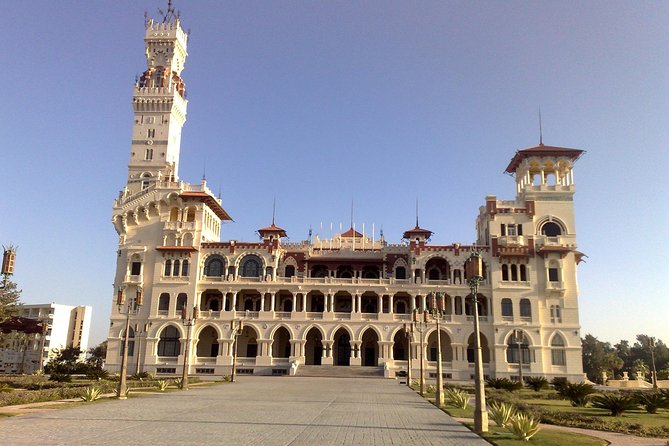
On arrival, you’re met inside the airport and helped through the visa and entrance protocol, then transferred to your Cairo hotel. That sounds basic, but it’s a big deal in Cairo. Airport time is usually the chaotic part of any trip, and this structure is meant to knock that out quickly so you can sleep and reset.
If you’ve ever arrived jet-lagged and found yourself hunting for counters, this is the kind of start you appreciate. It sets the tone: organized, guided, and focused on getting you to bed in time.
Giza’s pyramids and Sphinx: the visit you want, with a guide’s pacing
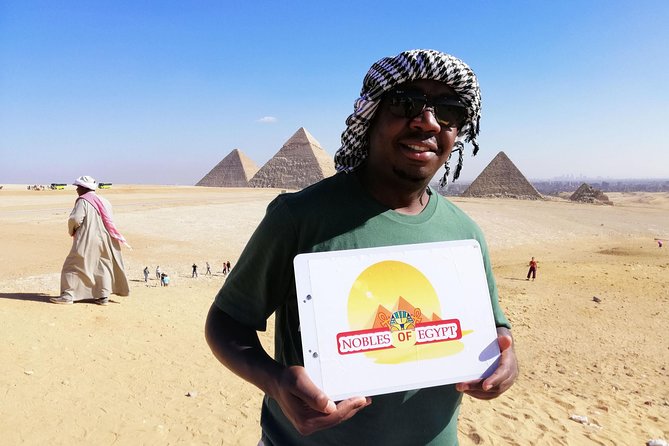
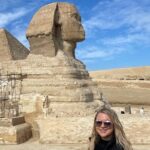
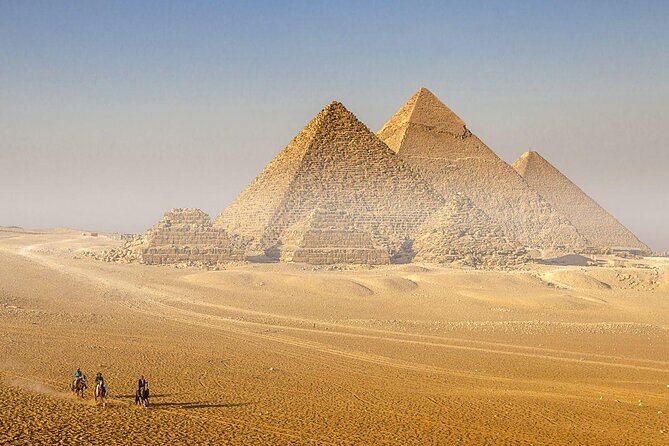
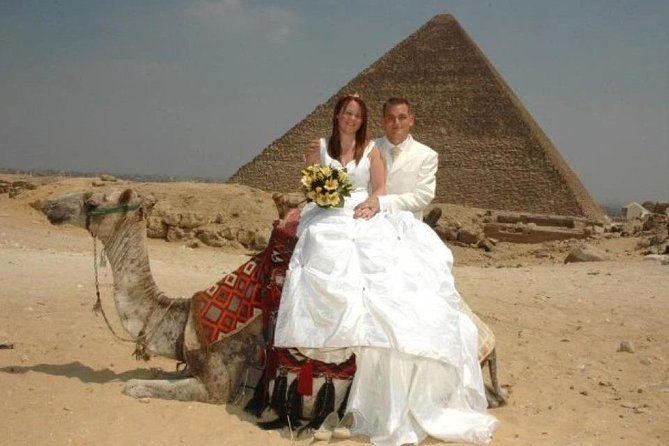
The next morning starts with the Pyramids of Giza and the Sphinx, with a guide meeting you at the hotel reception. You get about 3 hours for the visit, and those hours are valuable because this is one of those places where wandering without context turns into “I took photos… now what?”
A few practical thoughts for this kind of site:
- Wear shoes you can walk in for long stretches; the ground can be uneven and hot.
- Start with a slower orientation: knowing where you’re standing makes the pyramids feel more real and less like “massive shapes.”
- Bring sunscreen and water. The sun here can feel personal.
You’ll also appreciate that the guide is there from the beginning. Getting your bearings matters when you’re dealing with major landmarks and lots of foot traffic.
How Luxor fits in: cruise momentum after Karnak and Luxor Temple
Day 3 shifts you toward the Nile route. The schedule gives you a choice for moving from Cairo to Luxor—train or flight (depending on your preference and what’s arranged). Once you arrive in Luxor, a representative meets you and transfers you to your Nile cruise, your “home base” for the next several nights.
After lunch, you visit Karnak Temple and Luxor Temple. The time blocks listed are about 2.5 hours for Karnak + Luxor-area visits, plus an additional 1.5 hours for Luxor Temple.
Why this combination works: Karnak is big, layered, and visually dense, while Luxor Temple helps you connect the dots with a clearer “modern” feel of how the complex flowed through daily life and ceremony. With a guide, you’re less likely to treat Karnak like a photo stop and more likely to understand what you’re looking at.
Valley of the Kings and Medinat Habu: where the scale turns emotional
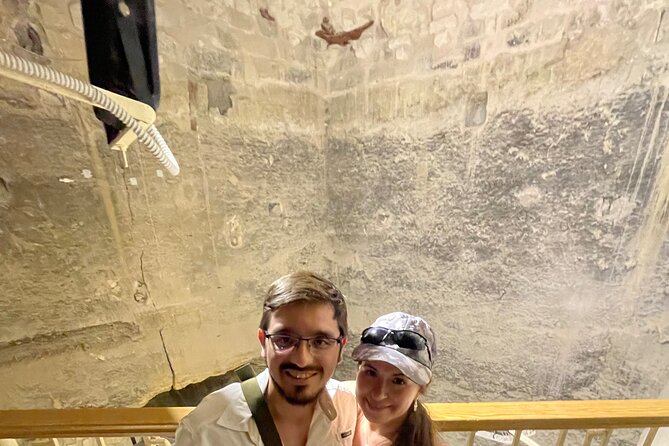
Day 4 goes straight into one of Egypt’s most powerful experiences: the Valley of the Kings. The visit is about 2 hours, and the schedule specifically calls out the wall paintings and craftsmanship made long ago. That’s the right expectation setting—this isn’t just about tomb exteriors; it’s about what you can learn and see when you pause.
Then you add Temple of Medinat Habu (listed with its associated Rames/ Ramsis reference). The timing is about 1.5 hours before you’re transferred back to the cruise and continue navigating toward Edfu.
What I think you’ll like here is the variety of “why it mattered.” Valley of the Kings is about death rituals and elite tomb planning. Medinat Habu is about how temples projected power and belief. When both are guided, the day feels like a story, not a checklist.
Possible drawback for this day: it’s an intense on-foot day. You’re packing two major archaeology stops into one travel rhythm. If your group tends to move slowly, it helps to mention that early so the guide can pace breaks.

Edfu and Kom Ombo: temple rhythm on the water
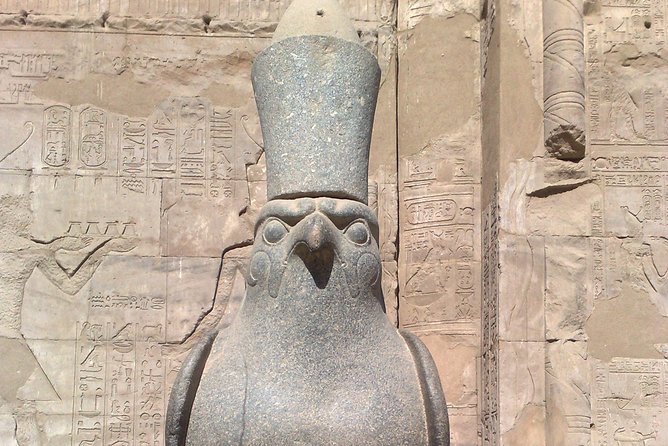
Day 5 continues the cruise with visits to Edfu and Kom Ombo. The schedule gives about 2 hours for the Horus Temple in Edfu, then about 1 hour 20 minutes for Kom Ombo.
Here’s the practical value of this day: you’re combining sightseeing with recovery time from the previous busy days. You leave the hotel-like comfort of the boat and return to it, with navigation between ports handling a chunk of the logistics.
If you want a simple “how to enjoy this day” approach:
- Treat temple visits like reading. Slow down for one main area and let the rest be supporting detail.
- Don’t try to see every inch—focus on the guided explanations and the most meaningful figures/reliefs.
A small note from the program details: Edfu is marked as Admission Ticket Free in the day’s outline, while Kom Ombo is marked as included for admissions. You don’t need to micromanage it, but it does underline that most entries are handled by the program rather than you.
Aswan: unfinished stone work and the High Dam’s real-world impact
Day 6 brings you to Aswan with two stops that connect past and present.
First is the Unfinished Obelisk, about 50 minutes. The point here is how ancient Egyptians cut stone and shaped tools and techniques. This kind of stop is a favorite for many people because it’s less “finished masterpiece” and more “how they did it,” which makes the craft feel tangible.
Second is the Aswan High Dam, about 30 minutes. This is where modern Egypt meets the historic river story. You’ll likely notice the contrast immediately: one stop shows process; the other shows outcome—how the Nile is managed today.
If you like understanding infrastructure and engineering behind the scenes, this day is a strong match. It gives your brain a different kind of context between temple days.
Abu Simbel: the optional mega-ticket decision
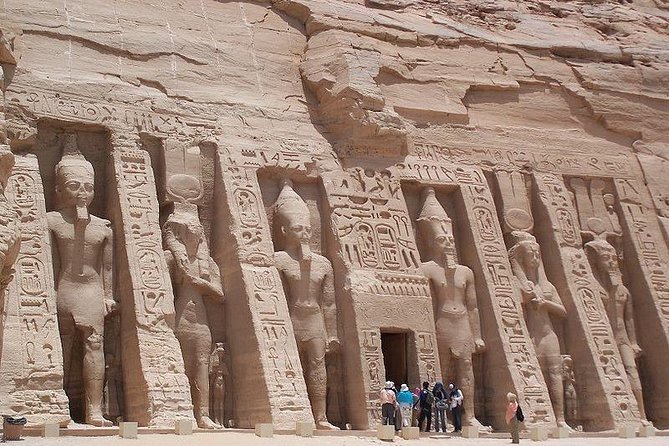
Day 7 includes Abu Simbel Temple Complex as an optional visit. The schedule lists 7 hours for the day, and it also says the admission ticket is not included.
So here’s how to decide without stress:
- If Abu Simbel is on your personal “must see” list, consider it part of your “big finale.”
- If your group prefers more relaxed days and fewer long transfers, you might skip it and head back to Cairo by train or flight as arranged.
Because it’s optional, you’re not locked into a rigid final day. That flexibility is a genuine benefit—especially if you’re already tired from earlier temple-heavy days.
Nile cruise value: what “5 with full board” means for your comfort
The cruise portion is one of the best reasons to choose a guided package like this. You get 3–4 nights on a 5 Nile cruise with full board (and the program notes without drinks). Combined with a Cairo hotel stay for 3–4 nights (in a 4 hotel), this structure avoids the worst kind of travel fatigue: endless checking in and out.
The meal inclusion listed is:
- Breakfast (7)
- Lunch (5)
- Dinner (4)
And on the cruise specifically you’re told you’ll have full board while navigating. Practically, this matters because on a tour like this, one missed meal can turn a sightseeing day into a cranky day. Full board keeps the energy stable.
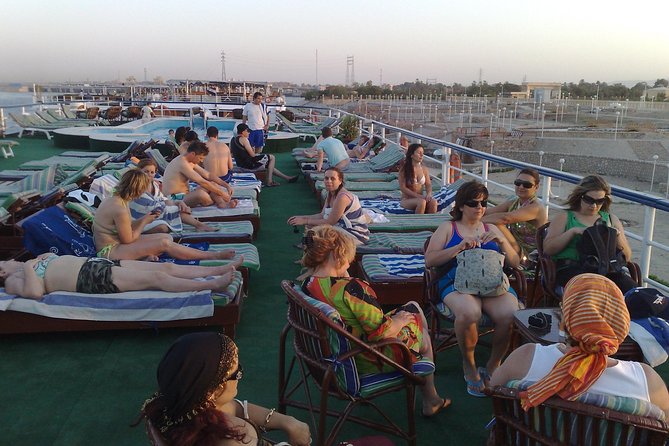
Also: the cruise itself is described by guests as beautiful, and the service attention is highlighted as taking care of needs. That’s exactly what you want from your “between cities” time—something that feels like a breather, not another chore.
Transfers, tickets, and the small comforts that add up
The program includes:
- Pickup offered
- All transfers
- Private tour (only your group)
- Mobile ticket option
Why these details matter: Cairo and the Nile route aren’t laid out like a European city. You’ll constantly be moving between areas, and ticket handling can become a time sink. When a guide and representative manage the flow, you lose less time to lines and confusion.
One of the praised elements from guest feedback is attention to comfort and organization, including the idea that guides work to handle ticket needs smoothly. In practice, that translates into a trip that feels coordinated rather than improvised.
Price reality check: what $1,200 buys you here
At $1,200 per person for an 8-day highlights package, you’re paying for:
- Guided visits to major monuments across Cairo and the Nile
- Hotel + cruise lodging for multiple nights
- Domestic flights listed as included (Cairo–Luxor / Aswan–Cairo)
- Transfers and representation at key moments
- Most admissions tied to the scheduled program
The best way to think about it is not only “is it cheap,” but “how much do you want to spend in time and stress?” If you DIY this route, you’ll spend effort matching transport, planning daily routes, and managing entry tickets. Even if you save some money, you often lose the smoothness.
The one obvious cost watch-out is Abu Simbel’s ticket (not included) and drinks on the cruise (not included). Those are normal “package boundaries,” not hidden surprises.
Who should book this tour, and who might want alternatives
This trip makes the most sense if you:
- Want Cairo and Luxor/Aswan highlights in a single trip
- Prefer a guide who explains as you walk (not just “stand here and take photos”)
- Like the social ease of a guide-led group experience, but with privacy since it’s only your party
- Appreciate a calm cruise base instead of constant hotel transfers
This might be less ideal if you:
- Want long free time with no structure (this itinerary is packed)
- Hate optional add-ons and want everything fully included (Abu Simbel is the big exception)
- Expect the cruise drinks to be included by default (the program says no drinks)
Booking tips so your days feel lighter
A few practical moves will help you get the best experience from this specific style of itinerary:
- Pack for hot sun: hats, sunscreen, and water are not optional.
- Plan for early starts and walking days. Even with guides, major sites require real foot time.
- If you’re considering Abu Simbel, decide early so you can plan your energy for the long day.
- Expect that drinks may mean extra spending on the cruise. Budget for it ahead of time.
Also, keep your expectations anchored: you’re visiting top monuments, but the comfort comes from the fact that everything else is handled for you.
Should you book Magnificat Tours for Egypt’s highlights?
If your goal is a smooth, guided route through Cairo’s signature sights plus a Nile cruise that gives you real monument time, this is a strong choice. The standout strengths are the attention to organization at arrival and during transfers, and the quality of guiding with a friendly, family-like group atmosphere—especially associated with guides such as Ahmed Ossman.
I’d book it if you’re happy with a structured itinerary and you’re open to Abu Simbel as an optional finale. I’d pause if you want fewer long days or you strongly prefer every single admission and expense to be included.
If you want an Egypt trip that feels planned for you—so you can focus on the monuments—this route fits that goal well.
FAQ
What’s included in the price?
The package includes 3–4 nights in a 5 Nile cruise with full board, 3–4 nights in a 4 hotel in Cairo, domestic flights (Cairo–Luxor and Aswan–Cairo), all transfers, an Egyptian high-qualified guide during visits, the including visits in the program, plus breakfast (7), lunch (5), and dinner (4).
Do I get airport pickup and help with arrival?
Yes. Your representative meets you inside Cairo International Airport to finish the visa and entrance protocol, then transfers you to your hotel.
Are tickets for the main sights included?
Most scheduled visits list admission tickets as included, and some are marked free in the itinerary outline. The one major exception noted is Abu Simbel, where the admission ticket is not included since the visit is optional.
How long is the tour and where does it start?
It’s an 8-day experience (7 nights). It starts at Cairo International Airport, with the start time listed as 9:30 am.
Is the Nile cruise part of the trip?
Yes. You stay on a 5* Nile cruise for 3–4 nights as your main base during the Luxor/Edfu/Kom Ombo/Aswan portion, with full board (without drinks).
Can I cancel for a full refund?
Yes. You can cancel up to 24 hours in advance for a full refund, but if you cancel less than 24 hours before the start time, the amount paid will not be refunded.