REVIEW · CAIRO
Tour to Giza Pyramids, Sakkara Pyramids, Memphis & Dahshur
Book on Viator →Operated by Ancient Egypt Tours · Bookable on Viator
Pyramids, plus a lot more in one day. This fast-moving route through Giza, Saqqara, Dahshur, and Memphis is a smart way to see the key pyramid sites without spending weeks in transit, with private expert guidance and convenient hotel pickup. I like that you get structured explanations at the big stops, and you also have room to look around at your own pace. The only real drawback: you’re on the go for about 8 hours, and monument entry fees are not included.
If you want a guided day that still lets you wander, this one fits. Bottled water comes along, and it’s set up as a private tour for your group only, so you’re not stuck waiting on strangers. Plan around monument tickets at the gate, and remember the tour needs good weather to run smoothly.
In This Review
- Key highlights and what they mean for you
- Why this Cairo pyramid day actually works
- Price and what you really pay for
- Hotel pickup, timing, and managing an 8-hour route
- Stop 1: Giza Plateau, Great Pyramid views, Sphinx, and the Valley Temple
- Stop 2: Saqqara’s Step Pyramid, Imhotep museum area, and early pyramid ideas
- Stop 3: Dahshur’s Red and Bent Pyramids and the “trial-and-error” stage
- Stop 4: Memphis and Mit Rahina Museum for the Old Kingdom context
- What the guide adds (and what you still do yourself)
- Practical tips that make this tour easier
- Who should book this private Giza, Saqqara, Dahshur, and Memphis tour?
- Should you book this tour or choose something else?
- FAQ
- How long is the tour?
- Is hotel pickup and drop-off included?
- Are monument entry fees included?
- Do I need a ticket for Saqqara?
- What sites does the tour include?
- Is the guide English speaking?
- Is this a private tour?
- What if the weather is bad?
Key highlights and what they mean for you
- Hotel pickup and return: fewer logistics headaches, especially if you’re juggling heat and traffic.
- Private Egyptologist-style guidance: helps you connect what you see on the plateau to who built it.
- Beyond Giza: Saqqara and Dahshur show pyramid ideas in earlier and more experimental stages.
- A day plan with breathing room: you get time on site rather than a pure drive-by.
- Good value for the route: one price for multiple major sites, with entry fees handled separately.
Why this Cairo pyramid day actually works
Cairo’s pyramid area can feel like a blur if you’re trying to do everything yourself. This tour solves that with a straightforward, one-day circuit: start at the iconic Giza Plateau, continue to Saqqara’s Step Pyramid, then head south to Dahshur, and finish with Memphis (near Mit Rahina) for the Old Kingdom context.
What makes it work is the balance between direction and freedom. Your guide is there to help you notice the right details. Then you’re not locked into a constant lecture. That matters when you’re standing in front of massive stone work where your brain needs time to catch up.
Also, the route is built for people who don’t have a lot of time. If you’re only in Cairo for a short stay, you still get a spread of pyramid styles, not just Khufu’s pyramid and a quick look at the Sphinx.
You can also read our reviews of more tours and experiences in Cairo.

Price and what you really pay for
The tour price is listed at $30.00 per person, which is extremely low for a full-day private pickup and a guide-led experience across multiple sites. The tradeoff is that monument entry fees are not included. So your total spend depends on how many tickets you purchase at each location.
There’s also a note about pickup areas. If you’re picked up from airport hotels, Nasr City, New Cairo, or 6 of October city, there’s an additional $10.00 per person pickup fee. It’s worth confirming what your pickup point counts as before you assume the base price is all-in.
One more detail I like: Saqqara is marked as having the admission ticket free in the tour information. That can help keep costs down compared to doing everything ticketed.
Hotel pickup, timing, and managing an 8-hour route
This is an 8-hour experience, give or take with driving and on-site time. That length is normal for “big site” days around Cairo, but you should still plan like it’s a marathon. You’ll want to dress for sun and bring a hat, since pyramid sites are exposed.
The included bottled water is a small but practical win. When you’re moving between sites, it’s easy to underestimate how quickly your water supply disappears.
Because it’s private, your group’s pace matters. If you want more time to wander around Giza and keep moving slowly elsewhere, you can sometimes do that. If you prefer a more efficient loop and fewer stops for photos, you’ll likely appreciate the structured flow.
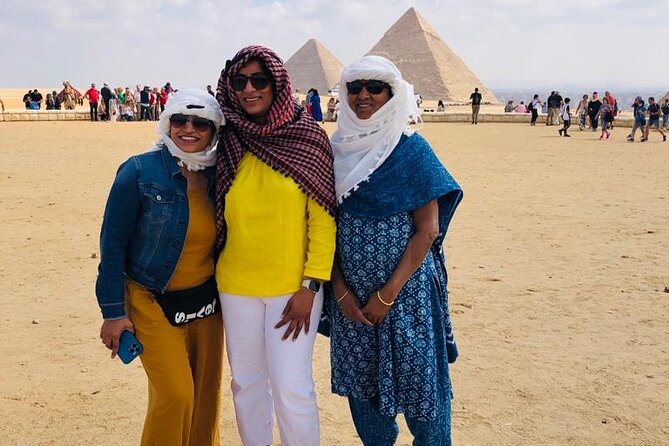
Stop 1: Giza Plateau, Great Pyramid views, Sphinx, and the Valley Temple
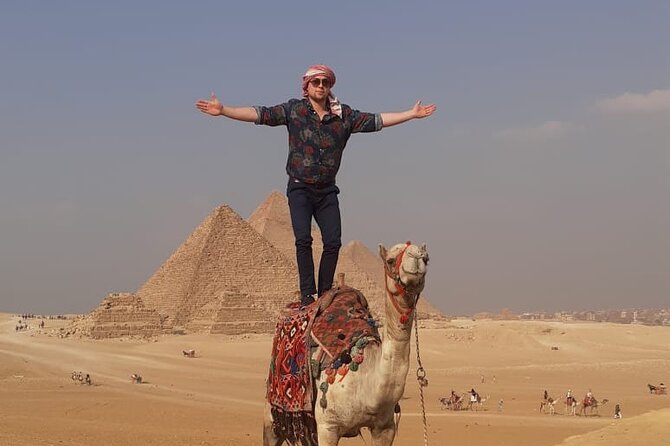
Giza is the obvious starting point for a reason. It’s the one place where the pyramid story is instantly visible in scale. You’ll see Khufu’s Great Pyramid as the headline site, then the surrounding smaller pyramids on the plateau.
The tour also takes you beyond a single pyramid. You’ll continue around Giza to see Khafre’s pyramid (described as the second-largest on the site) and Menkaure’s pyramid, along with the remnants of associated funeral temple areas. That spread is important. It’s easy to think of Giza as one monument. It’s really a whole royal complex with multiple pyramids and supporting structures.
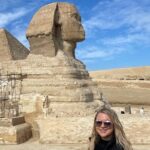
Then you move to the Great Sphinx. The guide framing you’re given matters here. The Sphinx is described as dating from the time of Chephren, and it’s presented as the head of a pharaoh with a lion’s body. After the Sphinx, you’ll visit the Valley Temple, connected to chefren.
One useful piece of context you’ll hear at the Valley Temple: it’s explained as having a role in preparing the king’s mummy before burial, including purification. That turns the Valley Temple from just another stone building into a clue about how the funerary process worked.
A consideration at Giza: entry tickets are not included, so you should expect to handle fees at the gate. Also, Giza can be crowded depending on the day, so if you’re sensitive to people and waiting, go into the day expecting some busier moments.
Stop 2: Saqqara’s Step Pyramid, Imhotep museum area, and early pyramid ideas
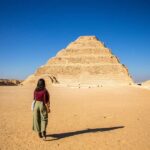
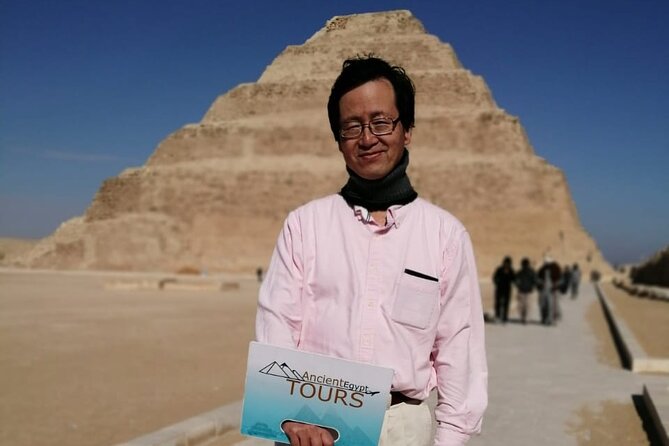
Saqqara is where the pyramid story becomes more interesting than you might expect. The centerpiece is the Step Pyramid of Djoser, described as the world’s oldest major stone structure, built for King Djoser in the 3rd Dynasty (around 2630 BC).
I like this stop because it gives you a sense of “how pyramids evolved.” You’re no longer only looking at polished, fully formed pyramids. You’re seeing the earlier stage: a step form that shows experimentation and ambition in stone.
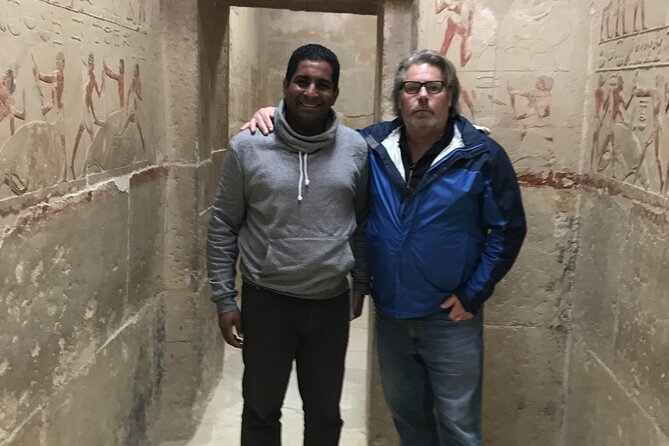
You’ll also have time for related areas, including the museum of Imhotep. Imhotep is presented here as part of what you’ll see, and that helps connect the architecture to the broader culture of builders and thinkers in that era. In the same area, the tour includes the tomb of a high official and additional pyramids tied to kings such as Titi and Unas.
The tour lists about 2 hours for the Saqqara portion, and it also notes the admission ticket is free in the tour details. Even if you end up paying for some extras on your own, this is still one of the most cost-friendly stops in the day.
One practical note: Saqqara is a different feel from Giza. You’re still in pyramid country, but the vibe shifts. It can feel less like a single famous landmark and more like an extended site where you’ll want time to look slowly.

Stop 3: Dahshur’s Red and Bent Pyramids and the “trial-and-error” stage
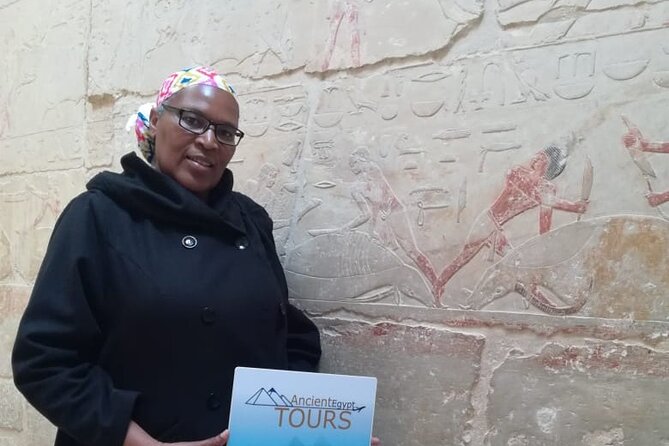
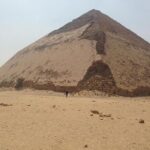
Dahshur is a short drive away from Cairo—about 40 km—so this is your chance to see a royal necropolis that feels removed from the biggest tourist gravity of Giza. The focus is the Red Pyramid and the Bent Pyramid, both tied to King Snefru.
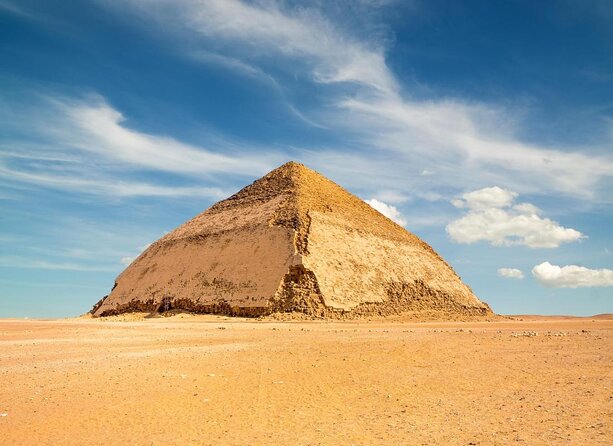
This stop is valuable because it shows another stage of pyramid building. The Bent Pyramid, in particular, is presented as a major signature structure at Dahshur, and seeing it alongside the Red Pyramid helps you notice how form and design choices changed. You’re not just collecting monuments. You’re watching ideas develop across time.
The Dahshur portion is listed at around 1 hour, and entry fees are not included. If you’re the type who wants time for close views and fewer photo stops, you’ll probably want to keep expectations realistic for this short visit. It’s enough to get the key shapes and a sense of place, but not so long that you’ll fully roam every corner.
Stop 4: Memphis and Mit Rahina Museum for the Old Kingdom context
After the pyramid sites, the day takes a thoughtful turn to Memphis. This is the place many people skip when they only think “pyramids = Egypt.” Memphis is different. It’s about the city that made pyramid building make sense.
You’ll visit the Mit Rahina Museum area connected to Memphis, founded by King Menes and described as the capital of Old Egypt for over 3000 years. You’ll hear about the city’s peak under the 6th Dynasty and its role in worship of Ptah, the god of creation.
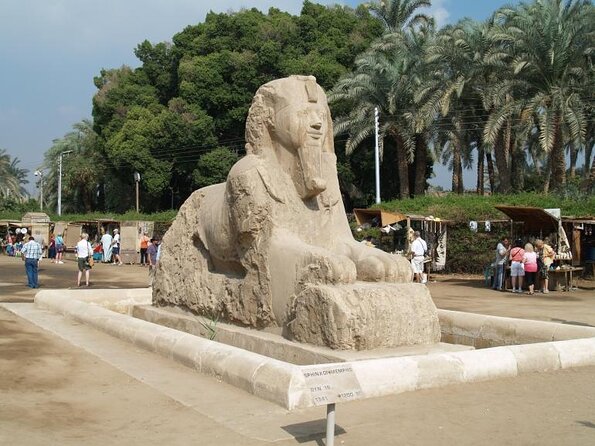
A standout detail here is the alabaster sphinx that guards the Temple of Ptah. In the tour explanation, it’s framed as a memorial to Memphis’s former power and prestige. That turns the sphinx from a random figure into a signal about how the city wanted to be remembered.
The Memphis triad is also included in the presentation: Ptah, his consort Sekhmet, and their son Nefertem. Hearing those names while you’re at a Memphis-linked site helps you understand that Egyptian religion wasn’t a separate topic from architecture. It was part of how places were organized and honored.
The tour lists about 1 hour here, and admission is not included. If you’re tired after the morning pyramid intensity, this stop is a good kind of different. It’s more interpretive and less about trying to visually decode giant stone geometry at speed.
What the guide adds (and what you still do yourself)
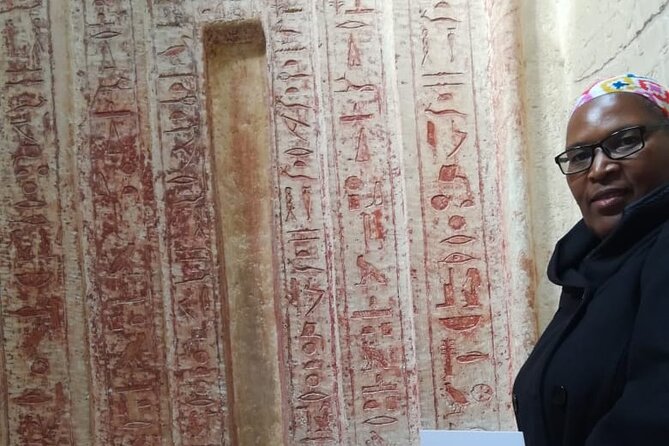
The biggest praise in the feedback is about service quality and explanation quality. One guide name that comes up is George, described as an archaeologist who did a nice job explaining things for a family group. That’s the sweet spot for a tour like this: a guide who can translate stonework into human stories.
One review also makes it clear that the experience can feel like a driving service with guidance rather than a constant guided walk-through. That can be a positive. When you’re touring multiple huge outdoor sites, a long lecture can get tiring fast. Having a mix—guided points plus time to explore—keeps the day from feeling forced.
So what should you expect? You’ll likely get the essential framing at each stop (what you’re looking at and why it matters). Then you can spend time on the parts that catch your eye.
Practical tips that make this tour easier
Here are the things I’d prioritize if you want the day to feel smooth, not frantic:
1) Bring cash or be ready to pay ticket fees on-site.
Entry fees are optional and not included, so plan for separate costs for the monuments you choose to enter.
2) Pack for heat and sun.
Your day spans multiple outdoor complexes. The tour includes bottled water, but it’s still wise to bring sun protection and comfortable footwear.
3) Use the tour structure to build a mental timeline.
The route naturally moves from Giza to an earlier pyramid form at Saqqara, then to Dahshur’s experimental stage, and finally to Memphis as the cultural backdrop. If you keep that timeline in your head, you’ll get more meaning from what you see.
4) Don’t rush photos.
On a day like this, photos can turn into a stress competition. Instead, take a few key shots at each stop and spend the rest of your time looking closely and letting the guide’s points land.
5) Know what you’re paying for: guidance plus access planning.
You’re paying for expert help, pickup, and a route that connects the sites. You’re not paying for every entry ticket. That’s usually a fair deal, but it’s important to know up front so you can budget.
Who should book this private Giza, Saqqara, Dahshur, and Memphis tour?
This tour is a strong fit if you:
- have limited time in Cairo and want several major sites in one day
- enjoy understanding what you’re seeing, not just checking boxes
- want private pickup and a group plan that reduces logistics stress
- prefer a guided day that still allows free time for your own exploring
It may not be the best fit if you want a slow, deep museum-style experience. With multiple locations and an overall 8-hour duration, you’ll have to accept some time limits per stop. Dahshur and Memphis are especially short compared with how long some people like to linger.
Should you book this tour or choose something else?
If you’re weighing options, I’d book this when your goal is simple: see the big pyramid sites plus the context cities and pyramid stages in one efficient day. The value is strong given the low base price, private pickup, and the guide support that helps the monuments click into a bigger story.
Skip it or consider a different pace if you hate the idea of handling separate entry fees and want extra time at fewer sites. In other words: this is the right choice for people who want range and momentum, not for people who want one place to be the whole day.
Either way, if you come prepared—especially for sun and ticket fees—you’ll leave with a clearer picture of how Egyptian pyramid building and royal culture connected across sites.
FAQ
How long is the tour?
The tour duration is listed as about 8 hours.
Is hotel pickup and drop-off included?
Yes. Pickup from your hotel (and return) is included, and airport pickup is also offered.
Are monument entry fees included?
No. Entry fees are not included and are listed as optional.
Do I need a ticket for Saqqara?
In the tour details, the Saqqara stop is marked as having an admission ticket free.
What sites does the tour include?
The tour includes the Pyramids of Giza (including the Sphinx and Valley Temple), Saqqara (Step Pyramid of Djoser and related areas), Dahshur (Red Pyramid and Bent Pyramid), and Memphis near Mit Rahina Museum.
Is the guide English speaking?
Yes. The tour includes an English speaking expert guide.
Is this a private tour?
Yes. It’s described as private, so only your group participates.
What if the weather is bad?
The tour requires good weather. If it’s canceled due to poor weather, you’ll be offered a different date or a full refund.