REVIEW · CAIRO
Top Day Tours In Luxor From Cairo By Flight
Book on Viator →Operated by EMO TOURS EGYPT · Bookable on Viator
Luxor in one day starts way too early. This private flight day trip from Cairo takes the hardest part off your plate: round-trip flights plus hotel pickup, transfers, and a guide who keeps the story straight. You’ll be met with a name sign in Luxor, then moved by private A/C vehicle to the West and East Banks so you can focus on tombs and temples instead of timetables.
I also love that the plan hits the major stops people travel for: Valley of the Kings, Hatshepsut at Deir el Bahari, and Karnak and Luxor Temple on the East Bank, with lunch and bottled water included. Guide names like Salwa, Hoda, and Mustafa come up for being patient and easy to work with. The main catch is the pace: it’s a 15-hour sprint, and some entrance fees (like King Tutankhamen’s tomb) can cost extra depending on your option.
In This Review
- Key points worth clocking before you go
- Why this Cairo-to-Luxor day trip feels “worth it”
- The tight schedule: 3:30 am start and what “private” actually means
- Valley of the Kings: tomb highlights and the King Tutankhamen cost question
- The practical drawback: King Tutankhamen’s tomb may cost extra
- How to handle the realities on site
- Hatshepsut at Deir el Bahari: why this temple is more than a photo stop
- What to expect on the ground
- Colossi of Memnon: a short stop that adds depth
- Karnak Temple and Luxor Temple: the East Bank payoff
- Karnak Temple: worship at scale
- Luxor Temple: a timeline written in construction
- Lunch, bottled water, and what’s actually covered
- Entrance fees: mostly included, but read the fine print
- Tipping and personal expenses
- The guide experience: how names like Salwa, Hoda, and Mustafa shape the day
- Price and logistics: what you’re paying for at $320
- Small risks to plan for (because it’s a flight day)
- Should you book this Luxor day trip from Cairo by flight?
- FAQ
- What time does the tour start?
- How long is the day trip?
- Is lunch included?
- Are entrance fees included?
- Is this tour private?
- What happens if I cancel or if the weather is bad?
Key points worth clocking before you go
- 3:30 am pickup from your Cairo hotel so you can tour the West Bank early
- Return flights in economy class and domestic transfers handled end-to-end
- Valley of the Kings tomb choices with the big famous names built into the route
- Hatshepsut’s temple at Deir el Bahari with context on Egypt’s rare female pharaoh
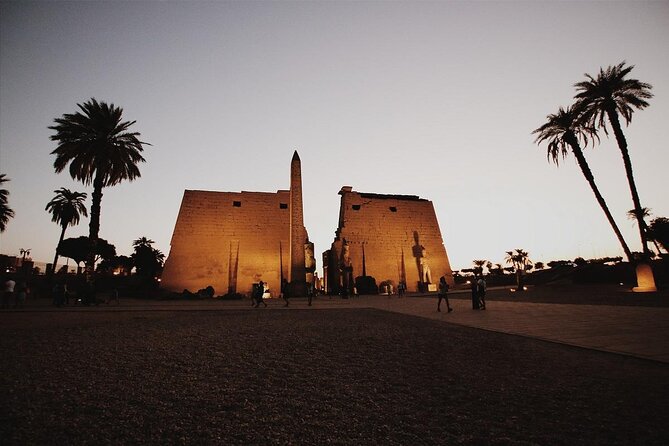
- Karnak plus Luxor Temple on the East Bank in one efficient day
- Extra costs to check: King Tutankhamen’s Tomb entrance and tipping
Why this Cairo-to-Luxor day trip feels “worth it”
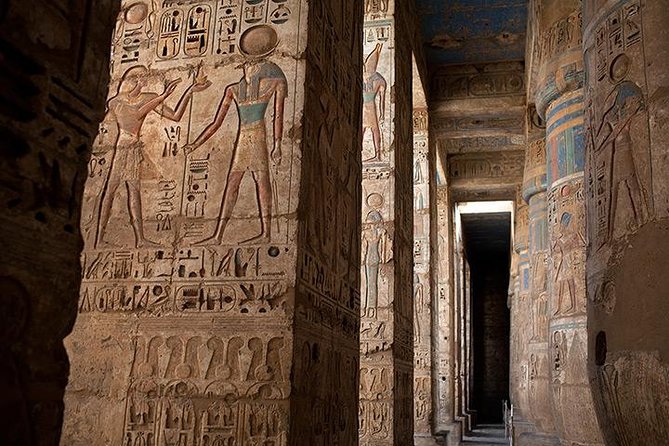
If you’re short on time in Egypt, Luxor can feel like a tease. The good news is that this itinerary is built for speed without turning into chaos. You get a full Luxor day experience with a guide, lunch, and tickets for the main sights—while the logistics (flights, transfers, and timing) are handled for you.
Where this tour really wins is simple: it turns Luxor from a planning project into a checklist you can trust. You don’t have to stitch together flight times, airport transfers, and a workable sightseeing order while you’re already tired from travel.
The other big factor is that the day is structured around what matters most at each site: tombs first on the West Bank, then the big temples on the East Bank, all in one tight rhythm.
You can also read our reviews of more tours and experiences in Cairo.



The tight schedule: 3:30 am start and what “private” actually means
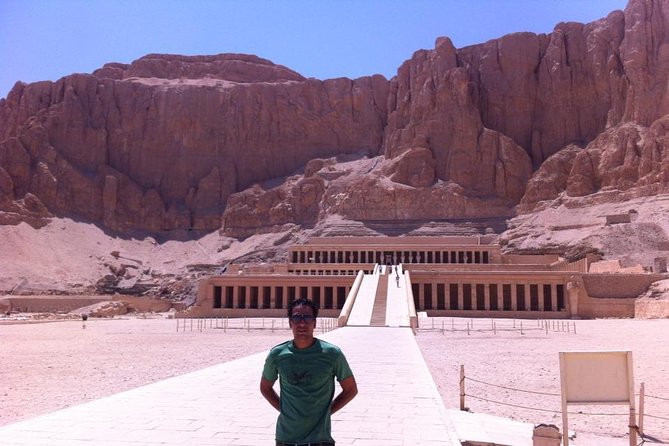
The day begins at 3:30 am with pickup from your Cairo hotel by a representative. From there, you’re transferred to the domestic airport for your flight to Luxor. When you arrive, someone meets you with a sign showing your name, and you move on to the West Bank by private A/C vehicle.
Because it’s private, your group runs the schedule. You won’t be squeezed into someone else’s plan. That’s a big deal with Luxor because the sites are visually intense and the day can feel long. A calm, on-your-time guide approach makes the difference between seeing things and remembering them.
One thing to keep in mind: this is a long day. With flights and travel time built in, you’re effectively commuting all day, not just sightseeing. If you’re the type who needs downtime, you’ll want to plan for a slow evening back in Cairo.
Valley of the Kings: tomb highlights and the King Tutankhamen cost question
This is where the itinerary starts to feel unreal—in the best way. After the morning flight and transfer, you spend about 5 hours at the Valley of the Kings on the West Bank.
The route focuses on the tombs people still talk about for a reason. You’ll be in the area of major burials such as:
- Tutmosis I
- Tutmosis III
- Tut-Ankh-Amon (King Tutankhamen)
- Ramssess VI
- Merenptah
- Amonhotep II
A guide gives background so the tombs don’t just look like random chambers. You’ll get the burial logic and the meaning behind the grandeur—how these places were designed for the afterlife, and why the craftsmanship matters.
The practical drawback: King Tutankhamen’s tomb may cost extra
Entrance fees at the Valley of the Kings are partly included, but King Tutankhamen’s Tomb entrance is not included (and entrance fees can vary depending on the tour option you choose). So if King Tut is a must-see for you, check ahead so you’re not surprised on the day.
How to handle the realities on site
Valley of the Kings time is usually spent moving between tombs plus waiting your turn. You’ll likely be walking and climbing a bit. If you’re sensitive to crowds or steps, go into it with a “slow and steady” mindset. The early timing helps, though. Starting in the morning often means better comfort than a midday slog.


Hatshepsut at Deir el Bahari: why this temple is more than a photo stop
Next comes the Temple of Hatshepsut at Deir el Bahari, also known as El Dir El Bahari. You’ll have about 2 hours here, with admission included.
This stop matters because it gives you a rare perspective on ancient Egypt. Hatshepsut was the daughter of Thutmosis I and ruled for about 20 years during the 18th Dynasty, roughly 1490–1469 B.C. She’s also noted as the only pharaonic woman who reigned ancient Egypt.
A guide’s role is especially useful here. The temple’s location and design make more sense when you understand the political and religious purpose behind it. This isn’t just “pretty ruins on a cliff.” It’s architecture tied to authority.
What to expect on the ground
You’ll spend time taking in the terraces and temple views from different angles, but you’ll also want to pause for the story. This is a place where a quick explanation can transform your understanding of what you’re looking at.
If you love context and symbolism, you’ll enjoy this stop more than a pure “walk and snap pictures” style of sightseeing.
Colossi of Memnon: a short stop that adds depth
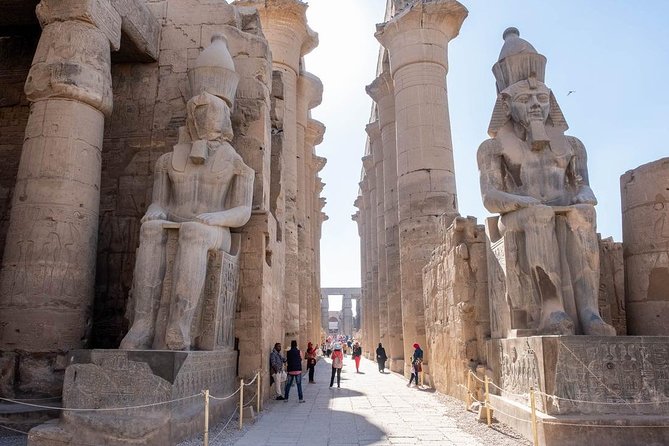
After Hatshepsut, the day includes the Colossi of Memnon. You’ll have about 30 minutes, with admission included.
These are the remaining mortuary temple statues associated with Amenhotep III. The stop can feel quick, but that’s not a flaw—it’s an intentional pace adjustment between bigger temple areas.
What you’ll get from the guide here is usually the value: tying these statues back to the larger mortuary temple complex and explaining why these two giant figures became famous far beyond their original purpose.
If you prefer longer time at each site, you might wish this were extended. But if you’re doing multiple major sites in one day, short stops can actually keep the whole schedule from feeling miserable.
Karnak Temple and Luxor Temple: the East Bank payoff
Later you cross to the East Bank, where the day becomes more temple-heavy.
Karnak Temple: worship at scale
You’ll spend about 1 hour at Karnak Temple. Admission is included.
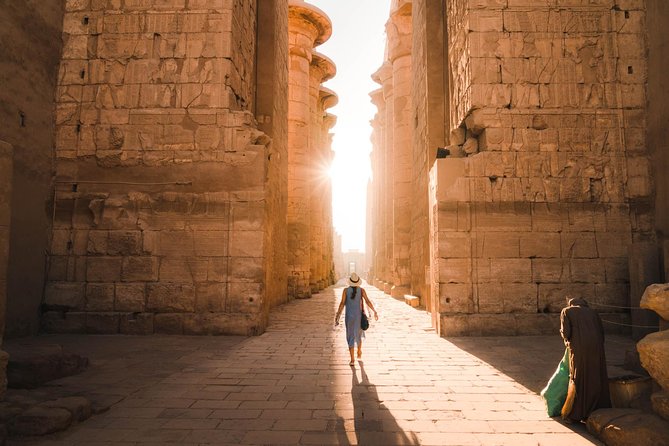
Karnak is described as the greatest example of worship in the history of Egypt, dedicated to the god Amon, along with his wife Mut and their son Khonsu. That divine family context is more than trivia—it helps you see why the complex is so expansive and why different parts feel like they have different “jobs” in the religious ecosystem.
With only about an hour, you’ll want your guide to point out what matters most. This is the part where a good guide earns their keep: they help you focus on the highlights rather than getting lost in stone.
Luxor Temple: a timeline written in construction
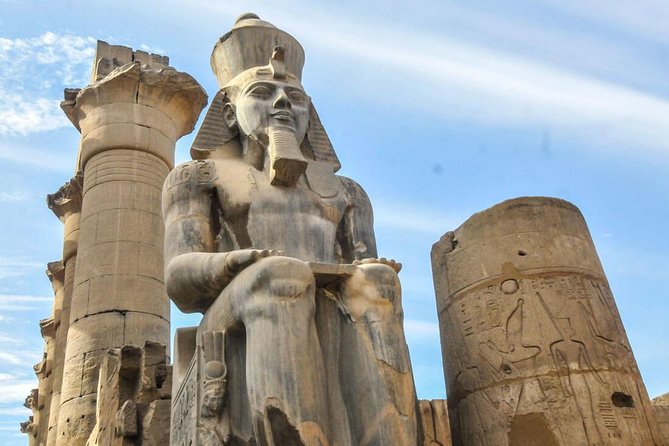
You finish the day with Luxor Temple, built by Amunhotep III in the 18th Dynasty and completed by Ramses II during the 19th Dynasty. The time allocation for this segment is around 5 hours in the itinerary flow, but remember it also connects to your flight back to Cairo later at night.
Luxor Temple is the kind of place where you can feel two eras in the same area. The guide’s background helps you notice how the temple story evolves across reigns.
By the time the day closes, you’re essentially moving from ancient ritual spaces into a modern logistics sprint—transfer to the airport and fly back. Plan to keep your energy for the temple moment, not the travel moment.
Lunch, bottled water, and what’s actually covered
This tour includes:
- Lunch
- Tour guide
- Hotel pickup and drop-off
- Round-trip Cairo/Luxor/Cairo by economy-class flights
- Bottled water
That’s a lot of value bundled in. Egypt days can turn expensive fast when you’re paying separately for guide time, transport, entry fees, and food. Here, you’re paying one price and getting a full day structure.
Entrance fees: mostly included, but read the fine print
The itinerary includes admission tickets for key stops, but it’s explicit that King Tutankhamen’s Tomb at the Valley of the Kings is not included. It also notes that entrance fees depend on the tour options you select.
So if you want a predictable budget, confirm exactly what your option covers before you go.
Tipping and personal expenses
Tipping and personal items aren’t included. That’s normal in Egypt, but it’s still good to budget a little so you’re not thinking about money while you’re trying to enjoy the temples.
The guide experience: how names like Salwa, Hoda, and Mustafa shape the day
The quality of the day tour hinges on the guide. Here, guide names like Salwa, Hoda, and Mustafa show up for a reason: they’re described as patient, easy going, and strong on information.
In practice, that translates into two things you’ll feel during the day:
- You’re not just walking between sites—you’re getting the meaning of what you see.
- The pace stays manageable. When someone makes sure you always have water and keeps the group organized, the experience feels smoother.
A private tour can still feel rushed if the guide doesn’t manage time well. The best part is when the guide gives you just enough context to make each stop memorable, without turning everything into a lecture.
Price and logistics: what you’re paying for at $320
At $320 per person, this tour isn’t cheap. But compare it to the alternative: organizing flights, airport transfers, a guide, and a workable route through Luxor while you’re dealing with a long travel day.
You’re paying for:
- flight planning and booking support (round-trip economy flights)
- door-to-door hotel pickup and drop-off
- internal Luxor transfers by private vehicle
- a guide for multiple major sites
- lunch and bottled water
If you’re the kind of traveler who’d rather pay to avoid mistakes, the value makes sense. If you love DIY planning and already know how you’ll get from Cairo airports to Luxor transfers, you might be able to assemble a cheaper version. But you’ll do it at the cost of time and stress.
The “real” value is that the itinerary is built to function even if you’re short on days. Luxor in one day is not about comfort. It’s about getting the highlights done with minimal friction.
Small risks to plan for (because it’s a flight day)
This experience requires good weather. If it’s canceled due to poor weather, you’ll be offered a different date or a full refund.
The other practical risk is the schedule itself. This day is timed around a very early start and a flight back at night. If anything slows you down—traffic to the airport, a line at security, or late departures—your sightseeing time can feel tighter.
That’s not unique to this tour. It’s just what happens when your plan depends on domestic flights.
If you can handle a long, early day and you want maximum Luxor payoff per hour, you’re in the right mindset.
Should you book this Luxor day trip from Cairo by flight?
I’d book it if:
- you only have a limited window in Egypt and really want Luxor’s top sights in one day
- you’d rather pay for guided, timed logistics than build a DIY schedule
- you want a private experience with hotel pickup, flights, transfers, lunch, and water handled
I’d hesitate if:
- you need a relaxed pace (this is a long sprint)
- you’re very budget-focused and don’t want to deal with extra entrance costs like King Tutankhamen’s Tomb depending on your option
- you dislike early starts and long travel days
If you want a practical one-day Luxor hit with minimal hassle, this is one of the more workable ways to do it. Just go in expecting an early start, strong guidance, and a lot of awe packed into a single day.
FAQ
What time does the tour start?
The tour starts at 3:30 am with pickup from your Cairo hotel.
How long is the day trip?
The duration is listed as about 15 hours.
Is lunch included?
Yes. Lunch is included, along with bottled water.
Are entrance fees included?
Admission tickets for stops are included, but entrance fees for King Tutankhamen’s Tomb at the Valley of the Kings are not included. Entrance fees can also depend on the tour options you choose.
Is this tour private?
Yes. It’s a private tour/activity, and only your group participates.
What happens if I cancel or if the weather is bad?
The experience is non-refundable and cannot be changed for any reason. If it’s canceled due to poor weather, you’ll be offered a different date or a full refund.