REVIEW · HURGHADA
small group trip to Cairo from Hurghada
Book on Viator →Operated by Book Tour Egypt · Bookable on Viator
Cairo in one day is a marathon. You’ll start before dawn, ride into Cairo with a guided small-group plan, and spend your day on Egypt’s biggest icons: the Egyptian Museum, the Giza pyramids, and the Great Sphinx.
Two things I really like: the Egyptian Museum and its Tutankhamun treasures, and the fact this is run as a max 10 travelers small group with a guide who answers your questions as you go. Names like Mario, Behary, Ahmed, Mokhtar, and Fhame show up often, and the common thread is clear explanations and keeping things moving so you don’t get stuck in confusion.
One consideration: this is a very long day (about 19 to 22 hours). Expect heat, early pickup, long road time, and some of your downtime getting used for papyrus/perfume-type craft stops while the convoy system does its thing.
In This Review
- Key highlights to know before you go
- From Hurghada to Cairo: the convoy drive reality
- Egyptian Museum: Tutankhamun’s golden coffin and how your time gets used
- Giza pyramids and the Great Sphinx: the core of the day
- Optional Nile boat trip and other extras: decide what fits your style
- Papyrus museum and essential oil factory: the reason for the craft stops
- Lunch, water, and the pacing of a 19 to 22-hour schedule
- Price and value check: about $52.34 per person
- Who this Cairo day trip suits best
- Should you book this Cairo day trip from Hurghada?
- FAQ
- How long is the Cairo trip from Hurghada?
- What time do you get picked up in Hurghada?
- Is this a small group tour?
- What’s included in the price?
- Are entrance tickets included?
- Is the Nile boat trip included?
- Can I ride a camel or horse near the pyramids?
- Why do you sometimes stop at papyrus and essential oil places?
- What about cancellations or bad weather?
Key highlights to know before you go
- Egyptian Museum focus: Tutankhamun’s golden coffin is a major draw.
- Small group feel: up to 10 travelers, so questions and pacing tend to be better.
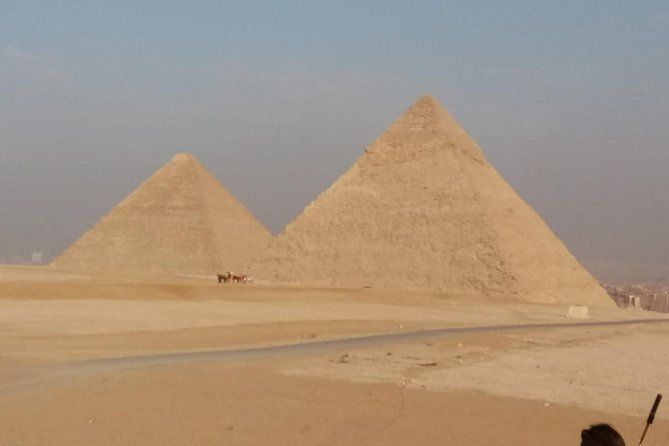
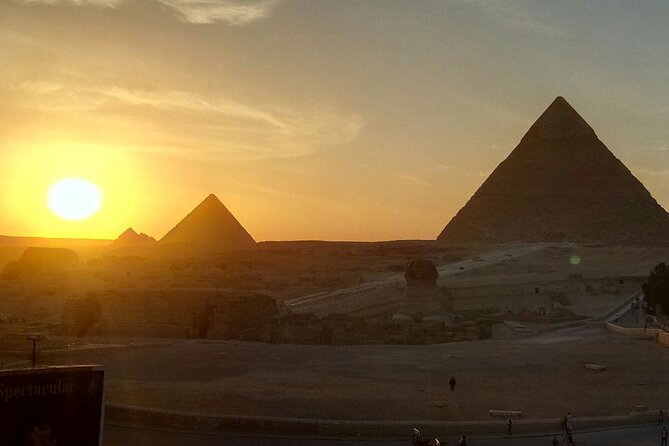
- Giza done right: Cheops, Chephren, Mykerinos pyramids plus the Great Sphinx and nearby temple area.
- Convoy timing matters: the police convoy security system can lengthen the road day.
- Optional add-ons: Nile boat trip (fee) and camel or horse rides (voluntary, booked separately).
- Extra stops while waiting: papyrus museum demonstrations and essential oil factory visits may appear.
From Hurghada to Cairo: the convoy drive reality
If you’re picturing a quick day trip, reset your expectations fast. This is built around an early pickup from Hurghada (around 1:00 a.m.) and a long, round-trip rhythm. The one-way drive can take 6 to 8 hours, largely because vehicles travel with police convoy security.
Here’s what that means in practice. Your group leaves Hurghada early, you reach Cairo with the guide, then you’re on-site for major sights. After the museum and Giza, you’re not just waiting for a normal return bus. You’re timing your departure with the convoy schedule out of Cairo later that day. That waiting time is exactly where some operators insert craft-style stops.
A couple reviews point out two different “feels” for the road day: sometimes the convoy wait is shorter than it sounds, and sometimes there can be an unexpected pause at a service point with little communication. Neither cancels your day, but both are reminders to plan like you’re doing an overnight-ish schedule. Bring your patience, not just your camera.
Good news: transfers are described as modern, air-conditioned vehicles, and you’ll have water provided in Cairo (details below). Also, several people preferred the comfort of this setup over a huge bus, mainly because small-group vehicles can feel less chaotic.
You can also read our reviews of more tours and experiences in Hurghada.


Egyptian Museum: Tutankhamun’s golden coffin and how your time gets used
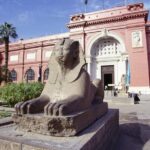
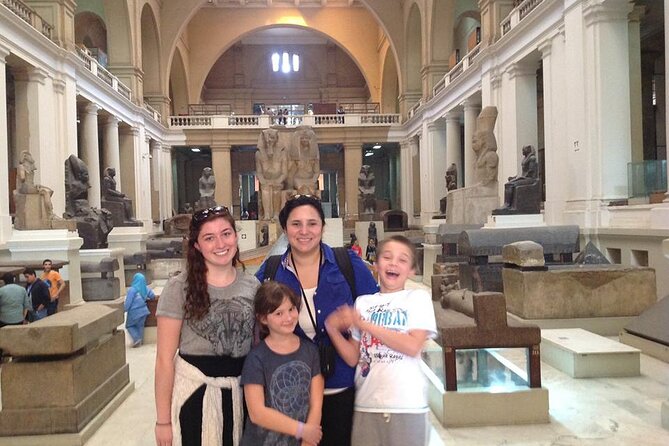
The Egyptian Museum is the anchor for the Cairo portion, and it’s the kind of place where you can lose an entire vacation if you let yourself. This tour keeps it focused: you’ll go in for a guided visit, with enough structure that you’re not just wandering.
The headline highlight is Tutankhamun’s golden coffin, one of the museum’s most famous objects. If you’ve seen pictures online, seeing it in person changes the scale and the “wow” factor. You’re also dealing with a museum that holds over 120,000 exhibits, so your best strategy is not to aim to see everything. Aim to see the museum’s most iconic thread—kings, power, and what Egypt chose to preserve.
A balanced note: museum time is always a negotiation on a tour like this. There are mandatory stops later in the day (papyrus and essential oil are common additions), and some people felt they didn’t get enough time for souvenir browsing. If you want books, replicas, or heavy shopping, you’ll want to be intentional with your time during the museum portion.
Guide quality matters here, and that’s where this tour tends to shine. Multiple guides associated with this program—Mario, Behary, Ahmed, Mokhtar, and Fhame—are praised for answering questions and giving context while you’re standing in front of the real pieces. That context is the difference between “I saw a lot of stuff” and “I understood what I was seeing.”
Giza pyramids and the Great Sphinx: the core of the day
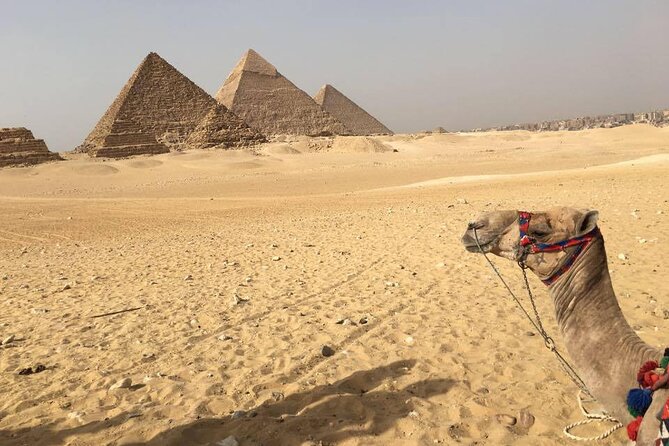
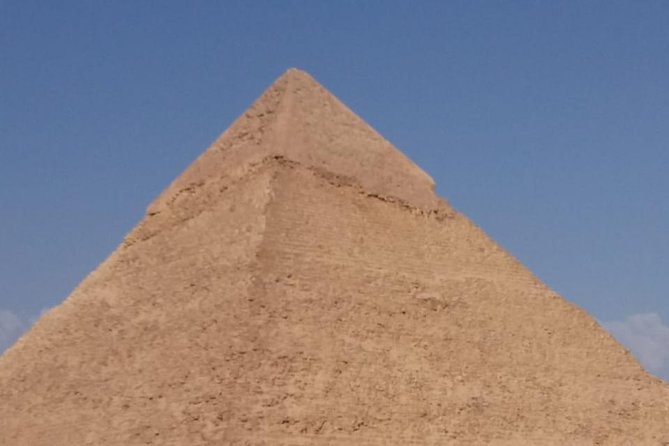
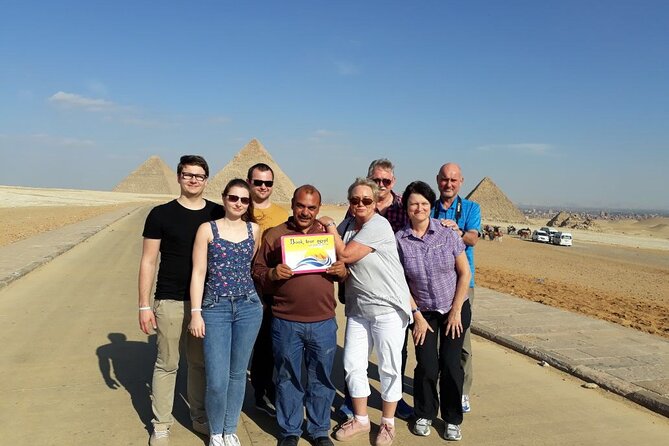
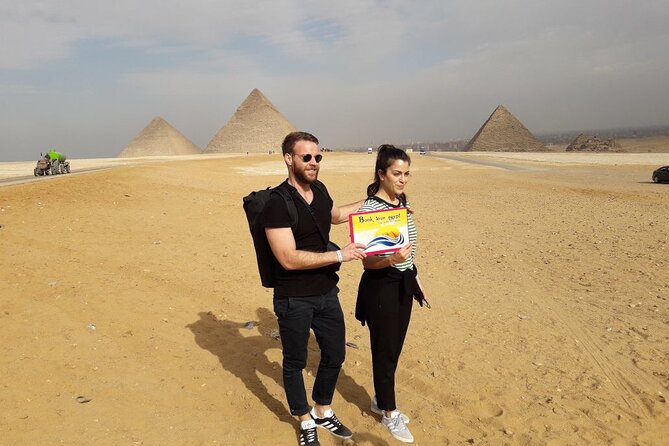
Then you hit the obvious reason people book this: Giza Plateau. You’ll visit three main pyramids—Cheops (Khufu), Chephren (Khafre), and Mykerinos (Menkaure)—and then move on to the Great Sphinx and its nearby temple area.
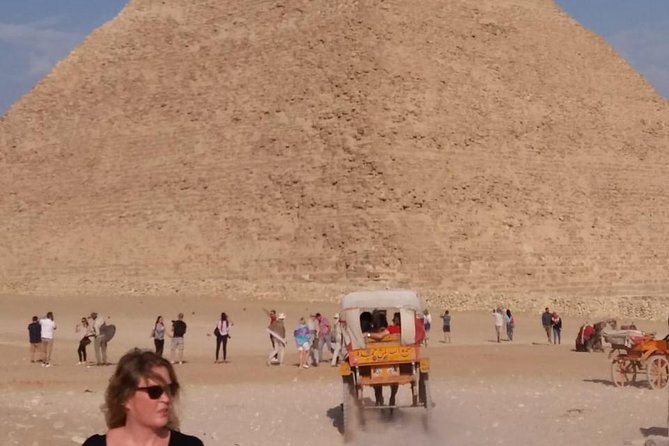
The pyramids here aren’t just impressive because they’re old. They’re impressive because they’re still engineered into your everyday sense of size. People describe that “sheer scale” feeling more than anything else. You can walk around the plateau area, and there are also optional ways to ride near the pyramids (camel or horse), though those come with ethical and comfort considerations—more on that later.
What you’ll likely notice on this tour is the pacing. You get guided route planning, then time on your own to look, photos, and quick souvenir moments if there’s time. One recurring theme in feedback is that the schedule is tight at Giza, especially if you’re trying to get the best photo angles. You may have limited free time on each stop, and you’re expected to move with the group.
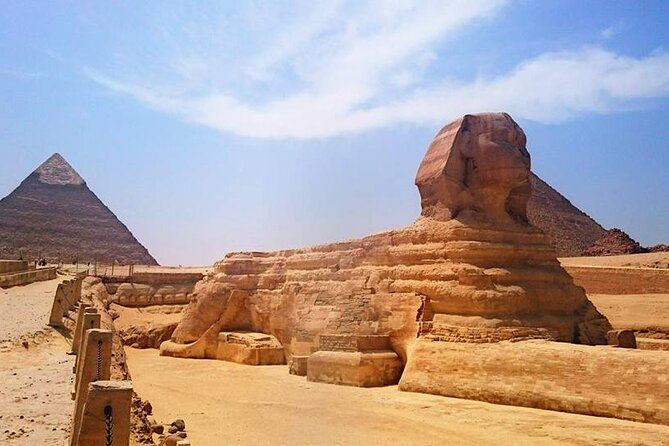
The Great Sphinx experience is generally straightforward: you’ll see the human head on a lion’s body, and you’ll get the background explanation that links the sphinx to the limestone hill quarrying connected with pyramid construction. That historical framing makes it easier to appreciate what you’re seeing instead of treating it like a single statue photo.
Also, if you’re sensitive to crowds and street pressure, a strong guide helps. Several people mentioned that the guide reduced hassle from persistent vendors around busy areas, which is a real part of the Giza experience.
Optional Nile boat trip and other extras: decide what fits your style
A Nile boat trip is listed as for a fee. So don’t assume it’s automatically included. If you do add it, treat it as a short break from walking and museum time, not a full “Nile cruise” day.
In some accounts of this kind of stop, the boat segment is described as quick and view-limited by air haze/smog and the industrial look of the water area. That doesn’t mean it’s worthless—it just means it’s not the dramatic postcard stretch of the Nile most people imagine. I’d do it only if you like having at least one water moment in your schedule and you’re fine with a brief, utilitarian ride.
Camel and horse rides near the pyramids are also described as voluntary and bookable with local Bedouins. This is one of the few areas where I’d urge you to be careful with your personal comfort and ethics. Some people strongly recommend skipping the rides, citing treatment concerns they witnessed. If you’re even slightly uneasy, skip it and spend that time walking and photographing the plateau the way you want.
Papyrus museum and essential oil factory: the reason for the craft stops
One of the most confusing parts for first-timers is why a Cairo day trip includes craft stops. The practical answer is timing: since the convoy departure out of Cairo happens later, the buses and cars have to wait. Those waiting windows get used.
So you may visit a Papyrus Museum and an Essential Oil Factory. The focus is on ancient Egyptian technique demos—how papyrus is produced and how essences/oils are made. That’s not the same category as “I want to climb a pyramid,” but it does add texture. It’s a look at everyday production methods rather than royal monuments.
The value depends on what you want. If you love hands-on demonstrations and want to understand how ancient Egyptians made practical goods, these stops can be interesting. If you’re mainly there for maximum time at the museum and Giza, you might feel these segments steal time from the sites that made you book in the first place.
A practical tip: if you see the group being moved toward these stops, don’t fight the pace. Go in with a mindset of “short learning break,” and you’ll get more out of it than if you’re silently counting minutes the whole time.





Lunch, water, and the pacing of a 19 to 22-hour schedule
Food and hydration get handled in a fairly basic way on this kind of day. Lunch is included, and water is provided in the vehicle in Cairo. That’s helpful, but it’s not the same as a full service setup for the entire day.
Because this is an all-day marathon—pickup near 1:00 a.m. and return around 11 p.m.—your biggest enemy is fatigue. Reviews mention being low energy after being up in the Cairo heat, and that makes sense. Your best move is to treat this like a long transit day: eat what’s offered, drink when you can, and plan to be flexible.
Also, pay attention to comfort. Some feedback calls out vehicle comfort variations (a big bus vs smaller vehicle setup). Even if everything is air-conditioned, you’ll still be sitting a lot. If you dislike long rides, you might want to bring small comfort items like a travel pillow or something for your neck. Not glamorous, but it helps you enjoy the sights once you arrive.
The pacing style is guide-dependent. When the guide is strong, they keep you on track while still offering enough explanation so each monument lands with meaning. When the pacing feels strict, you’ll want to prioritize what matters most to you—museum highlights and Giza angles—so you’re not chasing extras.
Price and value check: about $52.34 per person
At roughly $52.34 per person, this trip is priced to be accessible. The value isn’t just the attractions—it’s the logistics bundle: transfers with modern air-conditioned vehicles, a guided Cairo plan, lunch, and (when selected) entrance fees to the attractions listed.
Still, do a quick mental audit before you book:
- If entrance fees are included depends on the option selected. If not, you may pay separately once on site.
- The Nile boat trip is not included and costs extra.
- Camel/horse rides are optional and booked separately.
- Papyrus and essential oil stops can add time, and they’re not everyone’s favorite use of hours.
Where this becomes great value is if you want the big-ticket sights—museum + pyramids + Sphinx—without the hassle of arranging transport and guides yourself from Hurghada. That’s the main win.
Where the value can feel weaker is if you’re the type who wants long, slow exploration of the museum and Giza, plus lots of shopping time. With a day this long, you’re trading depth for coverage.
Who this Cairo day trip suits best
This works best for you if:
- You want a high-impact first visit to Cairo sights in one trip.
- You like structure: get picked up, follow a guided route, and see the essential monuments.
- You’re comfortable with long travel time and early mornings.
It might feel like hard work if:
- You’re looking for a relaxed pace with lots of personal wandering time.
- You hate guided shopping-type stops or want to skip craft demonstrations.
- You need frequent breaks and lots of downtime, because the day is packed and you’ll be on the move for most of it.
If you’re traveling with limited flexibility, this is still a solid choice because it’s set up as a small group with transfers and a single guide running the day.
Should you book this Cairo day trip from Hurghada?
If your goal is to see Cairo’s most famous sights—Egyptian Museum, Giza pyramids, and the Great Sphinx—and you can handle a very long schedule, I think this is an easy yes. The best version of the day is guided, organized, and satisfying: you get context, you get iconic photos, and you don’t spend your effort figuring out transport.
But book with open eyes. This is not a slow, flexible travel day. It’s a marathon with heat, convoy timing, and potential craft stops while the group waits for the return schedule.
If you’re the type who plans around your energy (and not just your itinerary), you’ll enjoy it.
FAQ
How long is the Cairo trip from Hurghada?
It runs for about 19 to 22 hours total.
What time do you get picked up in Hurghada?
Pickup is around 1:00 a.m., and you’re generally dropped back near your hotel around 11 p.m.
Is this a small group tour?
Yes. It has a maximum of 10 travelers.
What’s included in the price?
The tour includes lunch, all transfers by modern air-conditioned vehicles, water in the vehicle in Cairo, and entrance fees to the mentioned attractions if that option is selected.
Are entrance tickets included?
Entrance fees are included only if you select the option for them. If you don’t, you may need to pay separately on site.
Is the Nile boat trip included?
No. The Nile boat trip is listed as for a fee, and it isn’t included in the base package.
Can I ride a camel or horse near the pyramids?
Camel and horse rides are optional, and if you want them you can book with local Bedouins.
Why do you sometimes stop at papyrus and essential oil places?
Those stops can happen while waiting for the convoy schedule later in the day out of Cairo. The visits focus on ancient techniques for making papyrus and essential oils.
What about cancellations or bad weather?
You can cancel for a full refund up to 24 hours in advance. The experience also requires good weather; if it’s canceled due to poor weather, you’re offered a different date or a full refund. The tour may also be canceled if the minimum number of travelers isn’t met, with an alternative or refund offered.