If you want the big monuments without a long planning headache, this bus tour is it. You’ll hit the Egyptian Museum, then ride out to Giza for the Pyramids and Sphinx, with an expert Egyptologist keeping everything straight.
I like the way the day is built around clear, high-impact stops. The Egyptologist guide (people have named Khaled, plus others like Ahmed and Nabeer in the group) helps you understand what you’re looking at, not just where to take a photo.
One thing to think about: you’ll still need to budget for extras. A mandatory entry fee for the Egyptian Museum and Giza pyramids is listed as 20€, the Nile boat ride is not included, and you’ll also need a visa to enter Egypt.
In This Review
- Key highlights I’d circle before booking
- Getting to Cairo from Sharm: that long bus night you’re signing up for
- Egyptian Museum on Tahrir Square: where 120,000 artifacts start to make sense
- Nile River break: short boat ride is the extra you can choose
- Giza Plateau priorities: Great Pyramids and the Sphinx with real context
- Papyrus Museum: the small stop that clicks with everything else
- Lunch by the Nile: included, with one catch
- Guide quality and group size: why the day feels “organized”
- Price reality check: what you’re paying beyond the $63.88
- Who should book this bus tour from Sharm?
- Should you book this Cairo and Giza day trip from Sharm?
- FAQ
- How long is the tour?
- What does the tour include?
- Are entrance tickets included for the Egyptian Museum and Giza pyramids?
- Is the Nile boat ride included?
- Do I need a visa?
- What’s the group size?
- Do I get a mobile ticket?
Key highlights I’d circle before booking
- Overnight-style logistics from Sharm with hotel pickup and drop-off and an air-conditioned bus
- Egyptologist-led explanations at the Egyptian Museum, Giza, and beyond
- Egyptian Museum value: the 1901 building by Garozzo-Zaffarani and a massive collection with about 120,000 items
- Giza in a focused format: Great Pyramids, then the Great Sphinx, with time to actually look
- Papyrus Museum adds context for how Egyptians recorded their world
- Budget clarity: the tour price is only part of the total (entry fees + possible Nile boat)
Getting to Cairo from Sharm: that long bus night you’re signing up for
This trip starts with a late meeting time (11:30 pm is listed), and that matters. You’re basically trading comfort and organization for time in transit. The payoff is that you don’t have to coordinate trains, taxis, or separate guides on your own.
The bus is described as comfortable, with people enjoying the desert scenes on the way in. That’s not a small deal. When you’re heading to Cairo and Giza in the same day, feeling good during the drive helps you actually enjoy the sights later.
You’ll also get hotel pickup and drop-off in Sharm, which is one of those quiet conveniences you’ll appreciate when you’re tired. And with a maximum group size of 30 travelers, the day usually feels more manageable than the huge coach chaos.
You can also read our reviews of more tours and experiences in Sharm el Sheikh.



Egyptian Museum on Tahrir Square: where 120,000 artifacts start to make sense
The first big stop is the Museum of Egyptian Antiquities, the place most people simply call the Egyptian Museum. It’s on Tahrir Square, and it’s housed in a major building dating to 1901, built by the Italian company Garozzo-Zaffarani.
Here’s what makes this stop feel worthwhile: the museum is said to have 120,000 items, but only a representative portion is on display, with much more stored away. In other words, you’re not seeing everything—but you are seeing enough to build a strong mental picture of what ancient Egypt looked like and how it wanted to be remembered.
Time on-site is about 1 hour. That’s enough for highlights if your guide keeps you moving with purpose, and that’s where the qualified Egyptologist earns their pay. In reviews, guides like Khaled were singled out for explaining details, and that kind of framing makes the museum less like a checklist and more like a story.
One practical note: even though the schedule lists admission as free in some places, the tour also lists mandatory entry tickets for the Egyptian Museum (20€). So plan on paying that fee as part of the day.
Nile River break: short boat ride is the extra you can choose
After the museum, the program includes a Nile River stop. There’s a boat ride option listed as 30 minutes, and it’s not included (around 10€).
This is a good moment to reset. The Nile is one of the easiest ways to feel the mood of Cairo shift from “museum time” to “real-world Egypt.” Even if you don’t take the boat ride, you still get that break in the schedule that helps you stay fresh for Giza later.
If you do take it, treat it as a quick add-on, not a full cruise. The time is short by design because the whole trip is built to include Giza in one day.
Giza Plateau priorities: Great Pyramids and the Sphinx with real context
Then comes the headline. You’ll go to the Giza pyramid complex—also called the Giza Necropolis—for the Great Pyramid area. The site includes the Great Pyramid of Giza (Cheops/Khufu), the pyramid of Khafre (Chephren), and the pyramid of Menkaure (Mykerinos), along with their associated complexes.
These pyramids were built during Egypt’s Fourth Dynasty of the Old Kingdom. For many first-timers, knowing the era helps. Otherwise, the pyramids can feel like they all blur together as massive shapes. With a guide explaining the differences, you start noticing how the site is arranged and why it’s such a powerful statement of pharaoh power and afterlife belief.
You get about 1 hour 30 minutes at the pyramids. That’s not a long, slow walk through every corner, but it’s enough to see the main forms, find good viewing angles, and understand what you’re looking at without rushing so hard that you miss everything.
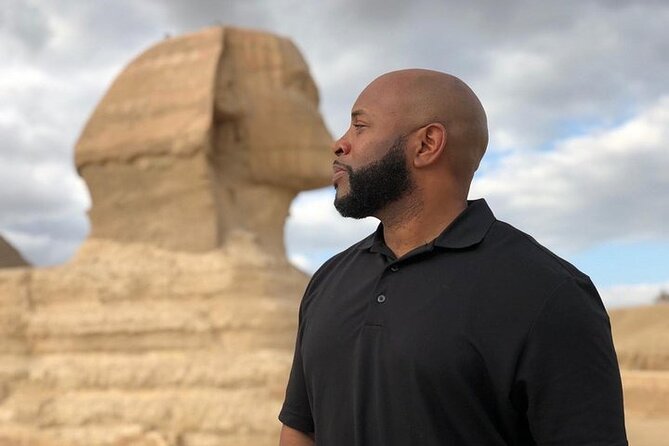
Next is the Great Sphinx, described as about 20 meters tall (66 feet) and with a human head on a lion’s body. The Sphinx is one of the world’s oldest and largest statues, and the program notes that its meaning and even its original builder are debated. That debate is part of what makes it feel alive as a landmark—you’re not just reading a solved riddle.
The Sphinx stop is about 30 minutes. Again, not super long, but it’s reasonable for a day trip format. The key is to use that time well: pause, look at proportions, and let the guide connect the statue to what you learned earlier about Egyptian beliefs.
Also worth knowing: the tour frames the pyramids as the last surviving monument of the Seven Wonders of the Ancient World, built more than 4,500 years ago. Even if you’ve heard that before, it lands differently once you’re standing close enough to feel the scale.
Papyrus Museum: the small stop that clicks with everything else
If the Pyramids and Sphinx are the show, the Egypt Papyrus Museum is often the “aha” moment. You’ll spend about 1 hour here, learning about papyrus as an early form of writing—basically an ancient kind of paper.
The program notes papyrus use dates back very far in Egypt, at least to the First Dynasty, when the papyrus plant was once abundant. That timeline matters because it links directly to how ancient Egyptians recorded their civilization—administration, religion, stories, and status.
This stop is easy to underestimate because it doesn’t have the same “wow” factor from a distance. But up close, it adds meaning. When you learn how Egyptians recorded life, the museum visit earlier feels less random, and the Sphinx and pyramids feel less like isolated monuments and more like part of a larger culture that kept track of itself.
It’s also a friendly stop for families. In the reviews, kids learning history and culture came up more than once, and this is one of the parts where that learning can actually feel understandable.




Lunch by the Nile: included, with one catch
Lunch is included, and it’s described as a traditional meal at an Egyptian restaurant, tied to the Nile area in the overall description. That’s a practical win on a day that otherwise involves transit stress and major sightseeing.
The catch is simple: drinks during lunch are not included. So if you like bottled water, soft drinks, or anything more, you’ll want to plan for that cost.
The best way to use lunch time here is not to rush it. In a day trip, your energy sets your experience. If you eat like you’re speed-running, you’ll pay for it later when the heat hits the plateau.
Guide quality and group size: why the day feels “organized”
This is one-day trip with a maximum of 30 travelers, and that affects the feel a lot. You’re not packed into a sardine can, and the guide has a chance to keep the group together without turning the day into constant waiting.
Most of the reviews praise the guide for being kind and for giving explanations with multilingual support. People name guides like Khaled, and others mention helpers such as Ahmed and Nabeer (especially around entertaining during the Nile part). You don’t need these names to enjoy the tour, but it does signal something: the people running the experience tend to care about communication.
With a guide who can point out what matters—like how to interpret pyramid placement or how the Sphinx fits into the myth-and-mystery side—you’ll spend your time better. And with an Egyptologist involved, you’re more likely to get accurate context instead of vague “this is ancient, it’s cool” talk.
Price reality check: what you’re paying beyond the $63.88
The listed price is $63.88 per person, and it includes air-conditioned vehicle, hotel pickup and drop-off, lunch, and a qualified Egyptologist guide.
But the day also includes costs that you should expect:
- Mandatory entry tickets (20€) for the Egyptian Museum and the Giza pyramids
- Nile boat ride (around 10€) if you choose to do it
- Drinks at lunch (not included)
- Visa requirement to enter Egypt
Because of that, the real value question isn’t only the tour price. It’s whether the organized transport, guide time, and built-in route save you enough effort and money to make the extras feel reasonable.
For many people, paying those mandatory fees is still a smart move compared to trying to DIY everything from Sharm while coordinating entry times. You get one plan, one guide, and less mental load.
Who should book this bus tour from Sharm?
You’ll likely love this if:
- You want Cairo and Giza highlights in one packed day
- You prefer guided context over wandering through major sites without a plan
- You like the idea of a comfortable air-conditioned bus with a structured itinerary
- You’re traveling with kids or anyone who enjoys history when it’s explained clearly
You might want to think twice if:
- You hate long travel days or you want a slow, flexible pace at museums
- You’re hoping everything is fully included with no added fees (the 20€ entry fee is mandatory, and the Nile boat ride costs extra)
- You’re extremely sensitive to heat and walking time on the Giza Plateau (the program’s time windows are short by necessity)
Should you book this Cairo and Giza day trip from Sharm?
Book it if you want maximum “wow” per hour, with an Egyptologist doing the heavy lifting. The route makes sense: museum first to set context, then Giza for the iconic monuments, then papyrus for that extra cultural link.
Skip it if you’re the type who needs long museum wandering time or you’d rather pay for a more leisurely, multi-day plan. This is built for one day only, and that comes with trade-offs.
If you do book, my best advice is to budget for the mandatory entry fee, decide in advance whether you want the Nile boat ride, and come ready to be impressed. The Pyramids and Sphinx don’t need much help, but your guide can make the rest of the day click.
FAQ
How long is the tour?
The duration is listed as 1 day (approx.).
What does the tour include?
It includes hotel pickup and drop-off, an air-conditioned vehicle, lunch, and a qualified Egyptologist guide.
Are entrance tickets included for the Egyptian Museum and Giza pyramids?
Tickets for the Egyptian Museum and the Giza pyramids are listed as a mandatory fee of 20€.
Is the Nile boat ride included?
No. The boat trip on the Nile is listed as not included, around 10€.
Do I need a visa?
Yes. A visa is required to visit this tour.
What’s the group size?
The tour has a maximum of 30 travelers.
Do I get a mobile ticket?
Yes. A mobile ticket is listed as part of the experience.