REVIEW · CAIRO
Private tour to Giza pyramids and Sakkara and Memphis museum
Book on Viator →Operated by Alba Tours Egypt · Bookable on Viator
Four monuments in one day is a big promise.
This private outing is interesting because it strings together the big names you hear your whole trip to Egypt: Giza pyramids and the Great Sphinx, then Saqqara’s Step Pyramid, and ending in Memphis with major royal statues. From the moment you’re picked up in Cairo, you’re not just dropped at entrances and left to fend for yourself. Your guide stays close, fills in the stories on the drive, and helps you get the most out of each stop with sensible photo breaks and transitions.
Two things I really like about this tour: the first is how it gives you a guided “through-line” across time, from Old Kingdom pyramid building to Saqqara’s evolution, then forward to Memphis in the later capital era. The second is the guide emphasis shown in the reviews tied to names like Sherif and Mostafa Ortega—people consistently note precise, kind attention and clear explanations (often in Italian). That matters because Giza can feel like a visual overload unless someone helps you connect what you’re seeing.
One consideration: the day is packed. You’ll spend around 30 minutes at several Giza stops and then longer at Saqqara and Memphis, so it’s great for a strong first sweep, but you may wish you had more time at the spots that grab you most.
In This Review
- Key highlights you’ll actually feel during the day
- How the 8:00 am pickup turns into a smooth Cairo to Giza rhythm
- Giza pyramids and the Great Sphinx: the day’s main stage
- Khufu, Menkaure, and the pyramid complexes you’ll actually recognize
- Great Pyramids, Valley Temple, and photo stops where the story lands
- The Great Sphinx: more than a landmark
- Khafre’s complex: the parts that make the illusion work
- Saqqara’s Step Pyramid of Zoser: where the pyramid idea takes its final shape
- Memphis and the Museum-area feel: Ramses II and the alabaster Sphinx
- Price, value, and what $55 really buys you
- Should you book this private Giza, Saqqara, and Memphis tour?
- FAQ
- What time does the tour start?
- How long is the tour?
- Is pickup included?
- Is this tour private?
- Which places are included besides the Giza pyramids?
- Are admission tickets included?
- Can I cancel for a full refund?
Key highlights you’ll actually feel during the day
- Private, guide-led pacing with pickup and direct return to your hotel so you’re not stuck figuring out transit
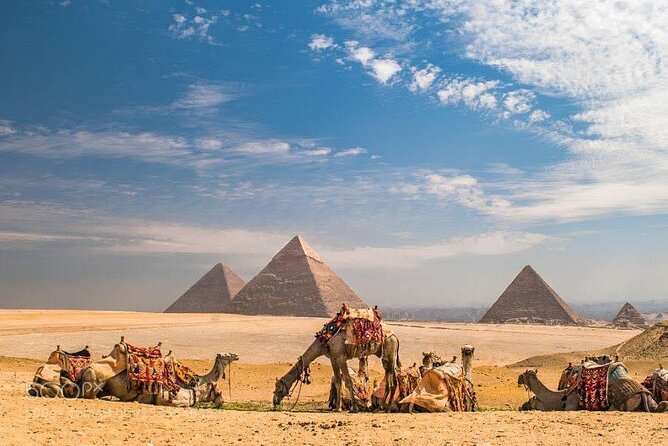
- Giza focus on Cheops, Chephren, and Mykerinos plus the Great Sphinx and valley temple viewpoints
- Saqqara’s Step Pyramid of Zoser (Djoser), presented as part of the pyramid evolution story from mastaba to pyramid
- Memphis stop with Ramses II and the alabaster Sphinx, tying Egypt’s monuments to the ancient capital
- Photo stops built into the route, so you’re not constantly running back and forth for angles
How the 8:00 am pickup turns into a smooth Cairo to Giza rhythm
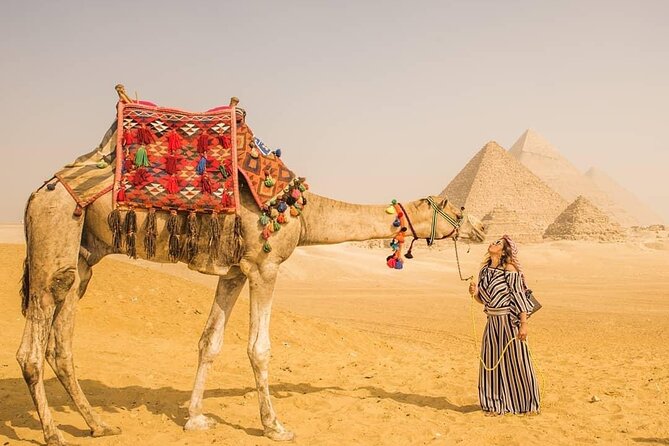
The tour starts at 8:00 am, and the structure is simple: you’re collected from your Cairo accommodation, you drive with your guide’s commentary, you visit the main sites, then you head back in comfort. The schedule also notes that the rest of the time is basically “travel time” to and from your hotel, which is helpful because Cairo traffic can eat plans fast.
In plain terms, you’re buying time and calm. Giza is far more enjoyable when you’re not negotiating buses, taxis, lines, and directions while your feet are already sore. A private setup also makes it easier to move at your pace, whether you want more stops for photos or you’re the type who wants to get bearings quickly and keep moving.
Expect the rhythm to be active. Even though the total duration is listed as about 8 hours, the sight times are chopped into chunks across Giza, Saqqara, and Memphis. This is the kind of day that works best when you come ready: water, hat/sunscreen, and comfortable shoes.
You can also read our reviews of more private tours in Cairo


Giza pyramids and the Great Sphinx: the day’s main stage
Giza is where your brain goes into “movie scene” mode. The good news here is that the tour doesn’t just say pyramid, pyramid, pyramid. It breaks the complex into named parts and themes, so you understand what each monument represents and why people obsess over angles, alignments, and temple layouts.
Khufu, Menkaure, and the pyramid complexes you’ll actually recognize
You’ll start with the pyramids at Giza and move through the major complexes tied to Khufu (Cheops), Chephren, and Mykerinos (Menkaure). The itinerary gives you specifics that help you notice what you’re looking at:
- For Khufu’s complex, the notes mention a valley temple now buried beneath the village of Nazlet el-Samman, along with paving and limestone walls found there even if the site hasn’t been excavated. That’s the kind of detail that makes the landscape feel like a living archaeological puzzle instead of just a viewpoint.
- For Menkaure’s complex, you’ll hear about its valley temple, causeway, mortuary temple, and the king’s pyramid, plus how a smaller ante-temple was added during the 5th Dynasty. This makes the site feel layered, not one straight “big pyramid photo.”
One practical tip: when you get a short time window, look for the temple-side elements and not only the pyramid peak. Your guide’s explanations help you “decode” the grounds in minutes, which is the difference between seeing monuments and understanding them.
Great Pyramids, Valley Temple, and photo stops where the story lands
After you get the big names in place, the tour moves you toward the Great Pyramids of Giza—Cheops, Chephren, and Mykerinos—then onto the Valley Temple area and the Sphinx.
This is where the tour leans into narrative. The itinerary specifically points out the Valley Temple as the place where priests prepared the king’s remains (it mentions King Chephren). Even if you treat that as the traditional association rather than a literal modern-day explanation you can verify on the ground, it helps you visualize what that temple space was for.
You also get photo stops—important because the Great Sphinx and the pyramid backdrop are at their best when you slow down for angles. With Giza, you don’t want to rush and then feel like you missed the best viewpoint by 30 seconds.
The Great Sphinx: more than a landmark
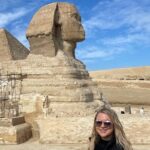
The tour includes the Great Sphinx, tied to the reign of Khafre (Chephren). It also notes that later rulers dedicated and added structures over time, including mention of Amenhotep II dedicating a new temple to Hauron-Haremakhet, then later additions by subsequent rulers.
That matters because the Sphinx often gets treated as a single image. Here you’ll get the sense that it’s part of a larger complex and a changing religious landscape.
You can also read our reviews of more museum experiences in Cairo




Khafre’s complex: the parts that make the illusion work
You’ll also revisit the Khafre pyramid complex in the flow of the day, including the valley temple, Sphinx temple, causeway, mortuary temple, and the king’s pyramid. The itinerary points out that valley temple yields included statues, with several found in a well discovered by Mariette in 1860.
Even if you can’t picture that discovery while standing there, your guide can. And that’s the value: you’ll leave with a reason for why certain areas matter, not just a checklist of what you saw.
Time reality check: several Giza segments are listed around 30 minutes each. If you’re the type who wants to sit and stare for an hour per monument, this tour may feel short at the ground level. If you want a strong overview with guidance to make the minutes count, it’s a good fit.
Saqqara’s Step Pyramid of Zoser: where the pyramid idea takes its final shape
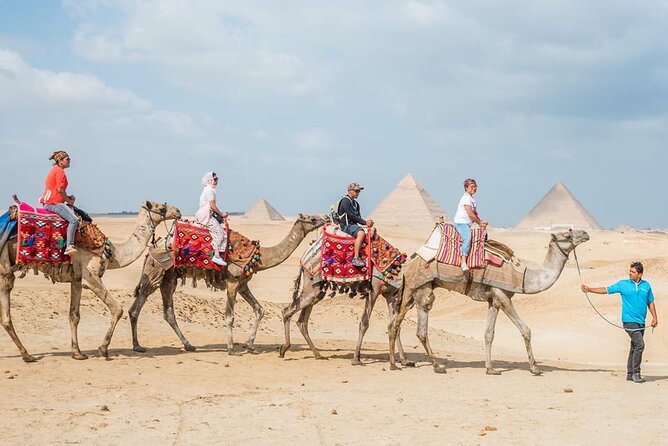
After Giza, you’ll head to Saqqara, about 27 km southwest away from Cairo in the tour notes. Saqqara is where the day stops being only about famous icons and starts becoming a story about how the Egyptians learned to build pyramids.
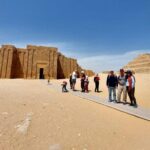
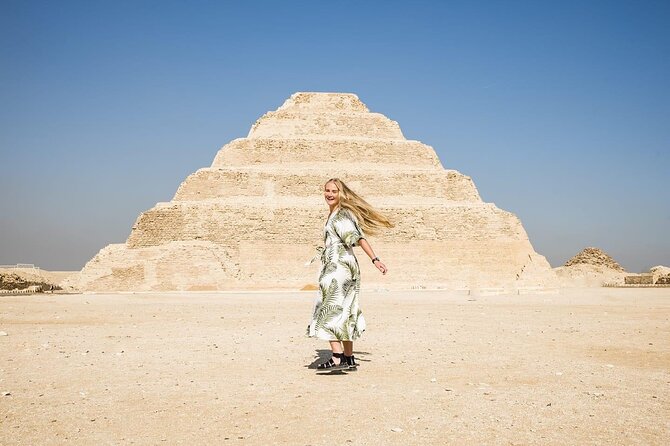
You’ll spend around 2 hours at Saqqara, focused on the Step Pyramid of Zoser, built for King Djoser in the third dynasty. The tour’s description frames it as an important stage in pyramid evolution—from mastaba to the pyramid form people expect.
This is a smart choice for first-timers because it changes how you interpret what you saw at Giza. At Giza, everything looks perfected and monumental. At Saqqara, you get to see the idea taking shape and understand the “why” behind the step-like form.
A practical way to use your time here: don’t just take a photo from the first view. Let your guide explain what makes this pyramid different, then look back at the structure with that in mind. That’s when it clicks.
Memphis and the Museum-area feel: Ramses II and the alabaster Sphinx
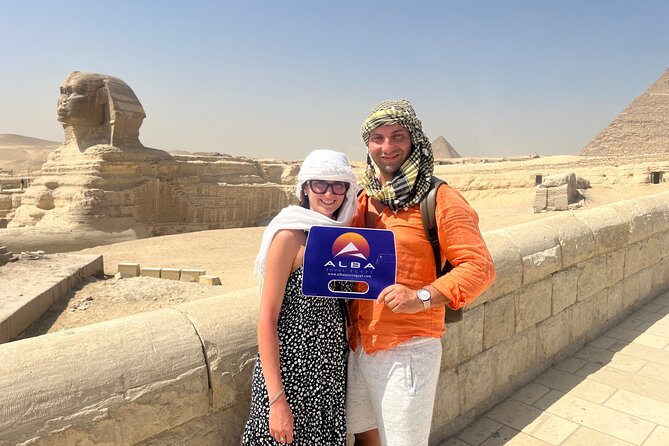
The final major stop is Memphis, described as Egypt’s ancient capital dating back to 3100 B.C. You’ll have about 1 hour 30 minutes here.
The highlight items named in the itinerary are the colossal statue of Ramses II and the great Alabaster Sphinx of Memphis. This is a great late-day shift because it connects royal power to later Egyptian history and material culture in a way that balances the Old Kingdom pyramid focus.
Also, Memphis is a calmer emotional landing than Giza. Even if the day is still long, this stop gives you a chance to reset. You’ll likely appreciate the change in pace after the huge visual scale of Giza and Saqqara.
Price, value, and what $55 really buys you
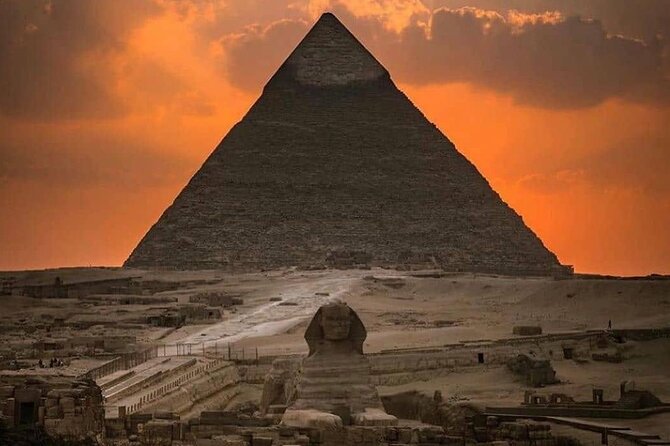
At $55 per person, this is priced like an efficient, organized way to do the classic Cairo monuments without turning your day into a logistics project. Here’s what makes the value feel real rather than theoretical:
- You get a private tour with pickup and return to your hotel, which can save you time and stress compared with piecing together transport and guide help separately.
- The itinerary lists each stop as admission ticket free, which, if that’s reflected in your booking, helps keep your out-of-pocket costs predictable.
- The tour includes photo stops and guide narration on the drive, which is hard to replicate if you’re traveling independently.
One note: because the time at each Giza segment is relatively brief, you’re paying for guidance and access to a tight route, not for lots of free wandering time. If you want slow travel at each site, you might feel the schedule is a bit tight. If you want a well-structured day that hits the “must-see” monuments and gives context fast, the price-to-experience ratio is strong.
Should you book this private Giza, Saqqara, and Memphis tour?
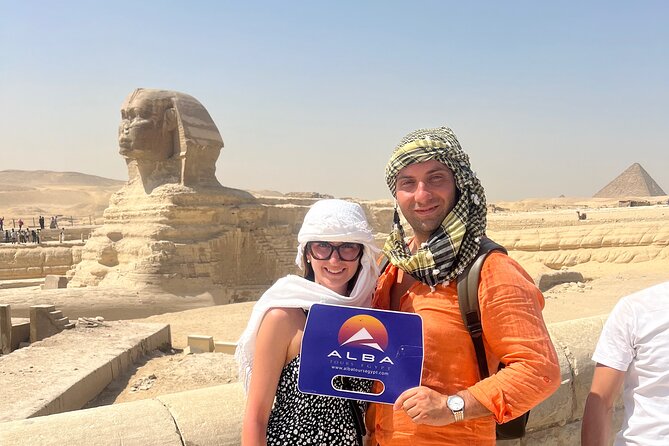
I’d book this if you want the classic monuments plus the important “why” behind them, all in one day. It’s especially good for:
- First-time Cairo visitors who don’t want to make a spreadsheet to plan transport
- People who love explanations that connect names like Cheops/Chephren/Mykerinos, the Great Sphinx, Zoser/Djoser, and Memphis royal imagery
- Couples and small groups who value privacy and a guide who sticks with you from pickup to return
I’d skip it or look for a longer alternative if you’re the kind of traveler who needs long quiet time at one or two places to really absorb them. This itinerary is built for coverage and understanding within a single 8-hour day.
FAQ
What time does the tour start?
The tour starts at 8:00 am.
How long is the tour?
It runs for about 8 hours (approx.), including time for hotel pickup and returning afterward.
Is pickup included?
Yes. Pickup is offered from your Cairo accommodation.
Is this tour private?
Yes. It’s private, and only your group participates.
Which places are included besides the Giza pyramids?
You’ll also visit Saqqara (Step Pyramid of Zoser) and Memphis (with the colossal statue of Ramses II and the alabaster Sphinx).
Are admission tickets included?
The itinerary lists admission ticket free for the listed stops.
Can I cancel for a full refund?
Yes, you can cancel up to 24 hours in advance of the experience for a full refund.