REVIEW · CAIRO
Private Tour to Giza Pyramids and Great Sphinx with Camel Ride
Book on Viator →Operated by Pharaonic Vision Tours · Bookable on Viator
Four words: pyramids, Sphinx, camels, comfort. This private Giza Pyramids and Great Sphinx tour is built for an easy half-day in Cairo, with A/C transport and a private Egyptologist explaining what you’re seeing. You get to hit the key monuments without the usual hassle of finding entrances, timing, and routes.
I especially like how the guide work turns the big visuals into real ideas: the Great Pyramid’s chambers, the Sphinx’s story, and how the Giza plateau fits together. I also like the built-in “reward stops” like the panorama viewpoint and the 30-minute camel ride, which is the kind of experience that makes photos feel different.
One consideration: with a total duration of about 4–5 hours, you’ll move at a steady pace. If you’re the type who wants hours and hours of wandering and re-wandering, you may want to tell your guide you want extra time at a single spot.
In This Review
- Key highlights worth getting excited about
- Why this Giza tour feels different from a typical checklist
- Getting picked up, staying comfortable, and not wasting time
- Stop 1: Inside the Great Pyramid of Giza (and what to notice)
- Stop 2: Khafre’s Pyramid and the casing detail
- Stop 3: Menkaure’s Pyramid, the smaller pyramids, and the Panorama lead-in
- Stop 4: Panorama View and the 30-minute camel ride
- Stop 5: Great Sphinx, lunch, and the papyrus stop that adds texture
- The guide experience: what “private Egyptologist” should feel like
- Is $12 per person a good deal? Here’s how I’d judge the value
- Who this tour fits best (and who should choose another plan)
- Practical tips that make a big difference in Giza
- Should you book this private Giza pyramids and Sphinx + camel ride?
- FAQ
- How long is the tour?
- Is hotel pickup and drop-off included?
- What’s included in the price?
- Do I get to enter the pyramids?
- Is the camel ride included, and how long is it?
- Does the tour include lunch?
- Is there a museum included besides the monuments?
- Is tipping included?
- Is there free cancellation?
- Is this a private tour?
Key highlights worth getting excited about
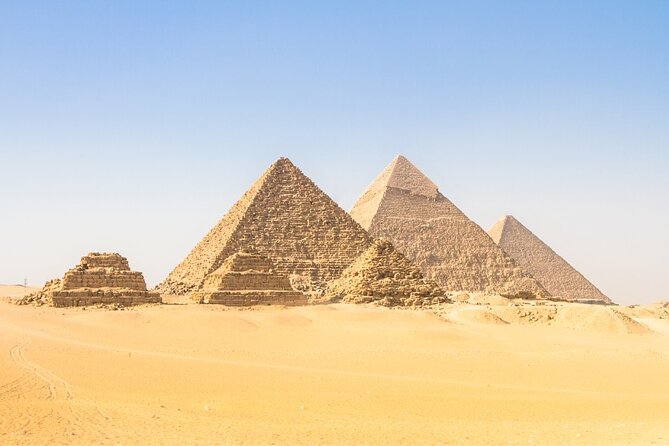
- A/C private transport from hotel to drop-off, so the day stays comfortable even when Cairo heats up
- Great Pyramid access with inside-chamber time, not just outside views
- Khafre and Menkaure stops to see how the Giza lineup changes from pyramid to pyramid
- Panorama View + 30-minute camel ride for a classic perspective (and better photo angles)
- Great Sphinx on the same route, timed after the views so it feels like the payoff
- Lunch plus Pharaonic Papyrus Museum, adding hands-on craft context to the monuments
Why this Giza tour feels different from a typical checklist
Giza can be intense. You’ll arrive seeing the same three pyramids people photograph for decades, and then suddenly it’s 90 questions in your head: How were these built? Why here? What’s the Sphinx really about? This tour is designed to answer a lot of that without turning the day into a sprint.
The biggest win for me is the “private” part. You’re not squeezed into a mixed group rhythm. With a private Egyptologist guide speaking your language, you can actually ask what you care about and get straight answers. And because everything is slotted into a tight 4–5 hours, you won’t lose half the day to logistics.
The second win is the mix of monument time and experience time. Yes, you’ll see the pyramids and the Sphinx. But you also get a real desert moment from the panorama viewpoint and a camel ride that feels like stepping into the world right around Giza—not just walking past it.
You can also read our reviews of more private tours in Cairo

Getting picked up, staying comfortable, and not wasting time
You’ll start with hotel pickup and a return drop-off. Transport is a private modern vehicle with A/C, and the day includes bottled water plus mineral water and snacks along the way.
That matters more than it sounds. Cairo heat can drain your focus fast. When your energy stays steady, the monuments land harder—because you’re actually looking, not just surviving.
The itinerary also includes admission tickets, so you’re not scrambling for paperwork or worrying about what’s covered. And because the tour is listed as private and still allows group discounts, you may find better value if you travel with friends or family.
Quick reality check on price: the published price shown here is $12 per person, but one set of guests reported paying $20 per person for a comparable combo with pickup/drop-off and camel riding. If you’re budgeting tightly, I’d confirm the exact inclusions and current rate when you book.
Stop 1: Inside the Great Pyramid of Giza (and what to notice)
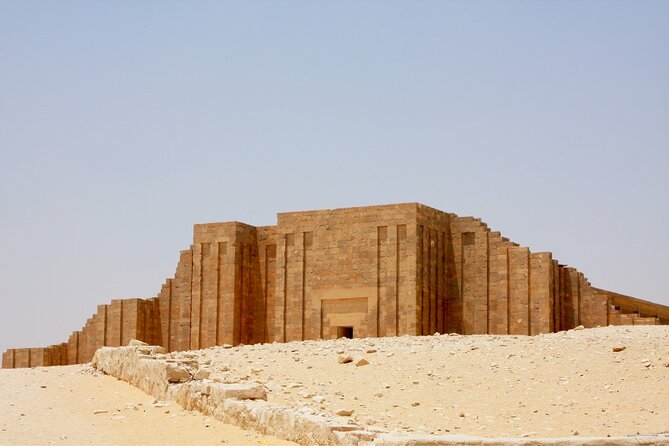
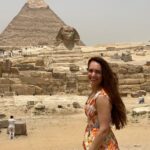
The Great Pyramid of Giza is the star because it’s the only one of the Seven Wonders that’s still standing. This is the pyramid built for Pharaoh Khufu, and the scale is the first thing you’ll feel in your bones.
What I’d focus on during this stop:
- The sheer engineering idea: it’s made from over 2 million limestone blocks.
- The geometry: it’s aligned with the cardinal points.
- The fact that you get more than a photo stop—you explore the King’s Chamber, Grand Gallery, and Queen’s Chamber.
Being able to walk through those spaces changes the experience. Outside, the pyramid reads as a massive shape. Inside, it becomes a human project—measuring, placing, building, and finishing with purpose.
Possible drawback: the inside sections mean you’ll spend time in enclosed areas. If you’re sensitive to tight spaces, heat, or crowds, you’ll want to go in with realistic expectations and move calmly.
Stop 2: Khafre’s Pyramid and the casing detail
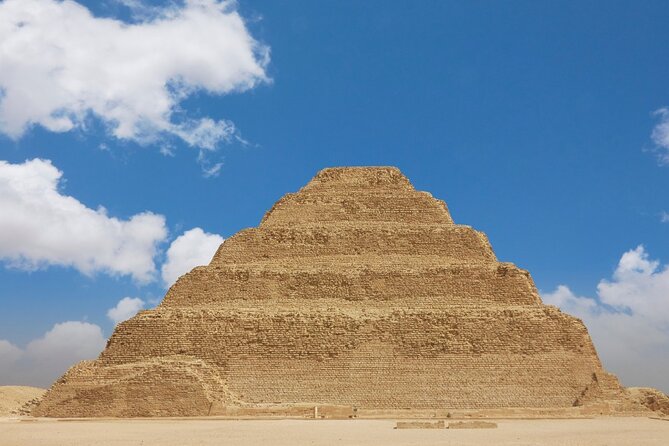
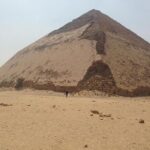
Next up is Khafre’s Pyramid, the second-largest on the Giza plateau. It was built around 2570 BC, and it originally rose to about 143.5 meters. One detail you’ll want to keep an eye out for is the preserved Tura limestone casing that still shows today.
That casing is important because it’s a glimpse of what the pyramids may have looked like when the surfaces were smoother and more uniform. It’s also a reminder that “the pyramid” isn’t just the giant base shape—it’s the finishing that makes it feel like a finished monument, not a ruin-in-progress.
You’ll also get a look at parts of the mortuary temple complex area connected to Khafre’s legacy. Even when you don’t see everything at once, the guide’s context helps you connect the pyramid to the rituals and ceremonies that would have surrounded it.
Stop 3: Menkaure’s Pyramid, the smaller pyramids, and the Panorama lead-in
Then you’ll shift to Menkaure’s Pyramid, the smallest of the three main pyramids, built around 2510 BC. It stands about 65 meters high, and its base includes granite blocks—another “materials story” that helps you see how builders used what they had (and what they valued).
Nearby are the Queens’ Pyramids, three smaller structures linked with Menkaure’s consorts. Even if they’re less famous, this is the kind of detail that makes Giza feel like a full royal complex instead of just three monuments on a postcard.
You also end this segment with a lead-in to the viewpoint. By this point, you’ve likely learned how each pyramid is a slightly different expression—size, materials, and layout. That sets you up to appreciate the panoramic payoff next.


Stop 4: Panorama View and the 30-minute camel ride
This is where the day turns from history lesson to lived experience.
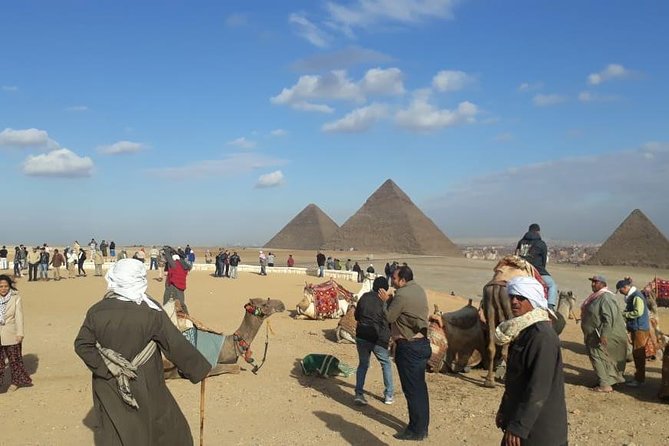
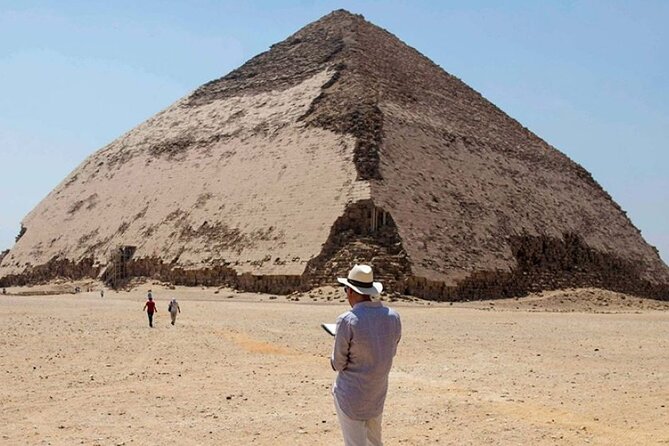
At the Panorama View, you’ll get strong vistas over the Giza plateau and the three pyramids. From here, the scale becomes clearer. The desert isn’t a blank space—it’s part of the setting that makes the monuments feel enormous.
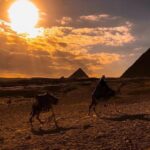
Then comes the camel ride: 30 minutes. This is your classic “from the back of a camel” moment, and it’s also one of the best ways to move at a human pace on uneven desert terrain without turning it into a chaotic wander.
A smart way to make this ride worth it:
- Wear something comfortable and secure for walking too.
- Bring sun protection, because even in the desert, the light is strong.
- Keep your expectations realistic: you’re riding for views and photos, not racing through miles.
Also, don’t assume every camel ride will be identical. If you’re riding for comfort, ask your guide what to do for getting on and off smoothly.
Stop 5: Great Sphinx, lunch, and the papyrus stop that adds texture
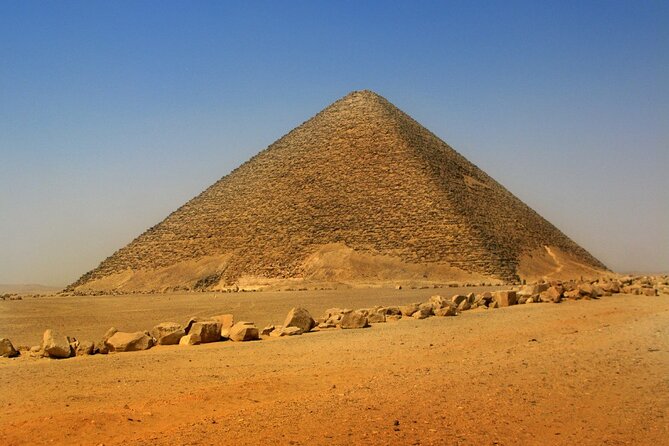
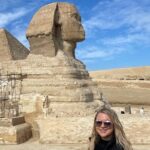
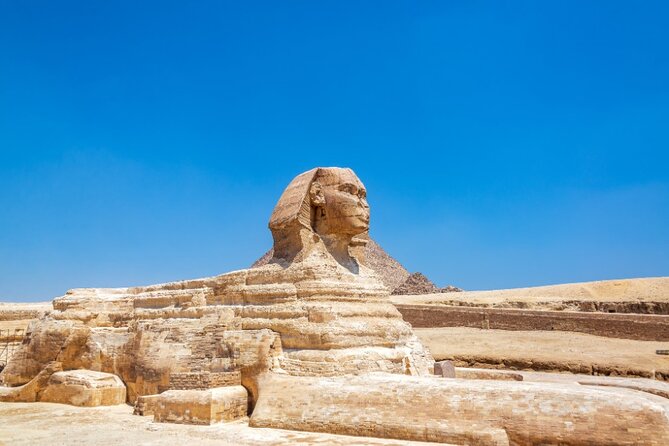
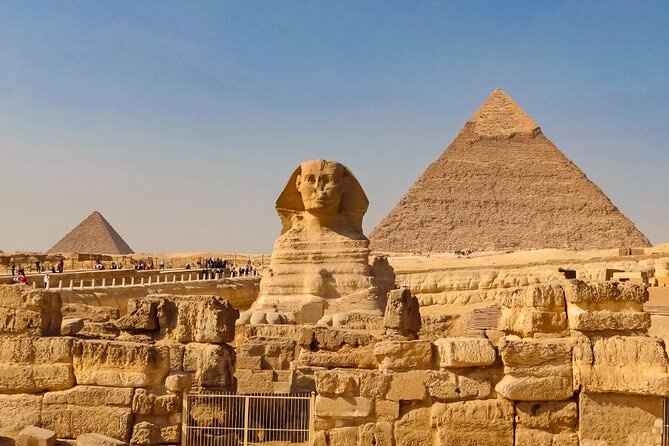
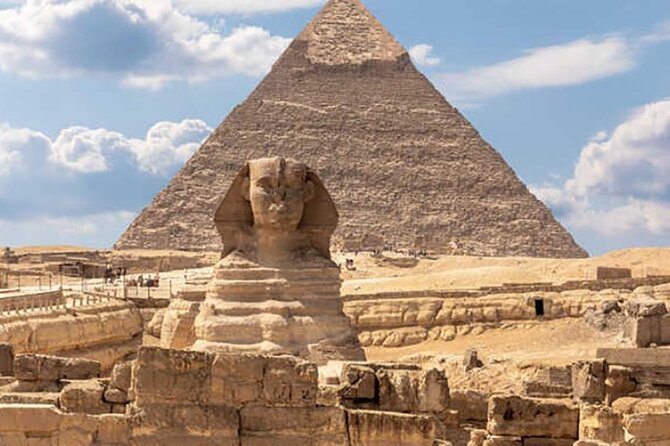
After the panorama ride, you’ll visit the Great Sphinx. Carved over 4,500 years ago from a single limestone block, it’s a colossal figure with the body of a lion and the head of a human.
What makes the Sphinx compelling is that it sits at a crossroads of art and myth. The dimensions are huge—about 73 meters long and 20 meters high—and it’s described as representing Pharaoh Khafre. When your guide ties those ideas together, it stops being a vague famous statue and starts feeling like a deliberate symbol in the royal landscape.
Then the tour doesn’t end with monument fatigue. You’ll enjoy lunch at a top-rated restaurant, included in the tour package.
After lunch, you’ll visit the Pharaonic Papyrus Museum. This is a great follow-up because it shifts you from stone monuments to Egyptian crafts and everyday storytelling. You’ll learn about papyrus-making and see Egyptian aromatic oils and perfumes—small objects with real cultural texture.
Finally, you’ll get a safe return to your hotel, which is a big deal in Cairo. You don’t want the day to dissolve into waiting for traffic or searching for a ride.
The guide experience: what “private Egyptologist” should feel like
A private guide isn’t just a luxury. It’s the difference between seeing shapes and understanding systems.
From the names you might encounter—Amira (also referenced as Mira), Mohammed Mostafa, Mona, Asma, and Sarah—one theme comes through: clear English explanations, and patience for questions. That matters most when you’re inside the pyramid or standing by the Sphinx, because you’ll naturally want context: what you’re looking at, why it matters, and what to notice next.
If you want this to go really well, I’d come prepared with two or three questions you genuinely care about, like:
- Why the pyramids are aligned the way they are
- What the chambers were for
- How the Sphinx connects to the wider Giza story
Then your guide can steer the conversation toward your interests, and you’ll leave feeling like you learned something you can actually use when you look at Egypt later.
Is $12 per person a good deal? Here’s how I’d judge the value
At the listed rate, you’re getting a lot in one box: hotel pickup and return, private A/C transport, a private Egyptologist guide, admission tickets included, lunch, bottled water/snacks, and a 30-minute camel ride.
That’s strong value if the timing works for your schedule and you’re not paying extra for the extras you’d otherwise buy separately. The camel ride alone can be a deciding factor for many people, and the inside access at the Great Pyramid is another.
Still, I’d treat price as a “confirm at booking” thing. One group reported paying $20 per person for pickup/drop-off and a similar combo including camel riding. So the real question is less about the number and more about what’s included today at the rate you’re seeing.
Who this tour fits best (and who should choose another plan)
This is a great match if you:
- Want a fast, focused half-day in Giza without the stress of planning every step
- Prefer a private guide who can explain in your language
- Like mixing “big monuments” with a hands-on or sensory stop like papyrus and scents
- Would enjoy a camel ride for photos and desert perspective
It may be less ideal if you:
- Hate being on a schedule
- Want hours of slow wandering at a single site
- Are very sensitive to enclosed spaces since you’ll explore pyramid chambers
Practical tips that make a big difference in Giza
A few things I’d take seriously here:
- Sun and heat planning: even with A/C driving, you’ll spend time outdoors at viewpoints and waiting for segments to start.
- Footwear: expect uneven ground near monument areas and in the desert setting for the camel ride.
- Photo strategy: if you care about photos, ask your guide for the best moments to step out of the main flow—so you’re not constantly switching positions with the crowd.
Also, since this is a private tour with admission tickets included, you can often keep momentum and reduce wasted time. That’s a major quality-of-life benefit in Cairo.
Should you book this private Giza pyramids and Sphinx + camel ride?
I’d book it if you want the full classic Giza experience in a calm, guided package: Great Pyramid inside access, Khafre and Menkaure context, a strong panorama stop, a 30-minute camel ride, the Great Sphinx, plus lunch and the Pharaonic Papyrus Museum.
You might skip it if you’re planning an ultra-deep, slow, do-everything-without-rush day. In 4–5 hours, you’ll get a great overview, but not the kind of lingering that takes most of the day.
If you’re unsure, here’s my simple decision rule: if you want help, comfort, and clear storytelling, this tour is aimed right at you. If you want total freedom with no schedule, you’ll probably feel more satisfied DIY-style.
FAQ
How long is the tour?
The tour duration is listed as about 4 to 5 hours.
Is hotel pickup and drop-off included?
Yes. Pickup services from your hotel and return are included.
What’s included in the price?
Included items are a private A/C modern vehicle for transportation, a private Egyptologist guide in your language, lunch at a high-quality VIP restaurant, bottled water plus mineral water and snacks, admission tickets (as listed for the stops), and a 30-minute camel ride.
Do I get to enter the pyramids?
Yes. The itinerary specifies admission tickets are included and includes exploring the Great Pyramid of Giza with the King’s Chamber, Grand Gallery, and Queen’s Chamber.
Is the camel ride included, and how long is it?
A 30-minute camel ride is included as part of the panorama viewpoint segment.
Does the tour include lunch?
Yes. Lunch is included at a high-quality VIP restaurant.
Is there a museum included besides the monuments?
Yes. You’ll visit the Pharaonic Papyrus Museum, with papyrus-making and Egyptian aromatic oils and perfumes.
Is tipping included?
No. Tipping is not included.
Is there free cancellation?
Yes. Free cancellation is available up to 24 hours in advance for a full refund.
Is this a private tour?
Yes. It’s private, meaning only your group participates.