REVIEW · CAIRO
Private Tour: Egyptian Museum, Alabaster Mosque, Khan el-Khalili
Book on Viator →Operated by South Sinai Travel · Bookable on Viator
Three Cairo stops, one smart private day.
This private tour strings together Egypt’s biggest museum moment, the stunning Alabaster Mosque in the Citadel, and a hands-on afternoon in Khan el-Khalili. I like the pace control: you can spend more time where your interests lean, instead of racing with a bus full of strangers. The trade-off is that the bazaar portion can feel a bit salesy, especially if your day includes perfume or shop stops.
You’ll start with the Egyptian Museum’s King Tut highlights, then move to a mosque that’s still used for worship and even gets explained in plain terms. For many people, the best part is the guide: the tour has been run by Egyptologists like Mohamed Osama, Mohamed Atef, Sayed, Ossama, Ahmed, Morad, Hammad, and Henry, and the common thread is clear explanations and patience. Just keep in mind the museum is huge, so it helps to know what to prioritize before you go.
In This Review
- Key takeaways before your Cairo day
- Why This Private Cairo Combo Makes Sense After Giza
- Entering the Egyptian Museum: King Tut Focus and How to Prioritize
- A quick heads-up on museum photos and extra fees
- Mosque of Muhammad Ali in the Citadel: Alabaster Walls and Real Worship
- What your guide should explain (and why it’s worth it)
- Khan el-Khalili: Bargaining, Souk Energy, and the Papyrus Option
- How to bargain without losing your sanity
- Papyrus Institute: a calmer cultural add-on
- Note on shop stops and sales pressure
- The Real Star: Your Egyptologist Guide and the Pace Control
- What good guiding looks like on this route
- Price and Logistics: Is $158.34 a Fair Deal?
- Lunch and what you should watch for
- Transfers and extra costs to understand
- The traffic reality
- Who This Tour Fits Best (and Who Might Want a Different Plan)
- Should You Book This Private Cairo Tour?
- FAQ
- How long is the tour?
- What are the time stops for each attraction?
- Are admission tickets included?
- Is lunch included?
- Does the tour include pickup?
- Can I take photos inside the Egyptian Museum?
- What’s the cancellation window?
Key takeaways before your Cairo day
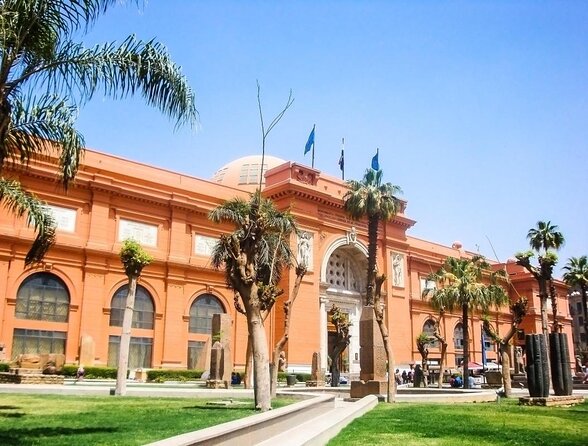
- King Tut is the anchor: you’ll get guided focus on the death mask and King Tutankhamun’s gold coffins.
- Mosque education, not just photos: your guide explains the basics of Islam and translates common prayers.
- Citadel skyline views: the Alabaster Mosque sits in the Citadel area with great city outlooks nearby.
- Bargain-friendly bazaar time: Khan el-Khalili is all about browsing and negotiating for small, handmade-style souvenirs.
- Time flexibility is real: because it’s private, you can shift minutes between stops to match your pace.
- Photo rules can surprise you: some museum photography has extra fees, and restricted areas exist.
Why This Private Cairo Combo Makes Sense After Giza
You already did the big-ticket pyramids and Sphinx. Good. Now Cairo can feel overwhelming—traffic, noise, lines, and too many places that all claim to be the main event. This tour works because it gives you three central sites with a clear story arc: ancient Egypt, Islamic Cairo, then the city’s street-life market culture.
The private setup is the real “value” here. You’re not trying to read your way through the Egyptian Museum while guessing what’s important. And you’re not trying to navigate Khan el-Khalili with no plan, no local context, and no one to help you avoid time-wasters.
It also saves energy. A 6-hour day can be a blessing in Cairo when your feet and patience start to revolt. You’ll see a lot without feeling like you need to master Cairo logistics first.
You can also read our reviews of more private tours in Cairo


Entering the Egyptian Museum: King Tut Focus and How to Prioritize
The Egyptian Museum is massive. The tour’s smart move is steering you to the moments most people remember for the rest of the trip. You start in the galleries with 165,000 artifacts on display, and your guided time lands on the King Tutankhamun treasures that dominate the experience.
Expect to spend about 2 hours here with admission included. The key items are the ones people talk about for a reason: King Tut’s death mask and the six gold gilded coffins in the main hall. The guide’s role matters a lot at the museum because it’s easy to wander for hours without learning the “why.”
Here’s the practical part. The museum can feel overwhelming, so I’d treat the first guided circuit as your map. Then use any free time to go back to what caught your eye—especially if you want close viewing or longer stops. The tour is structured so you don’t lose the best parts to random wandering.
A quick heads-up on museum photos and extra fees
One thing to plan for: there can be extra costs related to photography inside the museum. You might encounter a small fee where you receive a ticket to take photos. Even with permission, certain rooms may still restrict photography—particularly the areas featuring the death mask and coffins. If photos are important to you, assume you’ll need to pay and accept that some spots won’t allow it.
Also, there are optional paid areas inside the museum (like the Royal Mummy room). If you want those extra exhibits, ask your guide what’s worth the extra cost for your time and interests.
Mosque of Muhammad Ali in the Citadel: Alabaster Walls and Real Worship
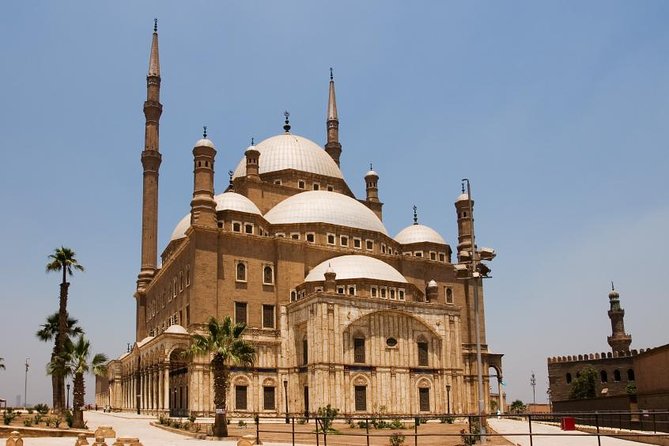
Next comes the Alabaster Mosque at the Citadel of Salah el-Din. This is not an “in and out” stop for decoration. It’s a working place of worship, and that gives it a different feel from many tourist-only sights.
You’ll spend about 1 hour here with admission included. The mosque is famous for its materials: the lower portions are clad in alabaster, while the upper parts are made from limestone cladding that was removed from the pyramids area of Giza. If you’re the type who likes to connect materials to meaning, this is the stop where those details start clicking.
What your guide should explain (and why it’s worth it)
Your Egyptologist guide doesn’t just point out architecture. They explain the basic tenants of Islam and can translate common prayers you’ll hear during worship. That matters because Cairo’s religious sites can feel like “readers-on-the-sidewalk” to visitors—interesting, but unclear. This tour tries to make the mosque legible.
There are also city views. The Citadel area sits above Cairo, and it’s one of the best places on this itinerary to get that skyline perspective without needing to tack on a separate panoramic outing.
One possible drawback: the mosque time is shorter than the museum. It’s enough for the main points, but if you want a long, unhurried walk and lots of quiet time for photos, you’ll want your guide to prioritize the route.
You can also read our reviews of more museum experiences in Cairo



Khan el-Khalili: Bargaining, Souk Energy, and the Papyrus Option
Then the tour shifts gears to Khan el-Khalili, Cairo’s bazaar maze. This stop is about atmosphere: narrow streets, small stalls, and the thrill of haggling for souvenirs that feel connected to local craft. You’ll get about 1 hour 30 minutes, and the bazaar admission is free.
The market is known for handmade-style goods, paper products, and other small purchases that are easy to fit into luggage. The guide will also give you the story people repeat about Khan el-Khalili inspiring Christopher Columbus to search for America. Even if you don’t treat legends as literal history, it’s part of the bazaar’s own self-mythology.
How to bargain without losing your sanity
Bargaining is a skill, not a sprint. Go in ready to make small decisions: pick a target souvenir type, compare two or three stalls, and don’t commit emotionally on the first offer. If you’re unsure what price range is reasonable, your guide can help you interpret what you’re looking at so you don’t overpay out of confusion.
Papyrus Institute: a calmer cultural add-on
You have an option to visit a Papyrus Institute. If you like crafts and production stories, this can be a good balance after museum density and bazaar chaos. It’s not just shopping—it’s seeing how the artwork is made, and you can usually buy genuine items if that fits your souvenir plan.
Note on shop stops and sales pressure
Some versions of this day can include a perfume shop stop, and people have mixed feelings about it. If you’re sensitive to sales pressure, simply use your private format: tell your guide you want more time for walking in Khan el-Khalili and less time on pitch stops. The whole point of private is that the day can flex.
The Real Star: Your Egyptologist Guide and the Pace Control
This tour lives or dies by the guide. And you’ve got reason to believe you’ll be in good hands. The tour has been led by Egyptologists such as Mohamed Osama and Mohamed Atef, who were praised for detailed explanations and for welcoming questions. Other guides—Sayed, Ossama, Ahmed, Morad, Hammad, and Henry—also came up in feedback for being polite, patient, and able to adjust their teaching to the group.
What good guiding looks like on this route
On a day like this, the difference shows up in small moments:
- You’re guided to the pieces that matter, not just what’s easiest to find.
- You understand the museum items through context, not just labels.
- The mosque stops feel like a lesson instead of a photo stop.
- You don’t feel rushed in the bazaar, because you can negotiate your own timing.
Because it’s private, you can also steer the pace. If you love Egyptology, you’ll probably want to spend more of the day at the museum. If you’re more interested in religion and architecture, you can give the mosque more time. If your priority is shopping and street life, spend less time in the optional add-ons and more time on Khan el-Khalili browsing.
A small warning: guidance quality can vary with any tour. Some people were happy with the guide, and others felt less impressed. If that matters to you, ask your operator what Egyptologist language skills and focus style your guide is known for, and be ready with your interests before you start.
Price and Logistics: Is $158.34 a Fair Deal?
At $158.34 per person, the question isn’t only whether it’s expensive or cheap. It’s whether you’re buying reduced stress, better context, and efficient use of your Cairo day. In practice, you are paying for:
- a private Egyptologist guide,
- museum and mosque admission being included,
- and a route that prevents wasted time in a city that can be hard to navigate without local help.
The day is about 6 hours starting around 9:00 am. That timing can be a big advantage. You get to the museum early enough to start with momentum, then move through Cairo’s center before your afternoon energy completely drains.
Lunch and what you should watch for
Lunch is included only if you choose the lunch option. People have said lunch was ok but could feel overpriced, so if budget matters, consider whether you’d rather handle lunch on your own schedule rather than rely on an included meal that might not match what you’d pick.
Transfers and extra costs to understand
Pickup is offered, but there are transfer supplements depending on where you’re coming from. The tour data lists supplements for areas such as 6th of Oct, N.A. Capital, and Settlement regions. If you’re staying outside central Cairo, ask upfront what your exact pickup/transfer charge will be so you’re not surprised later.
The traffic reality
Cairo traffic is real. One practical complaint was that pickup or arrival time could be delayed due to heavy traffic. If your day has a hard deadline—like an evening reservation—plan buffer time and keep your expectations flexible.
Who This Tour Fits Best (and Who Might Want a Different Plan)
This is a strong fit if you:
- already saw the pyramids and Sphinx and want the next layer of Cairo,
- want expert explanations instead of silent wandering,
- and prefer a private pace because Cairo can be tiring.
You’ll also like it if you enjoy the mix: ancient Egypt artifacts, then Islamic architecture and worship, then street-market life. That three-part combo is what makes the itinerary feel more like a full-day narrative than three separate checkboxes.
If you strongly dislike shopping pressure, shorten the market portion in your mind and be direct with your guide. Also, if you’re the type who wants a long, unstructured museum day, you might still appreciate the museum focus but wish the time were longer.
Should You Book This Private Cairo Tour?
Yes, I’d book it if you want structure, context, and an easier Cairo day after Giza. The Egyptian Museum stop is the anchor, and the mosque explanation plus Citadel views make the day feel complete instead of one-note. The private format is the main reason this is worth it: you can control the timing and get answers to questions instead of coping with crowds.
Don’t book it blindly if you hate shopping stops or you’re trying to squeeze in too many other plans that depend on perfect timing. If your schedule is tight, confirm transfer details and be clear about how much time you want in Khan el-Khalili versus any shop add-ons.
Most importantly: pick this day because you want to learn and see, not just collect photos. With a good Egyptologist (and you’re likely to get one from the names you’ll commonly see leading it), this tour turns Cairo from chaotic noise into an understandable story.
FAQ
How long is the tour?
It runs for about 6 hours (approx.), starting at 9:00 am.
What are the time stops for each attraction?
You’ll spend about 2 hours at the Egyptian Museum, 1 hour at the Mosque of Muhammad Ali, and about 1 hour 30 minutes at Khan el-Khalili.
Are admission tickets included?
Yes. Admission is included for the Egyptian Museum and the Mosque of Muhammad Ali. Khan el-Khalili has admission free.
Is lunch included?
Lunch is included only if you select the lunch option.
Does the tour include pickup?
Pickup is offered, but transfer supplements can apply depending on your region.
Can I take photos inside the Egyptian Museum?
You might need to pay a small fee to take photos inside the museum. Even with a photography pass, some restricted areas (including the death mask and coffins room) may not allow photos.
What’s the cancellation window?
Free cancellation is available up to 24 hours in advance for a full refund.
If you tell me your hotel area (and whether you want lunch), I can suggest a realistic plan for how to pace the three stops.