REVIEW · CAIRO
Private Half Day Tour to Islamic Cairo
Book on Viator →Operated by Egypt Tours Online · Bookable on Viator
Cairo’s mosques make more sense with a guide. This private tour keeps you moving by private car and handles pickup and drop-off, so you spend your energy on the sights, not Cairo logistics. I also like that you get clear background at each stop, plus handy time on the ground for photos from the high points. One thing to consider: entry fees and mosque dress rules can add friction, especially if you show up in short sleeves or uncovered arms.
What really sells this half-day is the line-up: Saladin Citadel, Muhammad Ali Mosque (the Alabaster Mosque), Al-Rifa’i Mosque, the Sultan Hassan Mosque-Madrassa, Al-Azhar, El Hussein, and Khan al-Khalili. Guides named in the tour experience like Heba, Asmaa, Khalaf, and Mahmoud Ismael are repeatedly praised for making the architecture and Islamic history feel readable, not like a textbook. If you’re tight on time in Cairo, this route is a smart way to get the big Islamic Cairo hits without getting stuck in planning and transit.
In This Review
- Key highlights at a glance
- Islamic Cairo in 5 Hours: What This Private Car Tour Solves
- Saladin Citadel: Getting the Views and the Backstory Fast
- Muhammad Ali Mosque and the Alabaster Effect
- Al-Rifa’i and Sultan Hassan: Two Masterpieces That Talk to Each Other
- Al-Rifa’i Mosque
- Sultan Hassan Mosque-Madrassa
- Al-Azhar and El Hussein: Two Different Spiritual Layers
- Al-Azhar Mosque: Fatimid Roots
- Al Emam Al Hussein Mosque: A Revered Burial Tradition
- Khan al-Khalili Bazaar Walk: Souvenirs, Coffee Stops, and Not Getting Lost
- Price and Value: Is $8 Really a Bargain?
- What to Wear for Mosque Entry: Avoid the Last-Minute Refusals
- Timing, Traffic, and Comfort: The Small Things That Matter in Cairo
- Who This Tour Suits Best (and Who Might Want Something Else)
- Should You Book This Private Half Day Tour of Islamic Cairo?
- FAQ
- How long is the Private Half Day Tour to Islamic Cairo?
- Is this a private tour?
- Do you get hotel pickup and drop-off?
- Where does pickup happen?
- What sites are included?
- Are entry fees included?
- Is lunch included?
- Is a guide included?
- What should I wear to enter the mosques?
- Is free cancellation available?
Key highlights at a glance
- Hotel pickup and drop-off so you start with less hassle
- Private A/C vehicle for a smoother ride through Cairo traffic
- Mosque-to-mosque flow from the Citadel down to Al-Azhar and El Hussein
- Guided context that helps you spot what matters in the details
- Khan al-Khalili walk with local help for shopping and bargaining
- Basic admission included in options, but extras may depend on the day
Islamic Cairo in 5 Hours: What This Private Car Tour Solves
Islamic Cairo can feel like a maze if it’s your first time. Streets are busy, signage is hit or miss, and the mosques are spread across areas that make taxi-hunting a pain. This tour solves the core problem: you get a driver, a guide, and a clear route.
The schedule is built around practical visits. Expect about five hours total, with stops that give you enough time to look closely without feeling like you’re sprinting. The private setup also means you can ask questions without waiting your turn in a large group.
And yes, the price matters here. At about $8 per person, the value is mostly in what you’re buying: private transport, guided storytelling, and a compact route that hits multiple major monuments in one morning-or-early-afternoon block. Your final cost can rise if you add lunch or if mosque admissions for certain areas aren’t covered by your chosen option.
You can also read our reviews of more private tours in Cairo



Saladin Citadel: Getting the Views and the Backstory Fast
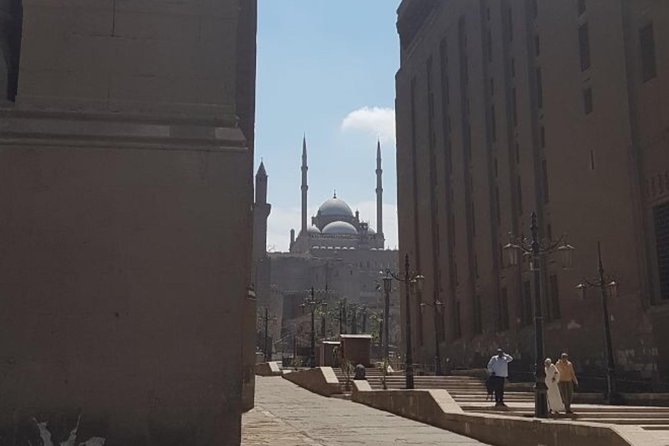
You’ll start at the Citadel of Salah El Din, with pickup around the morning start time (about 8:00 AM in the tour description). A guide meets you holding your name sign, which is a small thing but helps a lot when you’re arriving in Cairo and trying not to guess where to stand.
This is one of those places where the setting matters as much as the building. The mosque here sits at a high point, so the area is ideal for photos over Cairo. A guided stop is especially useful because people tend to rush the viewpoint and miss what the fortress placement was meant to do—control, defense, and symbolism in one package.
You get about an hour here. That’s enough time to:
- Look around at the views
- Understand why this complex became such a key moment in Islamic Cairo
- Take photos without feeling like you’re doing it all one-handed while juggling a scarf
Potential drawback: the Citadel visit is short. If you want a long, slow sit-down tour of every corner, you might feel tempted to stay longer than planned. In this format, you’re buying highlights and context, not a deep research day.
Muhammad Ali Mosque and the Alabaster Effect
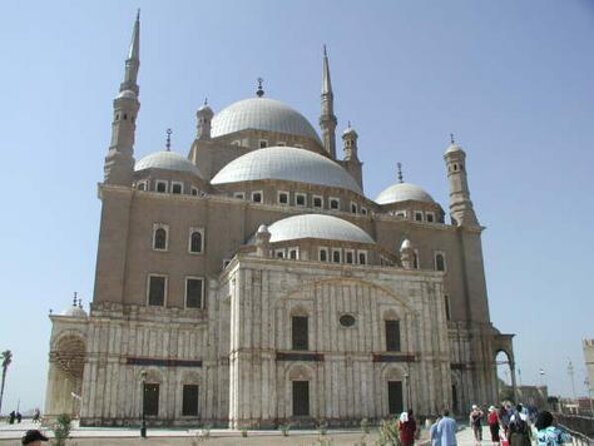
From the Citadel area, the tour moves to Muhammad Ali Mosque, also known as the Alabaster Mosque. The highlight is right there in the nickname: the outer walls are described as covered by alabaster stone. When you’re standing close, it’s easier to see how the material and design work together to create that famous look.
This mosque is also frequently described as one of the most beautiful in Cairo, which makes it a good centerpiece for the morning. A guide helps you look beyond the obvious big dome and minarets, too—pointing out architectural details and explaining what makes it special in Islamic art and Ottoman-era style.
You’ll have roughly half an hour at this stop. That’s not a lot, but it’s enough time to:
- See the exterior impression clearly
- Step into key areas and appreciate how the space feels
- Get your questions answered before moving on
One practical tip: mosque entry rules can be strict. If your clothing is too revealing, you can be turned away. A real-life example from the experience you provided is clear: one person wasn’t allowed in because elbows down to the wrist were showing. Plan to cover properly before you arrive, not after you’re stopped.
Al-Rifa’i and Sultan Hassan: Two Masterpieces That Talk to Each Other
After Muhammad Ali, the tour hits two big names that sit close enough to make sense as a pair: Al-Rifa’i Mosque and the Mosque-Madrassa of Sultan Hassan.
Al-Rifa’i Mosque
Al-Rifa’i Mosque is described as being opposite the Mosque-Madrassa of Sultan Hassan. That matters because the architecture was conceived as a complement to the older structure. The tour framing here is smart: you get one stop, then you understand it better because the next stop is right across the way.
It’s also tied to the 19th century rulers of Egypt, who aimed to associate themselves with earlier Islamic history and also modernize Cairo. If you like understanding why buildings were built when they were built, this stop gives you that kind of angle instead of just pointing at decoration.
Expect around an hour here. That extra time helps because the mosque’s story isn’t just visual—it’s historical, and your guide can connect it to what you’ll see at Sultan Hassan next.




Sultan Hassan Mosque-Madrassa
Then you go to Sultan Hassan, described as the most and biggest mosques in Cairo in this area. Construction is noted as beginning in 1356 A.D (and given as 757 AH), with work ending three years later. That timeline isn’t just trivia—your guide can use it to explain why the complex feels so forceful and complete, like it was built to last and to be seen.
Here’s another reason this stop works well with a guide: Sultan Hassan was designed to include schools for the four Sunni schools of thought—Shafi’i, Maliki, Hanafi, and Hanbali. If you’re walking around without context, it’s easy to see the building as only a monument. With context, you start to recognize the purpose of the madrassa side of the structure.
You’ll get about 30 minutes. Again, short by deep-dive standards, but enough to appreciate the massive scale and the fact that this place served as both worship and learning.
Al-Azhar and El Hussein: Two Different Spiritual Layers
Once you’ve handled the Citadel and big centerpiece mosques, the tour shifts to the spiritual core of Cairo.
Al-Azhar Mosque: Fatimid Roots
Al-Azhar Mosque is described as one of Islamic Cairo’s key mosques, with origins connected to the Fatimid Caliphate. The construction is attributed to Al-Mu’izz li-Din Allah around 970, for a newly established capital city.
What I like about this stop as a visitor is the word origin and what it signals. The name is commonly linked to Fatimah, titled az-Zahrā, meaning shining or resplendent. The tour also connects Al-Azhar to Cairo’s nickname, the City of a Thousand Minarets, which is the kind of cultural detail that makes the skyline feel more meaningful.
Time here is about 30 minutes. In that window, a guide can help you see the difference between what’s visually dominant (minarets, domes, courtyards) and what matters in the story (who built it, why it mattered at the start of Cairo’s rise).
Al Emam Al Hussein Mosque: A Revered Burial Tradition
Next is El Hussein Mosque, described as hallowing the burial site of the head of the prophet Muhammad’s grandson. That tradition is central to why the place pulls people in, and a guide’s job is to help you understand why the site holds weight beyond its architectural beauty.
Plan for about 30 minutes. This is also a good moment to remember: mosque etiquette counts. If you’re already tired from covering up and keeping your scarf in place, this is when you’ll appreciate having been dressed right from the start.
Khan al-Khalili Bazaar Walk: Souvenirs, Coffee Stops, and Not Getting Lost
After the mosques, the tour shifts to a walking tour of Khan al-Khalili, described as the oldest market in Egypt. This is the part of the day where the experience becomes less about monuments and more about everyday life.
With a guide, the bazaar stop is easier because you get context and help finding what you actually want. The experience you shared includes a strong theme around bargaining patience, including help from a guide named Asmaa. So if you’re shopping for souvenirs, this is the segment where guidance can save time and possibly money.
Expect about an hour here. It’s long enough to browse and short enough that you won’t end the day feeling fried. You’ll also be dropped back at the same pickup point, which reduces the stress of trying to navigate the market back into your travel day.
A practical note: bazaar walking can get crowded fast. If you don’t love crowds, you might focus on one street or one kind of souvenir rather than trying to see every stall.
Price and Value: Is $8 Really a Bargain?
At $8 per person, this tour reads like a budget win for a private half-day. The real question is what you’re paying for beyond the headline price.
Here’s how the value works in practice:
- You’re paying for private car transfers and hotel pickup/drop-off.
- You’re paying for a guide to interpret the architecture and Islamic history so you don’t miss the “why.”
- You’re paying for a compact route that would be time-consuming to stitch together on your own.
Now the trade-off: entry fees can be complicated. The tour notes that entry fees are optional depending on the tour options you choose, and entrance fees can include only the basic area. That means you should expect some admissions might be added depending on what your ticket covers.
Lunch is also optional. If you do add it, it may be offered as a buffet-style meal, and drinks might not be included. In a short five-hour window, meal choices can affect how long you have for browsing at Khan al-Khalili, so plan based on your priorities.
My balanced take: the low price is believable only if you’re okay with the admission extras being separate and you’re dressed properly for mosque entry. If you do those two things, this tour can feel like a high-impact day for not much cash.
What to Wear for Mosque Entry: Avoid the Last-Minute Refusals
Mosques in Islamic Cairo can be strict about coverage, and this is not an area to wing it.
A clear example from the experience you provided: someone was blocked from entering because elbows down to the wrists were showing. The advice given was straightforward:
- Wear long pants
- Cover arms down past the wrists
- Bring a jacket with a hood to help cover your head and arms if needed
- Use a scarf to cover your head
This advice is gold because it prevents the awkward moment of standing at the doorway while you scramble for what you forgot. If you’re traveling in warmer weather, consider light long layers that you can keep on without sweating through your trip.
If you want to skip stress: pack a scarf and a thin long-sleeve layer. You’ll look respectful and you won’t waste time bargaining with the door rules.
Timing, Traffic, and Comfort: The Small Things That Matter in Cairo
Cairo driving can be intense. The benefit of having a professional driver is that you get a smoother ride and less uncertainty about where you’re going next. The experiences you shared repeatedly mention driver patience and confidence, which matters when you’re moving between several major stops in a short window.
The car is described as private and air-conditioned, and bottled water is included. That’s a practical combo in warm weather. It also means you won’t lose time stopping for drinks, which helps you keep the day on schedule.
The only timing caution: the schedule is built for about five hours total, so you’ll have limited time per stop. If a particular mosque is your favorite, you’ll have to decide whether to prioritize photos, details, or a quick question for the guide. With a guide, you’ll get more out of those short blocks.
Who This Tour Suits Best (and Who Might Want Something Else)
This tour is a strong fit if you:
- Want Islamic Cairo highlights without spending your day planning routes
- Like architecture and religious art but don’t want to figure out the stories alone
- Have limited time in Cairo and want multiple major sights in one go
- Value hotel pickup and drop-off because Cairo logistics can be tiring
It might be less ideal if you:
- Want long, slow visits where you can sit for an hour in one place
- Prefer independent wandering with no guide interpretation
- Have a very flexible schedule and want to choose different sites day-of
Should You Book This Private Half Day Tour of Islamic Cairo?
I’d book it if your goal is simple: see the core Islamic Cairo monuments with less effort and more meaning. The best part is the mix of big-name mosques and a bazaar walk, all tied together by a guide who helps you understand what you’re looking at.
Book it confidently if you plan ahead for dress code and you’re okay with entry fees depending on the option you choose. If you’re expecting everything to be fully included no matter what, double-check admissions coverage for your specific ticket before you go.
If your schedule is tight, this is one of the most efficient ways to get your bearings fast in Cairo’s Islamic history zone—without spending your precious hours stuck in transit.
FAQ
How long is the Private Half Day Tour to Islamic Cairo?
The tour duration is about 5 hours.
Is this a private tour?
Yes. It’s a private tour, meaning only your group participates.
Do you get hotel pickup and drop-off?
Yes. Hotel pickup and drop-off are included.
Where does pickup happen?
Pickup is offered from hotels in Cairo or Giza.
What sites are included?
You visit the Cairo Citadel, Mosque of Muhammad Ali, Al-Rifai Mosque, Mosque and Madrasa of Sultan Hassan, Al-Azhar Mosque, Al Emam Al Hussein Mosque, and Khan al-Khalili bazaar.
Are entry fees included?
Admission tickets are listed as included for the stops, but the tour also notes that entry fees are optional depending on the tour options chosen, and entrance fees include the basic area only. You should expect some costs may vary by option.
Is lunch included?
Lunch is optional and not included in the base listing details.
Is a guide included?
The tour describes guided visits at the sites, but the booking details also list Guide as optional. If guide commentary is important to you, confirm it’s included in your chosen option.
What should I wear to enter the mosques?
Plan for conservative clothing. One documented issue was being denied entry due to elbows to wrists showing. Bring long pants and cover your arms down past the wrists, and use a scarf; a jacket with a hood can also help with head and arm coverage.
Is free cancellation available?
Yes. Free cancellation is offered, and you must cancel at least 24 hours before the experience start time for a full refund.