REVIEW · CAIRO
Private guided half Day tour to Pyramids Of Giza from Cairo
Book on Viator →Operated by EMO TOURS EGYPT · Bookable on Viator
Giza feels personal with a private guide. This half-day trip brings the Pyramids of Giza and the Great Sphinx into focus with context, pacing, and time to ask questions, either in the morning or afternoon. I like that you start with smooth hotel pickup and get round-trip transfers in an air-conditioned vehicle, so you spend more time looking up at the stone giants and less time figuring out logistics.
I also like the way the route strings together the major stops in a smart order, from the Great Pyramid of Khufu to Khafre and Menkaure, then out to the Sphinx and panoramic views. One thing to plan for: the admission you get is for the basic areas, so going inside any pyramid is optional and requires extra tickets.
In This Review
- Key moments that make this tour worth it
- A private half day in Giza: what the 6–7 hour rhythm really feels like
- Getting there in comfort: pickup, AC vehicle, and avoiding wasted hours
- Entering the Giza complex: start at the Great Pyramid of Khufu
- A practical note about crowds and time
- Khufu’s pyramid complex: the valley temple story you actually remember
- Khafre’s Pyramid: the Sphinx connection becomes obvious
- Menkaure’s Pyramid: small stop, clear shape
- The Great Sphinx: scale, alignment, and why it’s not random
- Photo tip that doesn’t require a trick
- Giza Plateau and panoramic views: stepping back for the big picture
- Paradise Perfumes Palace & Spa: a quick culture break or a shopping stop
- Tickets, tipping, and what costs extra once you’re there
- Price and logistics: is $40 fair value for Giza?
- Who should book this private Giza half-day tour?
- Should you book this private Giza half-day tour?
- FAQ
- How long is the private half-day tour to the Pyramids of Giza?
- What is included in the $40 per person price?
- Are tickets to enter inside the pyramids included?
- Does the tour include hotel pickup and drop-off?
- Can I choose a morning or afternoon departure?
- What optional activities are available for extra cost?
- What is the cancellation policy?
Key moments that make this tour worth it
- Private guide that explains what you’re seeing and keeps the story straight as you move around Giza
- AC round-trip transfers from your Cairo or Giza hotel, with bottled water included
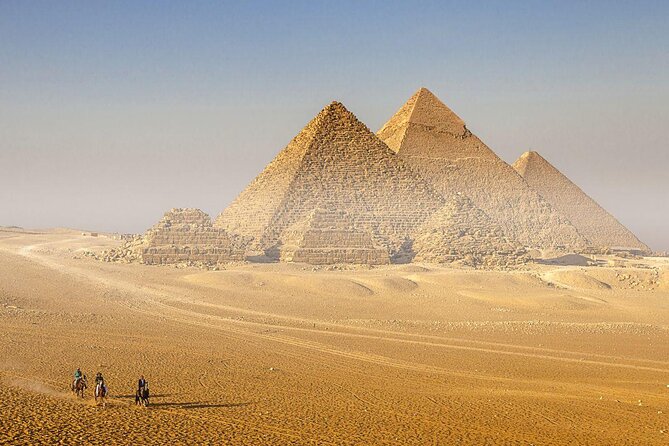
- Big three pyramid sequence: Khufu, Khafre, then Menkaure in one half day
- Great Sphinx stop with sizing and West-to-East alignment explained on site
- Panoramic view time for a broader look beyond the main monuments
- 20-minute Paradise Perfumes Palace & Spa stop, plus references to papyrus and flower-cotton stores
A private half day in Giza: what the 6–7 hour rhythm really feels like
This is a classic “best of” Giza itinerary that stays in the sweet spot: long enough to see the major sights, short enough that you’re not stuck on the road all day. Expect roughly 6–7 hours, depending on timing and how quickly you move through each area. Since you can choose a morning or afternoon departure, you can also pick the kind of light you want.
A private setup matters here more than you might think. Giza is huge, and the layout can feel chaotic when you’re trying to connect the monuments yourself. With one guide handling navigation and explanation, you get that moment of clarity: you stop guessing why a valley temple is placed where it is, or what the Sphinx is actually connected to.
You’re also not stuck waiting on a group. The guide adjusts pacing to your questions and comfort level, which is helpful when you’re standing in the same place looking at a pyramid and trying to understand scale.
You can also read our reviews of more guided tours in Cairo



Getting there in comfort: pickup, AC vehicle, and avoiding wasted hours
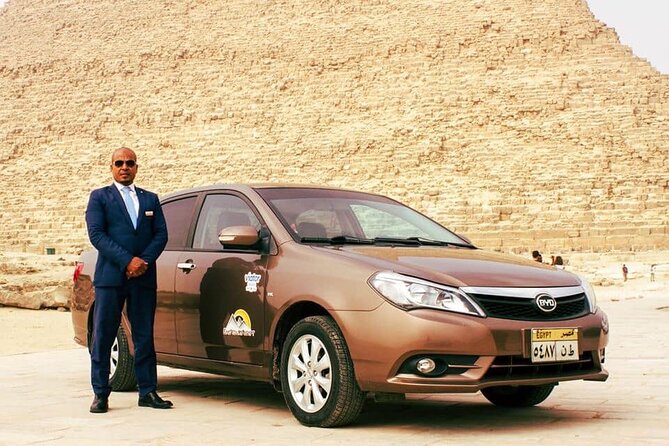
The tour includes round-trip transfers by private A/C vehicle from your hotel in Cairo or Giza, plus drop-off back at your hotel at the end. This convenience is one of the biggest practical wins in the whole experience.
In Cairo, the difference between a tight schedule and a stretched one is usually transportation time and decision fatigue. Here, pickup and routing are handled. That means you can start your day already in the mindset to look, not in the mindset to troubleshoot.
Also, bottled water is included, which you’ll appreciate once you’re out on the plateau. It’s a small detail, but it helps keep the day comfortable without you having to track down supplies on the fly.
Entering the Giza complex: start at the Great Pyramid of Khufu
Your first big stop is the Great Pyramid of Giza, also known as the Pyramid of Khufu (Cheops). This is the “main event” in the Giza skyline: the oldest and largest of the three major pyramids in the complex, and the oldest of the Seven Wonders of the Ancient World that still remains largely intact.
What your guide adds is the context that turns a dramatic photo into understanding. You’re not just looking at a tall triangle of stone. You learn how the Great Pyramid sits within the broader Giza pyramid complex along the Giza Plateau in the Greater Cairo area.
You’ll spend about 2 hours at the complex area. That’s enough time to do more than walk a loop. It’s time to pause, take in angles, and absorb the details that matter, like how the pyramids relate to the surrounding temples and landscape.
A practical note about crowds and time
Even with private time, Giza can feel busy because it’s one of Egypt’s top draws. If you’re trying to get the cleanest photos, staying flexible within your time window helps. A good guide can help you choose the best moments to step back, look, and then move again.
Khufu’s pyramid complex: the valley temple story you actually remember
From the Great Pyramid area, the itinerary moves to what’s called Khufu’s pyramid complex, with about 1 hour set aside. Here’s where the guide’s explanations can make the stones feel less mysterious.
Khufu’s complex is described as having a valley temple—part of it is now buried under the village of Nazlet el-Samman. You also learn that paving and limestone walls have been found, yet the site hasn’t been excavated in a full, open way.
Why this matters: it reminds you that Giza isn’t a museum diorama. It’s a lived-in landscape layered with archaeology. You’re seeing what’s exposed, but you’re also getting a sense of what’s underneath.
You can also read our reviews of more private tours in Cairo



Khafre’s Pyramid: the Sphinx connection becomes obvious

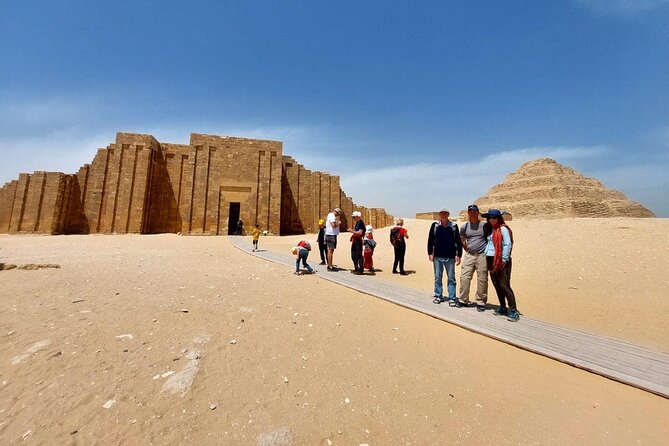
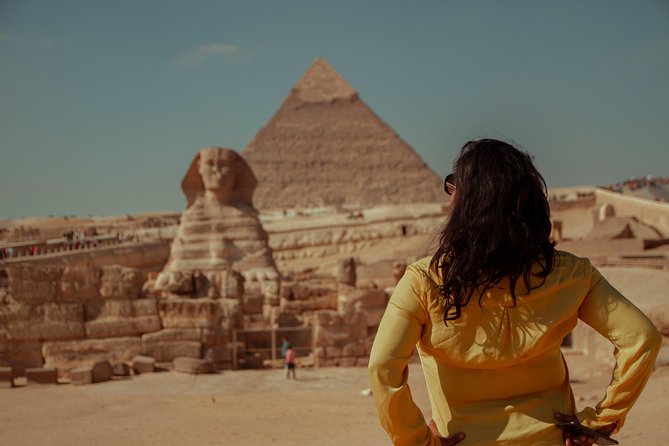
Next comes Khafre’s Pyramid, with about 30 minutes focused on this area. Khafre’s complex is tied closely to the Sphinx. It includes the valley temple, the Sphinx temple, a causeway, a mortuary temple, and the king’s pyramid.
This stop is brief on paper, but it can still land well if your guide points out what to look for. The route between temple spaces is part of the story, and the causeway concept helps you understand how different parts of the complex were linked as a single ceremonial system.
You also get a specific historical detail: the valley temple yielded statues of Khafre, and several were found in a well by Mariette in 1860. Little nuggets like that can make the complex feel more grounded and real, instead of just monumental shapes in the dust.
Menkaure’s Pyramid: small stop, clear shape
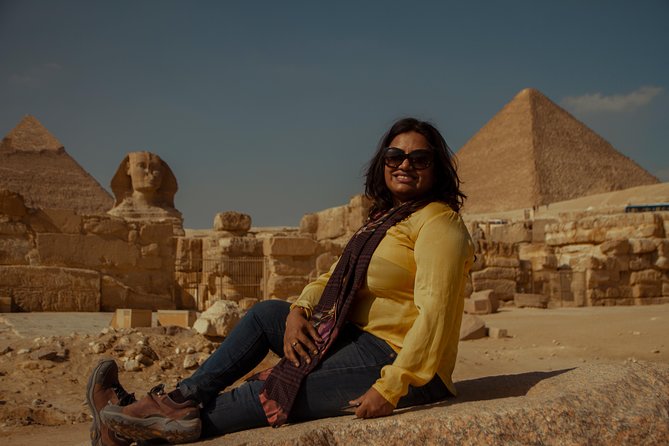
Then you move to Pyramid of Menkaure, also about 30 minutes. Menkaure’s pyramid complex is described as including a valley temple, causeway, mortuary temple, and the king’s pyramid.
One detail that helps you interpret Menkaure’s place in the larger site: during the 5th Dynasty, a smaller ante-temple was added to the valley temple. That kind of timeline information matters because it explains why the complex doesn’t look frozen in one moment.
Even with a short window, this stop gives you the full “three-pyramid sweep” and helps you see the differences in scale and layout rather than treating them as a single pile of landmarks.
The Great Sphinx: scale, alignment, and why it’s not random
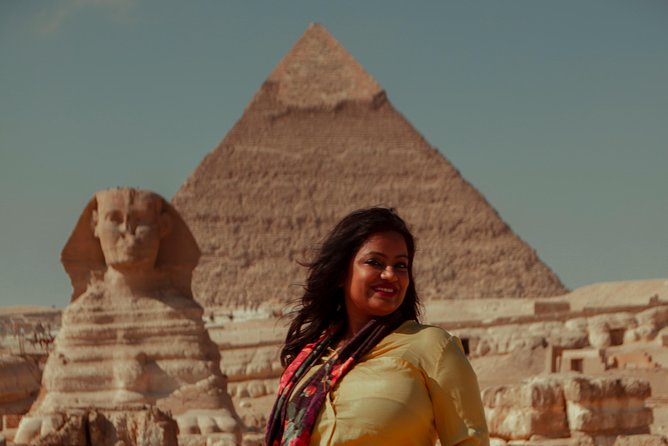
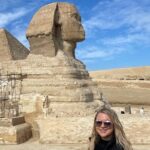
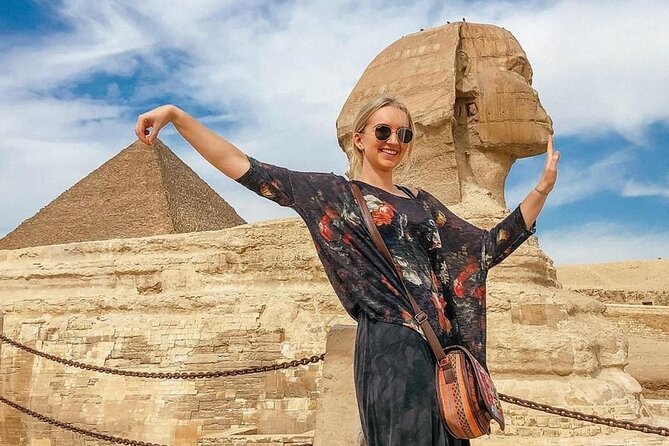
After the pyramids, the itinerary heads to the Great Sphinx. It’s a limestone sculpture of a reclining sphinx with the body of a lion and the head of a human figure, facing West to East.
The guide’s context here is key. The face is generally believed to represent the pharaoh Khafre. The Sphinx’s size is huge: it’s described as 73 meters long from paw to tail, 20 meters high, and 19 meters wide at its rear haunches. It’s also described as the oldest known monumental sculpture in Egypt.
You’ll spend about 1 hour at the Sphinx and surrounding areas. That’s enough time to take in the full body shape, notice the restoration layers, and understand the basic idea that the original shape was carved from bedrock and later restored with blocks.
Photo tip that doesn’t require a trick
If you want the classic Sphinx look, move slowly and change your angle rather than rushing for one shot. A guide can also help you time it with other visitors so you’re not fighting for a clear frame.
Giza Plateau and panoramic views: stepping back for the big picture
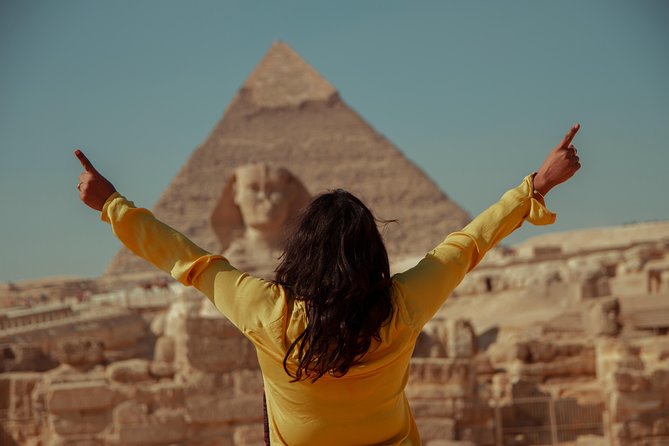
After the Sphinx, you get time on the Giza Plateau with about 30 minutes. The plateau is part of the larger Pyramid Fields in Egypt’s Western Desert edge along the Nile Valley, and it’s part of the UNESCO World Heritage Site.
This pause helps you stop thinking of Giza as individual monuments and start thinking of it as a whole system. The plateau includes the pyramids, multiple cemeteries, a workers’ village, and an industrial complex. Even if you don’t see everything directly, being told what else exists in the same area gives you scale and perspective.
Then you’ll have 30 minutes for a panoramic view. The idea is to see the pyramids and the Sphinx from a broader angle, which is exactly what you need after hours of close-up looking. Light can vary depending on whether you picked morning or afternoon, so treat this as your “zoom out” moment.
Paradise Perfumes Palace & Spa: a quick culture break or a shopping stop
The itinerary includes a 20-minute stop at Paradise Perfumes Palace & Spa. You’re shown their fragrance collection and can hear about scents, with expert perfumers guiding the sensory experience. It’s described as a place to find signature scents and gifts.
This is short by design, but it’s worth calling out: if you’d rather spend every minute outside in fresh air, this may feel like the least “ancient Egypt” part of the tour. On the other hand, it’s a low-pressure pause that breaks up the stone and sun, and you might enjoy learning how fragrance works as a cultural and personal detail.
The tour description also references related stores such as Key of life Papyrus and a Flower cotton store. If you’re not interested in shopping, it’s easy enough to just browse briefly and move on, since the time window is limited.
Tickets, tipping, and what costs extra once you’re there
Here’s the money math in plain terms.
- The price is $40.00 per person and you’re getting a private trip with tour guide, private A/C transfers, and bottled water.
- Admission is described as included for the main stops, but it’s also clearly stated that entrance fees cover basic areas only.
- If you want to go inside the Pyramids, you’ll need additional admission tickets. This part is optional.
So you can think of this as paying for the guide and the experience to the main sights, while entry into the internal pyramid spaces is where extra costs can pop up.
Also, tipping is not included. That’s normal for Egypt tours, but it’s good to remember so you’re not surprised at the end.
Optional extras are listed too:
- Camel ride (optional)
- Quad bike (optional)
- Lunch at local restaurants like koshari (optional)
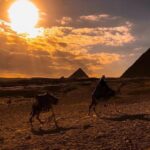
One of the better bits of advice here: if camel rides matter to you, decide in advance and ask your guide early how it fits into the flow. That way you avoid a last-minute scramble while you’re already at the main complex.
Price and logistics: is $40 fair value for Giza?
At $40 per person, this tour can be a strong value because you’re not just buying access to a landmark. You’re paying for:
- A guide to make the site understandable
- Round-trip private transfers in an air-conditioned vehicle
- A half-day schedule that hits the main monuments
Even if admission is partly included, the real cost saver is the logistics. In Cairo, getting to Giza and back without spending time planning routes, dealing with delays, and navigating the site alone can easily make a “cheap ticket” feel expensive in reality.
A good sign: it’s commonly booked about 10 days in advance, which suggests it’s popular and timing can matter. If you have a specific day or a tight itinerary, booking earlier is usually smart.
Who should book this private Giza half-day tour?
This tour fits best if you want:
- A private, guided introduction to Giza in one focused window
- A plan that runs on a schedule (especially with morning vs afternoon choice)
- Less stress from transport, since pickup and drop-off are handled in an A/C vehicle
- The big monuments in the right order, with explanations as you go
It’s also a solid pick for milestones, like birthday trips. One account singled out this kind of Giza day as a memorable birthday present, and the highlight was an added camel ride experience. If your group loves structure, history context, and a guided route, you’ll probably enjoy it.
If you’re the type who wants to roam freely for hours with no structure, then a half-day guided plan might feel too “on rails.” But most people find that Giza is so overwhelming at first that guidance is a relief.
Should you book this private Giza half-day tour?
Yes, if you want your time in Giza to feel organized, understandable, and comfortable. The combination of private guiding, AC transfers, and a route that covers Khufu, Khafre, Menkaure, the Sphinx, and panoramic views makes it a practical way to get the essence of the site without turning the day into a marathon.
Book it especially if you like having a knowledgeable guide answer questions while you’re standing in front of the monuments, not later at your hotel. Just make sure you budget for extra costs if you want to go inside the pyramids, and decide whether you want to add optional experiences like a camel ride or quad bike.
FAQ
How long is the private half-day tour to the Pyramids of Giza?
The tour runs about 6 to 7 hours.
What is included in the $40 per person price?
The tour includes a tour guide, all transfers by private A/C vehicle, a private trip, and bottled water. Admission is listed as included for the main stops, but with the note that it’s for basic area entry only.
Are tickets to enter inside the pyramids included?
No. Going inside any pyramid is optional, and you would need to buy admission tickets if you want to go inside.
Does the tour include hotel pickup and drop-off?
Yes. The guide picks you up from your hotel in Cairo or Giza, and the tour ends with drop-off back at your hotel.
Can I choose a morning or afternoon departure?
Yes. The tour is available in either the morning or afternoon.
What optional activities are available for extra cost?
Optional extras include a camel ride, quad bike, and lunch at local restaurants such as koshari.
What is the cancellation policy?
There is free cancellation. You can cancel up to 24 hours in advance for a full refund. If you cancel less than 24 hours before the start time, the amount you paid is not refunded.