REVIEW · CAIRO
Private Giza Pyramids & Sphinx Day Tour with Lunch from Cairo
Book on Viator →Operated by EMO TOURS EGYPT · Bookable on Viator
Giza hits you fast. One drive west and suddenly you’re staring at the Old Kingdom from ground level, not postcards. This private day tour pairs hotel pickup with a timed loop across the main monuments—Pyramids, Sphinx, and a panoramic view—plus an option for lunch and extras like camel rides.
What I like most is the chance to get real context from an English-speaking local guide. If you’re lucky enough to have a guide like Ms Eman Mostafa, Wael, or Tito, you’ll get clear explanations and practical photo guidance, not just a walk-and-point routine. The other big win is convenience: air-conditioned transport, a private group setup, and bottled water all help you stay focused on the sights.
One consideration: this is a short 3 to 4 hours. If your guide is quieter or you get nudged into extra stops, you might feel the schedule tighten—so I’d politely ask to skip detours like the oil-making stop and also ask how much time you’ll have at each place.
In This Review
- Key Things to Know Before You Go
- How the Half-Day Format Works (and Why It’s a Smart Choice)
- Getting Picked Up in Cairo or Giza (Heat, Timing, and Comfort)
- Stop 1: Pyramids of Giza (The Whole Complex First)
- Stop 2: The Great Pyramid of Cheops (Khufu) (Short Time, Big Impact)
- Stop 3: Menkaure Pyramid (Why the Smaller One Still Matters)
- Stop 4: Khafre’s Pyramid (Where the Sphinx Story Starts to Click)
- Stop 5: Great Sphinx (The Myth Meets the Evidence)
- Stop 6: Giza Plateau Context (UNESCO-level importance, without the lecture)
- Stop 7: Panoramic View of the Pyramids (The Photo Finish)
- Lunch at the Right Time (and the One Big Confusion to Check)
- Extras That Can Turn a Good Tour Into a Great One
- Price and Value: What $35 Buys You in Real Life
- The Guide Quality Factor (and How to Avoid the Worst Case)
- Who This Tour Fits Best
- Should You Book This Private Giza Pyramids & Sphinx Day Tour?
- FAQ
- How long is the Private Giza Pyramids & Sphinx Day Tour?
- Does the tour include hotel pickup and drop-off?
- Is lunch included?
- Are entry fees included?
- Are camel rides or quad bikes available?
- Is this tour private?
Key Things to Know Before You Go
- Private group only means the pace is yours, not a bus schedule
- Air-conditioned pickup and drop-off keeps the heat from hijacking the day
- Main monuments in one loop: Khufu, Khafre, Menkaure, plus the Sphinx area
- Photography-minded guides can help you find stronger angles quickly
- Basic area access is included, but paid add-ons (and some interiors) are separate
- Lunch may be included or optional depending on the option you select
How the Half-Day Format Works (and Why It’s a Smart Choice)
This is built for people who want the highlights without losing a whole day. You get picked up from Cairo or Giza, then you’re out in the desert area for a focused circuit. The whole thing runs about 3 to 4 hours, so you’ll be moving, not wandering.
The value here is time management. Giza is spread out and traffic can be unpredictable, so having someone handle the route and timing matters. It also helps you avoid the common first-day problem: spending an hour just figuring out where to stand, how to reach the next spot, and what you’re actually looking at.
You’ll still get moments to slow down—especially around the Great Pyramid complex and Sphinx viewpoint—but keep your expectations realistic. This is a sprint with payoff.
You can also read our reviews of more private tours in Cairo

Getting Picked Up in Cairo or Giza (Heat, Timing, and Comfort)
Pickup is part of the package, and the transport is air-conditioned, which is a big deal in Cairo’s warmer months. You’ll also have bottled water, so you can focus on sightlines instead of hydration math.
There’s another practical benefit to a private setup: you can ask questions in the car without worrying it slows down a larger group. I like tours that use the drive time well, because that’s when your guide can frame what you’ll see—like which pyramid belongs to which pharaoh, and why the Sphinx matters.
Stop 1: Pyramids of Giza (The Whole Complex First)
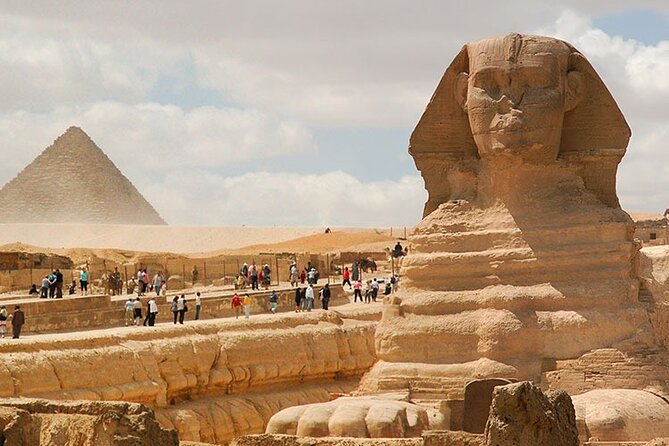
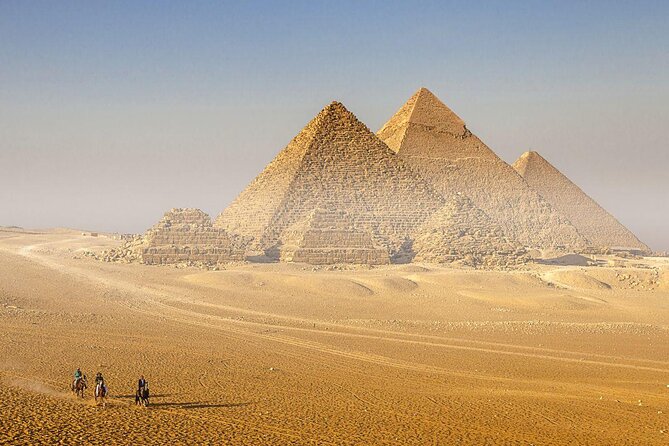
Your first major stop is the Giza Necropolis area, where the Great Pyramid of Giza (Khufu), the Pyramid of Khafre, and the Pyramid of Menkaure dominate the plateau. This is also where you’ll hear the basics of the Fourth Dynasty Old Kingdom story: how these royal monuments were designed as part of a broader mortuary landscape.
What makes arriving here first is clarity. From a single vantage point you can start mapping the site in your mind:
- which pyramid is the largest and why
- where the Sphinx sits relative to the complex
- how the causeways and surrounding structures connect
One practical note: the stop duration is listed as about 1 hour, which is enough to orient yourself, take photos, and start understanding the layout. If you feel rushed, ask your guide to point out the best places for your camera before you move on.
Stop 2: The Great Pyramid of Cheops (Khufu) (Short Time, Big Impact)
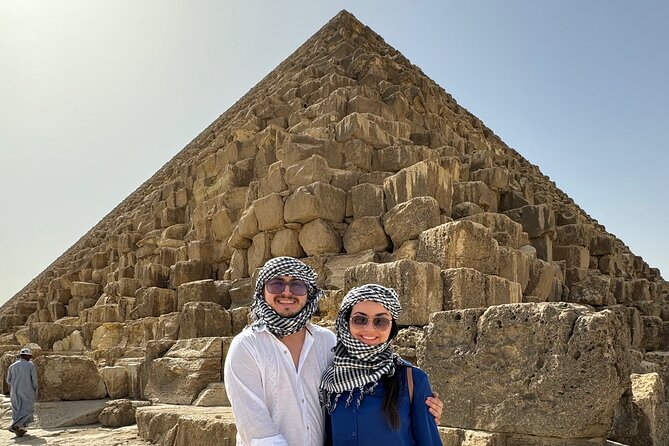
This stop focuses on Khufu’s pyramid complex. You’ll hear what’s known about the valley temple connection, and that some parts are now buried beneath modern activity near Nazlet el-Samman. It’s a reminder that Giza isn’t frozen in time—archaeology, construction, and modern life all overlap here.
The time at this stop is about 30 minutes, so the goal isn’t an in-depth museum-style experience. It’s more like: stand, understand the scale, and connect what your guide is saying to what’s in front of you.
If you want to take photos, this is where you should do it early. Light and angles change quickly, and the next stops may shift your position. I also suggest you ask your guide where Khufu’s complex looks most dramatic from your current route.
Stop 3: Menkaure Pyramid (Why the Smaller One Still Matters)
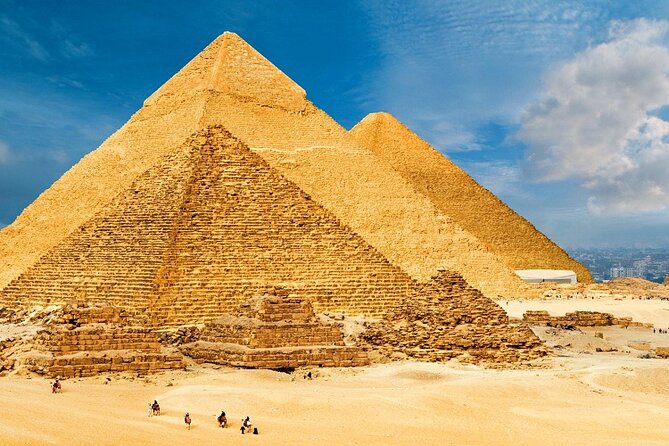
Menkaure’s pyramid complex is the smallest of the three main pyramids, but that doesn’t make it a lesser stop. Here you’ll get the basic breakdown of the complex layout—valley temple, causeway, mortuary temple, and the king’s pyramid—and what kinds of statues were once associated with Menkaure.
This stop is also around 30 minutes, so think of it as a “pattern recognition” stop. Once you’ve seen Khufu and Khafre, Menkaure helps you spot similarities and differences in how the complexes were built and organized.
A few more Cairo tours and experiences worth a look



Stop 4: Khafre’s Pyramid (Where the Sphinx Story Starts to Click)
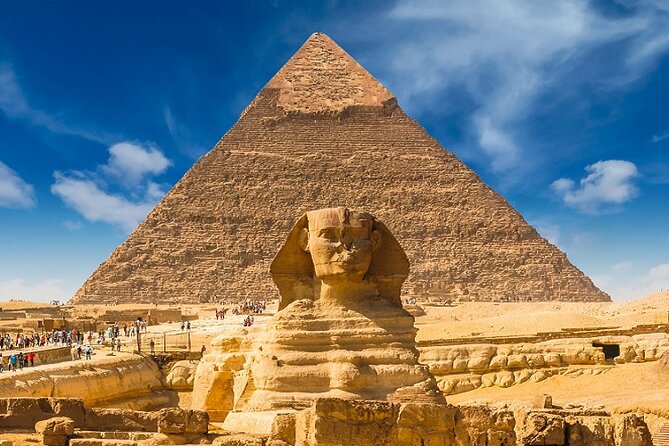
Khafre’s pyramid complex is tied closely to the Sphinx area, and your guide should help you connect those dots. The listing includes references to the valley temple and the Sphinx temple within the broader complex, plus the idea that statues connected to Khafre have turned up in the archaeological record.
This stop is about 30 minutes too, which keeps things efficient but not too rushed if your guide keeps the focus tight. I like giving this stop a quick scan for architectural cues: the bigger picture you get here makes the Sphinx stop far more meaningful.
Stop 5: Great Sphinx (The Myth Meets the Evidence)
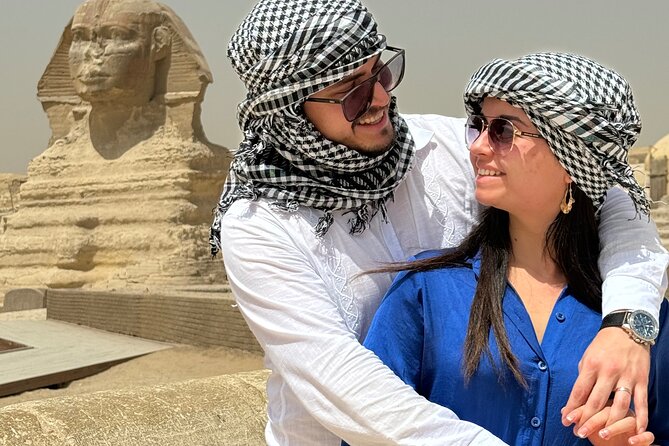
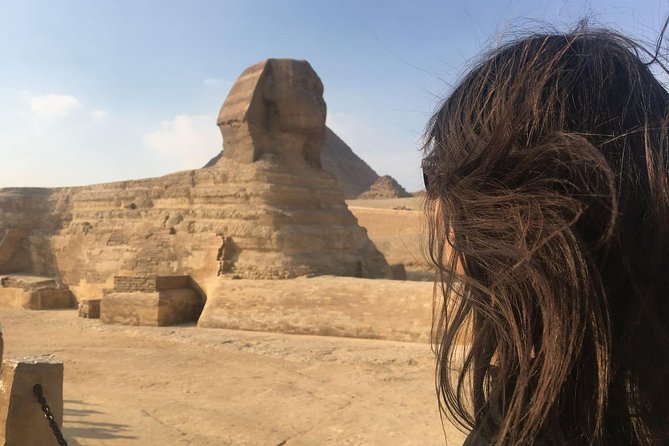
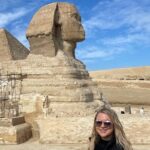
The Great Sphinx is the iconic face you’ve probably seen a thousand times—and still, seeing it in person feels different. Current Egyptology consensus listed here is that the head of the Sphinx is associated with Khafre.
This stop is about 30 minutes. It’s long enough to stand close, take photos, and hear the core story: why it’s positioned where it is, how it relates to the surrounding complex, and what the valley temple concept adds to the narrative.
A practical tip: plan your best photo for this stop. The Sphinx is a single focal point, so if you want the cleanest shot without a cluttered foreground, you’ll usually get better results by thinking ahead rather than grabbing a photo from wherever you first land.
Stop 6: Giza Plateau Context (UNESCO-level importance, without the lecture)
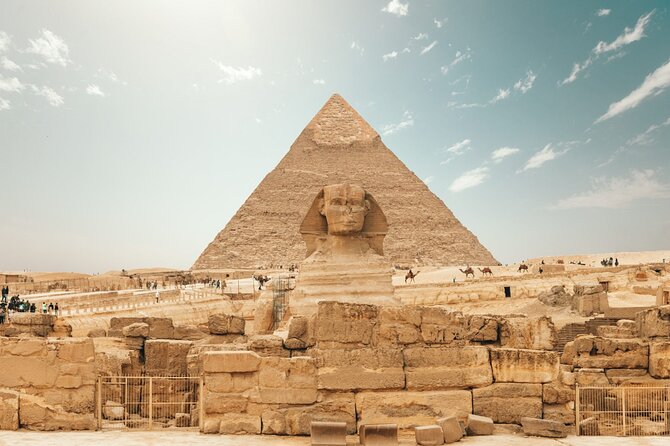
After the main pyramids and Sphinx, you’ll get time in the broader Giza Plateau area. The site is part of the UNESCO World Heritage listing for Memphis and its Necropolis, and it’s described as a limestone plateau about 60 meters above sea level.
Why this matters: even if you only have half a day, a quick reminder of the scale and significance helps your eyes work better. You start noticing the site as a planned environment—royal monuments, cemeteries, and a workers’ village concept—rather than three random structures.
Expect about 30 minutes here, so it’s a context stop, not a long-form walk.
Stop 7: Panoramic View of the Pyramids (The Photo Finish)
The tour ends with a panoramic view segment, about 30 minutes. This is where the day “clicks.” From the right viewpoint, the pyramids feel like a single unified statement across the plateau.
If you care about photos, this is the moment to check your shot list. If you missed a clean angle earlier, the panoramic stop is often where you can fix it. Also, this is a good time to ask your guide what you’re seeing: which pyramid looks like it’s standing taller from this direction, and how the plateau changes the feel of the scale.
Then you’ll be dropped off at your hotel in Cairo or Giza.
Lunch at the Right Time (and the One Big Confusion to Check)
Here’s the one thing you should double-check before you go: lunch is described in two different ways in the info you’ll receive.
- The tour highlights say lunch is included with the half-day tour.
- The options list lunch at a local restaurant (koshari) as optional.
- In practice, some people have planned lunch separately, including meals near the pyramids.
So I’d treat lunch as: likely available, but confirm what’s actually included in your chosen option. If you do have lunch, it’s a nice break from constant walking and heat, and koshari is a good Cairo-style comfort food choice if you like simple flavors.
If you don’t get lunch on the package, you’ll still be well-positioned to eat soon after the tour ends. This half-day schedule is friendly to a follow-up meal with friends or a quick rest before evening plans.
Extras That Can Turn a Good Tour Into a Great One
There are optional add-ons, and they can be worth it if you like light adventure, not just sightseeing.
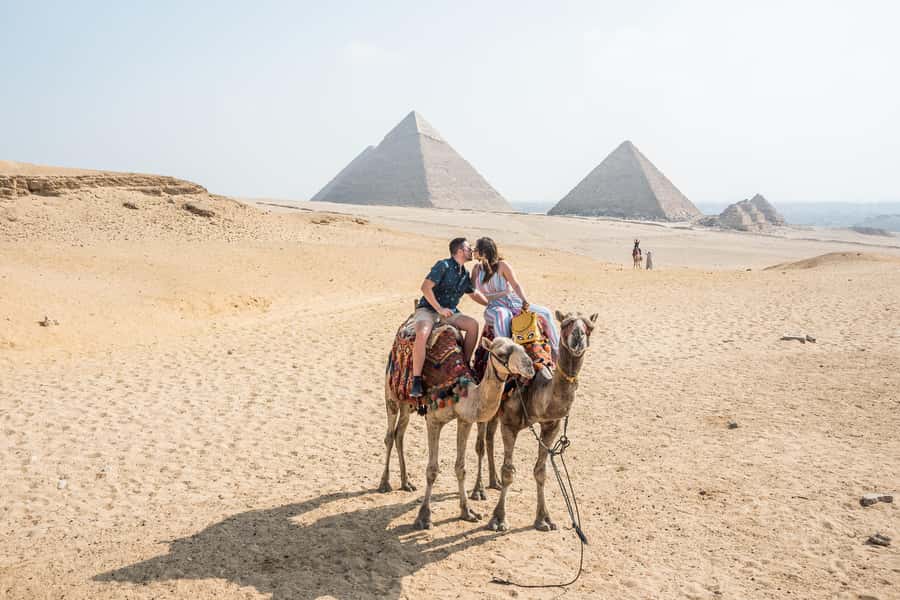
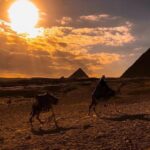
- Camel ride: listed as optional.
- Quad bike (1 hour): optional.
I’ll add one common-sense note: these extras take time and can affect how relaxed your pyramid photos feel later. If your priority is history and photos, consider doing one add-on—or none. If your priority is fun and novelty, pick the camel ride over the quad bike unless you know you enjoy the noise and intensity.
Price and Value: What $35 Buys You in Real Life
At $35 per person, the biggest value isn’t the pyramids themselves—you can find those on your own. The value is the bundle: local guide, pickup and drop-off, air-conditioned transport, bottled water, and a timed route that hits the core monuments fast.
But there’s also a cost reality: entry fees can be tricky with Giza tours. The info here says entrance fees are included for the basic area only, and that entrance fees depend on the tour options chosen. So when you compare value, don’t just compare the headline price. Factor in what you want to access, and whether you’re paying only for ground viewing or extra areas.
One more “value” detail: this is private, meaning your group doesn’t have to match the pace of strangers. That can be worth real money if you’re traveling with kids, older relatives, or just prefer control over your time.
Also note: it’s described as often booked around 11 days in advance, which is a sign it’s a popular half-day plan. If your dates are tight, I’d book early.
The Guide Quality Factor (and How to Avoid the Worst Case)
Giza tours can vary a lot because the monuments require explanation. If your guide tells the story clearly, everything feels easier: you understand why the Sphinx is where it is, and why Khufu and Khafre look the way they do.
If your guide is more quiet, you may get less context. In that case, you can fix a lot by asking simple questions:
- Which pyramid is which, and how do I tell them apart?
- What’s the Sphinx story, and why is it linked to Khafre?
- Where should I stand for the best photos right now?
One practical request that comes up: ask to skip any oil-making stop if it’s not your thing. If you want maximum pyramid time, make that preference upfront.
Who This Tour Fits Best
This tour is a strong match for:
- first-time visitors to Giza who want the highlights without a full-day commitment
- travelers who value an English-speaking guide and context
- people staying in Cairo or Giza who want smooth logistics handled for them
It may feel less ideal if you want lots of walking time, deep museum-style explanations, or a slow, wandering experience. The half-day format is efficient, and it rewards focus.
Should You Book This Private Giza Pyramids & Sphinx Day Tour?
Yes, if your goal is a focused, beginner-friendly Giza hit with minimal hassle. The price-to-coverage ratio is good for a private setup: pickup, guide, bottled water, air-conditioned ride, and a structured circuit across the key monuments.
I’d be cautious only if you know you’ll be picky about pacing and detours. If you want maximum time on-site and zero distractions, confirm your option details before you go and politely ask to skip anything you don’t care about.
If you get a solid guide, this is the kind of half day that leaves you talking about the proportions and the Sphinx for the rest of your trip.
FAQ
How long is the Private Giza Pyramids & Sphinx Day Tour?
The tour is listed as approximately 3 to 4 hours.
Does the tour include hotel pickup and drop-off?
Yes. Hotel pickup and drop-off in Cairo or Giza are included.
Is lunch included?
Lunch is described as included in the highlights, but lunch at a local restaurant (koshari) is also listed as optional. Confirm what option you select so you know what’s included.
Are entry fees included?
Entrance fees are listed as depending on the tour options, and entry fees include basic area only.
Are camel rides or quad bikes available?
Yes. A camel ride is listed as optional, and a 1 hour quad bike is listed as optional.
Is this tour private?
Yes. It’s a private tour/activity, so only your group participates.