REVIEW · SHARM EL SHEIKH
Private full Day Tour To Luxor from Sharm El Sheikh by flight
Book on Viator →Operated by Etro tours · Bookable on Viator
Luxor without the Cairo crush. A fast flight gets you into ancient Thebes with a calmer pace, and you still hit the big names like the Valley of the Kings and Karnak. What I like most is the door-to-door plan (pickup, transfers, return flight) and the fact it runs as a private tour, so you’re not wedged into the loud chaos that can come with big group sightseeing. One real drawback to consider: it’s an early start and a long day, and there can be extra waiting time and optional add-ons that affect your schedule.
The core idea is simple: Luxor is split by the Nile into the East Bank (temples) and West Bank (royal tombs). You’ll see both in one push, plus a lunch break on the East Bank to reset before the next set of sights. Also note the shopping/ad-ons part can be a deal-breaker for some people, and entrance fees are not included (except for one short stop), so you’ll want to budget ahead.
In This Review
- Key highlights I’d plan around
- Flying to Luxor: saving hours for temples, not traffic
- The 4:30am start and the long-day reality check
- Valley of the Kings: royal tombs hidden in the hills
- Deir el-Bahari and Hatshepsut: temple terraces carved into the mountain
- Colossi of Memnon: a quick stop with included entry
- Karnak Temples: the hypostyle hall and the biggest temple energy
- Lunch and timing: what’s included, what you should plan
- Price and value: what you’re paying for (and what you’re not)
- Shopping stops and optional add-ons: the one thing to read carefully
- Guide quality matters: Ahmed Hassan as a real example
- Should you book this Luxor day trip by flight?
- FAQ
- What time does the tour start from Sharm el Sheikh?
- How long is the private Luxor tour from Sharm el Sheikh?
- Is this tour private?
- Are airport flights included?
- Is lunch included?
- Are entrance fees included for the temples?
- Do you get picked up and dropped off at your hotel?
- Does weather matter for the trip?
Key highlights I’d plan around
- Flight time that protects your day: you’re not spending the whole day on the road.
- Private format: only your group, with a qualified Egyptologist and a private licensed driver in Luxor.
- West Bank lineup: Valley of the Kings + Deir el-Bahari (Hatshepsut) in the classic order most people want.
- Karnak scale: the hypostyle hall and Karnak’s major landmarks are the centerpiece on the East Bank.
- Lunch included, but no dinner: you’ll eat once on the trip, then handle dinner back in Sharm.
Flying to Luxor: saving hours for temples, not traffic
A Luxor day from Sharm el-Sheikh is one of those rare trips where the logistics actually help the sightseeing. By air, you cut out the long overland stretch that can swallow an entire vacation day. That means your schedule feels like it’s built for monuments, not for getting from place to place.
It also matters that Luxor attracts fewer first-time tourists than Cairo. The result is usually a more relaxed atmosphere around many of the sights (especially compared to the frantic feel you can get around Cairo’s main hubs). You still need to be ready for typical Egypt-site crowds and security checks, but the overall rhythm tends to be calmer.
The tour is offered as a private experience, which changes the feel immediately. You travel together, ride together, and move between stops with a plan—no negotiating for space or waiting for other groups. That’s also where the driver and Egyptologist setup matters: the driver handles the in-city transfers, while your guide keeps the story straight and the timing sensible.
You can also read our reviews of more private tours in Sharm el Sheikh



The 4:30am start and the long-day reality check
Start time is listed as 4:30am, and the full duration is about 16 hours 15 minutes. In practice, you’re committing to a very early morning and a late return. One of the common themes in feedback is that it feels like a marathon: you’ll see a lot, but you may spend a chunk of the day waiting between the major blocks.
Here’s why that happens. You’ve got multiple travel pieces in one day:
- pickup in Sharm
- flight to Luxor
- guided time on the West Bank and East Bank
- return flight to Sharm
- transfers back to your hotel
Even if every part goes smoothly, your day will still be long. And the tour includes lunch, which helps a lot. Still, you should expect that dinner is on your own schedule after you get back to Sharm.
Valley of the Kings: royal tombs hidden in the hills
Your West Bank tour begins with the Valley of the Kings. This is where Luxor’s reputation as a world-famous “open air museum” turns real: it’s a set of burial valleys carved into the hills, chosen for kings when Luxor was the power center (ancient Thebes).
You get about 2 hours here. The valley is known for more than 62 tombs, cut by kings from the 18th, 19th, and 20th dynasties. The name that most people connect to is Tutankhamun, and the valley became widely famous after the discovery of his tomb.
One practical note: the Valley of the Kings admission ticket is not included. You’ll want to either pay onsite (if your guide plans for that) or confirm the exact ticket process in advance so you’re not stuck working out logistics while time ticks away.
After the tomb time, the plan includes a chance to experience the local feel of the West Bank area and some time with handcrafts. That portion isn’t about temples—it’s about how people in the area sustain their livelihoods today. If you like genuine small encounters and don’t mind that it’s part of the cultural package, it can be a nice reset before the next big monument.
Deir el-Bahari and Hatshepsut: temple terraces carved into the mountain
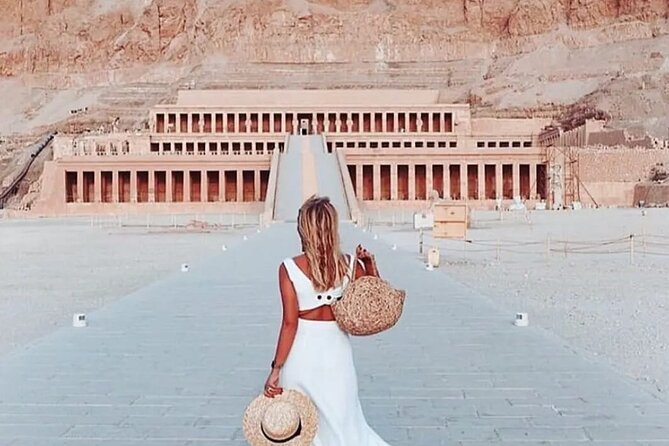
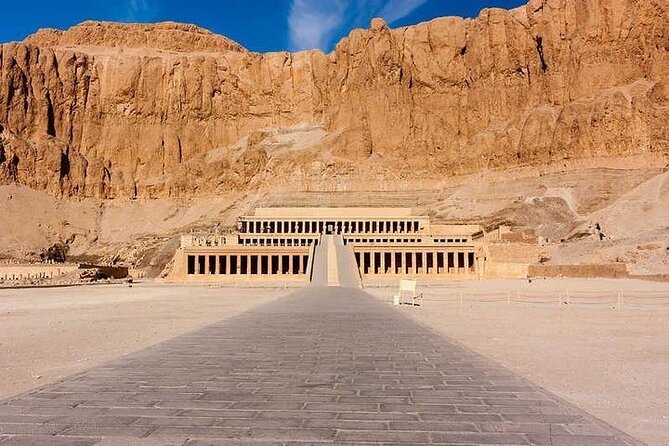
Next up is the Temple of Hatshepsut at Deir el Bahari. This is one of Egypt’s most striking “built into the landscape” scenes because the temple is shaped by terraces and cliffs. Your time here is also about 2 hours.
Hatshepsut is the key story. She was a queen-ruler (15th century B.C.), and her mortuary temple at Deir el-Bahari is the monument people come to see. The temple’s placement and architecture make it feel dramatic even before you start noticing details like columns, carvings, and the layout across terraces.
Admission is not included for this stop either, so budget accordingly. If you want to see Egypt at full steam, this is a great place to slow down and let your guide explain the why behind the design—this temple works as both architecture and royal propaganda, all in one.
After finishing on the West Bank, the tour shifts toward lunch and a break on the East Bank. That transition matters more than it seems: you’re moving from tomb valleys to major temple complexes, and your brain needs a pause before the bigger crowd spaces.
Colossi of Memnon: a quick stop with included entry
Then comes the Colossi of Memnon, two huge statues connected to the mortuary temple of Amenhotep III. This stop is short—about 15 minutes—but it’s still worth it because it’s a signature Luxor moment: monumental scale, simple photo-friendly framing, and a clear link to what the temple area once was.
The admission ticket is listed as included here. That’s useful because it reduces one payment step in the middle of a day that already has several separate ticket moments.
Because the stop is brief, you’ll likely get the essentials: a sense of scale, a few key facts, and then you move on. If you like longer wandering time, you may wish you had more minutes here—but as part of a tight schedule, this works.
A few more Sharm el Sheikh tours and experiences worth a look





Karnak Temples: the hypostyle hall and the biggest temple energy
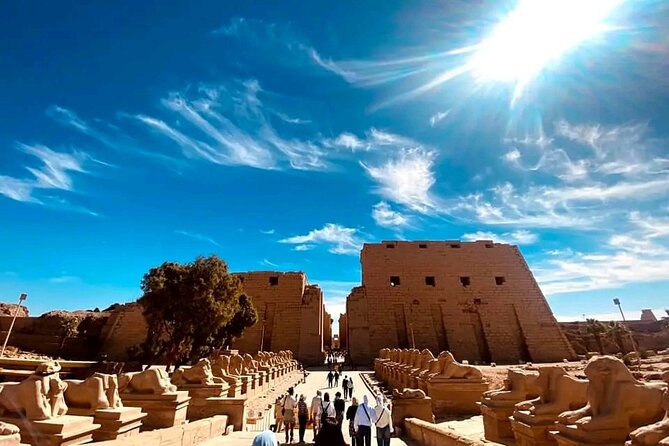
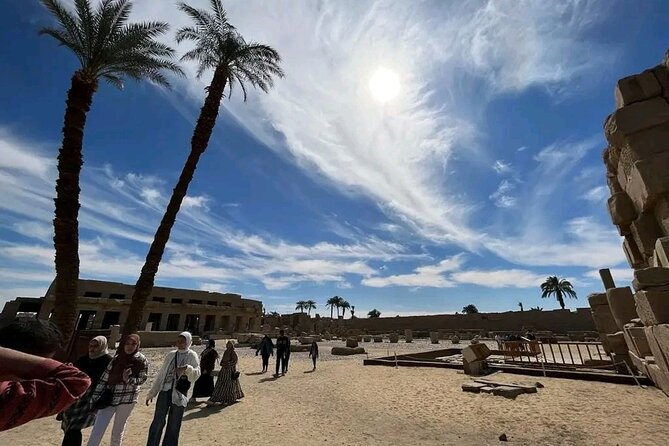
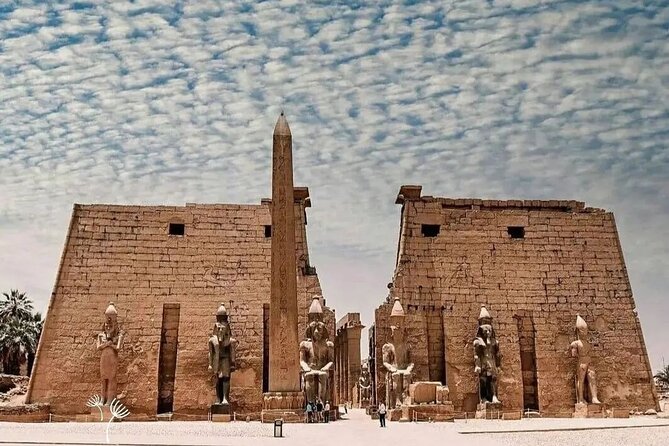
Your East Bank highlight is the Karnak Temples complex. Expect about 2 hours here. Karnak is huge in the most literal way: it’s described as the second biggest religious complex in the world, and the star feature people remember is the hypostyle hall.
Your tour includes the context for that hall: the hypostyle hall associated with Ramses II is famous for its 134 columns, and the site evolved across different generations of pharaohs. That mix is why Karnak can feel like multiple layers of Egypt standing in one place.
You’ll also hear about the obelisks, including Hatshepsut’s obelisk, noted as the tallest obelisk in Egypt. Even if you’re not hunting every engraving, the big picture is what hits: Karnak wasn’t a single temple—it was an empire-sized religious statement.
Admission is not included for Karnak on this tour, so plan for that payment. If you’re trying to keep the day smooth, ask your guide ahead how tickets will be handled. You don’t want the whole group stopping for a payment step while you’re halfway through the complex.
Lunch and timing: what’s included, what you should plan
Lunch at a local restaurant is included. That’s a real value point in a full-day itinerary like this, because it stops you from having to find food in-between timed stops.
What isn’t included is dinner. The trip is designed so you return to Sharm in time to catch dinner later on your own. One piece of wording in the schedule suggests you’ll arrive just in time for last orders, but the important thing is: don’t assume dinner is part of the package.
Also, because the start is early, I’d treat the day like this:
- Eat something light before pickup if you can.
- Keep a small water and snack plan for the longer waiting windows.
- Bring a way to handle heat and sun, since you’ll be outside during multiple temple and tomb visits.
Price and value: what you’re paying for (and what you’re not)
The price is $250 per person, and the tour is typically booked around 54 days in advance. That timing matters because the flight seats and day planning depend on schedules.
So what are you actually buying with this cost?
- Round-trip flight between Sharm and Luxor included
- Hotel/port pickup and drop-off in Sharm
- Door-to-door transfers within the day plan
- A qualified Egyptologist guide
- Lunch included
- Private licensed driver during your time in Luxor
- Mobile ticket
What you’re not buying:
- Entrance fees (not included) with the exception of the Colossi of Memnon stop
- Tipping
When you compare that to cheaper tours that use long road travel, the flight component is a big part of the value. It’s also why this tour can feel “more relaxed” than Cairo-style trips: less time stuck in transit fatigue, more time spent on the actual monuments.
Still, I think it’s fair to set expectations. If you dislike waiting time or any optional add-ons, the $250 can feel less like a bargain. If you go in knowing it’s a long, structured day, it can be excellent value for hitting the main East and West Bank highlights.
Shopping stops and optional add-ons: the one thing to read carefully
One negative review point stood out: there can be extra time spent waiting, and there may be optional add-ons that can lead to additional charges. There were also mentions of shopping stops—places designed more for purchases than for sightseeing.
This doesn’t show up as a clear “stop list” in the standard monument schedule, so treat it like a potential variable: the big sights are fixed, but the day’s downtime and optional segments may depend on how the operator manages timing and upgrades.
If you want zero pressure, do two things before you go:
- Confirm whether any shopping stops are included in the day plan.
- Ask if there are optional experiences with extra cost, and whether declining them affects your time.
You can’t control heat, crowding, or travel timing—but you can control how surprised you feel by the non-temple parts of the day.
Guide quality matters: Ahmed Hassan as a real example
One name showed up in feedback: Ahmed Hassan. The praise wasn’t just about facts—it was about organization and caring guidance. The kind of guide you want for Luxor is someone who can connect the tombs and temples to the bigger story, and keep you moving without turning the day into a rushed checklist.
If you get a guide with that kind of energy, the difference is huge. Karnak becomes more than columns. Valley tombs become more than random doorways. Deir el-Bahari becomes a queen’s statement in stone.
Even with a tight schedule, a strong Egyptologist turns the trip from sightseeing into understanding.
Should you book this Luxor day trip by flight?
I’d book it if you:
- want a private day with a guided East/West Bank hit list
- prefer flying over long overland travel
- care most about Karnak and the royal sites of the Valley of the Kings
- don’t mind a long day starting at 4:30am
I would think twice if you:
- hate long waiting periods and prefer slow, flexible schedules
- want zero shopping or zero optional add-on time
- have a hard time with very early mornings and late returns
The short version: for the price, the flight and guided structure are a strong value. Just go in with your eyes open about time length and possible optional segments.
FAQ
What time does the tour start from Sharm el Sheikh?
The start time is listed as 4:30am.
How long is the private Luxor tour from Sharm el Sheikh?
The duration is approximately 16 hours 15 minutes.
Is this tour private?
Yes. It’s a private tour/activity, and only your group participates.
Are airport flights included?
Yes. Flight tickets Sharm el Sheikh → Luxor → Sharm el Sheikh are included.
Is lunch included?
Lunch at a local restaurant is included.
Are entrance fees included for the temples?
Entrance fees are not included in general. The Colossi of Memnon stop specifically lists admission as included, while Valley of the Kings, Deir el-Bahari, and Karnak list admission as not included.
Do you get picked up and dropped off at your hotel?
Yes. The tour includes hotel/port pickup and drop-off, plus door-to-door transfers.
Does weather matter for the trip?
Yes. The experience requires good weather, and if it’s canceled due to poor weather, you’ll be offered a different date or a full refund.