REVIEW · HURGHADA
Luxor with private car and private tour guide from Hurghada
Book on Viator →Operated by Excursies Egypte-Day Tours · Bookable on Viator
Luxor hits different when it is your guide and your car. This private day trip from Hurghada is built around the West Bank’s biggest names, including the Valley of the Kings, Hatshepsut’s temple at Deir el Bahari, the Colossi of Memnon, and Karnak, plus a late-afternoon horse carriage ride.
What I like most is the pace that comes with privacy: you leave early (start time 5:00am), you get dedicated time at each site (not constant shuffling), and you have a real guide to explain what you’re looking at. A second big plus is value for a full day—your admission tickets (Valley of the Kings, Hatshepsut, Karnak) and lunch are included, and bottled water is on board.
The main drawback is simply the commitment: you’re looking at an early start and a long travel day, with pickup around 5:00am and return by about 9:00pm. If you hate early mornings, this is the part to think through.
In This Review
- Why a private car changes Luxor
- Key things to know before you go
- The practical reality: a private Luxor day from Hurghada
- Entering the Valley of the Kings: why you need the extra time
- Hatshepsut at Deir el Bahari: symmetry you can feel
- Colossi of Memnon: two statues, a bigger story
- Karnak Temple: plan for scale
- Lunch and the human pace of a real day
- The guides: clear explanations make the difference
- Price and value: what you’re actually paying for
- Who this tour fits best
- Ways to tailor the day without breaking the flow
- Should you book this Luxor tour from Hurghada?
- FAQ
- What time is pickup in Hurghada?
- How long is the Luxor day tour?
- Is a private car included?
- Are the tickets included for the main attractions?
- Is lunch included?
- Does the tour include a horse carriage ride?
- Is a boat trip included?
- Can I change the itinerary on the day?
Why a private car changes Luxor
I love how the private vehicle setup makes this day feel focused. You’ll cross the Nile to the West Bank, hit the big sights in a sensible order, then return to Hurghada without relying on a bus schedule. In multiple past trips, guides like Mohamed and Hamdy have been praised for keeping the story clear, even for families—and that matters because these temples can feel like “a lot of stone” until someone puts it into context.
Key things to know before you go
- Early pickup at 5:00am means you’ll arrive in Luxor around 9:30am and still have time for multiple sites.
- Valley of the Kings is a real time block (about 3 hours) with admission included.
- Hatshepsut at Deir el Bahari gets its own stop (about 1 hour) at one of the best-preserved temple layouts in Luxor.
- Colossi of Memnon is short but meaningful (about 30 minutes) and admission is free.
- Karnak plus an hour horse carriage ride gives you both scale and a slower end to the day.
- You can request small changes—like swapping Karnak for Luxor Temple or adding time in the souq—when possible.
You can also read our reviews of more guided tours in Hurghada



The practical reality: a private Luxor day from Hurghada
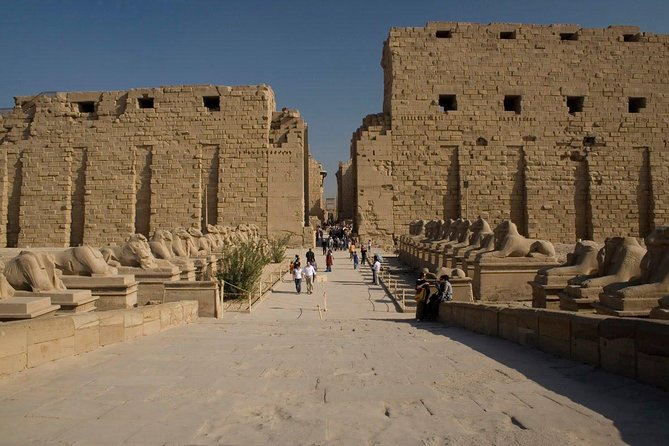
This tour is designed for people who want the classic Luxor highlights without turning the day into a logistics test. You’re picked up from your Hurghada hotel at 5:00am, travel by private air-conditioned vehicle, and arrive in Luxor at around 9:30am. Then the itinerary runs like a sequence of “world-class stops,” with enough time at each place to actually read the room—figuratively and literally.
The return is built around a late pick-up in Luxor: you’ll head back to Hurghada with the private car at about 5:30pm and arrive at your hotel around 9:00pm. So yes, it’s long. But it’s also efficient. You’re basically trading one day’s worth of energy for seeing several of Egypt’s most famous monuments in one sweep.
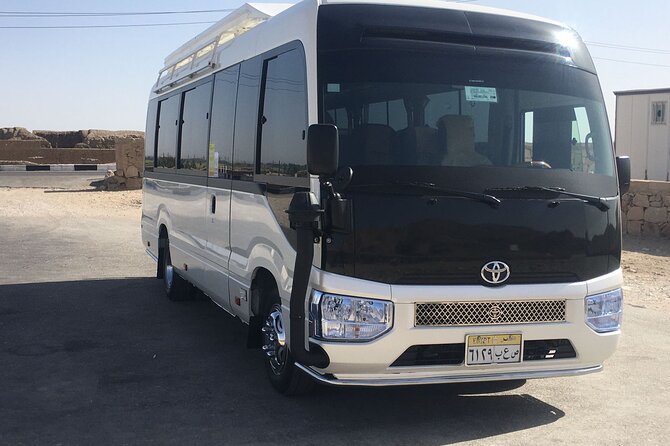
If you’re planning Luxor as a quick add-on to a Hurghada beach stay, this is one of the more straightforward ways to do it. You get a dedicated driver, a private English Egyptologist guide, and a full itinerary that doesn’t rely on you playing time-management Tetris.
Entering the Valley of the Kings: why you need the extra time
The day starts on the West Bank with the Valley of the Kings. You’ll spend about 3 hours here, and admission is included. This is where Egypt’s rulers from the 18th to 20th dynasty were buried, including legendary names like Ramses II and the boy pharaoh Tutankhamen.
Here’s what I think makes this stop worth protecting time for: the Valley isn’t just about tombs on the outside. The experience is mostly about what happens once you’re inside—where tombs were decorated and stocked with materials meant to support the next world. The itinerary notes that many decorations are still well preserved, and that’s a huge part of why people walk in and feel the impact quickly.
A good private guide is especially valuable in the Valley, because you’re not only looking at artwork. You’re trying to understand a burial system, symbolism, and a timeline of rulers. When guides like Mohamed have been mentioned positively for making it interesting for kids, that tells me the explanations aren’t just technical—they’re structured so people can follow along.
Consideration: if you’re sensitive to crowds or confined spaces, you’ll want your guide to pace you inside tomb areas. The tour gives you a dedicated window, which helps because you can slow down where you want and keep moving without feeling rushed.
Hatshepsut at Deir el Bahari: symmetry you can feel
After the Valley, you move to the Temple of Hatshepsut at Deir el Bahari. This stop is about 1 hour, with admission included.
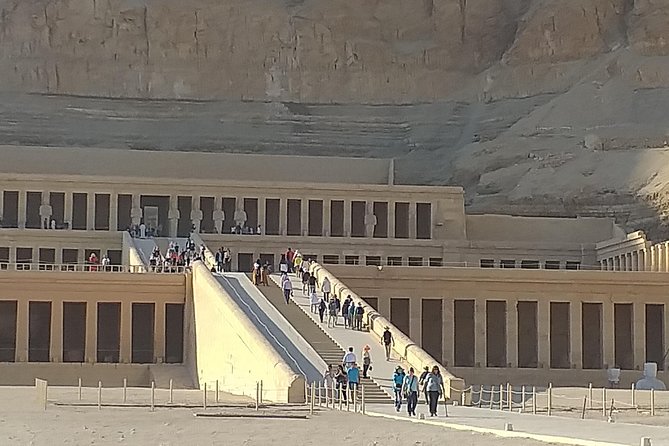
This temple is famous for its architecture—built on three levels, connected by two wide ramps. If you’ve ever wondered why some ancient sites feel “calm” even when they’re enormous, it’s often because of layout. Deir el Bahari is one of those places where the structure does some of the emotional work for you. You don’t have to be an architecture expert to feel the order.
I like that the itinerary gives this stop its own block rather than making it a photo-op and a dash. You’ll have time to stand back, take in the levels, and then look closer. And since your guide is there with you, you can connect the temple’s location and design to who built it and why.
Practical tip: wear something comfortable for steps and uneven ground. Even when a temple looks “straightforward,” you’ll be on a lot of surfaces that are meant for walking, not for sightseeing shoes.
Colossi of Memnon: two statues, a bigger story
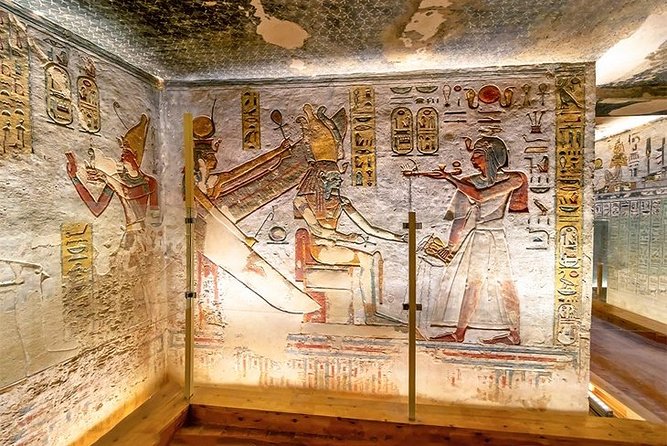
Next up are the Colossi of Memnon. You get about 30 minutes here, and admission is free.
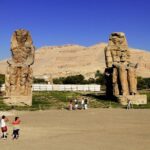
These are two massive stone statues of King Amenhotep III. They’re described as the remaining pieces of a complete mortuary temple, which is one of those moments where you realize you’re seeing fragments of something once much larger. The tour also notes the stones were made from blocks of quartzite sandstone that exist in Cairo and were moved about 700 km to Luxor.
Thirty minutes might sound short—but for this type of stop, it’s the right amount. It’s a strong visual moment with a clear, compact payoff. If you want the story, the guide will do that. If you want photos, you’ll have time without the “endless loop” feeling that some stops create.
You can also read our reviews of more private tours in Hurghada






Karnak Temple: plan for scale
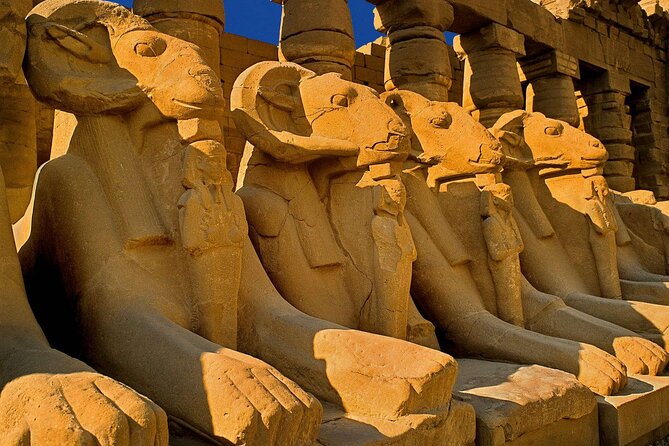
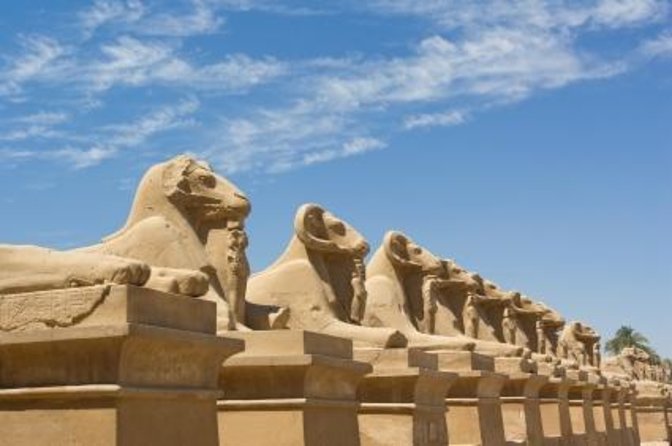
Then it’s on to Karnak Temple, one of the largest ancient religious sites known anywhere. In the itinerary, this stop is set aside for roughly 3 hours, with admission included.
Karnak can overwhelm you if you show up with no structure. That’s exactly why this is a “private guide” tour, not a “wander and hope” tour. With a good guide, you’ll understand what you’re looking at—temple sections, the role of different areas, and why Karnak mattered so much.
I also like that the tour doesn’t end at Karnak. It follows with a late afternoon horse carriage trip (about 1 hour). That break turns the day from nonstop monuments into a more relaxed way to see daily life and stretch your legs a bit.
If you finish early, there may be time for shopping for souvenirs in Luxor’s souq or for a bit of self-guided wandering in central Luxor. This is one of those flexible moments where you can match the tour to your energy level.
Lunch and the human pace of a real day
Your day includes lunch at a local restaurant in Luxor. You also get bottled water on board during the drive, which is one small comfort that matters on a long day.
A private car and guide can sometimes turn sightseeing into a scripted checklist. Here, the structure feels intentionally balanced: big monument blocks in the morning and midday, then a slower wind-down in the late afternoon with carriage time. That rhythm makes a difference, especially if you have kids with you or if you don’t want to burn through your energy before you even reach the “wow” moments.
Also, because this is private, you can ask questions on the fly. You’re not competing with a group for attention, which makes the explanations feel more personal.
The guides: clear explanations make the difference
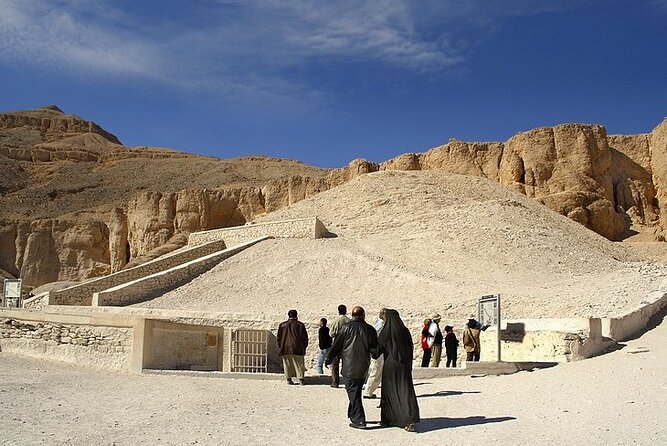
The tour includes a private English Egyptologist guide. In real-world experience with this kind of service, what changes the outcome is the guide’s ability to explain without turning everything into a lecture.
Past trip feedback has highlighted guides like Hamdy and Mohamed, and they were praised for knowing a lot and for handling requests smoothly. That matters because Luxor is not just one temple—it’s a whole set of stories. The guide’s job is to connect those stories so you leave with a mental map, not only photos.
If you’re traveling as a family, this kind of guide-driven storytelling can be the difference between kids staying engaged and kids counting the minutes.
Price and value: what you’re actually paying for
At $164.09 per person, this tour is not a “budget bus day,” and that’s okay. You’re paying for:
- Private, air-conditioned transfers from Hurghada and back
- Private guide time throughout the day
- Included admissions for Valley of the Kings, Hatshepsut, and Karnak
- Lunch
- Horse carriage trip
- Bottled water and service charges/taxes
When you total those categories, the price starts to make more sense. A lot of Luxor day options separate vehicle, guide, and tickets like separate bills you only discover after booking. Here, you’re getting a bundled plan, which reduces stress.
Value for you: if you’d rather spend money on a smoother day (your own car, your own guide, your own pacing) than on piecemeal add-ons, this is the right style of tour.
Consideration: tipping isn’t included. If you like to tip based on effort and friendliness, budget for it.
Who this tour fits best
This Luxor day trip is a strong choice if:
- You want the big West Bank highlights in one go
- You value private guiding over group logistics
- You’d like a plan that includes more than just temples (the horse carriage ride is a nice balance)
- You’re okay with an early start and a long day
It’s also a good fit for families when the guide keeps explanations clear and adaptable. The format gives you enough time to slow down when needed without giving up the key sites.
Ways to tailor the day without breaking the flow
The tour information says you can request changes when possible. For example, you might be able to:
- Swap Karnak Temple with Luxor Temple
- Spend more time in the souq
This kind of flexibility is useful because Luxor isn’t one-size-fits-all. Some people want more temple focus, others want more local strolling. Having the option means you can adjust your priorities without sacrificing the morning backbone of the itinerary.
Should you book this Luxor tour from Hurghada?
I’d book it if you want a structured, private way to see Luxor’s major monuments in a single day without guessing about timing or ticket logistics. The combination of a dedicated guide, included admissions at the biggest sites, and a relaxed late-afternoon horse carriage ride makes the day feel balanced rather than exhausting.
Skip it or rethink the fit if you strongly dislike early mornings, or if you want a more relaxed multi-day rhythm in Luxor itself. This itinerary is designed to compress a lot into one day, which is fantastic when you’re ready for the pace.
If you’re the kind of traveler who likes a clear plan, good explanations, and a smooth return to your Hurghada hotel, this is a smart way to get your Luxor fix.
FAQ
What time is pickup in Hurghada?
Pickup starts at 5:00am. You’ll travel to Luxor and arrive at around 9:30am.
How long is the Luxor day tour?
The duration is listed as about 1 day.
Is a private car included?
Yes. The tour includes all transfers by a private air-conditioned vehicle from your hotel in Hurghada and back.
Are the tickets included for the main attractions?
Yes. Admission is included for the Valley of the Kings, Temple of Hatshepsut, and Temple of Karnak. The Colossi of Memnon admission is free.
Is lunch included?
Yes. You’ll have lunch at a local restaurant in Luxor.
Does the tour include a horse carriage ride?
Yes. After Karnak, you get an hour traditional horse carriage trip.
Is a boat trip included?
No. A boat trip is listed as not included.
Can I change the itinerary on the day?
You can request changes when possible, such as visiting Luxor Temple instead of Karnak or spending more time in the souq.