REVIEW · HURGHADA
Luxor: Valley of the Kings and Hatshepsut Temple w/Nile Boat
Book on GetYourGuide →Operated by FTS Travels · Bookable on GetYourGuide
Luxor can feel impossibly big—until you see it organized. The trip pairs major sites like Karnak Temple and the Valley of the Kings with clear explanations from guides such as Nana, Ahmed, Shaban, and Doa. I particularly love the way a certified Egyptologist-style guide turns carvings and tomb layouts into something you can actually picture, and I love the smaller group pace that makes questions easy instead of rushed.
You’ll start with a hotel pickup in an air-conditioned vehicle and drive the long road to Luxor with snacks and lots of cold drinks waiting for the heat. Then you get the best “sequence” for first-timers: Karnak on the East Bank, an optional Nile boat crossing over to the West Bank, and then the core West Bank trio—Valley of the Kings, Hatshepsut, and the Colossi of Memnon.
One consideration: it’s a long, hot day. Even with air-conditioning on the bus, you’ll spend time outdoors at temples, and the early start can feel like a commitment.
In This Review
- Key highlights worth caring about
- Luxor From Hurghada: early start, air-conditioning, and a real plan
- Karnak Temple and the Avenue of Sphinxes: where the scale shocks you
- Optional Nile boat crossing: a short break with big views
- Valley of the Kings: tomb art, hieroglyphs, and the Tutankhamun add-on
- Hatshepsut Temple: terraces that make the story feel human
- Colossi of Memnon: quick, iconic, and worth the glance
- Lunch in Luxor: where the day stops being sightseeing-only
- Guides, pacing, and avoiding the tourist-pressure vibe
- Price and value: what $90 includes (and how to judge “cheaper” deals)
- What to bring, what to skip, and how to handle the heat
- Who should book this Luxor day trip
- Should you book this Luxor: Valley of the Kings and Hatshepsut with Nile Boat?
- FAQ
- What stops are included on the Luxor highlights day trip?
- Is the Nile boat crossing included?
- Is Tutankhamun Tomb entry included?
- What do I need to bring and what is not allowed?
- Where does pickup service apply?
- What languages are available?
Key highlights worth caring about
- Certified Egyptology-style guidance that connects the dots between temples, tombs, and pharaoh history
- Small-group touring that helps you move at a human pace and ask questions
- Optional Nile boat crossing from East to West Bank for a change of rhythm and great river views
- Valley of the Kings access with chances to see tomb art and hieroglyphs, plus the Tutankhamun Tomb option
- Hatshepsut Temple terraces and preserved artwork that photograph well in real life
- Practical extras like water, cold drinks, and lunch that keep the day from feeling purely exhausting
Luxor From Hurghada: early start, air-conditioning, and a real plan
This is a full-day Luxor highlights tour built for people staying around Hurghada. You begin with pickup from your hotel in an air-conditioned vehicle, then settle in for the drive to Luxor. In practice, expect a long ride both ways. One common theme in the feedback is that it can take about 4 hours each direction, so plan the day like you’re doing a “big outing,” not a casual stroll.
The comfort factor matters here. The tour is set up so you’re not just left to fend for yourself. You’ll have snacks, cold drinks, and water during the day, and that makes a real difference once you’re dealing with desert heat outside. If you’re sensitive to sun, bring a hat and sunglasses, and do yourself a favor with comfortable walking shoes.
Also note the tour doesn’t suit everyone equally. It’s listed as not suitable for pregnant women, people with back problems, mobility impairments, or heart problems. If any of those apply, you’ll want to choose an itinerary with gentler walking and fewer stairs.
You can also read our reviews of more boat tours in Hurghada



Karnak Temple and the Avenue of Sphinxes: where the scale shocks you
Karnak Temple is one of those places where photos never quite match the feeling. The tour starts there, walking the Avenue of Sphinxes and then moving through Karnak’s main structures with a guide who explains what you’re looking at.
What I like about how this is handled is that you don’t just “pass through” monuments. You’re given context: towering columns, intricate carvings, and hieroglyphs that start to make sense when your guide points out patterns and meanings. If you get a guide like Nana or Ahmed (names repeatedly mentioned), you’ll likely feel the history click faster because they focus on clarity and answering questions.
Practical note: Karnak can be busy, and some areas get blasted by direct sun. One review pointed out that guides know the best times and spots to avoid crowds, so your best chance at a calmer experience is arriving with a schedule that’s already been planned for. This tour’s structure helps with that.
Optional Nile boat crossing: a short break with big views
Once you’ve finished at Karnak, the next move is to cross the Nile from the East Bank to the West Bank by boat. The boat crossing is described as optional, so this is worth checking when you book or when the group is forming.
Even when you skip the boat, the day still hits all the West Bank highlights. But if you do take it, it’s a useful rhythm change. You get a break from bus time, a different perspective on the river, and a moment to reset before the tombs and temples.
This is also where the itinerary becomes more than a checklist. The East/West shift is part of why Luxor feels like two worlds. The Nile boat segment helps you feel that transition before you start walking through royal funerary spaces on the West Bank.
Valley of the Kings: tomb art, hieroglyphs, and the Tutankhamun add-on
The Valley of the Kings is the headline for many first-timers, and this tour targets it directly. You go with included entry and guidance that helps you understand what the tombs represent and what you’re seeing once you’re inside.
The tour description specifically highlights a chance to view vibrant tomb paintings and hieroglyphs. That’s the kind of detail that turns the Valley from a scenic valley into a site where your eyes have something to work on. If your guide is especially strong, this is often the moment where the day becomes memorable beyond the architecture.
There’s also an optional choice related to the Tutankhamun Tomb. It’s listed as included only if an option or add-on is selected. So if Tutankhamun is on your must-see list, confirm that your booking includes it. Don’t assume. In a day built around multiple sites, the difference between a standard visit and the Tutankhamun option can be huge for what you personally came for.
A quick reality check: tomb interiors can feel warm and crowded depending on the hour and site rules. Bring patience, keep your shoulders and legs protected for tight spaces, and use your guide’s cues so you can see what’s important without getting stuck waiting.
Hatshepsut Temple: terraces that make the story feel human
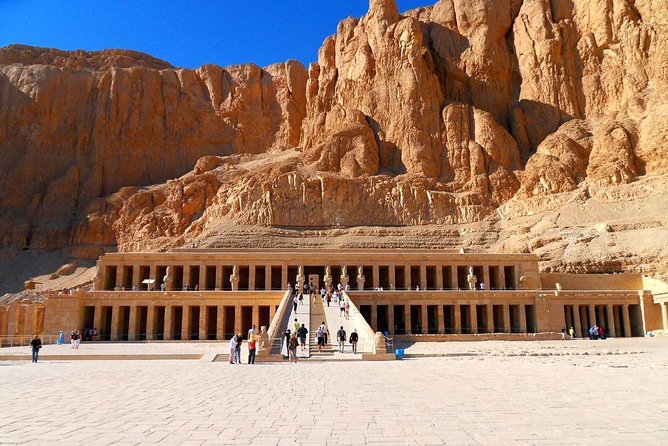
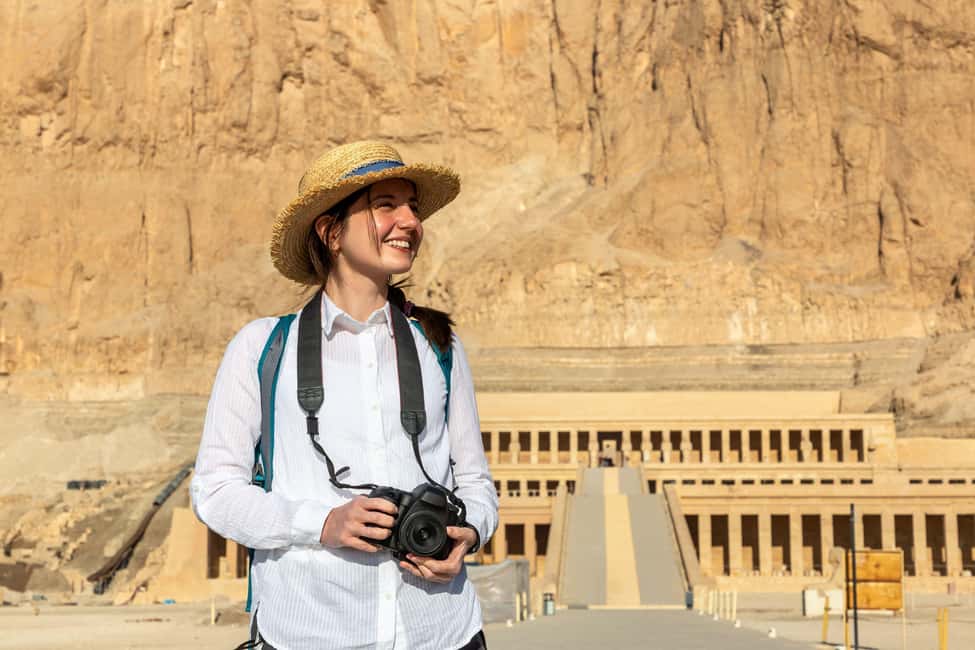
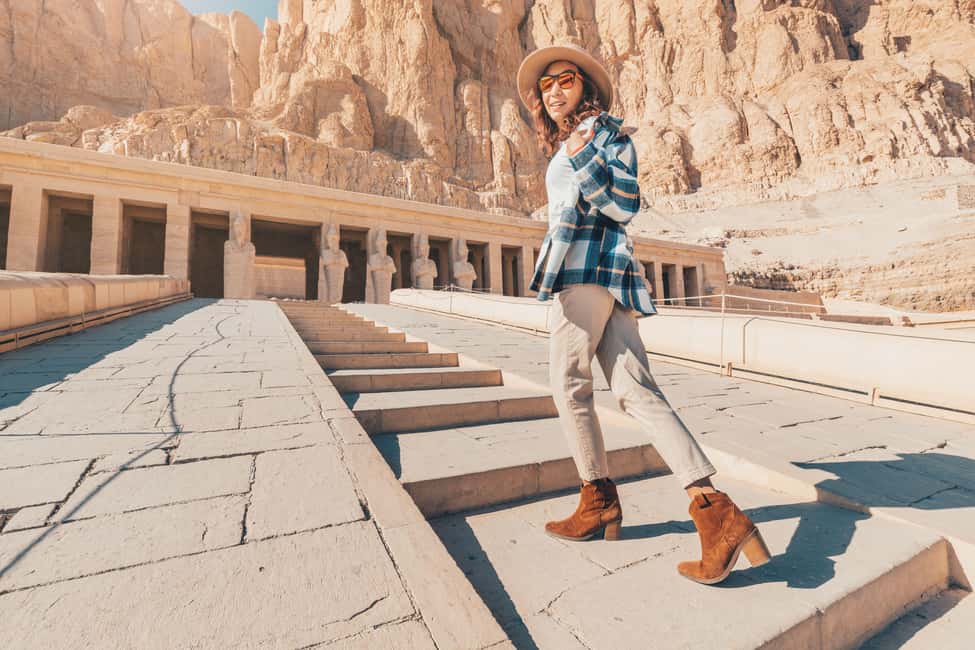
After the Valley, you’ll visit the Temple of Queen Hatshepsut, famous for its stepped terraces carved into the cliffs. This is one of Luxor’s most striking “shape” moments: you can understand the design quickly, and the preserved artwork helps you see why it mattered to the people who built it.
A lot of first-timers expect tombs and are pleasantly surprised by how visually theatrical Hatshepsut is. The terraces aren’t just a pretty backdrop. They’re part of how power and legitimacy were communicated. A good guide helps you connect that to what you just saw in the Valley, so the day feels like a connected story instead of separate stops.
Timing can matter here too. If you’re going during peak heat, shade and quick pacing help. The tour’s flow generally keeps you moving to the next stop before exhaustion wins, and the included water/snacks help you stay functional.



Colossi of Memnon: quick, iconic, and worth the glance
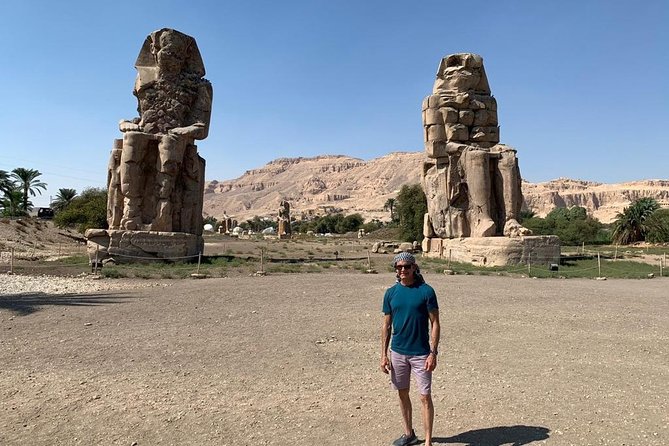
Next up are the Colossi of Memnon—two towering statues associated with the entrance to Amenhotep III’s temple complex. This stop is shorter than Karnak or the Valley, but it’s an easy “wow” moment.
These statues work well late in the day because they don’t require complex navigation. You can take photos, get context from your guide, and appreciate how monumental scale looks even when you’re seeing it in fragments. It’s also a good pause before lunch or after, depending on how the day is running for your group.
If you’re the type who hates long waits, this stop is a mercy. You’ll still get the meaning behind it without being stuck there for ages.
Lunch in Luxor: where the day stops being sightseeing-only
You’ll have lunch at a local Luxor restaurant. The description calls it a traditional Egyptian lunch, and it also notes a buffet-style lunch.
This matters more than you might think. A Luxor day trip is basically an endurance test disguised as history. Having a proper meal in the middle means you can focus on the sites instead of spending your energy hunting for food or worrying about timing.
Try to keep the meal simple. You’ll likely be outside again soon, and heavy food plus desert heat is not a winning combo for anyone. If your hotel can prep a breakfast box for early pickup, take that option the night before, as the tour guidance suggests. It’s especially useful if you start early.
Also, one practical win: the tour provides cold drinks and water along the way. That’s not a “nice bonus.” In this part of the world, it’s what keeps the day enjoyable instead of miserable.
Guides, pacing, and avoiding the tourist-pressure vibe
This tour’s biggest strength, based on the guide names and feedback, is the human factor. People repeatedly mention guides like Nana and Ahmed for being funny, energetic, and especially good at explaining history in a clear way. Another guide name you’ll see is Shaban, praised for not rushing and for caring if someone felt sick.
That matters because Luxor can be overwhelming. A good guide helps you:
- understand why a carving exists, not just that it exists
- move through crowds with a plan
- feel safe while you’re in busy temple areas
- get answers on the spot, instead of saving questions for later
Small group format supports that. You’re not fighting for attention, and your timing with the guide tends to feel more flexible. If you want a day that feels structured but not rigid, that’s the sweet spot this tour aims for.
Price and value: what $90 includes (and how to judge “cheaper” deals)
The price is listed at $90 per person. Compared to piecemeal bookings, that’s often where the value comes from: you’re paying for guided visits across multiple major sites, plus entry fees, plus transportation, plus lunch, plus day-long water/snacks.
Here’s how I think about value on tours like this:
- If a cheaper option cuts corners on guide quality, you pay later in frustration. You might still see the same monuments, but you’ll spend more time guessing what you’re looking at.
- If a cheaper option skips key inclusions, you’ll end up paying separately for entries, food, or transportation.
- If the schedule is poorly organized, you’ll lose prime temple time and waste energy standing around.
This tour is marketed as more organized, with reliable communication and stress-free support. Even if you ignore the marketing language, the included items themselves show where the company is focusing: comfort on the road, entries already handled, and enough food and drinks to keep you going.
Still, always compare apples to apples. Confirm whether Tutankhamun is included if you want it, check pickup eligibility based on your exact location, and make sure you understand the Nile boat crossing is optional.
What to bring, what to skip, and how to handle the heat
The tour’s practical list is straightforward:
- Bring passport or ID card
- Wear comfortable shoes
- Pack sunglasses and a hat
- Bring some cash
The tour also says you can’t smoke, and you shouldn’t bring luggage or large bags. Keep your day bag small enough that you’re not juggling it at each site.
Heat is the real boss here. Even with an air-conditioned vehicle, you’ll be walking outdoors at multiple landmarks. If you’re prone to feeling faint in sun, consider carrying a small fan if you already travel with one. The simplest upgrades often make the biggest difference.
Who should book this Luxor day trip
I’d point you toward this tour if you want a single day that hits Luxor’s most famous anchors: Karnak, the Valley of the Kings, Hatshepsut, and the Colossi of Memnon. It’s also a good fit if you like guided storytelling and want help making sense of tomb layouts and temple carvings.
You’ll likely enjoy it most if:
- you’re okay with an early start and a long drive
- you can handle walking at temple sites
- you want a structured day with water/snacks taken care of
- you’re interested in guidance from a named-style expert guide (Nana, Ahmed, Shaban, Doa are all mentioned)
It’s not a good match if mobility or health constraints limit your ability to walk, stand in sun, or manage basic temple terrain. If any of the listed restrictions apply, choose a more gentle alternative.
Should you book this Luxor: Valley of the Kings and Hatshepsut with Nile Boat?
If your goal is a full Luxor highlight day without piecing together transport and tickets, I think this tour is a solid choice. The included entry stops, the lunch, and the on-the-road water/snacks are the kind of details that keep a hot, long day from spiraling into chaos.
Book it if you care about guidance and you want the day to feel organized, with options like the Nile boat crossing and the Tutankhamun add-on available. Don’t book it if you’re looking for minimal walking or if you can’t manage heat and long travel.
Finally, before you go: confirm your pickup eligibility based on where you’re staying, and decide in advance whether you want the Tutankhamun Tomb and whether you want the optional Nile boat crossing. Those two choices can meaningfully change how satisfying the day feels.
FAQ
What stops are included on the Luxor highlights day trip?
You’ll visit Karnak Temple, the Valley of the Kings, Hatshepsut Temple, and the Colossi of Memnon. The tour also includes lunch in Luxor, and it can include the Tutankhamun Tomb if you select the relevant option or add-on.
Is the Nile boat crossing included?
The Nile boat crossing from the East Bank to the West Bank is described as optional. You’ll want to confirm on your booking what you’re selecting.
Is Tutankhamun Tomb entry included?
Tutankhamun Tomb entry is included only if an option or add-on is selected. If it’s a must-see, make sure it’s actually included in your purchase.
What do I need to bring and what is not allowed?
Bring your passport or ID card, comfortable shoes, sunglasses, and a hat (and cash). Smoking is not allowed, and you shouldn’t bring luggage or large bags.
Where does pickup service apply?
Hotel pickup and drop-off are provided using an air-conditioned vehicle, but the tour states it does not include pickup service from Makadi, Sahl Hasheesh, El-Gouna, Soma Bay, and Safaga. If you’re staying in one of those areas, double-check pickup eligibility.
What languages are available?
The tour offers German, English, or French, with other languages available upon request as an add-on. Arabic is also listed as available.