REVIEW · HURGHADA
Luxor overnight excursion from El Gouna
Book on Viator →Operated by Marsa Alam Tours · Bookable on Viator
Luxor lands fast when you start at 5:00am. I like the private guide setup and I like that the focus is UNESCO Luxor and the tombs nearby. The main trade-off is the early departure and long transit days—if you’re not a morning person, plan for a tired first afternoon.
This tour also makes practical sense. You get a 5-star hotel night in Luxor with breakfast, plus daily traditional lunches at local restaurants, and bottled water during the ride. Admissions are handled for most major stops, so you can spend your energy looking instead of negotiating.
One more consideration: the schedule packs a lot into two days, and the Colossi of Memnon stop is brief. Also, the sound and light show isn’t listed as included, so if you want it as an evening add-on, you’ll need to arrange it separately.
In This Review
- Key things that make this Luxor overnight work
- Price and value: what $94.24 buys you (and what it doesn’t)
- Getting to Luxor: the 5:00am start and how to handle it
- Day 1 at Karnak: the world’s biggest temple feeling up close
- Luxor Temple and the festival of Opet: why this site feels different
- Your Luxor hotel night: why staying overnight changes everything
- Day 2 starts with Valley of the Kings: tombs, dynasties, and preserved detail
- Hatshepsut Temple: ramps, symmetry, and a ruler you should know
- Colossi of Memnon: two statues, one big story
- Meals and pacing: traditional lunches and a Nile-view break
- Guides, hosting, and what “private” really feels like
- Who should book this Luxor overnight from El Gouna?
- Should you book this Luxor overnight tour?
- FAQ
- What is the price for this Luxor overnight excursion?
- How long is the tour from El Gouna to Luxor?
- When does the tour start?
- What’s included in the tour price?
- Which sites are visited during the two days?
- Are admission tickets included, and is the sound and light show included?
- Is free cancellation available?
Key things that make this Luxor overnight work
- Private A.C. pickup with no mixed groups: you’re traveling as your own group, not with strangers.
- Most major-site admissions are included: Karnak, Luxor Temple, Valley of the Kings, and Hatshepsut come with tickets.
- One hotel night in Luxor with breakfast: sleep in Luxor, not just a day-trip “drive and return.”
- Two lunches with a Nile-view stop: you’ll eat locally, not just on-the-road snacks.
- Guides named Mahmoud and Wahid praised for hosting: the guide experience is a big part of what people enjoy.
Price and value: what $94.24 buys you (and what it doesn’t)
At $94.24 per person for a roughly two-day Luxor overnight, you’re not paying for a bare-bones transfer. You’re paying for the heavy lifting: a private guide, transportation by A.C. vehicle, a 5-star hotel night in Luxor, breakfast, two lunches, bottled water, and included admissions for several top monuments.
That’s why the value feels solid compared with doing Luxor on your own from El Gouna. The biggest costs on an independent plan are usually your time and your logistics: arranging drivers, entrance timing, and having someone explain what you’re seeing. Here, you’re getting the explanation and the schedule structure built in, which matters on a tight two-day window.
What’s not included is also clear. Personal expenses, tipping, and extras like a sound and light show aren’t part of the package price. If you’re the type who adds a balloon ride or a guided add-on, budget those separately.
You can also read our reviews of more tours and experiences in Hurghada.


Getting to Luxor: the 5:00am start and how to handle it
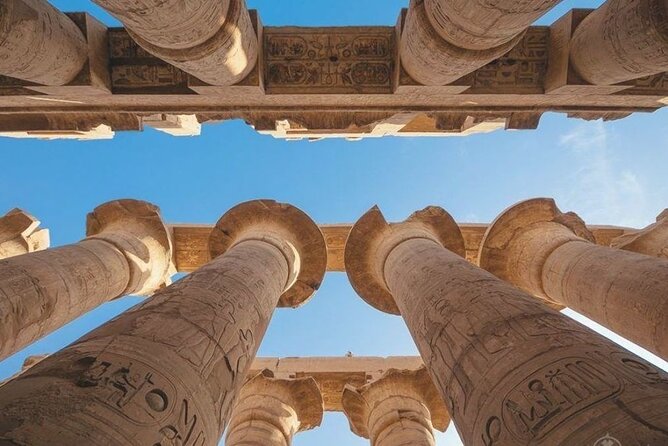
The tour starts at 5:00am, with pickup from El Gouna in a private A.C. car. That early push is the backbone of the whole plan: it gives you daytime hours for Karnak and Luxor Temple on Day 1, and then the tomb temples on Day 2.
Here’s the practical side: you’ll want to go into the day with sleep in your system and a light attitude. Even with A.C. comfort, it’s still a long travel day. If you pack snacks or plan your hydration (water is included), you’ll feel less tugged around by hunger and fatigue.
Also, because this is private and you’re the only group, your guide can set the pace. That can be a blessing when you’re moving between big sites—fast enough to keep energy, not rushed enough to feel like you’re being herded.
Day 1 at Karnak: the world’s biggest temple feeling up close
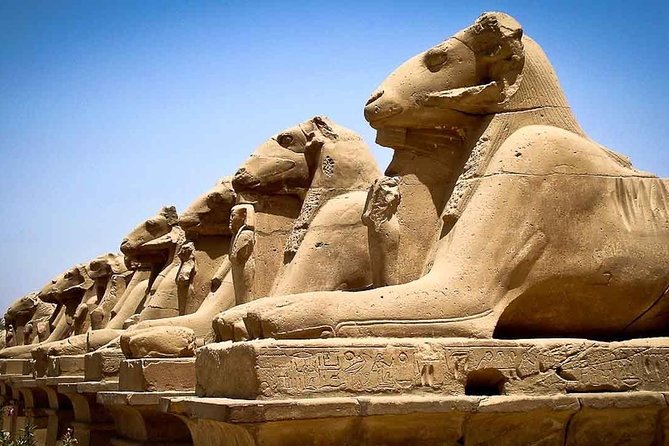
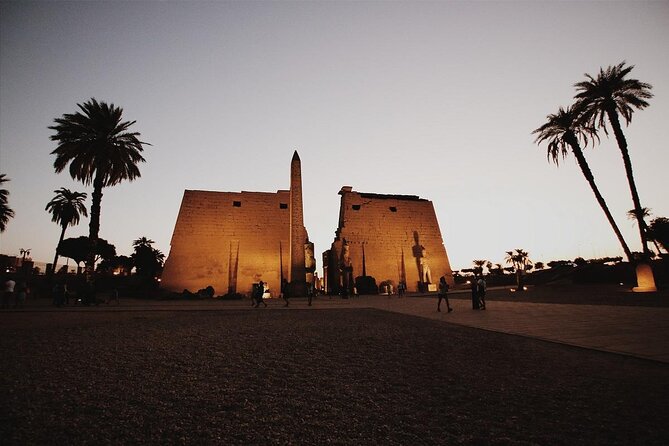
Karnak is where Luxor starts to make sense. You’ll spend about 2 hours there, with admission included. Karnak isn’t one single temple you walk into—it’s a vast complex, built and rebuilt across many generations of pharaohs.
One thing that helps you enjoy Karnak more is understanding its scale and structure. The temple complex is described as three main temples, plus smaller enclosed temples and outer temples, spread across about 247 acres. That means you’re not just seeing walls and columns—you’re watching a whole “city of worship” expand over time.
What to look for: focus on how parts connect and overlap. Even if your eyes blur after a while, you’ll start to notice patterns—how processional spaces lead deeper, and how different areas reflect different eras. With a private guide, you can ask questions on the spot and get context without stopping your momentum.
A small drawback: Karnak is big, so it can feel like information overload if you try to memorize everything. I’d treat it like a slow walk with occasional “aha moments,” not like a classroom. Two hours is a nice length for soaking it in without running out of steam.
Luxor Temple and the festival of Opet: why this site feels different
After Karnak, you’ll visit Luxor Temple for about 1 hour, with admission included. Luxor Temple has a different vibe than Karnak. It’s tied to rituals and festivals—specifically the festival of Opet.
The tour explanation you’ll hear matters here. Luxor Temple is described as a center for the most important festival of its time, built largely by Amenhotep III and Rameses II. The festival’s goal was to reconcile the human ruler with the divine office—so when you see spaces designed for processions and ceremonies, you’re not just looking at architecture. You’re seeing a system for storytelling and belief.
Luxor Temple is also a smart “second stop” on Day 1 because it keeps you moving from sheer scale (Karnak) to meaning (Luxor Temple). When the guide gives you context, it turns the carved surfaces from decoration into a map of ideas.
Tip for your visit: stay alert for details the guide points out—doorways, alignments, and ceremonial areas. That’s where the hour goes fastest, in the best way.
Your Luxor hotel night: why staying overnight changes everything
You’ll stay overnight in Luxor at Nile Palace Steigenberger (5-star) with breakfast included. This is a major advantage over day trips. You get to sleep in Luxor, not just arrive for photos and leave before you can properly enjoy the city’s slower rhythm.
Even if you don’t plan to wander much at night, the hotel night does something subtle: it reduces the “blink and you miss it” feeling. Day 2 starts with breakfast, then you move to the Valley of the Kings and the temple sites nearby. That pacing helps you stay awake and attentive instead of grinding through everything in a single long day.
What I’d do with your evening: keep it simple. Eat something light if you’re hungry, review the sites you’ve already seen, and get an early night. Luxor isn’t a place you want to rush at bedtime.





Day 2 starts with Valley of the Kings: tombs, dynasties, and preserved detail
Breakfast comes first, then you’ll ride with your private guide and air-conditioned vehicle to the Valley of the Kings. You’ll have about 2 hours, with admission included.
This is the part of Luxor that feels most like a time capsule. The Valley of the Kings served as the final resting place for rulers from the 18th to the 20th dynasty. You’ll hear about tombs including those of Ramses II and Tutankhamen—names that pop up in popular culture, but here you can see the setting they were made for.
The tour framing is important: these tombs were stocked with the material goods a ruler might need in the next world, and the decorations inside are still well preserved in many cases. That explains why people don’t just photograph the entrances—they want to understand the intent behind the paintings, carvings, and layout.
Practical consideration: tomb visits can be emotionally draining because you’re trying to absorb a lot in relatively enclosed spaces. With a guide, you can prioritize what to look for instead of trying to read every symbol at once. The goal should be to walk out understanding the bigger idea, not collecting every detail.
If you’re the type who likes to compare artistry across tombs, ask your guide where the differences show up most. That’s where a private guide really pays off.
Hatshepsut Temple: ramps, symmetry, and a ruler you should know
Next comes the Temple of Hatshepsut, about 1 hour, with admission included. This is one of Egypt’s best-preserved temple projects, and the structure is part of the lesson.
Hatshepsut’s temple is built on three levels with two wide ramps connecting the levels through the center. That means your walk becomes part of the story: you’re physically moving through the temple in a way that matches the design.
The big value here is seeing how the architecture supports the message. This wasn’t just a place to stand and admire—it was meant for ceremony and for making a statement visible from different angles.
How to enjoy it: don’t rush. Even though you only have an hour, use it to track the transitions between levels. The ramps aren’t just practical—they shape your viewpoint and your sense of scale.
If you’re doing Karnak and Luxor Temple on Day 1, Hatshepsut Temple on Day 2 gives you variety. It feels cleaner and more focused, and the preservation helps you make sense of why this site earned its reputation.
Colossi of Memnon: two statues, one big story
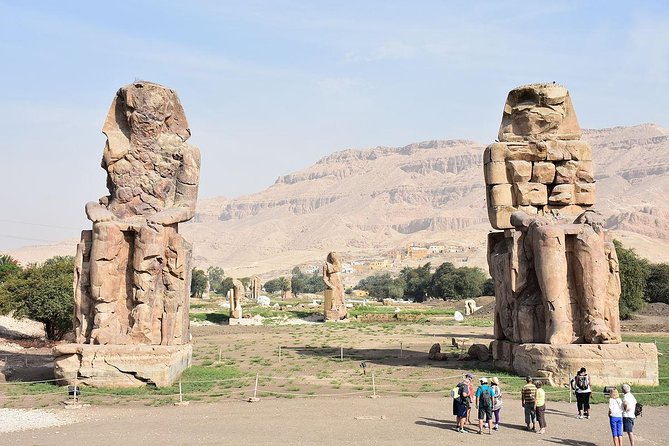
Finally, you’ll see the Colossi of Memnon: two massive stone statues of Amenhotep III. The stop is brief—about 30 minutes—and admission is listed as free for this part.
These statues are described as the only remains of a complete mortuary temple. Each statue is made from quartzite sandstone blocks that existed in Cairo and were moved roughly 700 km to Luxor. That kind of transport detail changes how you look at the figures. You start thinking about labor, engineering, and the sheer effort required to place them.
The upside of a short stop: it’s easy to keep your attention. After two days of big sights and tomb context, Colossi works like a focused finale.
The downside: because it’s short, you won’t have time for lingering. If you love statue portraits and want longer photography sessions, you might feel a little time-pressured.
Meals and pacing: traditional lunches and a Nile-view break
You’ll have lunch during the tour, and the included meals are part of why the trip feels smoother. Day 1 and Day 2 both include lunch, and there’s a Nile View restaurant stop mentioned before the drive back to your hotel.
This matters because Luxor days can turn into a grind if you’re hungry or eating random snacks. Having lunch built in keeps the energy up, and because it’s described as local restaurants, you’ll likely get a more authentic meal than a tourist-only quick stop.
My practical advice: keep your choices simple if you have a sensitive stomach. You don’t want food to become a problem in the middle of long travel hours.
Also, watch hydration. Bottled water is provided during the trip, but bring your own small plan too: sip often, especially on a day with early pickup.
Guides, hosting, and what “private” really feels like
This tour is private, meaning only your group participates. That can make a big difference in Egypt, where crowds can be intense at famous sites.
The tour includes a professional guide, and the overview mentions a qualified Egyptologist style of context. That’s the right mix for Luxor: you want someone who can explain what you’re seeing in plain language, not just recite dates.
And yes, hosting quality seems to matter here. Past groups have specifically praised Mahmoud and Wahid as great hosts. While your guide may be different, it’s a good sign that the experience isn’t run like a production line.
What you should do: come with a few questions. Ask what changed across dynasties, why certain temples are where they are, or what to notice inside tombs. Your guide can steer you toward the right details fast.
Who should book this Luxor overnight from El Gouna?
This tour is a strong fit if you want major Luxor sights without spending days planning and routing yourself. It’s also a good choice if you value a private pace and want context as you move between temples and tombs.
You’ll likely enjoy it most if:
- you’re okay with early mornings and a packed two-day schedule
- you want admissions included for key sites
- you prefer a guided structure over wandering alone
- you appreciate a hotel night in Luxor rather than one-day rushing
It might be less ideal if:
- you hate driving days and would rather keep trips shorter
- you want a lot of free time at each monument (this itinerary is scheduled)
- you’re expecting the sound and light show as part of the core price (it’s listed as not included)
Should you book this Luxor overnight tour?
If you want the highlights of Luxor—Karnak, Luxor Temple, Valley of the Kings, Hatshepsut, and the Colossi of Memnon—this is one of the cleaner ways to do it from El Gouna. The combination of private guiding, included admissions for the big stops, a proper hotel night, and two lunches makes the $94.24 feel like paying for time saved and understanding gained.
I’d book it if your priority is seeing the sites with context and keeping the logistics simple. I’d hesitate only if you’re extremely sensitive to early starts or you want evening entertainment baked into the price.
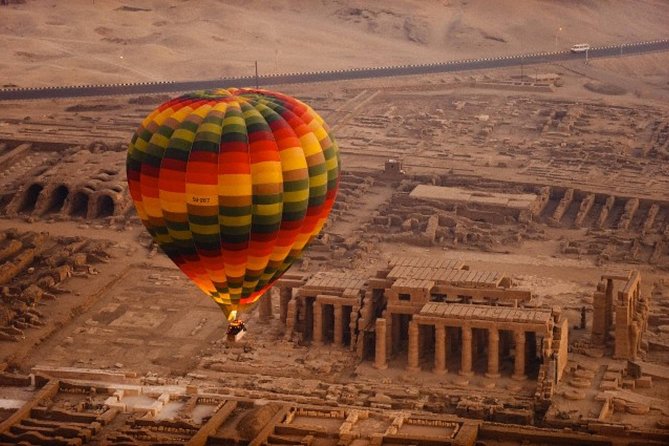
If you get the chance, adding a hot air balloon ride is a popular suggestion for those who want a different view of the region—just treat it as an extra.
FAQ
What is the price for this Luxor overnight excursion?
The price is $94.24 per person.
How long is the tour from El Gouna to Luxor?
It’s listed as 2 days (approx.).
When does the tour start?
Pickup starts at 5:00 am.
What’s included in the tour price?
Included features are breakfast, professional tour guide service, bottled water during the trip, one night in a 5-star hotel in Luxor with breakfast, and lunch (2). Admission tickets are included for Karnak Temple, Luxor Temple, Valley of the Kings, and Temple of Hatshepsut.
Which sites are visited during the two days?
Day 1 includes Karnak Temple and Luxor Temple. Day 2 includes the Valley of the Kings, Temple of Hatshepsut, and the Colossi of Memnon.
Are admission tickets included, and is the sound and light show included?
Admission tickets are included for Karnak Temple, Luxor Temple, Valley of the Kings, and Hatshepsut. The Colossi of Memnon stop is listed as free for admission. A sound and light show is not included in the package price.
Is free cancellation available?
Yes. You can cancel up to 24 hours in advance for a full refund.