REVIEW · CAIRO
Luxor East and West Bank: Valley of the kings, Habu Temple,Karnak&Luxor Temples
Book on Viator →Operated by Best Of Egypt Tours · Bookable on Viator
Eight hours of Luxor, nonstop ancient awe. This private guided tour strings together the Valley of the Kings and Karnak Temple Complex with a qualified Egyptologist, plus hotel or Nile cruise pickup in a private air-conditioned vehicle. You also get a bottle of water and mobile ticket support so your day moves faster.
I especially like how the guide helps you make sense of what you’re seeing at each stop, not just reciting dates. On the West Bank side, Deir el Bahari and the Temple of Hatshepsut make you appreciate the size of her ambition and the political story behind her rise. Guides like Laila and Mohamed Noor are repeatedly praised for clear English, strong context, and keeping everything organized.
One consideration: the headline price ($85) does not include entrance fees or tipping, so your real day cost will be higher once you pay for tombs and temples. Also, it’s a long day with limited breaks, so plan for heat and bring a snack if you’re the type who gets hungry early.
In This Review
- Key things I’d watch for before you go
- Why this Luxor East-and-West Bank tour works
- 7:00 am pickup, a private ride, and the basics that matter
- Valley of the Kings: seeing royal tombs with context (about 2 hours)
- Deir el Bahari and the Temple of Hatshepsut: power, posture, and story (about 1.5 hours)
- Colossi of Memnon: the part that survived (about 30 minutes)
- Karnak Temple Complex: Amun, Mut, and Khonsu in massive scale (about 2 hours)
- Luxor Temple on the East Bank: where Amun worship meets political building (about 1.5 hours)
- Medinat Habu (Temple of Ramses III): the first labor strike story (about 1.5 hours)
- Price and logistics: what $85 gets you, and what doesn’t
- The day feels long: how to survive it comfortably
- Laila and Mohamed Noor: why guides get named for a reason
- Who this tour suits best
- Should you book this Luxor East and West Bank tour?
- FAQ
- What time does the tour start?
- How long is the tour?
- Is pickup from my hotel or Nile cruise included?
- Is this tour private?
- What’s included in the tour price?
- Are entrance fees included?
- Is tipping included?
- Do I get a mobile ticket?
- What is the cancellation policy?
Key things I’d watch for before you go
- Private pickup and transfers in an air-conditioned vehicle from your hotel or Nile cruise
- Valley of the Kings time (about 2 hours) with a guide helping you choose what to focus on
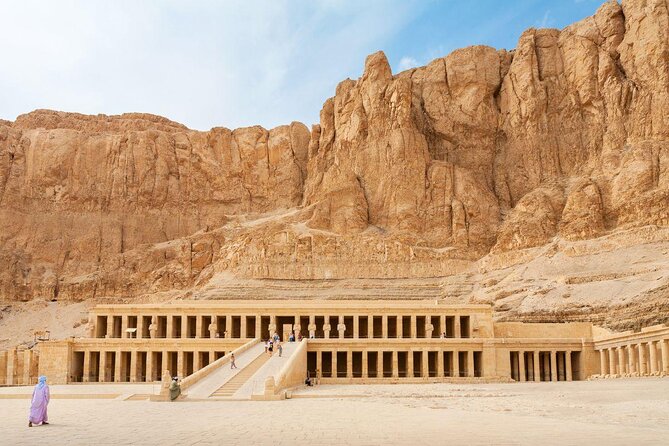
- Hatshepsut at Deir el Bahari with strong historical context from the Egyptologist
- Karnak Temple Complex at full scale (about 2 hours) with Amun, Mut, and Khonsu explained in plain terms
- Entrance fees not included, so budget for site tickets and keep tipping in mind
Why this Luxor East-and-West Bank tour works
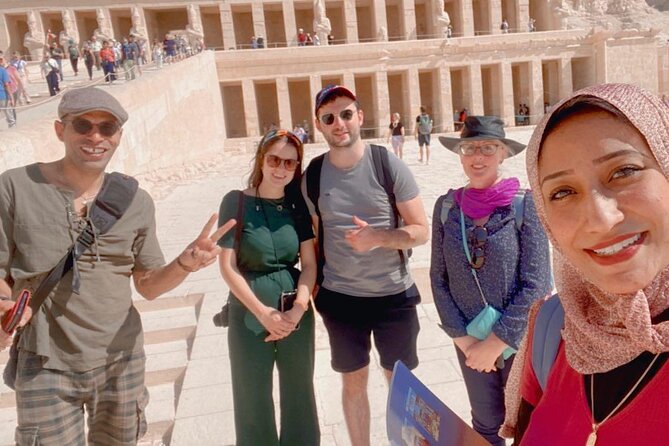
Luxor isn’t just one temple. It’s two worlds: the East Bank for grand temple complexes, and the West Bank for royal tombs and funerary sites. Doing both in one day is exactly what makes this kind of tour valuable. You get the story in order, from power in life to memory in death.
The route also makes practical sense. You start early, when sites are calmer, and you cover the biggest hitters with realistic time blocks. That means you’re not spending your day guessing where to go next or losing half the day waiting around.
And since it’s private, your group pace matters. If you want photos and slower explanations, you can ask. If someone in your group needs a breather, the guide can usually adjust in the moment.
You can also read our reviews of more tours and experiences in Cairo.


7:00 am pickup, a private ride, and the basics that matter
The start time is 7:00 am, and the day runs about 8 hours. You’ll be picked up from your hotel or Nile cruise, then transported by a private air-conditioned vehicle between sites. That alone can be the difference between a smooth day and a stressful one in Luxor’s heat.
The tour includes one bottle of water. You’ll still want to plan for snacks because the stops are packed and there’s no guarantee of a full break at every location. One review notes the tour is long, and that extra food helps.
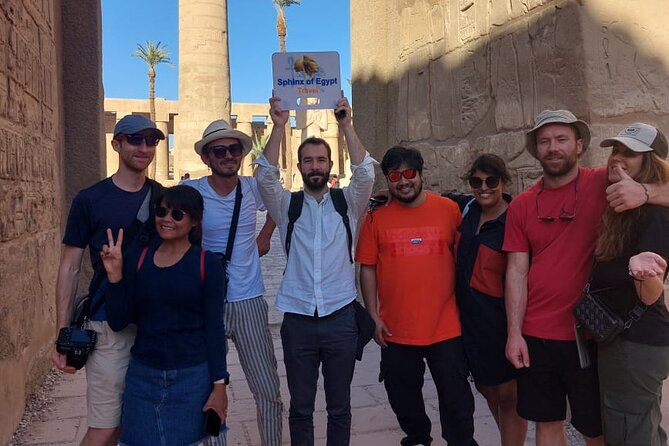
You’ll also travel with a qualified English speaking Egyptologist tour guide. This matters more than people think. In Luxor, the difference between a good and a great day is often interpretation—knowing what you’re looking at and why it was built the way it was.
Valley of the Kings: seeing royal tombs with context (about 2 hours)
Your West Bank day begins at the Valley of the Kings, also called the Valley of the Gates of the Kings. It sits opposite Thebes in the Theban Necropolis, and the wider area is made up of two valleys: East Valley and West Valley.
What you’ll feel here is scale and atmosphere. This isn’t a single monument you walk into and out of. It’s a site where the paths, cliff walls, and tomb entrances shape your experience. With an Egyptologist beside you, the tombs stop being random doors and become part of a larger funerary system.
One practical tip: tomb interiors can vary in what’s open and what’s worth spending your limited time on. Having a guide helps you prioritize. In at least some cases, visits include notable royal tombs such as those connected to Ramses III, Ramses IV, and Ramses IX, depending on the day and access.
Tickets for the Valley of the Kings are not included, so this is one of your main added costs. Entrance fees are separate, so plan your budget before you go.
Deir el Bahari and the Temple of Hatshepsut: power, posture, and story (about 1.5 hours)
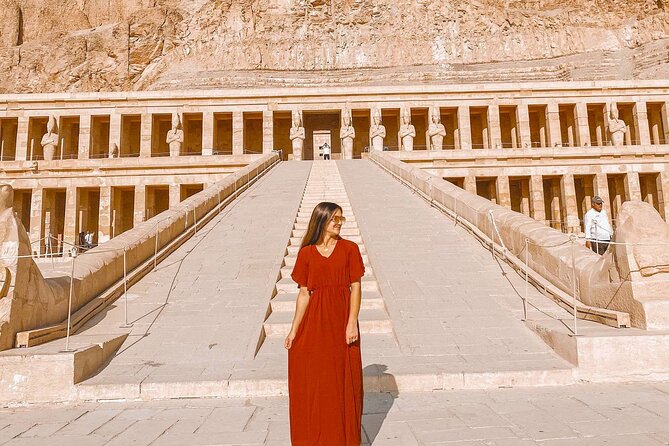
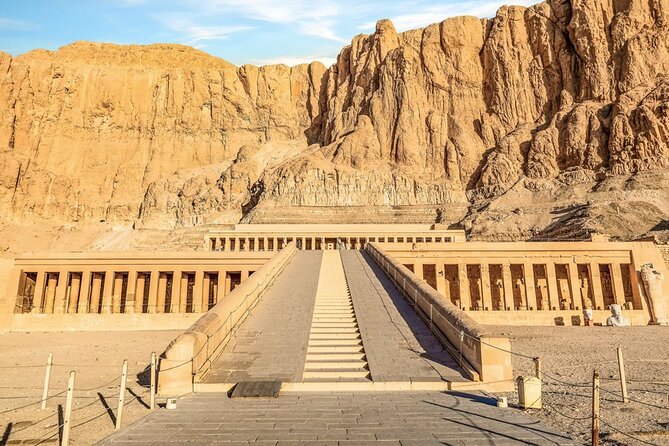
Next comes Deir el Bahari and the Temple of Hatshepsut, one of the most dramatic settings in Luxor. The site is associated with Hatshepsut, a famous queen who ruled Egypt and is considered a major figure in the 18th Dynasty.
The history here isn’t just trivia. Hatshepsut’s reign is described as a milestone in ancient Egyptian history, and her name is tied to Amun—meaning something along the lines of concubine of Amun, preferred among the ladies. In other words, her identity and legitimacy are part of what you’re looking at when you study the temple complex.
This stop is about making the art and architecture click with the political story. A good guide will point out how the temple layout supports a narrative of kingship rather than queenship-as-an-afterthought.
Also, this is one of those locations where timing helps. You’re on-site early enough to enjoy the views and stonework without it feeling like you’re fighting a crowd.
Entrance tickets are not included, so check your budget.
Colossi of Memnon: the part that survived (about 30 minutes)
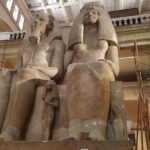
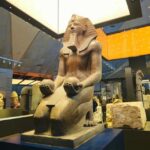
Then you get a shorter, lighter stop at the Colossi of Memnon. These are two huge statues built around 1350 BC, and they’re all that remains of a larger temple built in memory of Pharaoh Amenhotep III.
The statues depict Amenhotep III sitting with hands spread on his knees, facing toward the river. The description notes that they’re actually oriented toward the southeast rather than purely east, which is the kind of detail a guide can help you notice. Even if you only have 30 minutes, it’s a great reminder that Luxor isn’t just intact monuments. Sometimes it’s survival and fragments doing the talking.
Admission is listed as free here, so this can feel like a relief between ticketed stops. Still, time is limited, so use the guide moment to learn what you’re seeing.

Karnak Temple Complex: Amun, Mut, and Khonsu in massive scale (about 2 hours)
Karnak is the big one for many people, and it’s not hard to see why. The Karnak Temple Complex is a cluster of temples, buildings, and columns built and expanded over centuries—from kings of the Middle Kingdom through later eras.
You’ll be looking at the divine triad: Amun, his wife Mut, and their son Khonsu. Guides often stress that tourists sometimes say Karnak as if it’s one temple, but it’s really a complex. The guide helps you figure out what belonged to whom, and where the emphasis shifts as you move.
This stop works best when you let the guide guide you. Otherwise, it’s easy to feel like you’re walking through an endless architectural maze. With interpretation, you start to see the logic: sacred relationships, changing power, and how each reign left its mark.
Admission fees are not included, so this is another place to expect separate costs.
Luxor Temple on the East Bank: where Amun worship meets political building (about 1.5 hours)
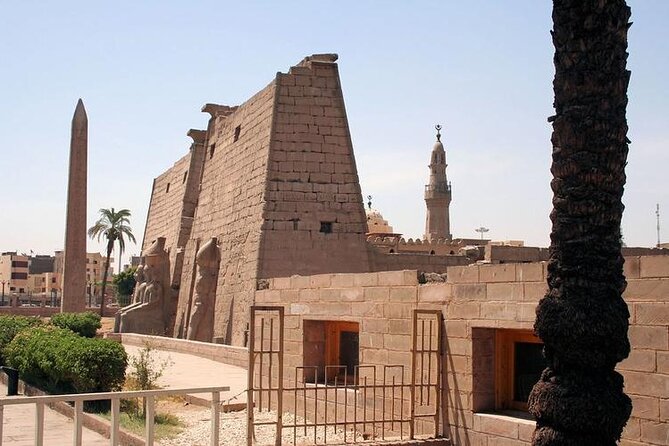
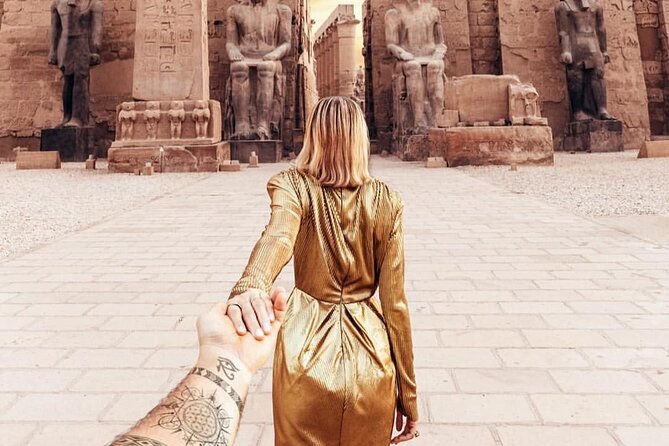
After Karnak, you continue to Luxor Temple on the East Bank. Founded around 1400 BC, it was built to worship Amun-Ra, Mut, and Khonsu—the Theban Triad.
This temple is strongly tied to the 18th and 19th Dynasties. Key buildings are linked to Amenhotep III and Ramses II, with Ramses II adding major features such as an open courtyard, an edifice, and obelisks. Thutmose III is also mentioned as having resided here.
If Karnak feels like a universe, Luxor Temple often feels more like a guided walk into specific moments of royal ambition. Your Egyptologist can help connect the names to what you’re actually seeing in front of you, so it doesn’t become a wall of dates.
Again, entrance fees are not included, so Luxor Temple adds to the add-on budget.
Medinat Habu (Temple of Ramses III): the first labor strike story (about 1.5 hours)
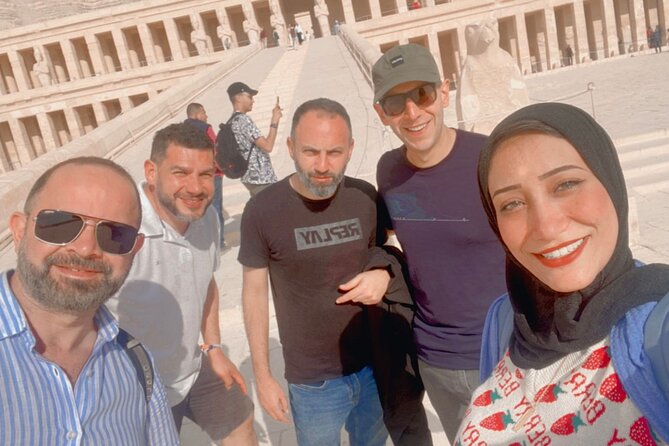
The last major site is Medinat Habu, also called the memorial temple of Ramses III, on the southern end of the Theban Necropolis. This temple is described as one of Egypt’s best-preserved, and it’s surrounded by a massive mud-brick enclosure wall that may have been fortified.
Here’s a detail I like because it brings the story closer to human stakes: the site is associated with what’s described as the first labor strike in history, launched against Ramses III. That’s the kind of historical angle that turns ancient stones into a real social story, not just royal propaganda.
This stop is about finishing your day with a strong theme: what happens when systems crack, and how power responds. With enough time on site, you can appreciate the architecture and fortification style instead of rushing through.
Entrance tickets are not included.
Price and logistics: what $85 gets you, and what doesn’t
At $85 per person, this tour can be good value if you factor in what’s included. Your price covers private air-conditioned transfers, pickup and return to your hotel or Nile cruise, one bottle of water, and a qualified English speaking Egyptologist guide.
What’s not included is crucial: entrance fees and tipping. In Luxor, those site tickets add up across Valley of the Kings, Karnak, Luxor Temple, and Deir el Bahari, and that changes the true total cost of the day.
So I recommend budgeting for the difference. Also consider tipping. Tipping isn’t included, so plan a reasonable amount for your guide at the end.
A quick practical note: one negative comment points to the possibility of extra money being needed during the experience. I can’t tell you the exact amounts you’ll face, but the lesson is simple—ask the guide early what costs are on top of the tour price and confirm the total you should expect.
The day feels long: how to survive it comfortably
This is a packed, full-day route with multiple sites and travel time. Even with a private vehicle, you’re moving through the West and East Banks, and you’ll feel it by late morning.
Two things help. First: eat something before you go. Second: carry a snack. One review explicitly calls out that the tour is long and recommends bringing a snack.
Beyond that, wear comfortable shoes and dress for heat. Luxor can be demanding, even when everything runs smoothly. The tour is also listed as requiring good weather, so if your day gets rescheduled due to poor conditions, don’t be surprised.
Laila and Mohamed Noor: why guides get named for a reason
The most repeated praise in the feedback is about guidance quality and organization. Guides such as Laila and Mohamed Noor are specifically mentioned for clear English, patience, strong knowledge, and keeping the schedule tight.
Some of the best practical compliments are about efficiency. One review says the guide had tickets ready so there weren’t long waits in lines. Another mentions the pace being quick but still informative, with enough guidance to help you enjoy each stop rather than get lost.
There’s also a useful, “real life” angle: at least one comment notes the guide can show a bit of town culture away from usual tourist traps. That matters because Luxor can feel overly scripted if your guide only points at monuments and never gives you the bigger picture of how locals experience the area.
That said, not every experience is perfect—one critical comment warns about extra spending and calls out concerns about the guide’s behavior. I can’t verify the details, but here’s the takeaway: ask what will cost extra, confirm how payments are handled, and keep your expectations grounded in the fact that entrance fees and tipping are separate from the listed price.
Who this tour suits best
This is a great fit if you want a structured day and you care about learning what you’re seeing. The Egyptologist guide is central to the value here, especially at Karnak, where the complex layout can overwhelm self-guided visitors.
It also suits couples, small families, and solo travelers who want private pacing. Since it’s private, the schedule can be easier to manage when someone needs a moment or wants to spend a little longer taking photos.
If you hate early starts or long walking days, you may find the 7:00 am start and packed stops challenging. But if you’re the type who wants the big Luxor highlights in one go, this route is a strong use of your time.
Should you book this Luxor East and West Bank tour?
If you want one day that covers the essentials—Valley of the Kings, Hatshepsut at Deir el Bahari, Colossi of Memnon, Karnak, Luxor Temple, and Medinat Habu—this tour makes a lot of sense. The private transfers and Egyptologist guidance are the real winners, and the feedback on guides like Laila and Mohamed Noor points to solid English and good organization.
Book it if you’re happy to plan for entrance fees and tipping on top of the $85 price. Don’t book it if you’re trying to keep costs ultra-low or you know you’ll struggle with a long, early day.
FAQ
What time does the tour start?
The tour starts at 7:00 am.
How long is the tour?
The duration is about 8 hours.
Is pickup from my hotel or Nile cruise included?
Yes. Pickup service from your hotel or Nile cruise and return transfers are included.
Is this tour private?
Yes. It’s a private tour/activity, and only your group participates.
What’s included in the tour price?
Transfers by a private air-conditioned vehicle, one bottle of water, hotel or Nile cruise pickup and return, and a qualified English speaking Egyptologist guide.
Are entrance fees included?
No. Entrance fees are not included.
Is tipping included?
No. Tipping is not included.
Do I get a mobile ticket?
The tour features include mobile ticket use.
What is the cancellation policy?
You can cancel for a full refund up to 24 hours in advance. Free cancellation is available, and if it’s canceled due to poor weather, you’ll be offered a different date or a full refund.