REVIEW · CAIRO
Luxor Day Tour from Cairo by Flight
Book on Viator →Operated by Imperialegypt · Bookable on Viator
One flight, and Luxor hits fast. This day trip strings together round-trip flights with a private guide, so you spend less time commuting and more time looking at ancient Thebes. You’ll see the East and West Bank in one intense schedule, with door-to-door pickup and the kind of guiding that turns stone into a story you can follow.
What I like most is how efficiently the tour covers the big Luxor highlights without feeling like a checklist. You get a structured flow through the Temple of Hatshepsut area and then onward to major temple sites, with time built in to actually take photos and absorb what you’re seeing.
The one real consideration is the pace. The morning starts early (pickup around 05:30), you’re on the move for about 14 hours, and entrance fees for several sites are not included in the tour price.
In This Review
- Key takeaways before you go
- Luxor in One Long Day: What 14 Hours Really Means
- Price and Value: What You’re Paying For
- Pickup in Cairo and the Flight Plan That Shapes the Day
- Valley of the Kings: 3 Hours in the Necropolis
- Colossi of Memnon: A Quick, Free Nile-Facing Stop
- Deir el Bahari and the Temple of Hatshepsut: Why Senemut’s Design Lasts
- Luxor Temple: From Amenhotep III to Ramses II’s Repurposing
- Karnak Open Air Museum: When Time Is Short, Know What Matters
- The Comfort Stuff That Makes or Breaks a Day Tour
- The Guide Factor: What Makes It Feel Like a Real Tour
- Who This Luxor Day Tour From Cairo by Flight Is Best For
- A Simple Strategy to Make the Most of Your Limited Time
- Should You Book This Tour?
- FAQ
- FAQ
- How long is the Luxor day tour from Cairo?
- Does the tour include round-trip flights from Cairo?
- Is pickup from my Cairo hotel included?
- Is there an English-speaking guide?
- What sites are included in the itinerary?
- Are entrance fees included?
- Is lunch included?
- Are drinks included?
- What group size should I expect?
- What is the cancellation policy?
Key takeaways before you go
- Flights save your day: round-trip air from Cairo keeps the schedule tight and doable.
- Private guide, small group: English-speaking guiding with a maximum of 18 people.
- East + West Bank in one pass: Valley of the Kings on the West, plus major temples on the East.
- Hatshepsut is a standout stop: Deir el Bahari’s design is a major reason it matters.
- Karnak time is short: the stop is on the plan, but don’t expect hours.
- Plan for extra costs: entrance fees, drinks, and tips are separate.
Luxor in One Long Day: What 14 Hours Really Means
This is a full, fast Luxor hit built for people who want the highlights without losing a night in a hotel. You’re looking at roughly 14 hours total, and you’ll feel it as you move from airport to tombs to temples and back again.
The format helps, though. You’re not organizing anything day-of. You leave Cairo early, you land in Luxor in the morning, and you’re guided site to site. The driving is air-conditioned, and you get lunch plus a bottle of water. That matters more than it sounds when you’re compressing what’s normally a multi-day itinerary into one day.
If you prefer slow travel and lingering, this will feel like a sprint. If you’re time-limited but want real monuments, it’s a smart compromise.
You can also read our reviews of more tours and experiences in Cairo.


Price and Value: What You’re Paying For
At $463.22 per person, this tour costs more than a standard bus day. The trade-off is that the price wraps in the big expensive logistics: round-trip flights, ground transfers, and guide time.
Here’s what that means for value:
- You’re not paying separately for flights, airport transfers, and a private guide for a full day.
- You’re not spending time figuring out timing and routing between the East and West Bank.
- You’re getting included lunch and water, which reduces day-of hassle.
What’s not included is also important. Entrance fees are separate for multiple stops, plus drinks and tips. So you should budget a little extra beyond the headline price. The good part: the tour still handles the hard part—getting you there and keeping the day moving.
Pickup in Cairo and the Flight Plan That Shapes the Day
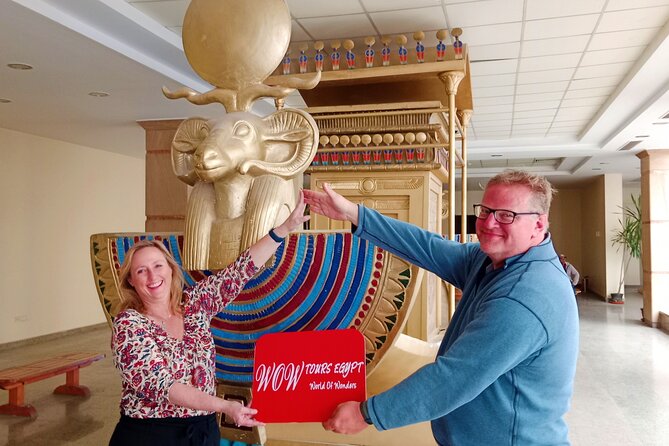
Your day begins with hotel pickup around 05:30 in an air-conditioned vehicle. You’ll head to the airport, then fly to Luxor. A guide meets you at the airport, and the tour officially starts there.
This timing is the reason many people choose this exact style of tour. Luxor is far enough from Cairo that a same-day drive is not fun. By flying, you’re basically buying back your daylight hours for sightseeing.
Practical tip: plan to pack light. You’ll be moving through airports, buses, and site entrances. You don’t want a heavy bag swinging around during tomb and temple walks.
Valley of the Kings: 3 Hours in the Necropolis
The morning focuses on the Valley of the Kings, on the Eastern side after you cross the Nile. This is a necropolis of tombs for powerful nobles and pharaohs of Ancient Egypt, and it’s one of those places where you understand why burial wasn’t just about death—it was about a whole belief system.
You’ll have about 3 hours here. That’s enough time to see multiple tombs if you plan your priorities well, and to pause for a breather before your next stop.
One thing to know: the tour schedule lists an admission ticket as not included for the Valley of the Kings. You’ll want to have entrance costs sorted ahead of time, because waiting can steal time from the sites you actually came for.
What to look for (and what helps): pay attention to how tomb spaces feel cooler and quieter than the outside heat. Even without going inside every tomb, the sheer scale of the necropolis gives you the right context fast.
Colossi of Memnon: A Quick, Free Nile-Facing Stop
On the return journey, the tour stops at the Colossi of Memnon. These are two gigantic statues of Amenophis III facing the Nile, and they’re the kind of sight where your brain goes, Wait, how is that still standing?
You’ll have around 30 minutes here. The admission is listed as free, which is a nice bonus when the tour has other sites where you’ll pay separately.
This stop works best as a reset. You’re coming out of tomb-and-temple intensity, and the Colossi give you a “big picture” moment—stone monsters looking out over the river valley.


Deir el Bahari and the Temple of Hatshepsut: Why Senemut’s Design Lasts
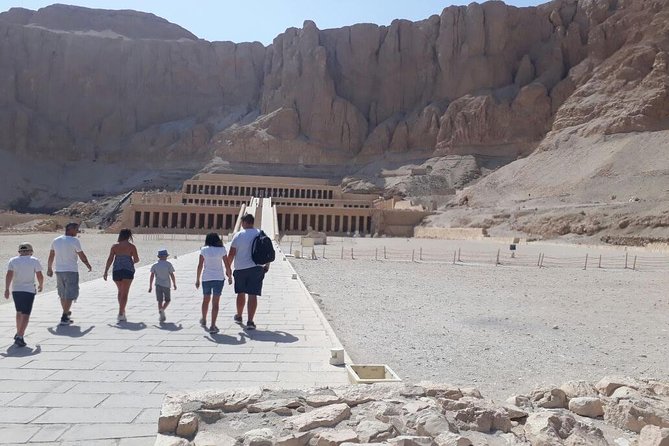
Next up is the Temple of Hatshepsut at Deir el Bahari, perched beneath massive cliffs near the West Bank of the Nile. This isn’t just another temple stop. It’s the story of a mortuary temple, built for a queen who ruled in an era where monument-building was political power.
The key detail that makes this site special is its design. The temple is dedicated to Amon-Ra, the sun god, and it was designed by architect Senemut. The structure is known for its classical-style layout, which makes it easier to read than some more chaotic-looking ruins.
You’ll have about 2 hours at Deir el Bahari, and admission is listed as not included. That means you should expect to pay the entry fee here separately.
What I’d do with your time: don’t rush through the first viewpoints. Take a minute to look up at the cliffs and then back down at the temple terraces. That vertical contrast is part of the experience and it helps the architecture click.
If you care about female rulers in Ancient Egypt, this stop is one of the strongest reasons to choose this tour. It’s not abstract; it’s built into the stones.
Luxor Temple: From Amenhotep III to Ramses II’s Repurposing
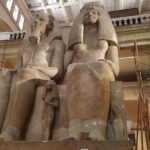
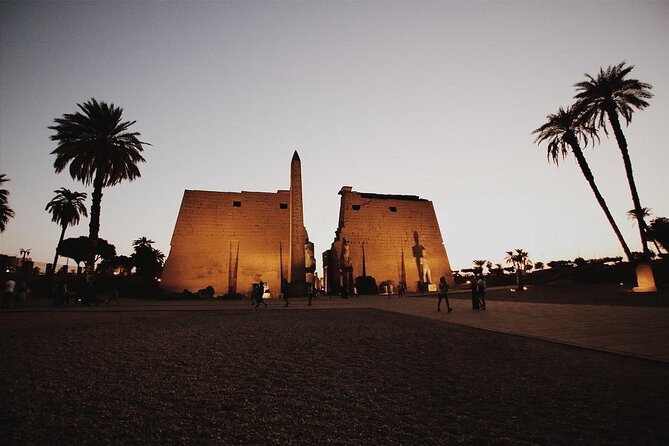
After Hatshepsut, the tour moves to Luxor Temple, another major New Kingdom landmark. Construction began under Amenhotep III, and later work continued under several rulers, including Tutankhamun and Horemheb. The finishing touches are tied to Ramses II, and the statuary and carvings you see today mainly feature Ramses II.
There’s an extra layer here that a guide helps with: Ramses II was known for commissioning new projects but also for reusing older monuments. That means Luxor Temple is partly history layered on history. It’s not just one ruler’s story—it’s Egypt’s habit of rewriting the visual record.
You’ll have about 2 hours here, and again admission is listed as not included.
Practical advice: Luxor Temple can feel crowded depending on time of day and tourist flow. Go slow anyway. Focus on the entrances, the columns, and the carved figures. If you’re trying to photograph, pick one section where you can stand and let the light hit the carvings, instead of rushing to new angles every few minutes.
Karnak Open Air Museum: When Time Is Short, Know What Matters
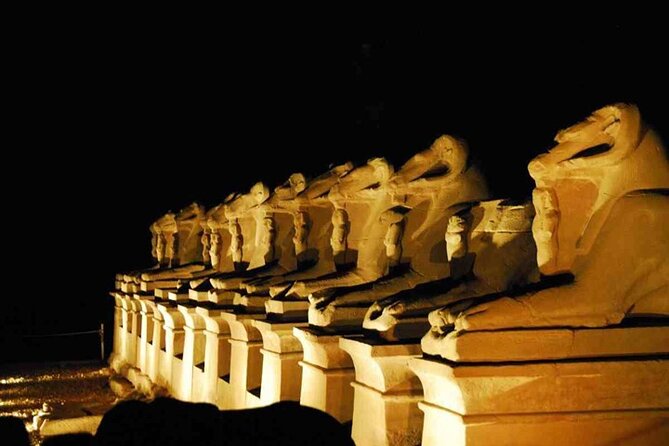
Karnak is one of those places where even a “short visit” can feel like a lot, because it’s a whole temple complex rather than a single building. Here, the tour calls it the Karnak Open Air Museum, and the ancient Egyptians called it Ipet-isu, often translated as most select of places.
You’ll hear the big context from your guide: Karnak is a city of temples built over more than 2,000 years, dedicated to the Theban triad of Amun, Mut, and Khonsu.
But here’s the key practical point: the schedule shows a very brief time allocation for Karnak. So don’t come expecting to understand every structure at ground level like you would on a multi-hour visit.
Instead, treat Karnak like a guided orientation plus a few “anchor” sights. Look for the scale. Look for how spaces shift as you move deeper. Let the guide’s narration do some of the work. When time is limited, listening becomes as valuable as looking.
Also remember: admission is not included here. So plan your entrance budget accordingly.
The Comfort Stuff That Makes or Breaks a Day Tour
A Luxor day trip lives and dies on logistics. This one includes several comfort basics that keep the day from becoming miserable:
- Air-conditioned car transfers across Cairo and to/from the airport
- Lunch and a bottle of water
- An English-speaking private guide
- Small group size up to 18 people
- Mobile ticket (handy when you’re juggling phone, passport, and schedules)
The included lunch is a real quality-of-life upgrade. In a long day like this, hunger can make every stone site feel longer and every line feel worse.
One more thing: drinks are not included. So if you’re sensitive to dehydration or just know you drink more in hot weather, plan accordingly and keep water habits steady.
The Guide Factor: What Makes It Feel Like a Real Tour
The tour’s biggest strength isn’t just where you go. It’s how the sights get explained along the way. You’ll have an English-speaking private guide who fills in background as you walk through tombs and temples.
One guide example I’ve seen associated with this kind of service is Muhammad Basham. If you end up with him, you’ll likely notice that his approach connects details to what you can actually see on-site. That’s the difference between looking at carvings and understanding why certain scenes or building choices mattered.
Even if your guide isn’t the same person, the role is the same: you get local context while you’re in the right spot to use it.
Who This Luxor Day Tour From Cairo by Flight Is Best For
This tour fits you if:
- You have a tight schedule in Egypt and you want Luxor in one day.
- You’d rather spend money on flying and guided logistics than on extra days in transit.
- You want both Valley of the Kings and major temples like Hatshepsut and Luxor Temple without planning your own route.
It might be a less perfect fit if:
- You get cranky with early starts (pickup around 05:30).
- You prefer long temple wandering with time to explore at your own pace.
- You want everything included with no extra payments beyond the tour price, because entrance fees and drinks are not included.
For most people, though, the structure is exactly what you need: pick up early, fly, see the highlights, return the same day, and sleep in Cairo again.
A Simple Strategy to Make the Most of Your Limited Time
You don’t need to overthink it, but you do want a plan for a day this packed:
- Decide before you go which sites you care about most, then match your energy to them.
- At tomb or temple sites, aim to take fewer photos and look longer at fewer carvings.
- Use your guide’s story as a tool. When you know what you’re looking at, the stones become easier to understand.
And bring the basics you’d bring anywhere in Egypt: comfortable shoes, sun protection, and layers you can adjust because mornings can feel cooler and afternoons heat up fast.
Should You Book This Tour?
If your goal is Luxor’s top highlights in a single day, this is one of the most straightforward ways to make it happen. The combination of round-trip flights, included lunch, and a private guide reduces the usual headache of squeezing Luxor into a Cairo schedule.
I’d book it if you’re flexible on time and you’re comfortable with an intense day. Skip it if you want a relaxed pace or you’d rather build in extra hours for Karnak and deeper tomb choices.
FAQ
FAQ
How long is the Luxor day tour from Cairo?
It runs for approximately 14 hours.
Does the tour include round-trip flights from Cairo?
Yes. The package includes round-trip flight tickets between Cairo and Luxor.
Is pickup from my Cairo hotel included?
Pickup is offered, and the itinerary starts with hotel collection around 05:30.
Is there an English-speaking guide?
Yes, the tour includes an English-speaking tour guide.
What sites are included in the itinerary?
You’ll visit the Valley of the Kings, Colossi of Memnon, Temple of Hatshepsut at Deir el Bahari, Luxor Temple, and Karnak Open Air Museum.
Are entrance fees included?
No. Entrance fees are not included for the listed sites.
Is lunch included?
Yes, lunch is included.
Are drinks included?
Drinks are not included (a bottle of water is included).
What group size should I expect?
The maximum group size is 18 travelers.
What is the cancellation policy?
The experience is non-refundable and cannot be changed for any reason.