REVIEW · CAIRO
Inclusive Day Tour to Giza Pyramids, Memphis, Sakara & Lunch.
Book on Viator →Operated by Egypt Royal Tours · Bookable on Viator
Big stone legends, packed into one morning. This day tour links Giza’s Pyramids from inside with the Great Sphinx, then rolls onward to Sakkara and Memphis—so you get multiple “must-see” ancient sites without having to plan transfers. It starts at 8:00 am with pickup, and you’re in a private air-conditioned vehicle with an Egyptologist guide.
What I really like is how focused the route is. You don’t just view the pyramids from the roadside—you also get time inside the Great Pyramid of Cheops, plus structured stops for Chephren and Mykerinus so the monuments make more sense as a group. I also like the guide-led pacing: you’ll get an Egyptologist who speaks your language, and that’s huge when you want real context, not just photos.
One consideration: it’s a 6 to 7 hour whirlwind, with plenty of walking and a busy schedule tied to weather. If conditions are rough, the experience may be changed or refunded, since good weather is required.
In This Review
- Key things to know before you go
- Giza Pyramids From Inside: Cheops, Chephren, Mykerinus
- Sphinx, Valley Temple, and the Camel Ride for Classic Photo Lines
- Sakkara at a Faster Pace: Step Pyramid of Djoser to King Teti’s Sand Pyramid
- Memphis After Lunch: Menes, Ramses II, and the Alabaster Sphinx
- Your Guide and the Private Vehicle: How This Tour Reduces Stress
- Lunch and Camel Time: What’s Included, What You’ll Still Pay
- Timing, Walking, and Weather: How to Make This a Good Day
- Who Should Book This Tour (and Who Might Prefer Something Else)
- Final call: Should you book this Giza–Sakkara–Memphis day?
- FAQ
- What time does the tour start?
- How long is the tour?
- Is hotel pickup included?
- What sites are included in the day?
- Is the camel ride included?
- Are entrance fees covered?
- Is lunch included?
- Does the tour include a guide?
- What should I budget for if I’m booking?
- What is the cancellation policy?
Key things to know before you go
- Great Pyramids from inside: Access is built into the plan, not an optional extra.
- Sphinx + Valley Temple photo timing: You’ll be set up for the classic views and viewpoints.
- Sakkara beyond the Step Pyramid: You’ll also see the sand pyramid of Teti and mastabas of high officials.
- Camel ride included (1 hour): Time is allocated for it, not just a quick try.
- Memphis after lunch: Old Kingdom capital vibes with Ramses II and the alabaster Sphinx.
- Private vehicle + hotel pickup: Less hassle, more time at the sites.
Giza Pyramids From Inside: Cheops, Chephren, Mykerinus
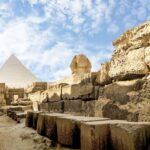
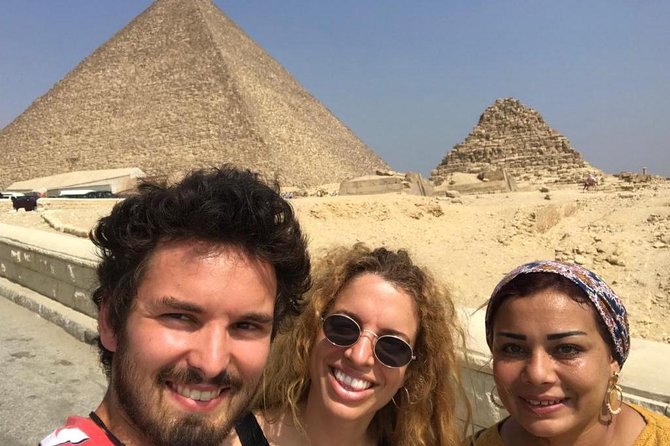
The day’s anchor is Giza, and the best part is that the Great Pyramid experience is built in. You’ll head to the pyramids of Cheops, Chephren, and Mykerinus, with a plan that keeps the sites connected instead of feeling like separate stops.
The “from inside” access matters because it changes how you understand the place. From the outside, you’re looking at a shape and scale. Inside, you get that sense of tight space, ancient engineering, and the commitment it took to build and later preserve corridors and chambers. It also tends to make the whole Giza story feel more tangible, not just impressive from afar.
If you’re the type who likes to connect what you see to what you’re hearing, this itinerary is set up for that. An Egyptologist guide helps translate what these rulers built and why. And since you’re moving monument to monument—rather than spending all your time at one single spot—you’ll likely feel you’re getting the “big picture” of Giza by the time you leave.
Practical note: inside-the-pyramid time can feel more physical than you expect. Even if you’re comfortable, bring a calm mindset for narrow passages and steady movement.
A few more Cairo tours and experiences worth a look

Sphinx, Valley Temple, and the Camel Ride for Classic Photo Lines
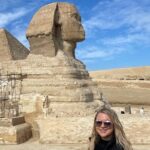
After the pyramid complex time, the route continues to the Great Sphinx, dated to the era of Chephren. The guide-led context is what helps here—otherwise it can just be another giant statue in a photo lineup. You get the “why this matters” piece, not only the “look at this” piece.
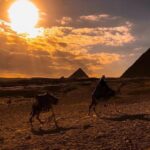
Next comes the Valley Temple area, paired with a camel ride. This isn’t described as a random add-on. It’s part of the schedule, with a full 1 hour camel ride included. That gives you enough time for photos and for the experience to feel like an actual activity, not a rushed moment.
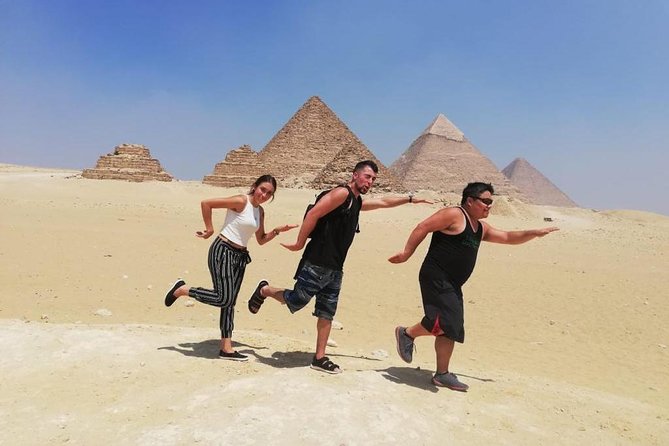
One nice detail is that you’ll use a high point for pictures aimed at capturing the pyramids in a line—famous Nine Pyramids views. If you’re serious about photos, this is the kind of planning that saves time and frustration. You’re not improvising where to stand; you’re brought to the viewpoints that fit the shot.
Small comfort tip: keep your expectations realistic. Camel rides can be bumpy, and you’ll want to keep your balance and follow your guide’s instructions.
Sakkara at a Faster Pace: Step Pyramid of Djoser to King Teti’s Sand Pyramid
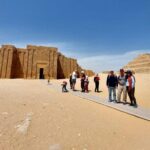
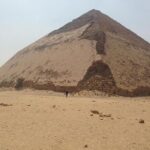
Sakkara is where the day turns from “famous giant pyramids” into “the blueprint that came first.” You’ll travel over to the Step Pyramid of Zoser, described as the world’s oldest major stone structure, built in the 3rd Dynasty for King Djoser. The guide explains the significance of the stepped design and the role of Imhotep as the architect.
This is a key part of why the tour works so well for first-time visitors. You’re not only seeing the end result at Giza; you’re seeing the earlier idea that helped lead toward what comes later. The Step Pyramid is also visually different—its shape reads like an evolutionary step in architecture, not just a monument.
From there, the itinerary continues through Sakkara’s other highlights:
- The sand pyramid of King Teti, with a burial chamber described as still very well intact. The walls include prayers and hymns for the journey of the soul in the afterlife.
- Mastabas of kings and high officials—important because it broadens the focus beyond a single ruler’s monument.
One drawback to consider: Sakkara can feel more “archaeology-textured” than Giza. That’s not a negative. It just means you’ll enjoy it most if you’re curious and listen to the guide, because the details are less obvious at a glance.
Admission is handled in the plan, labeled as free for this stop, so you’re not wasting energy hunting down tickets or re-checking entrance rules.
Memphis After Lunch: Menes, Ramses II, and the Alabaster Sphinx
Lunch comes between Sakkara and Memphis at a local restaurant. Having it slotted into the middle of the day is a genuine value point. You don’t need to time your own food break or worry about what’s nearby while you’re still moving between ancient sites.
After lunch, you’ll transfer to Memphis, the first ancient capital of Egypt founded by King Menes. The plan frames Memphis as a political and cultural center during the Old Kingdom for over 3,000 years—an idea that helps you connect why people kept coming back to this place.
In Memphis, you’ll visit:
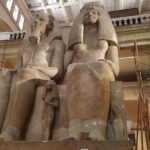
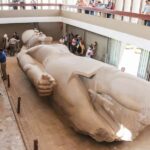
- A Statue of Ramses II
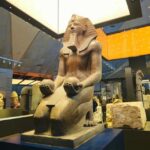
- The alabaster Sphinx of Memphis
This stop can be a quick burst compared to the pyramids and Sakkara, but that’s also why it’s included. It turns the day into a chronological sweep: early capital energy, old kingdom monuments, then the famous pyramid zone outside Cairo.
If you like symbolism and continuity, you’ll likely enjoy how the tour doesn’t stop at “big pyramids only.” You get a sense of Egyptian civilization as more than one landmark.
Your Guide and the Private Vehicle: How This Tour Reduces Stress
This is set up as a private tour/activity for your group, with pickup from your hotel and transfers by a private air-conditioned vehicle. That combination does a lot for your comfort. In Cairo, getting from one major site to another can be time-consuming and exhausting. A smooth transfer means you spend less time coordinating and more time actually at the monuments.
The tour also includes a private Egyptologist guide who speaks all languages (meaning the guide is selected to match your group’s language needs). And the guide is the difference between seeing objects and understanding them.
There’s also a strong signal in the feedback about guide style. Muhammad and Haizam are specifically praised for being fun, friendly, and flexible while sharing real knowledge. That’s exactly the kind of guiding that helps when a day like this has unpredictable moments—extra time at a viewpoint, a small change in pacing, or questions that pop up on the spot.


Lunch and Camel Time: What’s Included, What You’ll Still Pay
The included package covers the practical stuff that usually adds hidden costs:
- Private air-conditioned transfers
- Private all-languages Egyptologist guide
- Entrance fees to the mentioned sites
- Lunch at a local restaurant
- Bottled water during the trip
- Camel ride (1 hour)
- Great Pyramids access from inside
On top of that, tipping isn’t included, and extras aren’t included. That’s standard for many tours, but it matters because tips are often the thing people forget to budget for until the end of the day.
At $210 per person for roughly 6–7 hours, the value comes from stacking multiple major sites with guided context and “from inside” access. If you were trying to build this yourself, you’d likely spend time (and often money) coordinating entry tickets, getting transport right, and arranging a competent guide who can keep the chronology straight.
One more practical note: the tour uses mobile tickets and offers pickup. Those small logistics details usually cut down on stress when you’re starting early at 8:00 am.
Timing, Walking, and Weather: How to Make This a Good Day
This tour starts at 8:00 am, and the pacing is built for an all-in-one day. Plan to move with purpose. At Giza and Sakkara, you’ll do more walking than most people expect, even if you’re not racing. Comfortable shoes matter.
You also need to think about conditions. The tour requires good weather. If weather is poor, you’ll either be offered a different date or receive a full refund. That’s important for planning, because Egypt can be very different from morning to afternoon depending on season and wind.
If you’re the kind of traveler who likes slow, long museum-style breaks, this may feel fast. But if you’re trying to see the big anchors of Cairo’s ancient world in a single day, this itinerary is designed for exactly that.
Who Should Book This Tour (and Who Might Prefer Something Else)
This is a great fit if you:
- Want Giza plus Sakkara plus Memphis in one day without fighting Cairo logistics
- Care about context and timelines, not just photos
- Like active touring (pyramids, camel ride, and site-to-site movement)
- Want access to the Great Pyramid from inside included in the plan
You might choose a different style of tour if you:
- Prefer very relaxed days with fewer stops
- Don’t want camel rides or inside access experiences
- Get frustrated by early starts and a full schedule
For many visitors, this hits the sweet spot: a condensed day that still feels structured and meaningful.
Final call: Should you book this Giza–Sakkara–Memphis day?
I’d book this if you’re aiming for maximum ancient value per day and you want the big highlights connected by an Egyptologist guide. The combination of inside pyramids access, Sphinx/Valley Temple time, Sakkara’s Step Pyramid era, and a Memphis stop after lunch makes it more than a checklist tour.
If you’re sensitive to long walking and a weather-dependent schedule, you’ll need to go in with realistic expectations. Bring good shoes, stay hydrated (you get bottled water), and keep your schedule flexible.
If you want one day that meaningfully covers the Cairo area’s top ancient sites—without turning your trip into transportation math—this one is a strong pick.
FAQ
What time does the tour start?
The start time is 8:00 am.
How long is the tour?
It runs about 6 to 7 hours.
Is hotel pickup included?
Yes, pickup is offered.
What sites are included in the day?
You’ll visit the Giza Pyramids area (including the Great Pyramid from inside), the Great Sphinx and Valley Temple area, the Step Pyramid area at Sakkara, and Memphis.
Is the camel ride included?
Yes. A 1-hour camel ride is included.
Are entrance fees covered?
Entrance fees to the mentioned sites are included, and the Sakkara admission is listed as free in the plan.
Is lunch included?
Yes, lunch is served in a local restaurant.
Does the tour include a guide?
Yes. You’ll have a private Egyptologist guide for the day, in all languages (matched to your group).
What should I budget for if I’m booking?
Extras are not included, and tipping is not included. The rest of the core items (transfers, guide, site access, lunch, bottled water, and camel ride) are included.
What is the cancellation policy?
You can cancel up to 24 hours before the experience start time for a full refund. If you cancel less than 24 hours before, it isn’t refunded. If it’s canceled due to poor weather, you’ll be offered a different date or a full refund.