REVIEW · CAIRO
Half Day Tour To Memphis Sakkara And Dahshur Pyramids
Book on Viator →Operated by EMO TOURS EGYPT · Bookable on Viator
Pyramids beyond Giza in one tight half-day. I like how this tour packs Saqqara and Dahshur into a realistic schedule, with time at multiple pyramid sites and the Old Kingdom feel you don’t get from a Giza-only day. I also love the door-to-door pickup and the fact that entry fees and an Egypt-focused guide are part of the package.
One thing to consider: guide quality and communication can vary, and a few negative experiences mention slow or late pickup and guides leaning on a phone instead of explaining. If you care a lot about deep answers in English, ask questions early and don’t be afraid to steer the conversation.
In This Review
- Key things to know before you book
- Why this half-day tour beats a Giza-only plan
- Price and what you truly get for around $50
- Pickup, timing, and how to make the morning feel smooth
- Saqqara: Djoser’s Step Pyramid and the Old Kingdom “why it matters”
- More Saqqara stops: Teti, Unas, and the Mastaba of Ti
- Memphis: the practical history stop most people skip
- Dahshur: Bent and Red Pyramids, including the inside factor
- The shop stops: what they are, why they’re there, and how to handle them
- Guides and drivers: where your experience can swing
- What to wear and bring for a comfortable pyramid day
- Who should book this tour (and who might prefer something else)
- Should you book it? My practical recommendation
- FAQ
- FAQ
- How long is the Half Day Tour to Memphis, Saqqara, and Dahshur?
- What’s included in the tour price?
- Do I need to pay for the pyramids and Memphis separately?
- Is lunch included?
- Is this a private tour or a shared group tour?
- Can I choose what time the tour starts?
Key things to know before you book
- Multiple pyramid eras, not just one site: Step Pyramid at Saqqara, plus Bent and Red Pyramids at Dahshur.
- You can go inside more than one pyramid: Some tunnel interiors can be tight and physically demanding.
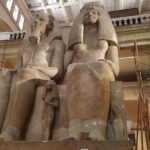
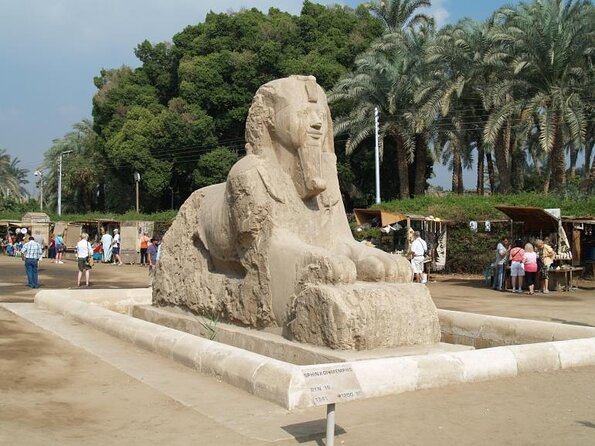
- Memphis adds context fast: You see Ramses II’s colossal statue and the Alabaster Sphinx.
- Your time is managed, but expect shop stops: There are planned visits for oils/cotton, papyrus, and handmade carpets.
- Private feel, but check pickup clarity: Some people reported confusion at the hotel entrance when the driver arrived with limited signage.
- Lunch is optional: An upgrade is available (koshari), but you’ll typically be deciding on food logistics on your own timing.
Why this half-day tour beats a Giza-only plan
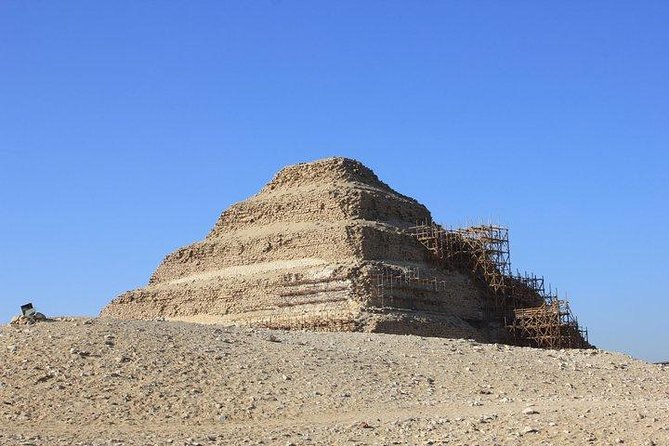
If your Cairo trip is short, you can still get that big “Egypt has been here forever” feeling without spending your entire day at Giza. This is one of those practical tours that gives you variety: evolution of pyramid design at Saqqara, then older royal tomb-building at Dahshur, then an Old Kingdom “this is where power lived” stop in Memphis.
Saqqara and Dahshur are also usually less chaotic than the Giza complex. That matters because pyramid photos are nice, but what you really want is time to look—at stone blocks, weird angles, the desert setting, and how these structures fit into their era. This tour’s structure helps you do that in about 5 hours.
You can also read our reviews of more tours and experiences in Cairo.

Price and what you truly get for around $50
This tour is priced at $50 per person, and the value comes from what’s bundled: hotel pickup and drop-off, an on-the-ground guide, and entry fees plus bottled water. For Cairo, transport plus multiple sites usually adds up fast, so bundling it is the point.
There are a few add-ons to factor in:
- Lunch is optional (the upgrade notes koshari).
- Tipping isn’t included.
- Entrance fees are listed as “basic area only,” and some optional government-shop-style stops are referenced in the info.
So I’d treat the $50 as a strong base price for a tight day. If you prefer minimal shopping and want a pure archaeology day, you’ll want to stay aware of the scheduled shop stops.
Pickup, timing, and how to make the morning feel smooth
The tour runs about 5 hours and offers choice of departure times, which is helpful if you’re juggling museum time, a late arrival in Cairo, or heat-sensitive plans. Pickup is offered from addresses across Cairo and Giza, and it’s designed to remove the transport stress and the haggling.
Still, a few details are worth watching:
- Some experiences mention waiting longer than expected or pickup confusion at the hotel entrance.
- A clean solution: message ahead (or confirm in your booking) exactly where you’ll meet your guide/driver and what name/signage to look for.
- If you’re sensitive to timing, pick a departure that gives you a buffer before your next commitment.
Once you’re in the car, the day tends to move efficiently. Several driver stories emphasize safe, calm driving through busy Cairo streets and rougher roads on the way south.
Saqqara: Djoser’s Step Pyramid and the Old Kingdom “why it matters”
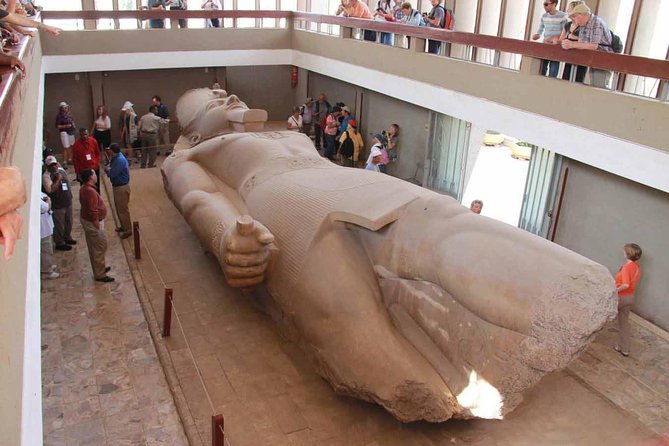
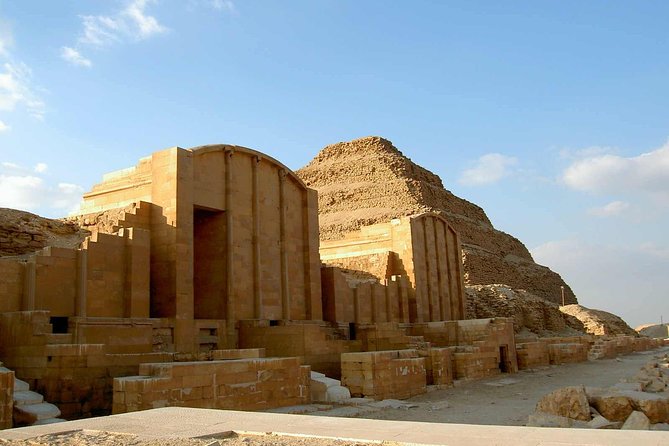
Saqqara is the place to understand the pyramid idea before it becomes the Giza style everyone recognizes. The big stop here is the Step Pyramid of Djoser. You’ll spend about an hour on site, and the focus is not just sight-seeing—it’s the story of how Egyptian pyramid-building evolved, from earlier forms toward the more familiar pyramid shapes.
What I like about starting here: you’re seeing a design concept that sits at the foundation of the later “wow” moment at Giza. The stone, the scale, and the way people worked the site into a wider sacred complex makes more sense when you see it first.
Also, there’s time built in to see key structures in the area, not just one photo and done.
More Saqqara stops: Teti, Unas, and the Mastaba of Ti
This tour doesn’t just stop at Djoser and rush away. You get shorter, focused visits at:
- Pyramid of Teti (about 30 minutes)
- Pyramid of Unas (about 30 minutes)
- Mastaba of Ti (about 30 minutes)
Why this is worth it: these are the kind of structures that make a site feel lived-in by history instead of feeling like a checklist. The Mastaba of Ti includes details such as serdabs and tomb wall scenes of everyday life, and it’s associated with discovery by Auguste Mariette (a name you’ll often hear in Egyptology circles).
At these stops, the pacing matters. Short visits can feel rushed if you’re expecting museum-style explanations for each tomb. But with a guide who can connect what you see to the broader Old Kingdom story, these extra pyramids and mastabas add real depth—without taking over the whole day.

Memphis: the practical history stop most people skip
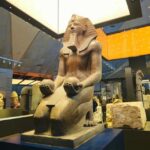
Memphis is the “okay, so where did they actually run the show?” stop. It’s listed as the ancient capital of Egypt, with major landmarks including:
- a colossal Ramses II statue
- the Alabaster Sphinx
You’ll have about an hour here, and it’s a nice shift from desert sand and pyramid stone into an open-air context where power is visible in monumental form. The Ramses II statue is the kind of object that makes scale obvious fast—your brain stops trying to compare it to models and just accepts: this was built for people who mattered.
If you like your photos to carry meaning, this stop tends to deliver. Even people who focus mostly on pyramids often come away glad they added Memphis.
Dahshur: Bent and Red Pyramids, including the inside factor
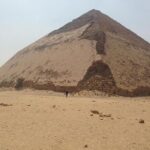
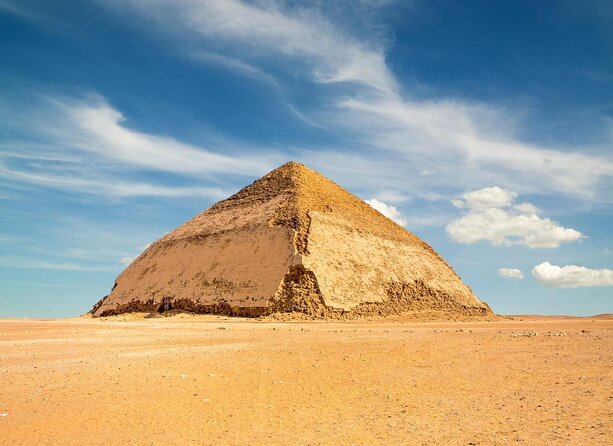
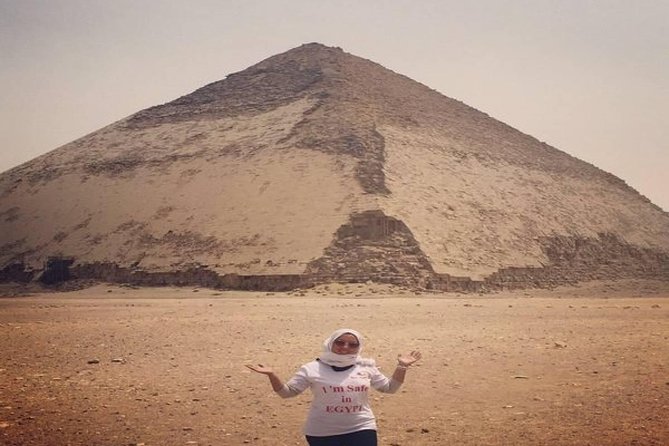
Dahshur is where the story gets more dramatic. You’ll spend about 1.5 hours visiting the Bent Pyramid and the Red Pyramid. These are older and among the best preserved in Egypt, and they’re famous for two things:
1) their design differences (the “bent” shape is part of the appeal)
2) the feeling of walking around a complex that doesn’t overwhelm you with crowd noise
The big consideration here is the interior access. Some tours include time inside pyramid chambers/tunnels, and that can be challenging—narrow spaces and physical effort. If you’re claustrophobic, have mobility issues, or just don’t like tight stone corridors, go into it with expectations: wear sturdy shoes, move carefully, and decide on the spot whether you want to enter.
The shop stops: what they are, why they’re there, and how to handle them
This tour includes government-aligned stops that focus on Egyptian crafts and products, such as:
- natural oils and soft Egyptian cotton (Paradise Perfumes & Flower Cotton)
- papyrus making and traditional artwork (Key of Life Papyrus)
- handmade rug weaving at a local school (Handmade Carpets)
The info also notes “government stops” for higher-quality souvenirs. Expect short sessions at each, around 20 minutes per stop.
Are these worth your time? It depends on your style:
- If you like watching crafts happen and you’d buy something small (papyrus, cotton goods, or a textile), it’s a reasonable break between pyramid walking.
- If your goal is pure archaeology and zero shopping, the trade-off is that these pauses can feel like filler.
My practical suggestion: treat them like pit stops, not attractions. If you want to buy, decide quickly. If you don’t, use the time to rest, hydrate, and get ready for the next pyramid.
Guides and drivers: where your experience can swing
This is the part you can’t fully control, but you can manage the risk.
In positive examples, guides are praised by name for explanations and enthusiasm—people mention guides such as Entesar Esmail, Besma, Menna, Heba, and Hazem Anwar. Drivers named Mahmoud and Ahmed also show up in good experiences, with comments about safe driving and punctual arrivals.
In less positive experiences, the complaints are specific:
- Pickup delays or confusion at the hotel entrance
- A guide using a phone too much, with limited explanation unless asked
- Communication gaps in English
- In rare cases, behavior that felt uncomfortable in isolated moments
Here’s how to protect your day:
- At the start, ask one clear question that proves the guide understands you (for example, ask what design change you should notice between Saqqara and Dahshur).
- If you don’t get good answers, don’t wait silently. Ask again, or refocus on what you can see and photograph.
- If personal boundaries feel blurred, set them directly. You’re paying for a cultural experience, not for awkward attention.
When the guide clicks, this tour feels like a smart education sprint. When it doesn’t, you’ll still get the pyramids—but you might want to do more reading beforehand so the stone still makes sense even if the explanations are shaky.
What to wear and bring for a comfortable pyramid day
Even in a half-day plan, you’ll do real walking and may enter tight spaces.
Bring:
- Water (bottled water is included)
- sturdy shoes with grip
- sun protection (cap/sunglasses/sunscreen)
- a light layer if you’re out early or it gets breezy
For inside-the-pyramid plans, go slow. If the entry feels too tight, stepping back is not a failure. The outside views at Dahshur still carry plenty of impact.
Who should book this tour (and who might prefer something else)
This works best if you:
- want more than Giza without sacrificing a full day
- enjoy guides who explain the “why” behind the monuments
- like the idea of fewer crowds and faster context switching (Saqqara → Memphis → Dahshur)
Consider another plan if:
- you get overwhelmed by cramped interiors
- you want only one major complex and zero shop stops
- you need advanced historical discussion in very specific detail (English communication can vary)
Should you book it? My practical recommendation
Yes—if you want a high-value, efficient route through Saqqara, Memphis, and Dahshur, this is a strong fit. The combination of Step, Bent, and Red Pyramids plus the Memphis capital context is exactly the kind of “compressed clarity” you want on a short Cairo stay.
Book with confidence, but go in with eyes open:
- confirm pickup details clearly
- ask questions early so the guide’s communication works for you
- plan for short shopping stops
- treat inside-pyramid access as optional, not guaranteed “must-do”
FAQ
FAQ
How long is the Half Day Tour to Memphis, Saqqara, and Dahshur?
It’s listed as about 5 hours (approximately).
What’s included in the tour price?
The tour includes a guide, hotel pickup and drop-off, entry fees, and bottled water.
Do I need to pay for the pyramids and Memphis separately?
The tour says entry fees are included, with notes that the entrance fees include the basic area only.
Is lunch included?
Lunch at local restaurants is optional. There’s an upgrade option mentioned (koshari).
Is this a private tour or a shared group tour?
It’s described as a private tour/activity, meaning only your group participates.
Can I choose what time the tour starts?
Yes. The information notes you can choose departure times to fit your schedule.