REVIEW · CAIRO
Half Day Private Guided Shopping Tour in Cairo
Book on Viator →Operated by Egypt Life Tours · Bookable on Viator
Cairo shopping, minus the chaos. I like the private air-conditioned car and the qualified guide approach, because you watch crafts happen first and shop with context instead of wandering blindly. The slightly trade-off is that it’s very shopping-forward, so if your goal is heavy sightseeing, you’ll want to pair this with a landmark day.
One name keeps popping up in the quality notes: Zeinab. In feedback, she’s described as friendly, patient, and willing to explain things clearly, including slowing down for small places around the Giza side when the route allows. If you like making sense of what you’re buying, this tour format fits well.
In This Review
- Key things to know before you go
- A smarter way to shop in Cairo: crafts first, stores second
- The carpet-making and papyrus segment: where your shopping starts to make sense
- How the “governmental shops and bazaars” feel in real life
- Glass and perfume factories: souvenirs with an actual production story
- The three-story shopping center: Egyptian cotton, gold jewelry, and everyday gifts
- Bashmena scarves and embroidered shirts: the best kind of “small but meaningful” purchase
- Cartouche statues and ornate magnets: easy souvenirs, quick decisions
- Price and value: what a $5 private tour really means
- Timing, comfort, and how to plan your half day
- Who this tour fits best (and who should skip)
- Tips to get better results from your guide
- Should you book this private Cairo shopping tour?
- FAQ
- How long is the Half Day Private Guided Shopping Tour in Cairo?
- Where does hotel pickup and drop-off happen?
- Is this tour private or shared?
- What does the tour cost?
- What’s included in the tour?
- Does the tour use a mobile ticket?
- Can I get a full refund if I cancel?
Key things to know before you go
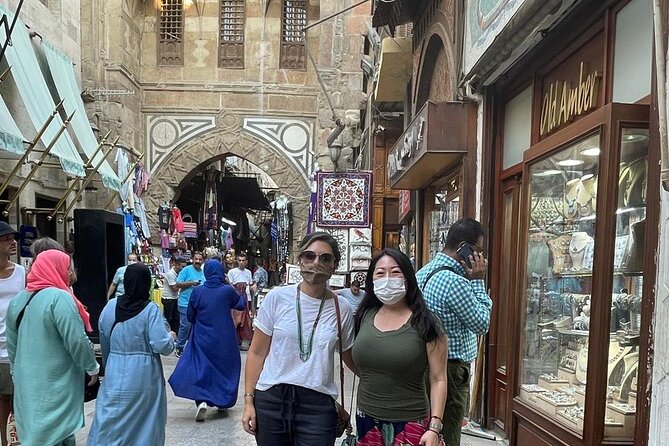
- Craft demos before buying: carpets and papyrus come first, so souvenirs feel earned, not random.
- Shopping in a structured route: governmental shops and bazaars are included, which can cut down on guesswork.
- Egyptian cotton bed sheets and basics: you’ll see upscale textiles alongside simpler embroidered tees and scarves.
- Factory-style stops: glassmaking and perfume production are part of the plan, not just stores.
- Private, not a cattle-herd loop: your group stays together with hotel pickup and drop-off.
A smarter way to shop in Cairo: crafts first, stores second
Cairo shopping can be a mix of fun and exhausting. This half-day private setup helps because it gives you a clear flow: you get introduced to the materials and processes, then you’re guided toward places where those items are actually sold.
I like that you’re in a private modern A/C vehicle. That matters when the day runs warm and you don’t want to burn energy haggling with heat on top of haggling with people. With a qualified guide driving the pace, you’re more likely to ask the right questions at each stop instead of making quick, regret-prone purchases.
You’ll still be in shopping mode. But shopping becomes less of a scramble when you’ve seen the behind-the-scenes steps—like how carpets are made or how papyrus is created.
You can also read our reviews of more guided tours in Cairo



The carpet-making and papyrus segment: where your shopping starts to make sense
The experience begins with time focused on Egyptian crafts—carpet making and papyrus creation. Even if you’re not a “craft person,” watching production basics first changes what you look for later.
Carpet making is one of those crafts where the differences are real but not obvious at first glance. Seeing the process helps you understand why handmade or better-constructed pieces command different pricing. You’re also more likely to notice the kind of work that takes time—because you’ve already watched the effort happen.
Papyrus is similar. Cairo has plenty of papyrus souvenirs, but a demo gives you a clearer sense of what you’re buying: what the material is, how it’s handled, and why some pieces look more polished than others.
This early part also has an educational rhythm. You’re not just handed a list of shops; you’re taught what to pay attention to. That’s the best kind of shopping guide: the one that helps you shop smarter instead of shopping faster.
How the “governmental shops and bazaars” feel in real life
After the craft portion, the route continues through governmental shops and bazaars. This can be a good thing, and it can also feel more structured than you might expect.
Why it can be good:
- You’re less likely to end up in a random maze of stalls with no context.
- A guide can steer you toward places selling quality rather than only whatever is easiest to sell.
Why you should keep your expectations realistic:
- Bazars are still busy. Even with a private plan, you’ll be in market conditions.
- Some shops may be oriented toward selling, so you’ll want to pace yourself and avoid feeling rushed.
My practical advice: go in with a short mental shopping list and a “try not to decide instantly” rule. When you’re surrounded by beautiful textiles, perfume, and gift items, quick decisions are where impulse pricing usually hides.
Glass and perfume factories: souvenirs with an actual production story
Next come glassmaking factories and perfume manufacturers. This is one of the most interesting parts of the day if you like souvenirs tied to a process, not just a product.
Glass is a great example. A lot of glass souvenirs in Cairo look similar from far away. When you watch production, you start to see the kinds of steps that affect how pieces look and how they’re finished. Even if you don’t become a glass expert, the demo gives your eye a head start.
Perfume adds a different kind of value. Instead of treating perfume shopping as a guessing game, you get introduced to how production is presented as part of the craft. You’re better positioned to compare scent styles, understand how companies market their blends, and ask what ingredients or styles go into what you’re smelling.
I also like that these stops break up the shopping rhythm. A market loop can blur into one long blur of shopping bags. Factory-style segments give you “reset moments” where the day feels like it has structure.
The three-story shopping center: Egyptian cotton, gold jewelry, and everyday gifts
The itinerary then lands you in a three-story shopping center full of Egyptian products. This is where the shopping energy really ramps up.
You’ll commonly see:
- gold jewelry
- luxury bed sheets made with Egyptian cotton
- towels
- bashmena scarves
- t-shirts with traditional embroidery
- magnets and cartouche-themed items near the end of the route
This portion is valuable because it gives you variety. If you’re shopping for a mix of gifts—someone wants something decorative, someone wants something useful, someone wants something small—you can cover it in one concentrated block.
A practical drawback to expect: a big shopping center can make it easy to lose track of what you liked first. If you care about quality, take a moment early in the center to compare a few options side by side, then go back later for the best picks. Don’t be afraid to say no and keep moving. A guide can also help you stick to your budget.
Also, if you’re shopping textiles, pay attention to the feel and finish. Since the tour is framed around Egyptian cotton and embroidered items, your guide can help you focus on the pieces that align with that promise rather than getting distracted by unrelated goods.
You can also read our reviews of more private tours in Cairo






Bashmena scarves and embroidered shirts: the best kind of “small but meaningful” purchase
Some Cairo shopping can turn into too much stuff too fast. That’s why I like that the route includes items like bashmena scarves and embroidered t-shirts.
These are the kind of gifts that travel well. They’re lighter than carpets, easier than jewelry, and more personal than a generic magnet—especially when you buy after you’ve seen the craft side of the story.
If you want to avoid buyer’s remorse, treat scarves and embroidered tees like a “fit and finish” purchase:
- Check stitching and how clean the embroidery looks from a few angles.
- Pick the size and style that fits the person you’re buying for.
- Compare a couple options, not five. Too many comparisons in one stop can fry your decision-making.
Cartouche statues and ornate magnets: easy souvenirs, quick decisions
The tour ends with browsing cartouche statues and ornate magnets in golden or silver finishes. This closing segment matters more than it seems because it helps you convert the day’s shopping learning into simple, lower-stakes purchases.
Cartouche items are a common Egypt souvenir, but the charm is that you’re often looking at something designed to be decorative and personal. Magnets are even simpler. They’re the kind of souvenir you can buy without overthinking, as long as you confirm the finish and overall quality.
How to shop this part well:
- Only buy magnets you genuinely like. They’re small, but cheap magnets multiply quickly.
- For cartouche statues, check paint or metallic finish consistency up close. If details look sloppy at arm’s length, they’ll look sloppy at home too.
If you’re the type who struggles to finish shopping, this ending helps. It’s a gentle way to close the day without demanding big-ticket spending.
Price and value: what a $5 private tour really means
The price listed is $5.00 per person, with an average booking time of about 11 days in advance. On paper, that sounds almost too good to be true—and in a way, it is a bargain-level entry point.
Here’s how to think about value for this specific experience:
- You’re getting hotel pickup and drop-off, plus transport in a private modern A/C vehicle.
- A qualified guide is included.
- Coffee and/or tea are included.
- The tour is private, meaning it’s only your group.
Even if you expect some pricing power on crafts and store items (that’s normal in shopping tours), the core experience still offers real value if you care about a guided route and craft context. The “value lever” isn’t just the demo—it’s the time saved and the reduced stress of figuring out where to go and what to ask.
One note for your expectations: the craft and factory visits likely set up opportunities to buy. If you go in with a clear list and a hard budget, you’ll get more satisfaction from what you choose.
Timing, comfort, and how to plan your half day
Duration is listed as about 4 to 6 hours. That window is short enough to fit between bigger sightseeing days, but long enough for meaningful browsing.
Plan for:
- A morning start. The example time is 9 am, with flexibility for your preferred start time.
- Heat and walking inside shops. Even with A/C transport, you’ll still spend time on foot at stops and inside buildings.
- Decision fatigue. When a day includes craft demos and a big shopping center, your brain will get tired before your bags do.
I recommend you bring:
- a small bag for purchases and a separate spot for receipts
- water (even if coffee or tea is included)
- a light layer for A/C interiors
If you want the most satisfying shopping day, aim to have at least one restful meal before you go. Shopping is easier when you’re not hungry or rushed.
Who this tour fits best (and who should skip)
This tour fits best if you:
- want private guidance rather than a fixed group bus schedule
- enjoy learning a bit about how things are made before you buy
- like a practical shopping list: textiles, souvenirs, and smaller gifts
- want a half day that balances education (carpets/papyrus) with buying opportunities (glass/perfume/shopping center)
Consider skipping or changing your plan if you:
- mainly want landmark sightseeing and minimal shopping
- hate shopping settings and feel stressed in markets
- expect a long, deep-dive museum-style cultural day
This is a “make sense of the craft, then shop the output” experience. If that’s your style, you’ll likely enjoy it.
Tips to get better results from your guide
The quality of the guide is a real part of the experience. Zeinab is specifically noted as friendly, patient, and willing to explain clearly, even taking the time to show smaller visiting spots around the Giza side when the route allows. That kind of guide makes a huge difference in a shopping tour.
Use that advantage:
- Ask what to compare in the textiles or craft items before you buy.
- Take your time at the first good stand. Your early choices set your standards.
- If something feels overpriced, ask for another option in the same category rather than bargaining blindly.
Also, go in ready to say yes only when you feel confident. A good guide can help you reach confidence faster.
Should you book this private Cairo shopping tour?
Book it if you want a structured, half-day private experience that mixes carpet making, papyrus creation, and factory-style stops with shopping for practical Egyptian gifts like cotton bed sheets, bashmena scarves, embroidered tees, cartouche statues, and magnets.
Skip it if your perfect Cairo day is mostly monuments and you don’t want shopping stops to shape your schedule.
My simple call: if you like learning while you shop—and you want your time protected with A/C transport and a guide—this is a strong value way to spend a morning or afternoon in Cairo.
FAQ
How long is the Half Day Private Guided Shopping Tour in Cairo?
It runs for about 4 to 6 hours.
Where does hotel pickup and drop-off happen?
Hotel pickup and drop-off are included, with transport handled by a private modern A/C vehicle.
Is this tour private or shared?
This is a private tour/activity. Only your group will participate.
What does the tour cost?
The price is listed as $5.00 per person.
What’s included in the tour?
Included are hotel pickup and drop-off, transport in a private modern A/C vehicle, a qualified tour guide, and coffee and/or tea.
Does the tour use a mobile ticket?
Yes, mobile ticket is listed as a tour feature.
Can I get a full refund if I cancel?
Yes. You can cancel up to 24 hours in advance for a full refund.