REVIEW · CAIRO
Giza pyramids,Sphinx Sakkara,Dahshuh,Memphis,Camel
Book on Viator →Operated by Let`s Explore Egypt · Bookable on Viator
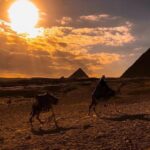
One day, five hits of ancient Egypt. This Cairo tour strings together Giza and Saqqara with a guide who explains what you’re seeing and a 30-minute camel loop near the Great Pyramid and Sphinx area.
I like the practical stuff here: hotel pickup/drop-off in an air-conditioned vehicle, plus snacks and bottled water and lunch included so you’re not scrambling between sites.
My only caution: the day is tightly scheduled, the camel ride is only 30 minutes, and you should confirm which pyramid entry fees are actually covered to avoid ticket-gate surprises.
In This Review
- Key things to know before you go
- The smart value of a single-day Giza, Saqqara, Dahshur, and Memphis route
- Giza Pyramids and the Sphinx: the first wow moment, timed right
- What can feel less ideal at Giza
- Camel ride around the pyramids: fun, but keep it realistic
- Saqqara pyramids (Sakkara) and the King Titi interior: when the story goes older
- The main downside to watch for in Saqqara
- Mit Rahina (Memphis): the Ramses II statue and a sphinx that anchors the scale
- What to consider
- Dahshur Bent and Red Pyramids: the perfect change from Giza
- The best way to do Dahshur in a day
- Price and ticket reality: what $100 is doing for you
- Guides and the photo factor: why the best days feel effortless
- Sales stops and shopping pressure: how to keep control of your day
- What to pack and how to survive the heat
- Who this tour is best for
- Should you book this full-day pyramids plus camel ride tour?
- FAQ
- How long is the full-day tour, and what time should I expect to be out?
- Do you get hotel pickup and drop-off?
- Is the camel ride included, and how long is it?
- What sites are covered during the day?
- What’s included in the price besides the guide?
- What is the dress code?
- Is there free cancellation?
Key things to know before you go
- 30-minute camel ride around the Giza pyramids keeps it fun but not too long
- Saqqara includes a planned interior visit to the King Titi pyramid
- Mit Rahina (Memphis) focuses on major ruins plus the Ramses II statue and a big sphinx
- Dahshur’s Bent and Red Pyramids give you a satisfying change of scenery
- Lunch, snacks, and water mean fewer stress stops in the heat
- Private guiding for your group makes photo stops and questions easier
The smart value of a single-day Giza, Saqqara, Dahshur, and Memphis route
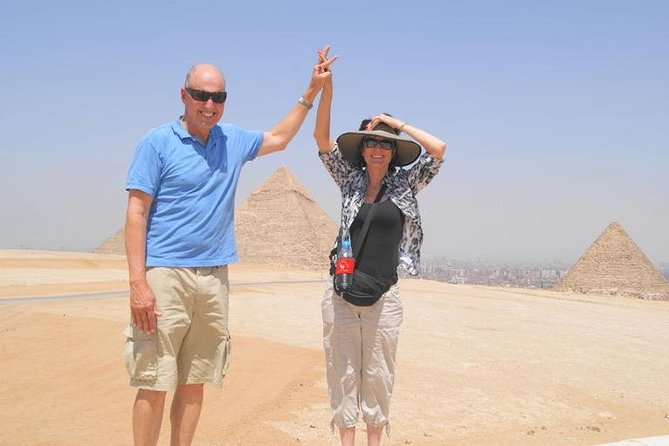
Cairo can be a lot. Traffic is real, distances feel long, and the pyramids show up in the middle of your day like a pop quiz. This tour’s main win is simple: it stacks the big names—Giza, Saqqara, Dahshur, and Memphis—into one organized route, with pickup and drop-off from your hotel and an air-conditioned vehicle between stops.
For $100 per person, you’re not just paying for access to monuments. You’re paying for time saved (transportation + guiding) and for the “stuff that usually costs extra” during a first Cairo visit: snacks, bottled water, lunch, and entrance fees are built into the plan. That’s what makes it feel like value rather than just another bus ride.
One more practical note: it’s set up as a private tour/activity for your group, so the pace is usually easier to manage than with a big open-deck crowd. Still, it’s one full day—so the best experience comes when you’re ready for heat, walking, and the usual Egypt-site “energy.”
You can also read our reviews of more tours and experiences in Cairo.

Giza Pyramids and the Sphinx: the first wow moment, timed right
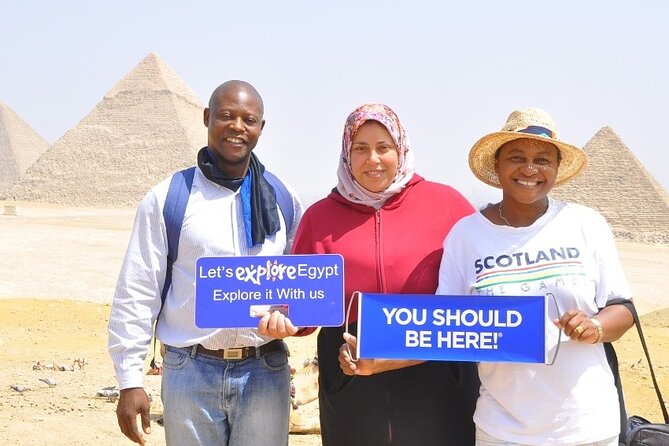
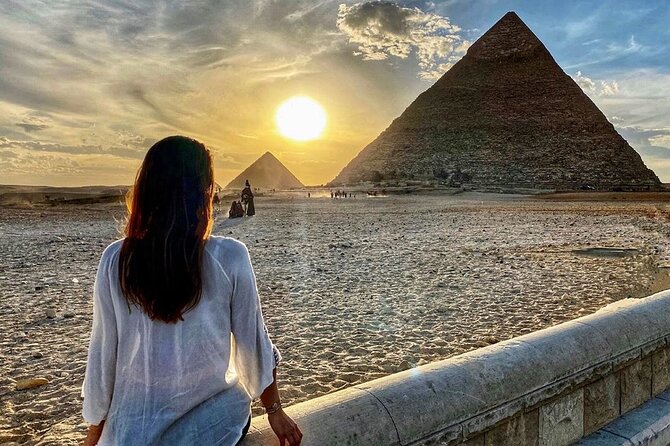
Your day starts at Giza, with time on the pyramids grounds and the Sphinx. The itinerary gives you about 2 hours at Giza, including the 30-minute camel ride around the pyramids. Admission tickets are marked as included for this stop, which matters because Giza isn’t just one viewpoint—it’s multiple areas.
Here’s how to get the most out of this part:
- Go in with a short checklist: Great Pyramid area, Sphinx area, and at least one good wide-angle photo point.
- Be ready for crowds and the “everyone wants a moment with you” vibe around icons. Your guide’s job is to keep you moving to the best spots without turning the visit into chaos.
At Giza, the camel ride is a big part of the appeal, and it’s also where expectations matter most. In the itinerary, it’s 30 minutes, and that’s a solid length for a first-time ride—long enough to feel like it’s part of your story, not so long that it hijacks the whole morning.
The Sphinx stop itself is described as part of the Giza visit time, with an indication that the Sphinx area is free to view (you don’t pay a separate fee for that stop in this plan). The key is to let your guide time your walking so you see it without burning daylight.
What can feel less ideal at Giza
Giza can be physically demanding even when you have a guide. The ground is dusty, the sun is direct, and you’ll likely do more walking than you expect. If you’re sensitive to heat, build in your own rhythm: pause when you need to, use the provided water and snacks, and don’t feel guilty about slowing down.
Camel ride around the pyramids: fun, but keep it realistic
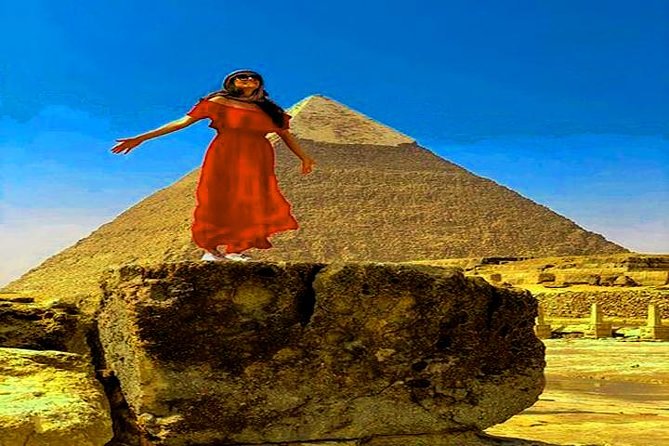
Let’s be honest: the camel ride is a highlight for many people, but it’s not a full adventure in the mountains. In this itinerary, it’s explicitly 30 minutes around the Giza pyramids area.
That’s enough to:
- get a different angle on the Great Pyramid views
- feel like you’re part of the Giza myth in a very practical way
- break up the walking and move through the busiest areas with less effort
If you care about comfort, wear sturdy shoes and keep a little calm. The camel rides near famous sites tend to be more “loop and photos” than “nature ride.” Also, if you have mobility concerns, ask your guide early how the camel portion is handled at the start of Giza so there are no last-minute surprises.
One more thing: camel rides can become a “too short” feeling if the day runs late. So it helps to start your day on time, be ready at pickup, and trust your guide to keep the schedule moving.
Saqqara pyramids (Sakkara) and the King Titi interior: when the story goes older
Next up is Saqqara, the ancient necropolis area often considered a key stop for understanding Egyptian pyramid history. This itinerary calls it the oldest pyramid site in Egypt, dating back about 4,500 B.C. and gives you roughly 2 hours at Saqqara.
What makes this stop special in this particular plan is that it aims beyond photos:
- You get to see Saqqara’s cemetery areas
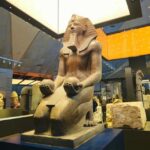
- You’re scheduled to enter the King Titi pyramid
- You’ll have time with your guide to understand what you’re seeing
That interior visit matters. Pyramid exteriors can look similar from far away, but once you’re inside (even briefly), the experience shifts. You’ll understand why people traveled for these spaces and how the site reads differently when you’re standing inside a tomb complex rather than just circling the monuments.
You also stop for lunch at Saqqara at a restaurant, which is a smart move. Waiting until the end of a long day to eat can turn lunch into a survival tactic. Here, lunch happens while you still have momentum.

The main downside to watch for in Saqqara
Saqqara is big, and 2 hours can evaporate fast if you get pulled into extra stops. The best experience is when your guide keeps you focused: cemetery views, then the King Titi interior, then lunch, then straight to the next driving segment. If you want the full walking loop of Saqqara, you may need extra time beyond what this day offers.
Mit Rahina (Memphis): the Ramses II statue and a sphinx that anchors the scale
After lunch, you head to Mit Rahina, also tied to Memphis, Egypt’s former capital. The tour description frames this as exploring the “remains” of the city, with about 2 hours here.
This stop is where the day shifts from pyramid timelines to royal-city scale. Your plan includes:
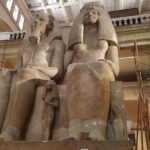
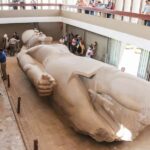
- a massive statue of King Ramses II
- viewing another major sphinx associated with the city, described as the second largest sphinx there
- time with your guide for explanations of the site
One of the most useful ways to think about Memphis is this: it’s not just a monument stop. It’s a reminder that Giza and the pyramids weren’t isolated. They were part of a wider world with administration, worship, and power centered in cities like Memphis.
If you like “how big was it really?” moments, this stop is a strong match. Ramses II statues are hard to process if you only see them from postcards.
What to consider
This part of the day is less about shiny surfaces and more about interpretation. You’ll get the most out of it if you let your guide point out what to look at—where the city feel is, what survived, and why certain pieces matter.
Also, this is another walking-and-sun stop, so keep your water handy and use breaks when your feet ask for them.
Dahshur Bent and Red Pyramids: the perfect change from Giza
Finally, you head to Dahshur, where the itinerary focuses on two big pyramids attributed to King Senfru: the Bent Pyramid and the Red Pyramid. You get about 2 hours here.
This is a smart way to structure the day because Dahshur doesn’t just add another pyramid—it adds another type of pyramid story. The Bent and Red pyramids help you connect the dots between early pyramid experimentation and later, more recognizable forms. Even if you only take in a portion of the details, seeing both in the same visit gives you a “progression in stone” feeling.
The best way to do Dahshur in a day
Treat Dahshur like a photography stop with context. Don’t rush to count angles—focus on getting at least:
- one wide view of the Bent Pyramid area
- one solid look at the Red Pyramid form
If you try to sprint through all viewpoints, you’ll end the day tired and underwhelmed. Dahshur rewards a slower, more deliberate gaze—even in the heat.
Price and ticket reality: what $100 is doing for you
At $100 per person for a 9-hour day, the value mainly comes from bundled costs:
- hotel pickup/drop-off
- air-conditioned vehicle
- private guide
- snacks + bottled water
- lunch in a restaurant
- entrance fees (at least as the itinerary describes them)
- a 30-minute camel ride
That bundle is what makes this more cost-effective than piecing together separate guides, transport, and site tickets on your own, especially on a first trip.
Still, here’s the practical truth: pyramid ticket rules can be confusing, and “included” can mean different things depending on what ticket categories you’re using. Some people end up needing extra tickets for certain interior areas or chambers, even when a tour says entrance fees are covered.
So before you commit, ask your guide or operator these exact questions:
- Are interior pyramid entries included for Saqqara (King Titi) and for any Giza pyramid chambers?
- If they say entrance fees are included, what specific areas does that cover at Giza?
- Is lunch definitely included as part of your cost, or is it an optional upgrade at the restaurant?
If you clarify that upfront, you protect yourself from the most common “it’s not actually all-in” problem.
Guides and the photo factor: why the best days feel effortless
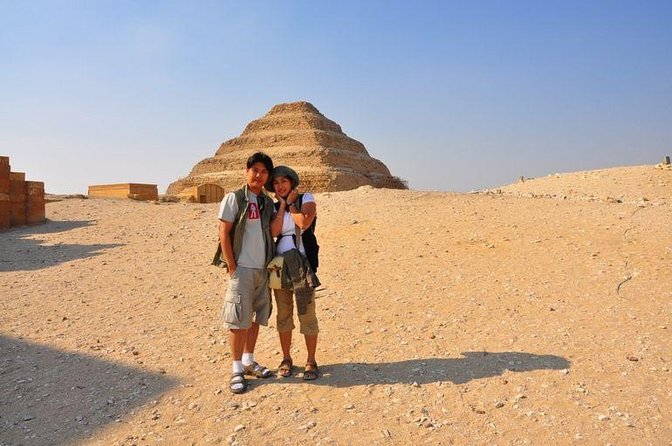
A huge share of the success of this tour comes down to your guide’s style—how they explain, how they manage pacing, and how they handle the constant attention around famous sites.
In this Cairo circuit, guides such as Amir, Rania, Hassan, Habib, and Yasser Adam are repeatedly associated with standout days: friendly explanations, quick photo direction, and a knack for keeping you from getting dragged into unwanted side trips. When your guide is strong, the tour feels like it has a brain behind the scenes.
On a practical level, you’ll notice it in:
- where you stop for the best pyramid angles
- how fast you move between sites
- whether you can ask questions and get straight answers
- whether souvenir pressure slows you down (a good guide keeps things under control)
If you want to maximize this, do two things: confirm your preferred language when booking, and tell your guide at the start that you want minimal shopping stops.
Sales stops and shopping pressure: how to keep control of your day
Some tours in this region include short detours to shops tied to papyrus products or souvenir bazaars. This itinerary doesn’t list shopping as a feature, but it’s smart to assume you might pass through areas with sales opportunities simply because they’re on the route near major sites.
If you want to avoid getting pulled into a long shopping detour:
- bring cash/credit only for what you intend to buy
- set your boundary early with your guide
- don’t get pressured by someone who starts explaining prices before you even see the item
A good day should feel like monuments first, shopping last—if it’s the other way around, you lose time.
What to pack and how to survive the heat
This is a full day outdoors with major walking. Even with an air-conditioned car, the time you spend outside adds up quickly.
Bring:
- sunscreen and a hat
- comfortable walking shoes
- a light layer for shade or wind
- sunglasses
- any motion-sickness remedies if you’re sensitive to rides between sites
The tour includes bottled water and snacks, which helps a lot. Still, treat it as support, not a replacement for your own sun-smart habits.
Also, follow the described smart casual dress code. Lightweight layers tend to work best because you can adjust as the sun shifts.
Who this tour is best for
This tour fits best if you:
- want to see Giza, Saqqara, Dahshur, and Memphis in one organized day
- prefer private guiding over a crowded group format
- like the “history with photos” style, where your guide helps you get good angles fast
- don’t want to plan transport and ticket combinations yourself
It may be less ideal if you:
- hate tight schedules
- want long, slow wandering time at each site
- need very flexible timing for health reasons
Should you book this full-day pyramids plus camel ride tour?
I’d say book it if you want a first-time Cairo “greatest hits” day that’s built around efficient routing, a guided explanation of what you’re seeing, lunch, and a short camel ride at Giza.
I’d hesitate or ask extra questions before booking if:
- you’re specifically hoping for guaranteed interior access at every major pyramid point
- you’re worried about shopping detours
- you want a very relaxed pace instead of a packed itinerary
If you confirm what tickets are truly included (especially interior access) and you tell your guide what you do and don’t want, this can be a strong, cost-effective way to cover Cairo’s most famous ancient stops in a single day.
FAQ
How long is the full-day tour, and what time should I expect to be out?
The tour is about 9 hours (approx.) with multiple stops across Giza, Saqqara, Dahshur, and Memphis.
Do you get hotel pickup and drop-off?
Yes. The tour includes hotel pickup and drop-off from your Cairo hotel.
Is the camel ride included, and how long is it?
Yes. A 30-minute camel ride around the Giza pyramids is included.
What sites are covered during the day?
You’ll visit the Pyramids of Giza and the Sphinx, Saqqara (including the King Titi pyramid), Mit Rahina (Memphis), and the Bent and Red Pyramids in Dahshur.
What’s included in the price besides the guide?
The plan includes snacks and bottled water, lunch at a restaurant, entrance fees, and your listed experiences (including the camel ride). A mobile ticket is also mentioned.
What is the dress code?
Smart casual dress is requested.
Is there free cancellation?
Yes. Free cancellation is available up to 24 hours in advance for a full refund.