REVIEW · CAIRO
Giza Pyramids with (GEM) Grand Egyptian Museum
Book on Viator →Operated by About Egypt Tours · Bookable on Viator
Giza and Cairo in one smooth, guided hit. You get a private car and private guide setup that keeps the day moving, plus time at the Giza plateau for the Great Pyramid view, the Sphinx, and a camel or horse ride around the pyramids. You also get entry into the Grand Egyptian Museum for major artifacts and behind-the-scenes style explanations that make the place feel way more connected than a quick walk-through.
One thing to weigh: entrance tickets are not included, so your total cost will rise once you add the separate Pyramids and GEM tickets.
In This Review
- Key highlights
- Giza Pyramids in Focus: Great Pyramid Views, Panorama, and the Ride
- Valley Temple of Khafre: Walking Inside the Sacred Approach
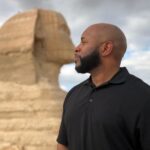
- Sphinx Time: The Guardian Face Up Close
- Grand Egyptian Museum (GEM): Tutankhamun, Ramses II, and Everyday Egyptian Life
- Price and Tickets: How to Budget the Real Total for $80
- What the Private Car Really Buys You in Cairo
- The Guide Factor: Why Midoo and Mohamed Get Mentioned So Often
- Lunch and Comfort: Small Included Extras That Matter
- Who This Tour Fits Best (and Who Might Want to Adjust)
- Should You Book This Giza + GEM Private Tour?
- FAQ
- How long is the Giza Pyramids and GEM tour?
- What is included in the $80 per person price?
- Are the entrance tickets included?
- What stops are included during the day?
- How much time do you spend at Grand Egyptian Museum?
- Is pickup included?
- Is this tour private or shared?
- Is shopping part of the experience?
- Does weather affect the tour?
- Do guides provide language support?
Key highlights
- Private guide and private car for a calmer, less-chaotic Giza and museum day
- Camel or horse ride around the pyramids for that classic, iconic moment
- Valley Temple of Khafre + Sphinx with time to walk and take photos
- Grand Egyptian Museum focus on big names like Tutankhamun, Ramses II, and Hatshepsut
- Photo planning with guides like Midoo or Mohamed who know good spots and timing
- Local lunch included plus bottled water to keep the day comfortable
Giza Pyramids in Focus: Great Pyramid Views, Panorama, and the Ride
This is the kind of day you’ll be glad you didn’t try to piece together yourself. Giza is huge, and with a private guide you spend your energy on seeing, not figuring out logistics in traffic and crowd flow.
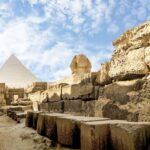
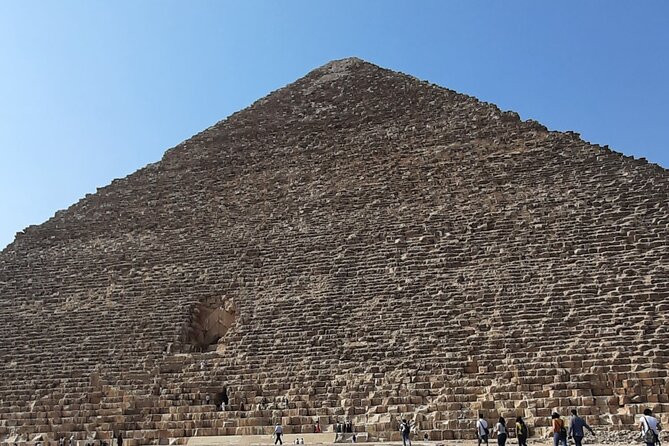
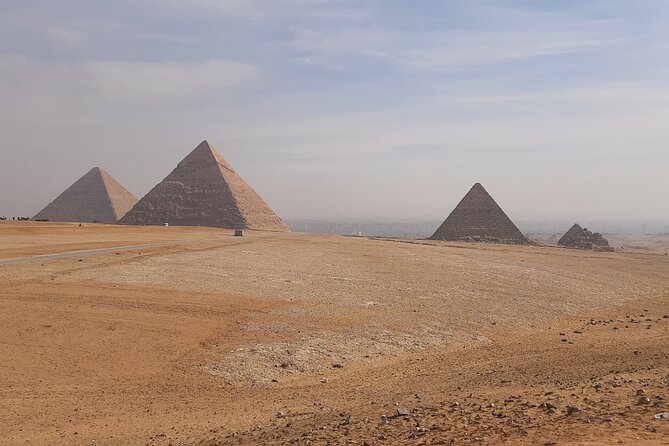
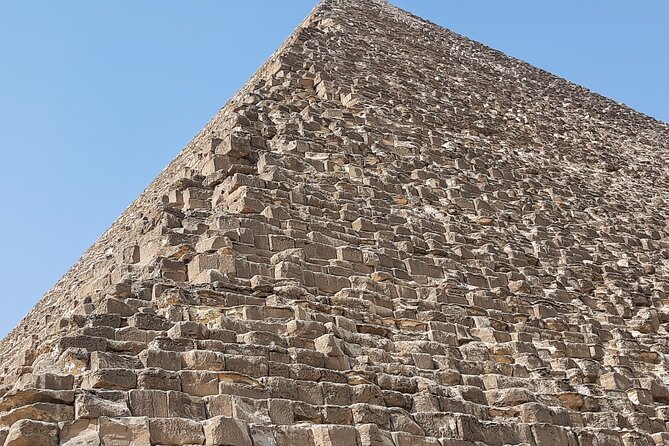
The heart of the experience starts on the Giza plateau with the Pyramids of Giza and the Great Pyramid, the one that still looks almost intact from the ancient world. Your guide’s job here is not just to name monuments, but to help you understand why this site matters: the fourth dynasty context, the scale, and how the pyramids weren’t built as isolated “wow moments,” but as part of a broader Egyptian belief system and royal landscape.
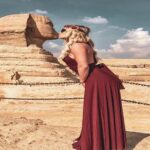
Then comes the part I especially like for first-timers: the panorama view of the pyramid landscape. You’ll look across the plateau to see the way the pyramids sit together and why people call it a “visual argument” for ancient engineering. You also get time for photos with the pyramids as your backdrop, not from one awkward angle.
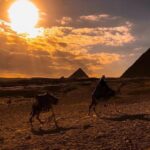
Next is the camel ride or horse ride around the pyramids. Included in the tour, it’s a big part of the classic Giza memory. If you’re deciding what to choose, pick what matches your comfort level and how much you want to feel the ride. Either way, plan to use a phone strap or keep your hands steady, because you’ll want your camera ready at the moment you get a clean angle on the pyramids.
My practical take: this setup works well when you want the “major hits” without burning the day on waiting, backtracking, or negotiating for the ride you want.
You can also read our reviews of more museum experiences in Cairo
Valley Temple of Khafre: Walking Inside the Sacred Approach
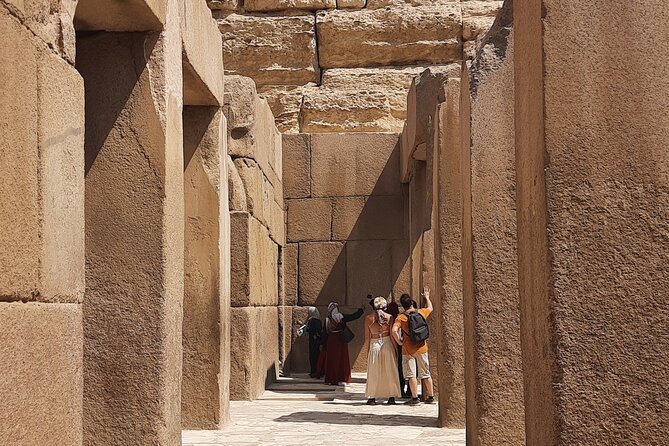
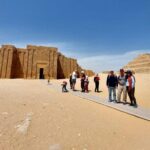
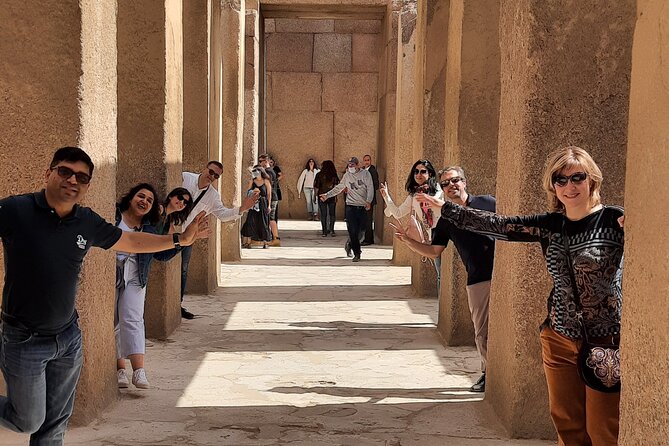
After the big exterior moments, you move to the Valley Temple of Khafre and a walking tour inside. This is a good shift in pace. The pyramids themselves are the headline, but the valley temple is where you feel the layout—how the kings, religion, and architecture relate along a route.
Why this stop matters is simple: it helps you connect the Great Pyramid zone to the living logic of the site. You’re not just staring upward. You’re walking through a space that was meant for ritual and royal symbolism, and your guide can point out details that most people skip when they only focus on the skyline views.
You’ll also have the best kind of time for photos here: not rushed, not staged for you to stand in the wrong spot. If you’ve ever tried to take pictures at Giza without a plan, you know how quickly “I’ll just grab a shot” turns into frustration. A guide who knows where the light and angles work saves you stress.
One consideration: this is still an outdoor experience. Wear shoes you’re happy walking in, and don’t count on the comfort of long stops if the weather is hot.
Sphinx Time: The Guardian Face Up Close
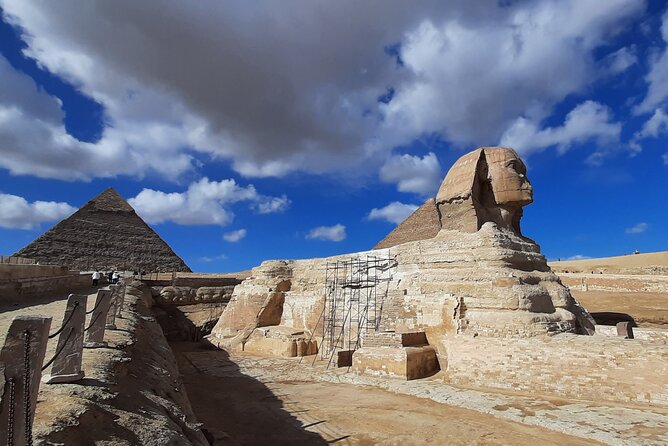
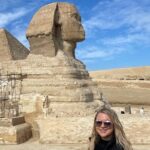
Then it’s the Sphinx, described as the guardian of Egyptian civilization and made from limestone. This is one of those stops where scale and expression hit differently once you’re actually there. Up close, you notice the “made by human hands” feeling. From a distance, it’s easy to think it’s just scenery. Up close, it’s a crafted symbol.
In this tour flow, the Sphinx fits well right after the valley temple walking. You get a sense of the site’s royal function before you go back to the big view photo moments. Your guide’s explanations help you interpret what you’re seeing instead of treating it like a single-stop checklist.
And yes, you’ll want photos here. If you’ve heard people say to trust your guide for photo timing, this is where it pays off. In the feedback for this service, guides like Midoo and Mohamed are repeatedly mentioned for guiding visitors to strong photo spots—so you spend less time guessing and more time getting usable shots.
Grand Egyptian Museum (GEM): Tutankhamun, Ramses II, and Everyday Egyptian Life
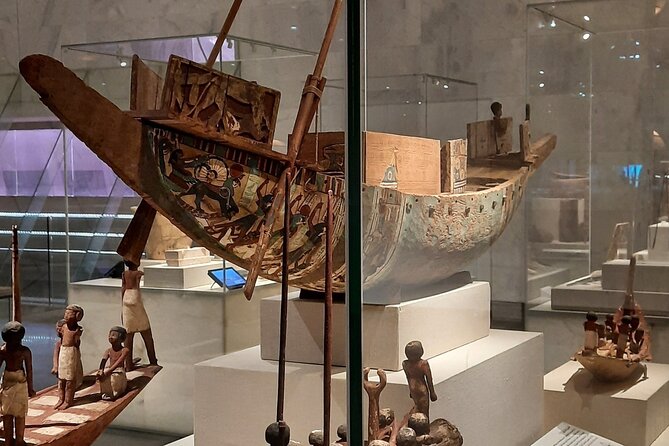
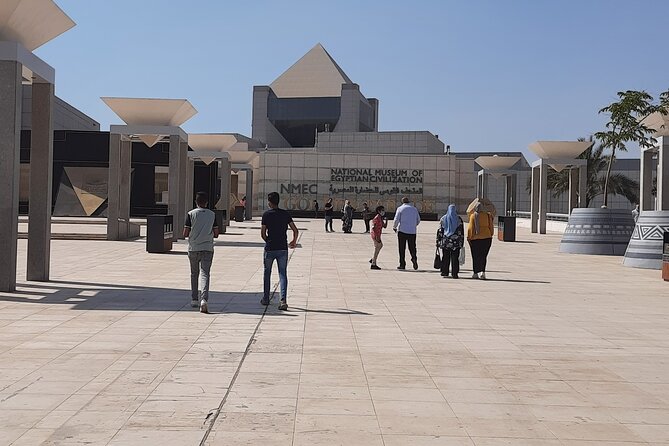
After Giza, you head to the Grand Egyptian Museum, where the day shifts from monuments to artifacts. Your focus becomes history you can actually see up close: statues, objects, and pieces tied to real people and real skills.
The tour emphasizes rare antiquities from more than 5,000 years and includes explanations about how ancient Egyptians lived and worked—engineering, agriculture, music, and other industries. That matters because it turns GEM from a “look at old things” museum into a place that answers questions you didn’t know you had.
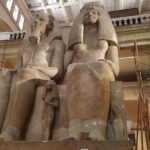
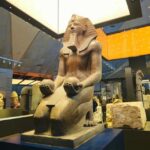
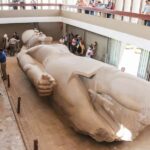
You’ll also see highlights tied to major royal figures. Expect to encounter the colossus of King Ramses II and pieces connected to Queen Hatshepsut. The tour also notes behind-the-scenes context for statues, which is useful because museums can be tough for self-guided visitors. You might see the object, but your brain needs help connecting it to what it means.
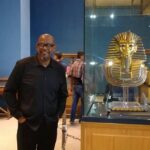
Then there’s King Tutankhamun. The tour specifically calls out his golden mask and golden furniture. Even if you think you already know Tut, the museum setup changes the feeling. Golden objects can look like flashy relics, but with a guide, you get a better sense of why these items were made and what they were for.
Finally, the tour stays grounded in daily life and cultural function, including how ancient Egyptians used materials and technologies. That’s one of the best reasons to choose a guided visit instead of only buying a basic entry ticket.
Time check: GEM stop is listed at about 1 hour 30 minutes in the overall plan. For many people, that’s enough to feel satisfied without turning the day into a museum marathon.
Price and Tickets: How to Budget the Real Total for $80
The listed price is $80 per person, and what you get for that money is the private guide experience plus the day’s included items. This is where the value story is actually hiding.
What’s included:
- Lunch
- Bottled water
- Air-conditioned vehicle
- Private transportation
- Private tour guide
- Camel ride or horse ride around the pyramids
What’s not included:
- Pyramids of Giza tickets: 700 LE
- Grand Egyptian Museum tickets: 1,270 LE
- Tipping for the guide
The math is straightforward: your total cost will depend on those ticket add-ons. If you compare this to piecing together a half-day guide, entry fees, and the ride separately, the structure often feels fair. You’re buying convenience and time management as much as you’re buying “sightseeing.”
One more practical point: because tickets aren’t included, it’s smart to treat this as a plan that requires a little pre-decision. Choose whether you want to bring cash or handle payments based on what you’re comfortable with. Either way, make sure you’re ready for separate ticket costs so the day stays smooth.

What the Private Car Really Buys You in Cairo
Cairo can be tiring fast if you’re bouncing between stops on your own. A private car is not a luxury-only detail here—it’s a fatigue reducer.
With private transportation, you’re less likely to waste time figuring out meeting points, negotiating short transitions, or losing momentum after a long visit at Giza. That matters because the day runs about 4 to 6 hours overall. When a day is that tight, every stop needs to feel purposeful.
Pickup is offered, and the meeting point is listed as Pyramids Gardens, Al Haram, Giza Governorate. That’s helpful if you’re staying nearby or already oriented around Giza.
Also, the tour is described as private, meaning only your group participates. That’s a big deal if you want quieter conversation with the guide or if you have kids, mobility needs, or just want a day that doesn’t feel like a conveyor belt.
The Guide Factor: Why Midoo and Mohamed Get Mentioned So Often
In a city where “tour guiding” can range from sketchy to superb, what stands out in the feedback for this service is the human part.
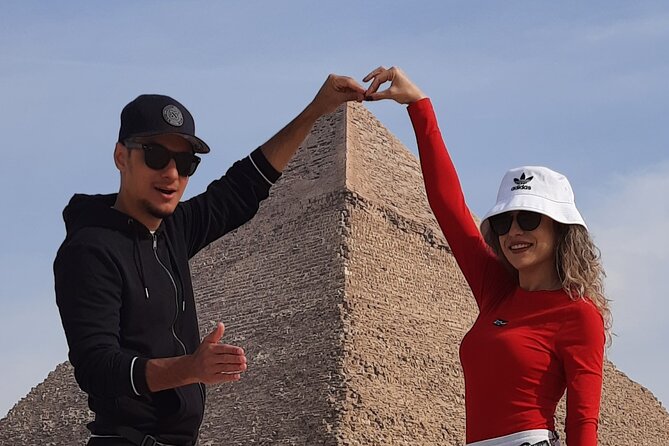
Names show up again and again: Midoo and Mohamed. People describe them as friendly, careful with details, and able to keep the day enjoyable rather than stressful. One especially useful theme is that the guides help you get better photos by taking you to the right spots. Instead of you trying to angle your body and camera while others surge behind you, you get a guided approach that makes your pictures look like they belong in a guidebook.
Another practical detail: communication support. One review notes that a guide was able to communicate in Spanish using his phone. If language is a concern, this is a positive sign that the guide can find ways to make explanations work.
Finally, there’s a theme of “no pressure.” One comment specifically says the guide did not try to sell visitors into extra stops. That’s a real quality marker because Giza-area shopping can be aggressive.
Shopping is still part of the day: the tour notes about one hour shopping for ancient Egyptian products and souvenirs. I see this as a choice point. If you enjoy browsing, it’s there. If you don’t, use that time to pick up only a few items you genuinely want, then get back to monuments.
Lunch and Comfort: Small Included Extras That Matter
Lunch is included, and bottled water is included. Those sound like minor items until you’re in the heat and suddenly you’re calculating where you can grab something decent. Having lunch built into the day can keep you from running off-script when you get hungry.
A/C in the vehicle matters too. Even if you love being outside for photos, you want somewhere cool between stops.
For best results, treat this as a half-day reset plus two major “anchor experiences”: pyramids outdoors, then GEM indoors. That balance helps keep the energy up and prevents museum fatigue from stacking directly onto a long walk under the sun.
Who This Tour Fits Best (and Who Might Want to Adjust)
This tour is a great match if you:
- Want both Giza and GEM without building a plan from scratch
- Prefer a private guide who can explain and pace the stops
- Care about getting good photos without random wandering
- Like classic Egyptian highlights: pyramids, Sphinx, and Tutankhamun
It may be less ideal if you:
- Don’t want to spend time shopping for souvenirs (shopping is included as about an hour)
- Are sensitive to outdoor walking or heat at Giza
- Want only GEM or only Giza and would rather spend longer in one place
The camel or horse ride is included, so consider whether that fits your comfort level. If it doesn’t, it’s worth checking how the tour handles that preference before you book.
Should You Book This Giza + GEM Private Tour?
If your goal is a smooth, high-impact day that hits the big landmarks and major museum artifacts, this is a strong pick. The private guide + private car + included lunch combination does real work: it protects your time, keeps the day organized, and helps the sites make sense.
I’d book it if you want the classic Giza views with the Sphinx and valley temple, and you also want GEM explained in a way that connects artifacts to the people who made them. The price can feel reasonable once you factor in the included ride and guide attention, even with separate tickets.
Before you click confirm, do one thing: budget for the 700 LE pyramids ticket and 1,270 LE GEM ticket, so the day stays on schedule and on cost.
FAQ
How long is the Giza Pyramids and GEM tour?
The tour runs about 4 to 6 hours.
What is included in the $80 per person price?
It includes lunch, bottled water, air-conditioned vehicle, private transportation, a private tour guide, and a camel ride or horse ride around the pyramids.
Are the entrance tickets included?
No. Pyramids tickets are 700 LE and Grand Egyptian Museum tickets are 1,270 LE. Tickets are not included in the price.
What stops are included during the day?
You’ll visit the Pyramids of Giza area (with panorama views and a ride), the Valley Temple of Khafre, the Sphinx, and then the Grand Egyptian Museum.
How much time do you spend at Grand Egyptian Museum?
The GEM visit is listed at about 1 hour 30 minutes.
Is pickup included?
Pickup is offered, and the listed ticket redemption point is Pyramids Gardens, Al Haram, Giza Governorate, Egypt.
Is this tour private or shared?
It’s described as a private tour, and only your group participates.
Is shopping part of the experience?
Yes. You’ll also spend about one hour shopping for ancient Egyptian products and souvenirs.
Does weather affect the tour?
Yes. The experience requires good weather. If it’s canceled due to poor weather, you’ll be offered a different date or a full refund.
Do guides provide language support?
The information provided includes at least one example of communication in Spanish using a phone, as noted in feedback about the guide service.