REVIEW · CAIRO
Giza pyramids, Sphinx, and the big museumum
Book on Viator →Operated by Lovely Egypt Tours · Bookable on Viator
Pyramids feel less like ruins and more like math. On this Cairo day trip you trace the royal tomb design from Zoser’s step pyramid through Snefru’s Bent and the perfect Red Pyramid, and I love how the guide ties the shapes to Raa and the idea of protecting the mummy for forever. I also like that you get time at the big museum, with coffins, jewelry, gold, statues, masks, and lots of Egyptian myth and symbolism. One drawback to plan for: entrance fees and tipping are not included, so you’ll likely pay extra at some stops.
This is built for people who want a lot in one morning-to-afternoon stretch, starting around 8:00 am with hotel pickup and drop-off. You’ll ride in private transportation with a guide, and the pace can feel full—especially in the sun—so wear comfy shoes and expect real walking. If you’re lucky, you’ll have a guide like Morsi, who’s been praised for clear explanations and helping with great photos.
At about $40 per person, the value is in the guided circuit and transport, not in the museum tickets and pyramid entry fees. Also keep your phone handy after booking: one common complaint is that confirmation messages can come in quick follow-ups if you don’t respond right away.
In This Review
- Key points to know before you go
- Price and logistics: what you’re really paying for
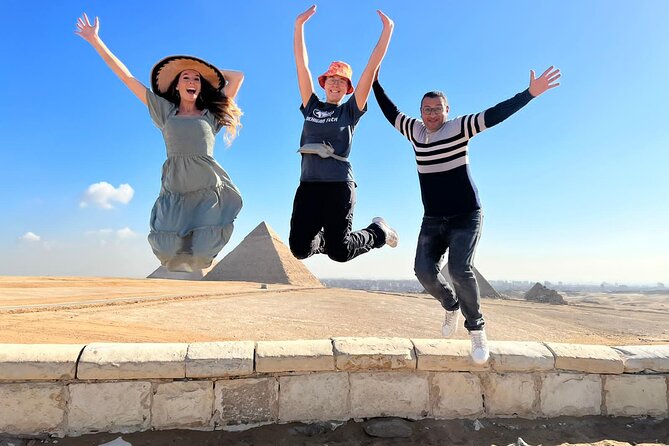
- Stop 1: Giza pyramids and Cheops’ million-stone story
- Stop 2: The Great Sphinx, the Sun Temple, and a wishing well moment
- Stop 3: Saqqara’s Step Pyramid of Djoser (and why angles mattered)
- Stop 4: Bent Pyramid inside the Snefru story
- Stop 5: Red Pyramid and the cold, steady feeling inside
- Big museum time: coffins, gold, masks, and real context
- Photo, pacing, and comfort: make the day feel smooth
- Should you book this Giza and Saqqara circuit with Lovely Egypt Tours?
- FAQ
- What time does this tour start, and how long is it?
- Is hotel pickup and drop-off included?
- What’s included in the price, and what costs extra?
- Is this tour private or part of a larger group?
- Which major sites are included in the day?
- Can I cancel for a full refund?
- Is a service animal allowed?
Key points to know before you go
- Step-to-bent-to-red pyramid evolution: you’ll learn why each stage mattered for royal tomb design.
- Sphinx + Sun Temple symbolism: you hear the story behind King Kefren’s face and the Raa-centered meaning.
- Some interior access is part of the experience: there’s an emphasis on going inside select spaces (and it gets cold in the Red Pyramid).
- A big museum stop adds context: coffins, gold, jewelry, statues, and masks make the day feel less like a photo sprint.
- Entrance fees and tipping are extra: build that into your budget because not all stops are included.
- A long day with lots of transfer time: it’s efficient, but you’ll want to pack water and stay flexible.
Price and logistics: what you’re really paying for
This tour runs for about 8 hours and costs $40 per person, with hotel pickup/drop-off, a guide, private transportation, and bottled water included. The tour format is also private in the sense that only your group participates, which usually means fewer hassles with meeting points and time lost to other groups.
Here’s the practical catch: entrance fees and tipping are not included. In the itinerary, some stops are listed as admission ticket free, but others are not. So the “cheap day” math only works if you’re ready to pay for those paid sites and any tips your guide/driver expects.
The good side: at this price level, you’re mostly buying logistics—getting from Cairo to the sites, having someone handle the “where next,” and getting explanations while you’re there. If you hate planning under a hot sun, that’s exactly what this tour is designed to do.
You can also read our reviews of more tours and experiences in Cairo.

Stop 1: Giza pyramids and Cheops’ million-stone story
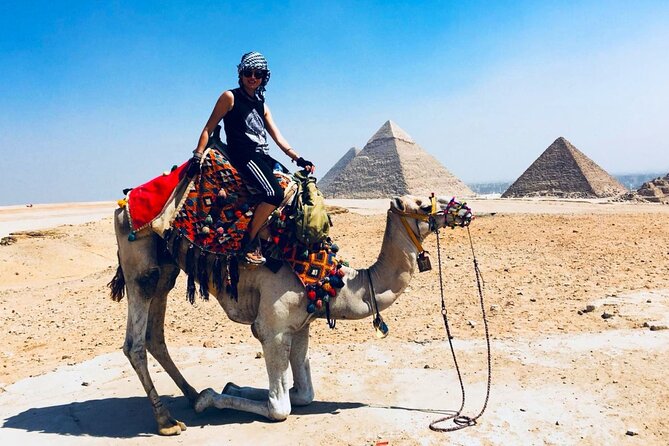
You start in the Giza Governorate area and focus on the Cheops pyramid, the biggest headline on the skyline. The guide’s emphasis is on the idea that the pyramid contains about one million stones, and that its shape connects to Raa, the god of creation, as a way to protect the mummy forever.
This stop is also about effort and imagination. You’ll hear the story of how they managed to move blocks to Giza, with the tour framing it as transport along the Nile direction from Luxor. Even if you take the numbers as symbolic, it still helps you see the pyramid as a designed system, not just a pile of rocks.
One consideration: this part of the day is marked as admission ticket free in the tour plan, but you still need to manage your time on-site. The Cheops area can pull you in different directions fast, so go with the guide’s rhythm and don’t wander for too long if you want the full circuit.
Stop 2: The Great Sphinx, the Sun Temple, and a wishing well moment
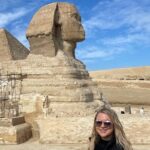
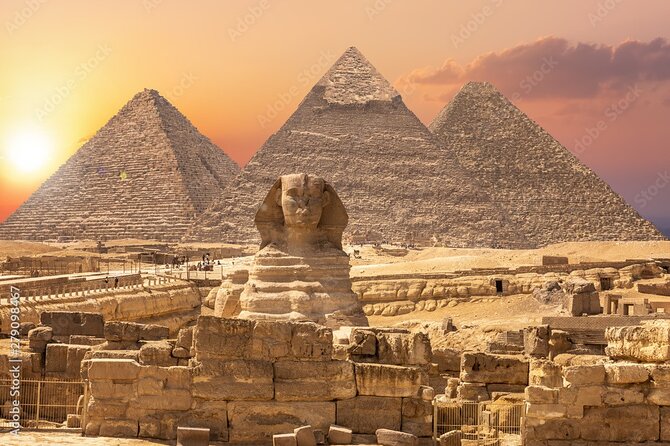
Next comes the Great Sphinx, described as a guard for the pyramids—huge, powerful, and carved from one stone by hand. The key “what to look for” is the mix of human and animal features: the face is linked to King Kefren, with a lion body meant to communicate strength and intelligence.
This stop also leans heavily into condition and weathering. You’ll hear how the Sphinx was once covered by sand, and how damage affected the nose and the long beard. It’s a good reality check: you’re not just seeing a sculpture, you’re seeing time.
Then there’s the symbolism layer. The tour connects the setting to the Sun Temple of King Kefren, and the idea of watching the sun at set and sunrise as part of Raa’s cycle of death and rebirth. You may also get the chance to do a quick “wishing well” moment where small money is thrown in—small, but it’s the kind of ritual that turns a landmark stop into a personal memory.
Stop 3: Saqqara’s Step Pyramid of Djoser (and why angles mattered)
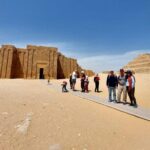
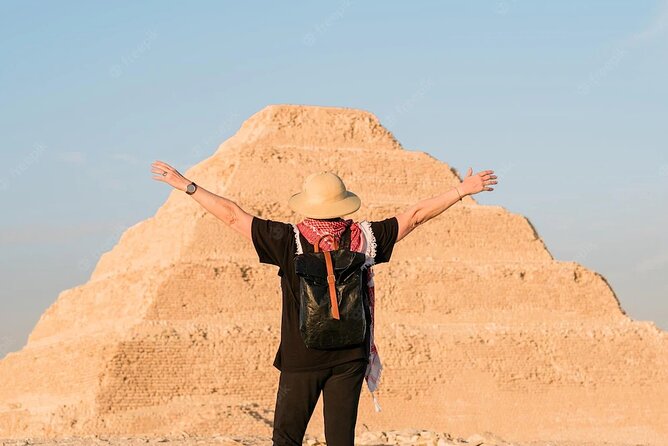
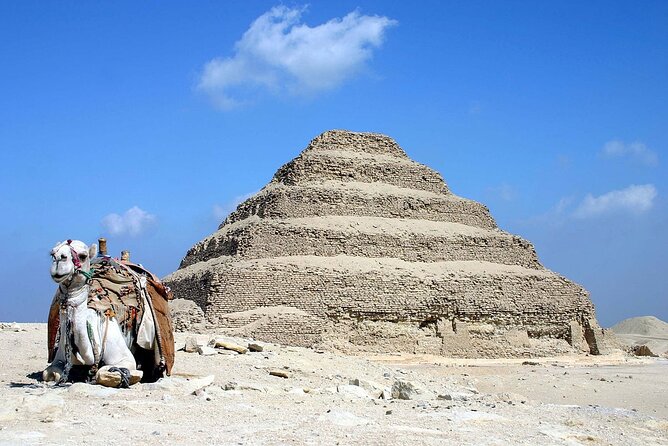
After Giza, the day shifts to Saqqara for the first and oldest step pyramid, built under King Zoser around 3000 BC. You’ll hear it has six steps, and the story ties the effort to Imhotep, who wanted the pyramid to reach a more complete ideal—though the step shape is where the project ended.
The guide’s explanation makes a clear point: step pyramids and perfect pyramids aren’t just different shapes. The tour frames the step design as having less “energy” to reach Raa compared with the smoother pyramid form. Whether you treat that literally or as symbolic religious thinking, the lesson is useful: the pyramid evolution was a progression in technique and purpose.
This stop is also listed as admission ticket free, which helps keep the day’s costs down. The trade-off is time: it’s two hours here, so you’ll want to use that window to ask questions and really look at the structure, not just rush through for photos.
Stop 4: Bent Pyramid inside the Snefru story
From Saqqara’s step pyramid, you move into the next stage: the Bent Pyramid, connected to Snefru, the father of Keops. The tour highlights why it has its name—the angle changes partway up, starting steeper and becoming shallower as the pyramid rises.
This stop is one of the most interesting for people who like architecture and problem-solving. The guide’s way of explaining it is straightforward: the builders started with a big angle, then shifted mid-course when they moved toward what would become the more “perfect” direction.
You’ll also hear about the interior. The plan notes the tomb inside is empty, and that Snefru is presented as keeping details private—framed as a ruler closely tied to the sun god. If interior access is part of your bucket list, this is the moment in the day that can feel most different from just standing outside and staring up.
Again, entrance for this stop is listed as not included, so expect to pay on the day.

Stop 5: Red Pyramid and the cold, steady feeling inside
The final pyramid stop is the Red Pyramid, described as the first pyramid built for Snefru and praised for its perfect angle. This is where the “evolution story” clicks: the tour links the gradual improvements from Djoser to Bent to Red as an engineering and religious refinement.
The Red Pyramid is also framed as a mummy-protecting structure with stronger stability, plus a more effective path to Raa. On a practical level, the big takeaway is how the Red Pyramid interior can feel like an experience, not just a site. The plan calls out that it’s very cold inside, so you’ll likely be glad you have a light layer—even in Cairo heat.
Entrance is not included for this stop in the tour plan. That matters because interior access is usually the part you’ll remember most, and it’s also where extra site fees can hit your budget.
Big museum time: coffins, gold, masks, and real context
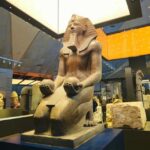
The tour also includes a visit to the big museum in Cairo, built around mummies and afterlife artifacts. You’ll see coffins, jewels, gold, and lots of statues, plus masks and references to different gods and stories.
I like museum time after pyramid stops because it gives your eyes somewhere to land besides stone. After you’ve spent the day hearing about the mummy, protection, and tomb symbolism, the museum artifacts make the ideas feel less abstract. It’s the difference between learning mythology as a lecture and seeing how it was built into objects people used.
One practical tip: museum hours can vary by day and layout, but the best approach is to go in with a shortlist. Focus on items tied to burial rituals, like coffins and masks, so your visit doesn’t become endless wandering.
Photo, pacing, and comfort: make the day feel smooth
This is a full circuit, not a relaxed stroll. You’ll likely spend significant time in the car between stops, and on-site you’ll do concentrated walking in the sun.
A few things that help you enjoy the day more:
- Wear comfortable, supportive shoes and plan for uneven ground.
- Use sunscreen and a hat; water is included, but you’ll still want your own habits for staying hydrated.
- Build in buffer time in your head. When you’re switching between Giza and Saqqara, the schedule is tight and you don’t want to miss the guide’s “look here” moments.
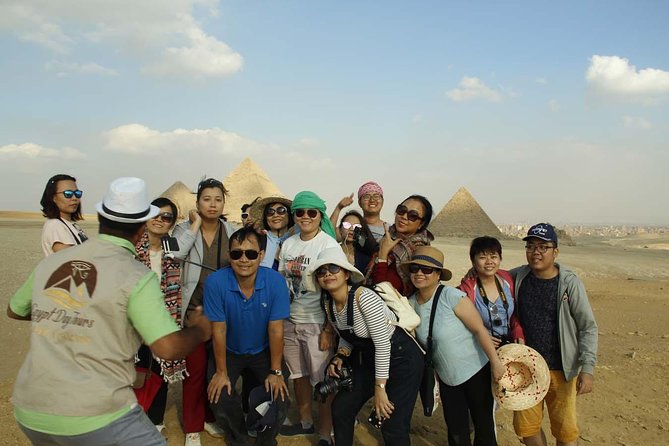
If your guide is strong—like Morsi has been described—you’ll spend less time guessing and more time getting the right angles and explanations. The photo advantage is real when someone times stops so you can shoot without sprinting.
Should you book this Giza and Saqqara circuit with Lovely Egypt Tours?
If you want a high-efficiency Cairo day that links the Great Sphinx with the pyramid evolution from step to bent to red, this tour makes a lot of sense. The value is in guided interpretation plus private transport plus museum context, especially if your time in Cairo is short and you don’t want to stitch the day together yourself.
I’d be cautious if entrance fees and tipping will feel stressful right now, because those costs are not included and can add up once you’re on-site. Also, be ready for a phone-and-message rhythm after booking, since some people report getting quick follow-ups if they don’t respond immediately.
Overall: for $40, you’re buying a guided day that tries to explain what you’re seeing, not just where to stand for a picture. If that matches your travel style, book it.
FAQ
What time does this tour start, and how long is it?
It starts at 8:00 am and runs for about 8 hours.
Is hotel pickup and drop-off included?
Yes. Hotel pickup and drop-off are included, along with private transportation and an on-board tour guide.
What’s included in the price, and what costs extra?
Included are private transportation, a tour guide, hotel pickup/drop-off, and bottled water. Entrance fees and tipping are not included, and some stops are listed as admission ticket free while others are not.
Is this tour private or part of a larger group?
It’s described as private, meaning only your group participates.
Which major sites are included in the day?
You’ll see Giza pyramids, the Great Sphinx, and Saqqara’s Step Pyramid of Djoser, plus the Bent Pyramid and Red Pyramid. The day also includes time at a big museum with coffins, jewelry, gold, statues, and masks.
Can I cancel for a full refund?
Yes. You can cancel for a full refund with free cancellation, as long as you cancel at least 24 hours before the experience’s start time.
Is a service animal allowed?
Yes. Service animals are allowed, and the tour states most travelers can participate.