REVIEW · CAIRO
Full Day Coptic Cairo and Islamic Cairo Private Guided Tour
Book on Viator →Operated by GEM Explore Egypt · Bookable on Viator
Three Cairo faiths, one focused day. I like how this private outing strings together the big-name Islamic sites of Cairo with Coptic churches and the Jewish Ben Ezra Synagogue—so you get a clear sense of Cairo as a living religious crossroads, not just stone and photos. You start at the Cairo Citadel (Saladin’s fortress) and end near Khan Al-Khalili, with key stops like the Alabaster Mosque, Hanging Church, and Sultan Hassan along the way.
My two favorite parts are the private guide with 15+ years of experience (and the relaxed pace that helps you ask questions and get photos) and the fact that pickup/drop-off happens from your Cairo or Giza lodging in an air-conditioned vehicle. The only real drawback to keep in mind is that entry fees and lunch are included only if you choose the option that matches your booking, so double-check before you go.
In This Review
- Key Highlights You’ll Care About
- Why This Coptic and Islamic Cairo Day Works So Well
- Price and Value: What You Get for $60
- The 8 AM Start and Private Pace (Without the Rushing)
- Cairo Citadel and Mohammed Ali Mosque: Ottoman Grandeur in One View
- Sultan Hassan and Al-Rifa’i: Mamluk Scale Meets Royal Burial
- Lunch Break and the Turn Toward Coptic Cairo
- Hanging Church: An Old Church With a Strong Pilgrimage Pull
- Saints Sergius and Bacchus: When Tradition Meets Church History
- Ben Ezra Synagogue: The Moses Lore and the Geniza Manuscripts
- Khan Al-Khalili and a Quick Photo Stop at the Hussein Mosque
- Who Should Book This Tour (and Who Might Want a Different One)
- Should You Book This Private Coptic and Islamic Cairo Tour?
- FAQ
- How long is the Full Day Coptic Cairo and Islamic Cairo Private Guided Tour?
- Does the tour include hotel pickup and drop-off?
- Is lunch included?
- Are entry fees included?
- What sites are visited during the day?
- Is this a private tour?
- Is there an extra cost for certain pickup locations?
Key Highlights You’ll Care About
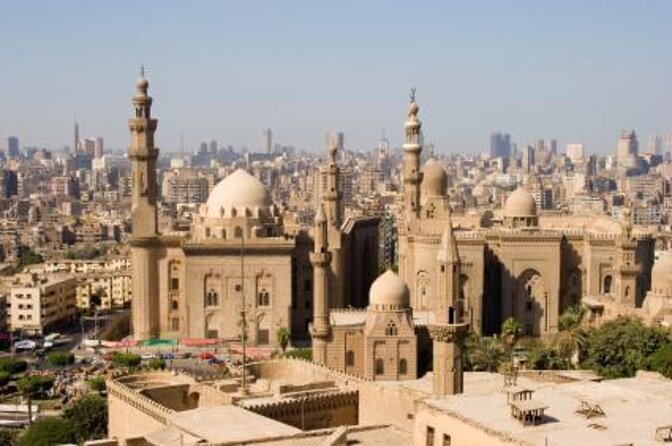
- Cairo Citadel first so everything else makes more sense once you’ve seen the Ottoman and Mamluk power layers
- Mohammed Ali Mosque details like 86m minarets, gold-plated domes, and alabaster walls
- Sultan Hassan + Al-Rifa’i contrast: Mamluk grandeur on one side, royal mausoleum status on the other
- Coptic Cairo near Fort Babylon with Hanging Church and the Saints Sergius and Bacchus story at the center
- Ben Ezra Synagogue history tied to the geniza and manuscripts lore from the Fustat area
- Photo-friendly moments at multiple stops, with guides who tend to help you frame and capture the day
Why This Coptic and Islamic Cairo Day Works So Well
Cairo has a way of overwhelming first-time visitors. Streets are loud, monuments are everywhere, and “history” can turn into a blur of random stops. This tour cuts through that mess by doing something simple: it builds a route through three faith communities in one long day, with a guide who helps you connect the dots.
You’ll move through major Islamic landmarks in Islamic Cairo (including major mosques and madrasas), then shift into the older religious quarter tied to Coptic Christianity around Fort Babylon. After lunch, you’re also given the Jewish thread via Ben Ezra Synagogue in Fustat. The net effect: you get a much fuller picture of how faith shapes places here.
This is the kind of day that feels best when you want context, not just a checklist. If you like asking why a building looks the way it does, or what a tradition says happened on-site, this route fits.
You can also read our reviews of more guided tours in Cairo


Price and Value: What You Get for $60
At $60 per person for a 6 to 8 hour private tour, the value depends on one thing: which option you select for what’s included.
What you should expect as built-in basics:
- Pickup and drop-off from your accommodation in Cairo or Giza
- An experienced tour guide (15+ years)
- Bottled water during the day
- Entry fees + taxes service, but this is listed as included only if you pick the option that covers entry fees
- Lunch, also included only if your option says so
So, yes, $60 can feel like a good deal if you select the entry and lunch options you need. If you don’t, the tour still runs, but you’ll likely face extra payments on the day at certain stops.
Also note the small pricing curve: there’s an extra $15 per head if you’re picked up from specific areas like airport hotels, New Cairo, Nasr City, 6 October, and Heliopolis. If you’re staying in central Cairo or Giza, the standard pickup is the better value.
One more practical point: the day is long, and Cairo midday heat is real. You’ll appreciate the air-conditioned vehicle and the water, especially on the stretches between sites.
The 8 AM Start and Private Pace (Without the Rushing)
The tour usually starts around 8:00 AM and runs about eight hours, with flexibility in the start time and a typical end around 4:00 PM. That timing is smart. You get the big outdoor architecture earlier, then handle the more concentrated old-city walking as the day goes on.
Because it’s private, you’re not stuck with strangers who want to sprint or stop every ten minutes. You can move at the pace you set with your guide. In particular, past guides associated with this tour style have been praised for not rushing and for answering questions, which matters a lot on religious sites where details are easy to miss.
If you’re someone who likes to take photos but also wants to actually understand what you’re photographing, this pace usually fits better than a “see everything fast” tour.
Cairo Citadel and Mohammed Ali Mosque: Ottoman Grandeur in One View
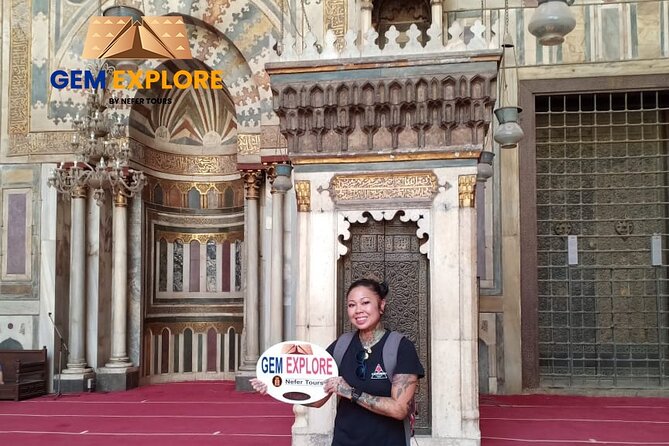
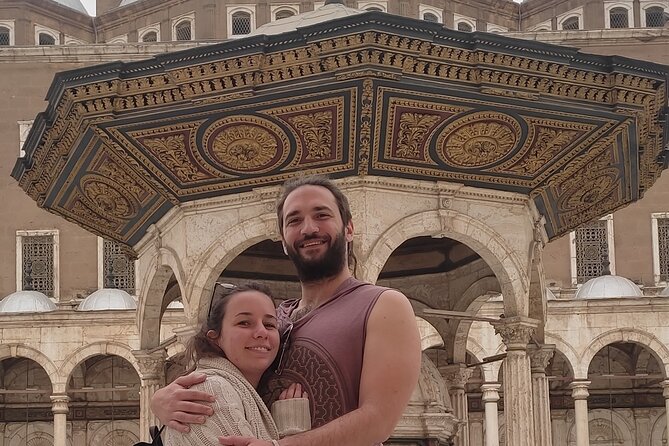
Your first major stop is the Cairo Citadel, also known as Saladin Citadel. The setting alone is worth it: this was a military and political power base dating back to the 11th century, built by Saladin and his minister. You’re told it includes 13 fortified towers, 7 mosques, and that the citadel served as a seat of government and residence for rulers for more than 700 years.
Even if you know nothing else about Egyptian history, the citadel helps you get the “why” behind the skyline and fortress placement. It’s the kind of place where a guide can quickly give you bearings, then you can look around and feel what the place was designed to do: control, defend, and rule.
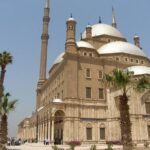
Then you’ll move to the Mosque of Muhammad Ali, also called the Alabaster Mosque. This is one of Cairo’s most visually specific monuments. The details given for this mosque are the real hook:
- Minarets reaching 86m
- Domes plated with gold
- Walls outside and inside described as alabaster
- Completed in 1848 AD
If you’re the type who notices materials, this mosque rewards you. It also works as a “language switch” moment—going from fortress history to Ottoman-era religious spectacle.
Time on this section is about 1 hour at the citadel area (with admission ticket included as listed), and then about 1 hour for the mosque itself (listed as admission ticket free). Plan for sun and photos. You’ll likely want a slow minute or two before you rush inside to enjoy the shapes and surfaces.
Sultan Hassan and Al-Rifa’i: Mamluk Scale Meets Royal Burial
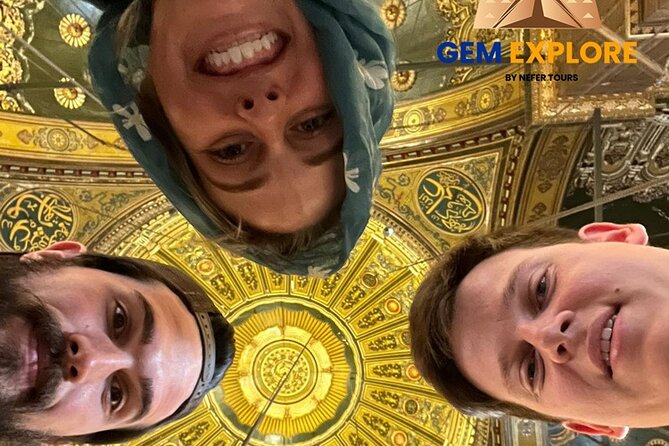
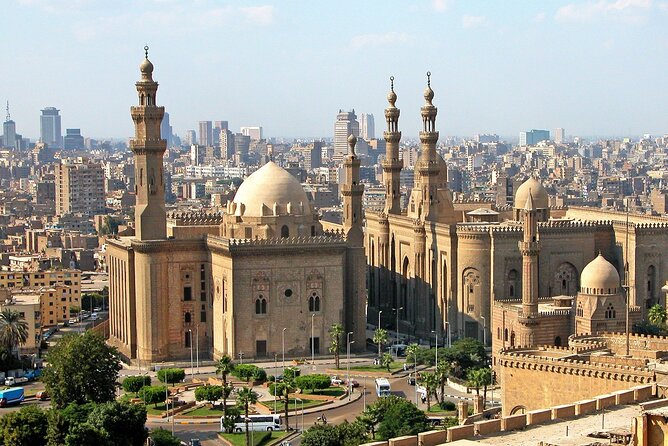
Next comes Islamic Cairo in a big way. You’ll visit the Mosque and Madrasa of Sultan Hassan, built between 1356 and 1363 by order of Al Sultan Hassan An-Nassir. The description emphasizes its size and Mamluki Islamic designs, and that’s exactly what makes it stand out. This isn’t a small neighborhood stop—it’s the kind of building that feels built to impress long after the ruler was gone.
You’ll also hear how Islamic Cairo developed across centuries, and that Sultan Hassan’s complex sits within that broader story. If you enjoy architecture, you’ll likely spend a bit more time watching how the complex frames space and movement.
Then you shift to the Al-Rifa’i Mosque, located adjacent to the citadel square. This one has a royal connection: it’s described as a royal mausoleum for the Muhammad Ali family and completed in 1912. One detail you’ll want to remember while you’re there: it’s said to include the tomb of Mohammed Reza Pahlavi, described as the last Shah of Iran.
You get about 1 hour for Sultan Hassan and then about 30 minutes for Al-Rifa’i, with entry described as included for Sultan Hassan and free for Al-Rifa’i. This pairing works because it shows two different kinds of power: Mamluk-era religious instruction on one side, and later royal commemoration on the other.
You can also read our reviews of more private tours in Cairo



Lunch Break and the Turn Toward Coptic Cairo
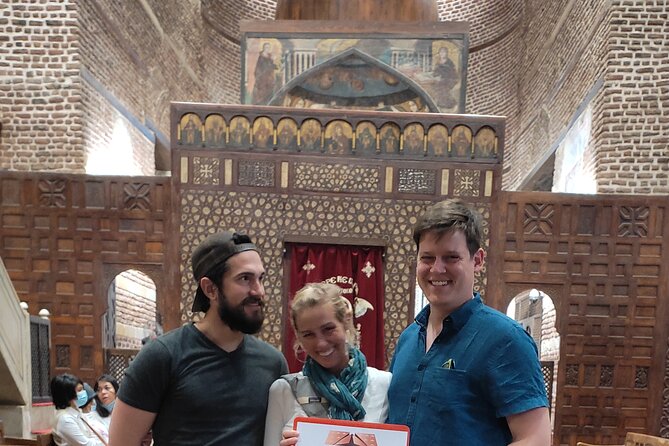
After you finish the citadel-and-Islamic-Cairo stretch, the tour takes a breather with lunch (if you selected that option). This is the right moment. You’ll have walked and looked for a while, and you don’t want the Coptic half of the day to feel like an afterthought.
Then you head to Coptic Cairo, which is described as being apart from Old Cairo but still part of the broader religious core. You’ll be guided through sites associated with Fort Babylon and major Coptic churches, including:
- Pabylon Fortress (Fort Babylon)
- Hanging Church
- Greek Church of St. George
- Saints Sergius and Bacchus and other Coptic churches in the area
There’s also a tradition tied to the Holy Family and the site around Saints Sergius and Bacchus. Your guide is meant to connect that story to what you’re seeing, and that’s often where these stops become more meaningful than a quick interior peek.
Expect about 30 minutes at this stage, with entry listed as free.
Hanging Church: An Old Church With a Strong Pilgrimage Pull
The Hanging Church is next, with about 45 minutes allocated and free admission listed. This is one of Cairo’s most famous Coptic churches, and the area around Fort Babylon is presented as home to what’s described as Egyptian Christians’ oldest churches.
This is also a multi-religion pilgrimage area. The tour framing highlights that people come from around the world to visit, which usually means the site feels both sacred and historically layered.
Practical tip: in a church, your best photos often come from slower observation—watching light, noticing icons or structural details, then photographing once you feel where your camera fits best. Rushing through can make you miss the small cues that explain why people care.
Saints Sergius and Bacchus: When Tradition Meets Church History
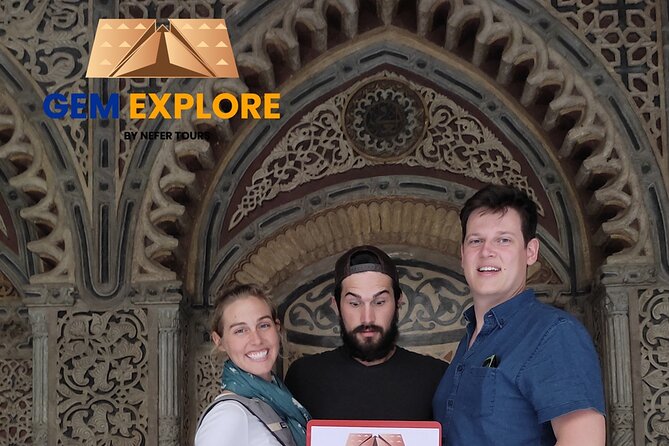
After Hanging Church, you go to Church of St. Sergius and Bacchus, also about 45 minutes with free admission listed.
This stop gets its importance from the tradition connected to the Holy Family—it’s described as built on the spot where Joseph, Mary, and the infant Jesus rested at the end of their journey into Egypt. The tour also links the church to the idea that they may have stayed while Joseph worked at the fortress.
That tradition matters, but there’s also a history thread built in: it’s described as the place where many patriarchs of the Coptic Church were elected. That’s a big deal in how you should interpret what you’re seeing. This isn’t just a local church; it’s described as part of the institutional life of Coptic Christianity.
If you care about the story behind places, take your time here. This is often where guides can answer questions in a more personal way—less “tour script,” more meaning.
Ben Ezra Synagogue: The Moses Lore and the Geniza Manuscripts
Next is Synagogue Ben Ezra, about 45 minutes, with admission listed as free. This stop adds a Jewish thread in Old Cairo’s Fustat area.
The description shares two key storyhooks:
- Local folklore says it’s on the site where baby Moses was found.
- The synagogue’s geniza (store room) was found in the 19th century, containing “forgotten” Hebrew, Aramaic, and Judeo-Arabic manuscripts.
Those manuscripts are the reason this synagogue matters beyond architecture. You’re not just looking at a religious building—you’re touching a history of preserved texts and centuries of everyday life, study, and prayer.
If you’ve ever wondered why Cairo shows up in books about manuscripts, languages, and lost documents, this is where that interest can click. Your guide can help you understand what a geniza represents and why that discovery changed how scholars study the period.
Khan Al-Khalili and a Quick Photo Stop at the Hussein Mosque
The tour then shifts to Khan Al-Khalili, a historic bazaar described as established as a trade center in the Mamluk era. You’re given about 1 hour here, with entry listed as free.
This is where Cairo gets noisy and sensory. The tour description points to goods like silver, copper, brassware, gold, and leather goods. Even if you don’t plan to shop, Khan Al-Khalili can be a good reality check after churches and mosques. It shows how religion and commerce have lived side by side in the city for a long time.
There’s also a nearby stop with an Islamic site tied to the reputed burial place of the head of Hussein, the grandson of the Prophet Mohammed. The mosque is said to have been renovated recently, and you’ll have an opportunity for photos.
No long explanation is scheduled here, but it’s a useful moment to break up the bazaar energy with a calmer pause at a significant religious spot.
Who Should Book This Tour (and Who Might Want a Different One)
This tour is a great match if you:
- Want a single day that covers Islamic, Coptic, and Jewish Cairo
- Like architecture and religious sites with context (not just quick photo stops)
- Prefer a private guide who can answer your questions without making you feel rushed
- Care about pacing and photo help, since guides associated with this tour style are praised for slowing down and assisting with pictures
You might want to think twice if:
- You dislike long days of sightseeing. The day runs about eight hours and includes multiple indoor/outdoor transitions.
- You booked without checking whether entry fees and lunch are included in your option. That’s not a dealbreaker, but it can change how “simple” the day feels.
Also, if you’re hoping for lots of downtime, this route is tightly packed. Cairo rewards curiosity, but it doesn’t do “slow stroll” by default.
Should You Book This Private Coptic and Islamic Cairo Tour?
I’d book it if you want a well-structured religious itinerary that doesn’t treat Islamic Cairo and Coptic Cairo like separate worlds. The route is logical: you start with the citadel and Ottoman mosque visuals, you move into major Mamluk complexes, then you pivot to Fort Babylon churches, and you end with Ben Ezra and Khan Al-Khalili to round out the day.
Before you commit, do two quick checks:
- Confirm your booking includes entry fees and lunch, since both are option-based.
- Plan for a long day in Cairo heat. Wear comfortable shoes and expect you’ll want breaks on the ride between stops.
If that all sounds good, this is one of the stronger “one-day Cairo” choices for people who care about faith, history, and how the city layers meanings across centuries.
FAQ
How long is the Full Day Coptic Cairo and Islamic Cairo Private Guided Tour?
The tour typically runs 6 to 8 hours, usually starting around 8 AM and ending around 4 PM.
Does the tour include hotel pickup and drop-off?
Yes. Pickup and drop-off are included to your accommodation in Cairo or Giza.
Is lunch included?
Lunch is included only if you choose the option that includes it.
Are entry fees included?
Entry fees are included only if you picked the option that includes them.
What sites are visited during the day?
You’ll visit the Cairo Citadel and Mohammed Ali Mosque, Mosque and Madrasa of Sultan Hassan and Al-Rifa’i Mosque, then Coptic Cairo stops including the Hanging Church and the Church of St. Sergius and Bacchus, plus Synagogue Ben Ezra and Khan Al-Khalili.
Is this a private tour?
Yes. It’s a private tour/activity, so only your group participates.
Is there an extra cost for certain pickup locations?
Yes. There is an additional $15 per head for pickup from Airport Hotels, New Cairo, Nasr City, 6 October, and Heliopolis.