REVIEW · CAIRO
From Cairo: 3-Nights Nile Cruise Luxor, Aswan by Flights
Book on GetYourGuide →Operated by Mody Egypt Tours · Bookable on GetYourGuide
A Nile cruise turns ancient sites into a single, moving story, and the pace is built around early starts. I like the clear, high-touch guidance people receive (often credited to Egyptology guide Mohamed Gobran), and I like how the trip mixes major monuments with calmer river time. The main drawback is the packed schedule—you’ll be up early a lot, and communication about flight logistics can feel last-minute.
You also get a rare combination that’s hard to piece together yourself: Abu Simbel by shared small group, then Temple-hopping through Kom Ombo and Edfu, and finishing with the Luxor balloon and West Bank sights. Most people praise the cleanliness, food, and smooth sailing, but a couple of practical details can affect your comfort: drinks like water may cost extra onboard, and entrance fees and tipping aren’t included.
In This Review
- Key Things I’d Pay Attention To
- Aswan to Luxor by Cruise: Why This Route Feels Different
- Price and Value: What $1,100 Covers (and What It Doesn’t)
- Day 1: From Aswan Airport to a 5-Star Cruise, Then High Dam and Philae
- Aswan High Dam: Why It Matters Beyond the View
- Philae Temple: Isis by Boat
- Day 2: Abu Simbel Rock Temples with an Egyptologist Guide, Then Kom Ombo
- Shared Small Group to Abu Simbel
- Back to the Cruise, Lunch, and Sailing to Kom Ombo
- Day 3: Horse Carriage to Edfu, Esna Lock, and Relaxing Into Luxor
- The Horse Carriage Ride to Horus at Edfu
- Sailing to Luxor: Esna Lock and Deck Time
- Luxor Temple and Onboard Evening Entertainment
- Luxor Balloon at 5:00 am: The Best Reason to Tolerate Early Mornings
- What you’re actually buying with a balloon
- West Bank Temple Day: Valley of the Kings, Hatshepsut, and Memnon Statues
- Valley of the Kings: Hidden tombs in the New Kingdom
- Hatshepsut at El Deir el-Bahari
- Photo stop: Colossi of Memnon
- Lunch time: optional local restaurant
- Karnak Temple on the East Bank: Columns and Obelisks That Keep Expanding in Your Mind
- Why Karnak works best with a guide
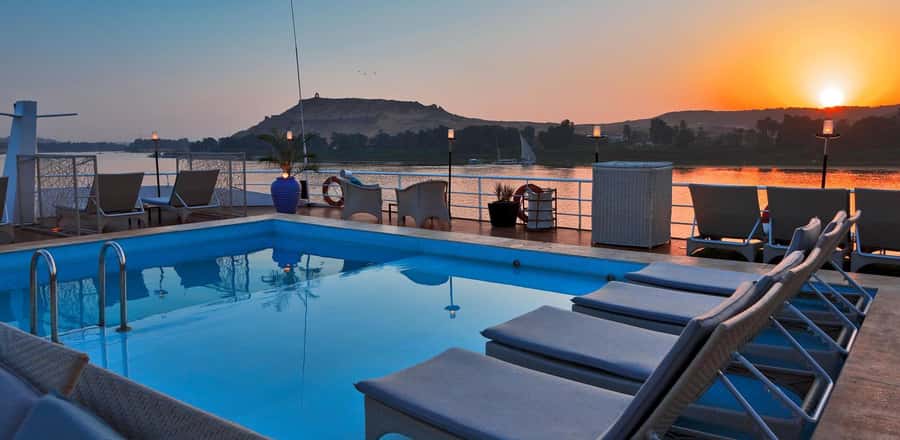
- What the Cruise Itself Adds (Clean Cabins, Good Food, Real Help)
- Who Should Book This Nile Cruise (and Who Might Struggle)
- Tips, Entrance Fees, and Small Costs That Can Surprise You
- Should You Book Mody Egypt Tours’ Aswan to Luxor Nile Cruise?
- FAQ
- What’s included in the cruise price?
- How long is the experience?
- Which major sites are part of the sightseeing?
- Is there an Egyptology guide?
- Are meals included?
- Do I need to pay entrance fees?
Key Things I’d Pay Attention To
- Hot air balloon ride over Luxor at about 5:00 am with early-morning views
- Abu Simbel in a sharing small group with an Egyptologist guide
- Two-temple stops that change the vibe: Kom Ombo then Edfu
- More than just temples: Philae by boat, plus belly dancing onboard
- A very full itinerary with frequent early departures and tight timing
- Small extra costs to plan for: entrance fees and recommended tips
Aswan to Luxor by Cruise: Why This Route Feels Different
The Aswan to Luxor stretch is popular for a reason. You’re not just visiting isolated monuments; you’re moving along the Nile while Egypt’s story unfolds in order. The cruise keeps you grounded in real time—morning light on the river, late-afternoon temple visits, and sails that break up all that stone-and-sand intensity.
What makes this specific package especially practical is that it’s built like a route, not a list. You travel with an onboard base for 3 nights, so you’re not constantly changing hotels. And the plan is timed to help you see key places before the crowds swell, which is why those early starts can actually make sense.
You can also read our reviews of more boat tours in Cairo



Price and Value: What $1,100 Covers (and What It Doesn’t)
At about $1,100 per person for 4 days, this isn’t a bargain tour. But it also isn’t only “a cruise.” Your price includes domestic flights (Cairo ⇄ Aswan/Luxor ⇄ Cairo), 3 nights on a 5-star Nile cruise on a full-board basis, an English-speaking Egyptology guide, major transfers by A/C vehicle, and the hot air balloon ride over Luxor.
That’s the real value equation: you’re paying for reduced friction. Flights, guides, intercity transfers, and a structured route are handled for you. If you tried to assemble this on your own, the costs and time sinks would add up fast—especially the Abu Simbel day trip.
Two things to budget separately:
- Entrance fees are not included.
- Tipping is recommended.
In one experience, entrance tickets were handled at about $105 per person, and tips were around $15 per person. That gives you a realistic sense of what can land on top of the base price.
Day 1: From Aswan Airport to a 5-Star Cruise, Then High Dam and Philae
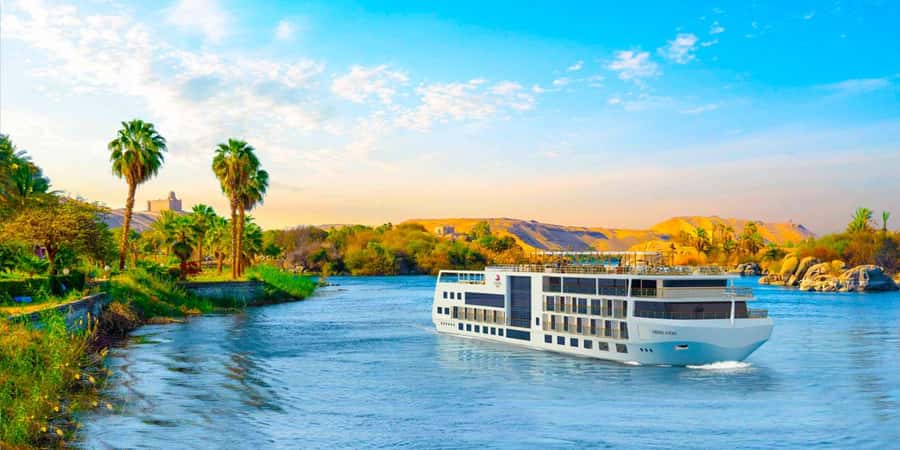
Your first day is all about getting settled quickly. A representative meets you at Aswan Airport, railway station, or hotel, then you transfer by A/C van to your 5-star Nile cruise for check-in. After lunch onboard, the sightseeing starts without wasting daylight.
Aswan High Dam: Why It Matters Beyond the View
You visit the High Dam, built in 1960 to control flooding and generate electricity. It’s not just a monument you pass by. It’s your chance to understand how modern Egypt shaped what you’re looking at today—because the Nile’s behavior changed dramatically once the dam started doing its job.
It also acts like a “bridge” in your mind: this trip isn’t only about pharaohs. It’s about the whole Nile system, from ancient plans to modern engineering.
Philae Temple: Isis by Boat
Next comes Philae Temple, dedicated to goddess Isis. The most memorable detail here is the small motorboat ride to reach the temple. That short crossing changes the mood. You arrive feeling like you’ve left the cruise behind and entered a more cinematic zone of ancient stone.
After dinner onboard, the day ends with a folkloric show, followed by overnight on the boat.
Day 2: Abu Simbel Rock Temples with an Egyptologist Guide, Then Kom Ombo
Day 2 starts early for a reason: Abu Simbel is one of Egypt’s big emotional hits. The shared small-group setup means you’re not dragging a private van all the way out, but you still get a guided visit.
Shared Small Group to Abu Simbel
You’ll be picked up around 4:30 am, aiming to arrive around 8:00 am. The timing matters. You want enough morning energy to enjoy it, and you want the light that helps you read the scale of what you’re seeing.
At Abu Simbel, you visit the rock-cut temples of Ramses II and Nefertari—famous for the way the design was built into the rock. If you care about “how did they do that,” this is where you’ll feel it.
Back to the Cruise, Lunch, and Sailing to Kom Ombo
By around noon you return for lunch, then the cruise resumes sailing toward Kom Ombo.
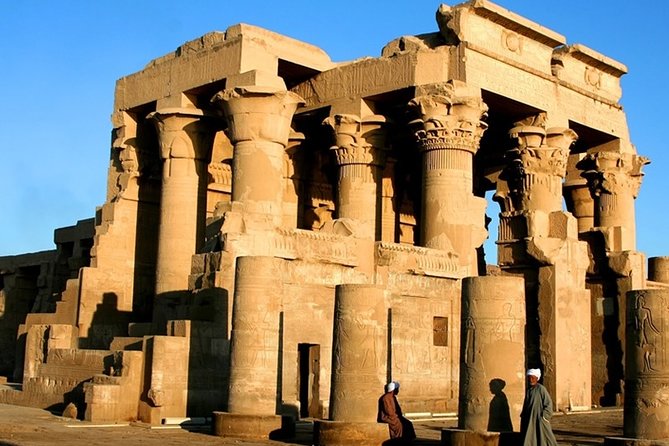
Kom Ombo’s stop is built around one theme: dual worship. You visit the Temple of Kom Ombo, dedicated to Sobek (the crocodile god) and Horus (the falcon god).
It’s a great contrast with Abu Simbel’s heavy spectacle. Here, you often feel the temple layout more as a set of systems and symbols, not just monumental faces.
Dinner onboard follows, and then the ship continues to Edfu for overnight.
Day 3: Horse Carriage to Edfu, Esna Lock, and Relaxing Into Luxor
If your legs need a breather, Day 3 is where the itinerary turns into “active sightseeing plus real downtime.” You start with breakfast onboard, then head out with your guide.
The Horse Carriage Ride to Horus at Edfu
You take a horse carriage ride with your tour guide to reach the Temple of Horus in Edfu. This isn’t just transportation. It sets the rhythm: you’re moving at a human pace, and it makes the arrival feel like an event.
Edfu is often described as exceptionally well preserved and is considered a top example of an Egyptian temple. That makes it a strong “core temple” stop on a short itinerary.
Sailing to Luxor: Esna Lock and Deck Time
After returning to the cruise, you get time to reset while the boat sails toward Luxor. Two highlights here:
- watching the Nile unfold from the deck
- crossing the Esna Lock, which adds a “we’re going somewhere” mechanical moment to the calm scenery
Lunch is served onboard, then the afternoon includes tea on the sundeck and a Luxor Temple visit on the East Bank.
Luxor Temple and Onboard Evening Entertainment
Late in the afternoon, you arrive at the Luxor dock and transfer to Luxor Temple on the East Bank. One helpful detail: the itinerary notes you may also get Karnak Temple earlier if timing allows (arriving around 3:00–3:30 pm). That flexibility can be a big win if your day runs ahead.
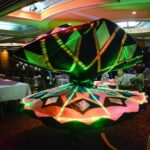
Dinner onboard comes with belly dancing, and you sleep onboard in Luxor.
Luxor Balloon at 5:00 am: The Best Reason to Tolerate Early Mornings
If there’s a single moment that justifies the early wake-ups, it’s this. Day 4 begins around 5:00 am with a hot air balloon ride over Luxor.
What you’re actually buying with a balloon
You’re not paying for a photo. You’re paying for scale and orientation. From above, you can see how the East Bank and West Bank relate, where the river bends, and how the temples and modern parts of the city sit in the same grid of time.
In a couple of experiences, the balloon ride has been affected by wind. On one occasion, the ride was canceled and a refund of $25 each was reported. It’s a reminder that weather can change plans, even when the ticket is included.
West Bank Temple Day: Valley of the Kings, Hatshepsut, and Memnon Statues
After the balloon, the plan drives you straight into Luxor’s West Bank, where tombs and mortuary temples sit in the mountains.
Valley of the Kings: Hidden tombs in the New Kingdom
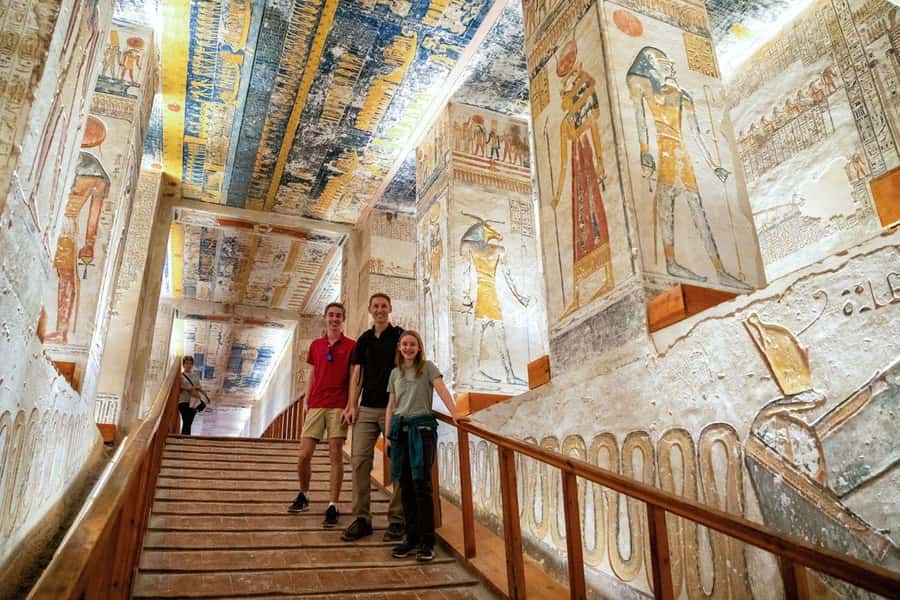
You visit the Valley of the Kings, where pharaohs from the New Kingdom were carved into rock to hide treasures and protect mummies. The point isn’t only the tombs. It’s the idea of how power staged its afterlife secrecy, and how the landscape turned into a kind of architectural security system.
Hatshepsut at El Deir el-Bahari
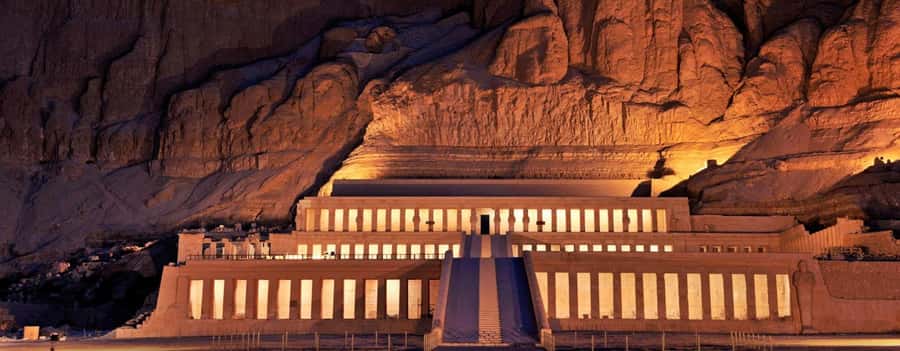
Next is the Mortuary Temple of Hatshepsut at El Deir El Bahari. This is a place where the story feels built into the design. You’ll get to connect the queen’s famous legacy to stone terraces and a setting that still reads like careful planning.
Photo stop: Colossi of Memnon
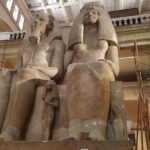
Then you end with a photo stop in front of the gigantic statues of Memnon. Even if you only see them briefly, they’re memorable because they’re so large they seem to take up your whole frame before you even raise your camera.
Lunch time: optional local restaurant
Lunch time is scheduled at a local restaurant (optional). What this means for you is simple: don’t plan on all meals being identical in style to the cruise. If you’re sensitive to timing or prefer predictable dining, confirm what “optional” means in practice before you go.
Karnak Temple on the East Bank: Columns and Obelisks That Keep Expanding in Your Mind
The final big temple stop is Karnak Temple, the largest temple complex in the itinerary. It’s described as being built through 2000 years and covering about 63 acres.
Why Karnak works best with a guide
Karnak can feel overwhelming if you show up with only guesswork. That’s where your Egyptology guide becomes more than a ticket checker. You’ll want them to help you read the layout: how obelisks, pylons, and columns fit into changing eras.
Even without getting lost in details, you’ll feel it. Karnak isn’t one moment. It’s a slow growth of scale.
And yes, you’ll get photo chances between huge pillars and obelisks, but the real value is how the space teaches you something about the Egyptian mindset: time as a construction material.
What the Cruise Itself Adds (Clean Cabins, Good Food, Real Help)
This is a “temple-and-tempo” trip, but the cruise matters. A lot of the positive feedback you’ll see focuses on:
- the boat being clean
- staff being friendly and hospitable
- a good variety of buffet food
- smooth sailing along the Nile
One practical point: not everything is included onboard beyond meals. In at least one experience, drinks weren’t included, and that included basic water. If you like staying hydrated without thinking about it, add that cost into your day plan.
Who Should Book This Nile Cruise (and Who Might Struggle)
This package is a strong fit if you want:
- a guided route with minimal planning
- a mix of big name sites (Abu Simbel, Valley of the Kings, Karnak)
- the convenience of flights + transfers handled
- a schedule that prioritizes early hours so you can move and see more
It’s less ideal if you hate early mornings. The itinerary is intense, and you’ll feel it: Day 2 is early for Abu Simbel, and Day 4 is even earlier for the balloon.
Group size can also make a difference. One experience described an intense itinerary with about 40 people, so you’ll spend part of the trip in a larger group dynamic even though Abu Simbel is done in a small shared group.
Tips, Entrance Fees, and Small Costs That Can Surprise You
Entrance fees and tips aren’t included, and that’s not a deal-breaker, but it’s part of being prepared. Plan on spending extra for:
- entrance fees for the listed sights
- recommended tipping (often handled separately, sometimes on the day)
If you like structure, ask your guide or the onboard team early what tends to be handled on the spot versus prepaid. In at least one experience, the guide handled entrance tickets (about $105 per person) and tips (about $15 per person) during the visit flow.
Should You Book Mody Egypt Tours’ Aswan to Luxor Nile Cruise?
If you want a guided, efficient Aswan-to-Luxor experience with the key highlights packed into 4 days, I think this is a good booking. The standout reasons are the full route—Abu Simbel, Kom Ombo, Edfu, Luxor Temple, and West Bank sights—and the fact that your domestic flights and major transfers are included.
I’d book it if:
- you’re okay with early starts
- you want someone else to handle the logistics
- you care about explanations from an Egyptology guide (especially if you get Mohamed Gobran or another highly praised guide)
I’d think twice if:
- you need highly predictable flight communication from your operator, because some experiences report late or unclear flight logistics
- you prefer a slower pace with fewer organized stops
FAQ
What’s included in the cruise price?
The package includes 3 nights on a 5-star Nile cruise with meals on a full-board basis (breakfast, lunch, and dinner), domestic flights (Cairo/Aswan/Luxor/Cairo), meet-and-assist by English-speaking representatives, an English-speaking Egyptology guide, all transfers by A/C vehicles, and the hot air balloon ride over Luxor.
How long is the experience?
It’s a 4-day trip with 3 nights on the Nile cruise.
Which major sites are part of the sightseeing?
You’ll visit Aswan sights including the High Dam and Philae Temple, go to Abu Simbel, see Kom Ombo, visit Edfu, tour Luxor Temple, enjoy the Luxor balloon, and visit the Valley of the Kings, Hatshepsut’s Mortuary Temple, the Colossi of Memnon photo stop, and Karnak Temple.
Is there an Egyptology guide?
Yes. The itinerary includes an Egyptology English-speaking tour guide.
Are meals included?
Yes. Breakfast (3), lunch (3), and dinner (3) are included.
Do I need to pay entrance fees?
Entrance fees are not included. Tipping is also not included, though it’s recommended.