REVIEW · CAIRO
Exploring Egypt’s Marvels: Giza, Saqqara, Memphis & Dahshur
Book on Viator →Operated by Travel Door Tours · Bookable on Viator
Four sites, one big wow-factor day. This private Egyptologist tour strings together Giza, Saqqara, Memphis, and Dahshur with hotel pickup, guided time on-site, and classic photo chances like the Sphinx and pyramid views. I also like that guide quality can be excellent, with names like Michael, Mohamed Salah, and Amro showing up in the experience history.
What I liked most: you get a true private guide (not a moving lecture with strangers), and the core costs are handled—entrance fees, bottled water, and lunch are included. I also appreciate the structure: you see the key landmarks, and the guide helps you manage the “inside pyramid ticket” question without you having to guess.
One consideration: some of the timed highlights can depend on logistics once you’re there, and inside pyramid entry is not included (it needs a special ticket). Add in the fact that the camel-riding details are a bit mixed in the tour notes, and you’ll want to confirm what’s included before you arrive.
In This Review
- Key things to know before you go
- Price and value: what you’re really paying for at $80
- The flow of a long day: how the 8 to 9 hours usually feels
- Entering Giza Plateau: pyramids, camel time, Sphinx, and Khafre’s Valley Temple
- Cheops (Khufu) area: seeing the wonder, plus the inside-pyramid decision
- Khafre’s pyramid and valley temple: what “well-preserved” means in real life
- Menkaure’s pyramid: the granite clue and why it’s a big deal
- Panoramic view of all six pyramids: your best photo payoff
- Great Sphinx: ticketed access, photo time, and the reality of parking
- Saqqara and Memphis: earliest pyramids, then the Old Kingdom capital
- Dahshur Bent and Red Pyramids: Sneferu’s experiments that changed everything
- What makes the guide experience matter (names you’ll see in the tour record)
- Comfort, transfers, and avoiding Cairo taxi chaos
- Who should book this private day tour
- Should you book this tour?
- FAQ
- How long is the tour?
- Is hotel pickup and drop-off included?
- What’s included in the price?
- Are the pyramids included with entrance tickets?
- Is a camel ride included?
- Do I need to haggle for taxis?
- Is this a private tour?
- What time commitment should I expect at each main stop?
- Can I cancel for a refund?
Key things to know before you go
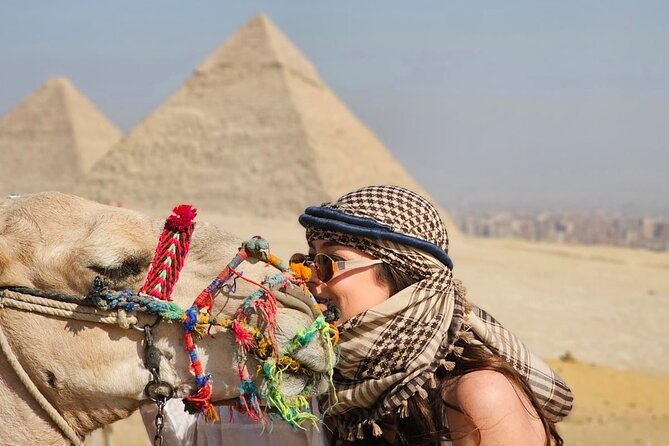
- Private Egyptologist time through multiple sites, not just a quick drive-by
- Hotel pickup and drop-off so you don’t fight Cairo traffic or taxi math
- Entrance fees, lunch, and water included, which keeps the day predictable
- Inside pyramid tickets cost extra, but your guide can assist
- Camel ride may require extra confirmation depending on which stop details apply
- Photo stops are time-managed, so bring a plan for your must-shots
Price and value: what you’re really paying for at $80
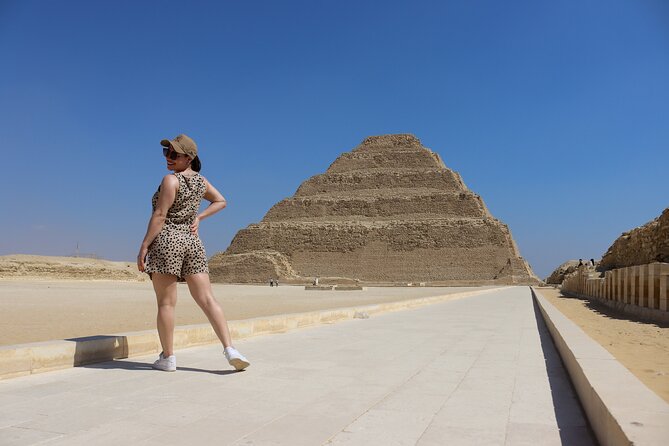
At around $80 per person, the headline number looks simple. The value comes from what’s bundled: a private Egyptologist guide, hotel transfers, entrance fees, lunch, and bottled water. That’s not just convenience; it saves you energy in a city where time is the currency.
You’re also paying for a day that stitches together far-apart sites (Giza, Saqqara, Memphis, Dahshur) without you coordinating transport between them. If you’re the type who likes facts, explanations, and not getting lost in logistics, the included guide time is where your money goes.
If you’re traveling on a strict “minimize guide costs” mindset, you might feel the price is mostly for the person with the answers. But if you want your photos paired with context—why each pyramid is shaped that way, and what Memphis meant—the package fits well.
You can also read our reviews of more tours and experiences in Cairo.
The flow of a long day: how the 8 to 9 hours usually feels
This tour runs about 8 to 9 hours, with a schedule that moves from the Giza plateau into Saqqara/Memphis and then to Dahshur. The time blocks aren’t huge everywhere, so you’ll get a guided “see the point, then move” rhythm rather than wandering for hours.
That works if you want variety and don’t want to burn half a day arranging rides between monuments. It can feel a little tight if your personal travel style is slow and unplanned, or if you insist on multiple inside-pyramid entries (those require extra tickets and time).
Entering Giza Plateau: pyramids, camel time, Sphinx, and Khafre’s Valley Temple
This is where your day goes from drive to wow. You start on the Giza Plateau with the Great Pyramids area, panoramic views, and a short camel ride opportunity. You’ll also see the Sphinx and the Valley Temple of Khafre (Khafre’s complex is tied to rituals around the king’s body and the mummification process).
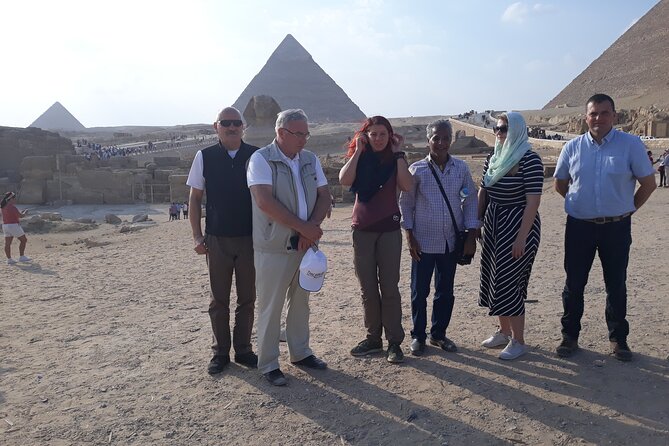
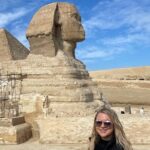
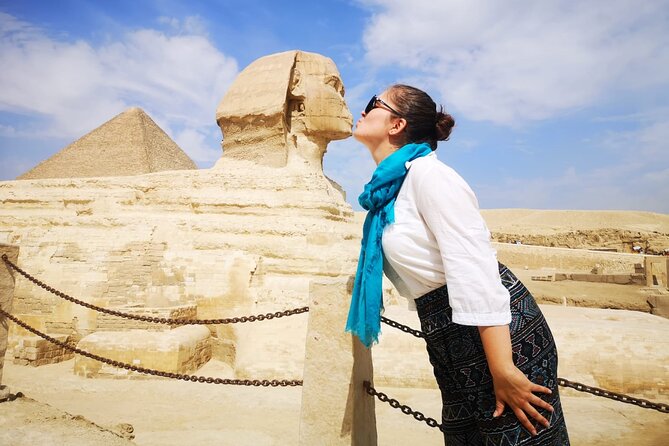
I like that the Sphinx stop isn’t treated like a drive-by. You get time for photos in front of the guardian lion body and King Khafre’s head, and you’ll hear the symbolism and traditional stories connected to it. If you’ve ever looked at the Sphinx in books, this is the moment where it suddenly becomes real scale.
A practical tip: camel rides are one of those experiences that can be more about timing than ticketing. If camel time matters to you, confirm the exact option for your pickup day and what (if anything) is extra.
Cheops (Khufu) area: seeing the wonder, plus the inside-pyramid decision
Next comes the Great Pyramid of Cheops (Khufu), famous as the only surviving wonder of the Seven Wonders of the Ancient World. Even if you never go inside, the complex gives you plenty to think about: the site includes references to the valley temple area and hints at how much is still not fully excavated.
The tour notes are clear about this: entering the pyramid interior requires a special ticket and it’s not included. That matters because “inside” entry affects both time and budget. The good news is that the guide team can help you handle the process if you decide to go in.
If you do choose interior access, go in with a plan for what you want from it: the experience is mostly about atmosphere and scale, not comfort. Go slow, keep water in mind, and don’t feel pressured to rush just because others are moving.
Khafre’s pyramid and valley temple: what “well-preserved” means in real life
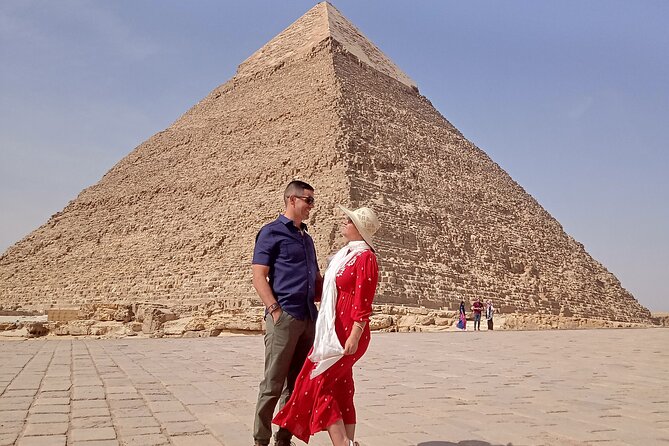
Then you shift to Khafre’s Pyramid, often described as the second highest on the plateau. This is a strong stop if you care about how much of the surrounding complex still feels intact. You’ll explore the Valley Temple of Khafre and the causeway, which helps you connect the landscape to the rituals.
Khafre’s reign is also part of why the guide talk matters here. You’re not only seeing stone shapes; you’re hearing how the reign connected to the architecture. It’s the kind of explanation that turns “I saw a pyramid” into “I get why this design happened.”
Same note as the other pyramids: inside entry needs a special ticket and is not included. If you want a streamlined day, you can skip interior visits and still get meaningful insight from the exterior complex and temples.

Menkaure’s pyramid: the granite clue and why it’s a big deal
The Menkaure Pyramid is the smallest of the three main Giza pyramids, but it’s not small in interest. The standout detail is the granite outer layer on its lower sections, and the tour information points to the fact that the granite was quarried from Aswan—over 900 kilometers away.
That long-distance engineering detail changes how you look at the pyramid. You start thinking about labor, logistics, and planning, not just “someone stacked rock.” Even the texture differences—limestone versus granite—help make this stop feel distinct instead of repetitive.
It’s a shorter visit, but it’s a good “contrast stop” after Khufu and Khafre.
Panoramic view of all six pyramids: your best photo payoff
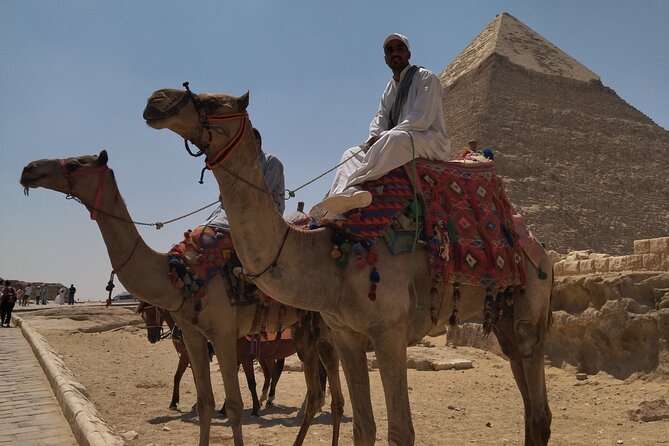
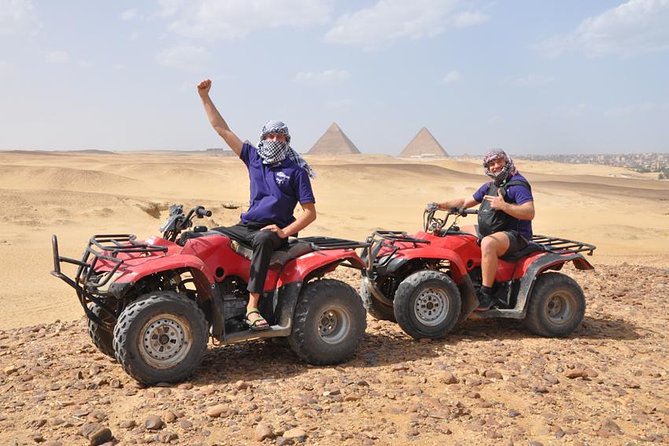
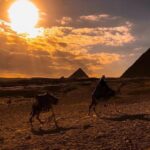
You’ll then get a panoramic viewpoint where you can see all six pyramids with the Giza skyline in the background. You get about 30 minutes here for photos, which is honestly the right amount of time: long enough to shoot from a few angles, not so long that the light changes and your “golden hour” brain starts panicking.
Camel rides may be available at this viewpoint as well, but the tour notes also say camel rides are not included in the package at this specific stop. Translation: confirm pricing and what’s included for your exact day so you don’t get surprised by a last-minute add-on.
I recommend doing two things here: first, take the classic wide shot. Second, step back and line up the pyramids in your frame—this helps your brain connect what you saw earlier with the bigger layout.
Great Sphinx: ticketed access, photo time, and the reality of parking
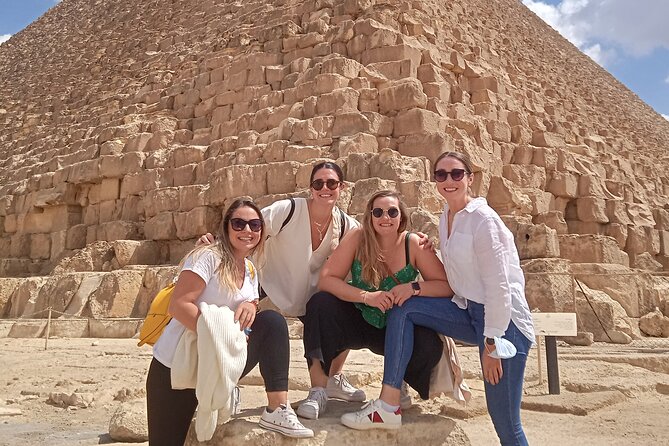
Back at the Great Sphinx area, your entry ticket to the pyramids zone allows you to get close and take photos. The tour notes say you’ll have around 30 minutes here, and that the Sphinx entry portion is listed as free with your ticket.
This is also the kind of stop where real-world conditions can affect your time. If the parking situation isn’t ideal on the day, the time for photos can tighten—so if you have “must-have” angles, tell your guide early and don’t wait until the last minute.
Think of this as the moment to trade questions for camera work. If you’ve already gotten the history talk from the guide at earlier points, use this stop to focus on your images.
Saqqara and Memphis: earliest pyramids, then the Old Kingdom capital
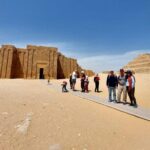
After Giza, the day turns into a history “sweep” across early pyramid development and then the political center that watched pyramids become tradition. You’ll visit Saqqara, described as home to the earliest pyramids, and then continue to Memphis, the ancient capital.
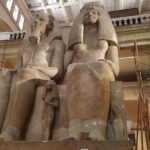
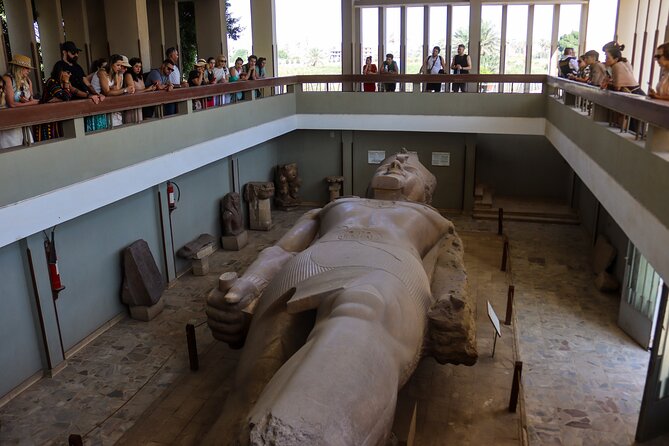
Memphis is the Old Kingdom anchor in this route. It dates to around 3100 BC, and during your visit you’ll see key monuments tied to pharaohs and state power. The highlights include the colossal statue of Ramses II carved from limestone, and the Great Alabaster Sphinx. Those objects are the kind of things that help you feel the continuity between Old Kingdom building and later dynasties.
If you want a practical way to use your guide time here, ask them to connect Memphis’s role to why the pyramid era mattered. The tour description points to this connection, including how Memphis related to the pharaohs connected to the pyramid builders.
You’ll also hear about Old Kingdom timing and how these sites fit together in Egypt’s long timeline. Even if your background is basic, this part is where the guide’s explanations make the day feel less like a checklist.
Dahshur Bent and Red Pyramids: Sneferu’s experiments that changed everything
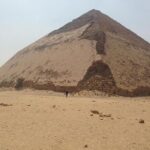
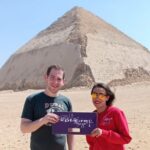
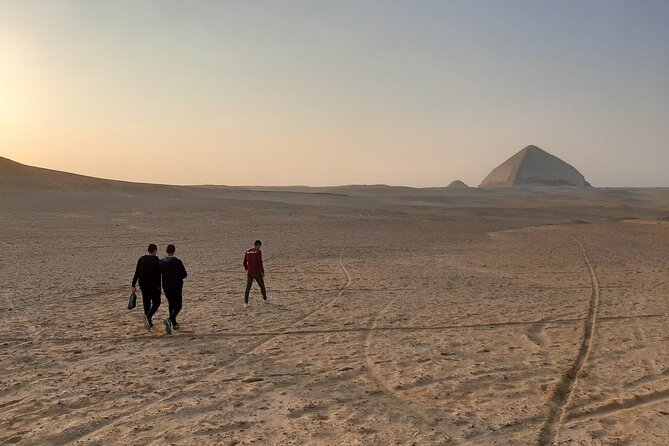
Finish at Dahshur, about 40 kilometers south of Cairo, where the pyramid story becomes about experimentation and evolution. You’ll see two major pyramids: the Bent Pyramid and the Red Pyramid, both associated with Pharaoh Sneferu, who founded the Fourth Dynasty.
The Bent Pyramid is famous because its angle changes: it starts around 54 degrees and shifts to about 43 degrees. That visual clue tells you the builders were working through problems and refining technique. It’s a perfect stop if you like “how it was figured out” rather than only “final masterpiece.”
Then comes the Red Pyramid, described as the first true pyramid with smooth angled sides and a height of about 105 meters. This contrast—Bent Pyramid’s changing angles versus Red Pyramid’s clean finish—helps your brain understand progress over time.
Dahshur is also a good place to slow down a bit. Even when the schedule is tight, the architecture here feels different from Giza, and you come away with more than “same stones, different spot.” You come away with a sense of engineering growth.
What makes the guide experience matter (names you’ll see in the tour record)
This tour’s strongest reputation is tied to the way guides handle the day. In the experience history, Michael is singled out for making the day easy, relaxing, entertaining, and informative—especially if you want history explained in a friendly way without rushing. Mohamed Salah is also praised for going above and beyond, plus a smooth, well-run car and a good pace around Giza, Saqqara, and Memphis. Amro gets credit for clearly explaining the different kings and helping the monuments feel connected.
There’s also a clear caution in the experience history: a bad-guide day can drag, with poor explanation and time not matching expectations. I can’t control who you get, but you can control how you prepare—be ready to ask questions early, and if something feels off, communicate quickly so your day doesn’t turn into a silent bus ride.
Comfort, transfers, and avoiding Cairo taxi chaos
This is a private package with hotel pickup and drop-off, which is the unsung value. You avoid negotiating, you avoid guessing travel times between sites, and you can focus on the monuments instead of the roads.
Your route includes long drives—especially when Dahshur is on the list—so comfort matters. The tour description also notes bottled water and lunch are included, which helps you keep energy steady. When the day stretches, that small predictability is a big deal.
Who should book this private day tour
This tour is a strong fit if:
- You want Giza + Saqqara + Memphis + Dahshur in one day without doing planning.
- You value an Egyptologist explanation to turn photos into understanding.
- You’re okay with some stops being shorter because the goal is variety.
You might reconsider if:
- You prefer slow, unstructured sightseeing where you can linger for hours at one site.
- You’re only interested in one pyramid complex (because this plan spreads your time across several).
- You want every possible interior pyramid entry; inside tickets aren’t included, so you’ll pay extra.
Should you book this tour?
Yes—if you want a single-day, guided hits-all-the-big-sites plan with lunch, entry fees, water, and hotel transfers handled. This is exactly the kind of itinerary that helps you see how Egypt’s pyramid story evolves, from early pyramid efforts at Saqqara to Sneferu’s Dahshur breakthroughs.
Book with confidence if you’re excited about history explanations and photo stops, and if you’re willing to handle the reality that inside pyramid entry costs extra. I’d just do one thing before you go: confirm the camel ride details for your specific day and ask how inside tickets will be handled so your day stays smooth.
FAQ
How long is the tour?
The tour runs about 8 to 9 hours.
Is hotel pickup and drop-off included?
Yes. The tour includes hotel pickup and drop-off from your chosen Cairo or Giza location.
What’s included in the price?
Entrance fees, bottled water, a local lunch, and a qualified Egyptologist guide are included. It also notes guaranteed skip-the-line.
Are the pyramids included with entrance tickets?
Yes for the listed site entrances. However, the notes say that entering the Great Pyramid of Cheops, Khafre’s Pyramid, and Menkaure’s Pyramid from the inside requires special tickets that are not included.
Is a camel ride included?
Camel rides are mentioned as part of the Giza experience in the tour highlights and also described as a short ride early in the day. At the panoramic viewpoint, the notes say camel rides are not included, so it’s smart to confirm what’s included for your day.
Do I need to haggle for taxis?
No. The tour includes 2-way hotel transfers, so you won’t need to arrange or negotiate transport on your own.
Is this a private tour?
Yes. It’s listed as a private tour/activity, and only your group participates.
What time commitment should I expect at each main stop?
The tour notes provide time estimates per stop, including about 3 hours at the Giza Plateau and around 1 hour each for Memphis/Saqqara and Dahshur, plus shorter timed photo and pyramid-area visits.
Can I cancel for a refund?
Free cancellation is available. You must cancel at least 24 hours before the experience start time for a full refund. If you cancel less than 24 hours before, it won’t be refunded.