REVIEW · EGYPT
Exotic 13 Days Egypt Tour
Book on Viator →Operated by LuxorPrivateTour · Bookable on Viator
Egypt in 13 days can feel unreal. What makes it workable is the tight routing from Giza to Abu Simbel, plus professional handling of your entrance fees and pickups so you’re not stuck planning every move.
I especially like the domestic flights that cut the long gaps (Cairo to Aswan, and Hurghada back to Cairo). I also like that you get an Egyptian tour guide with a degree in Egyptology and a whole team approach from Ash and guides like Mohamed, Osama, Ramma, and Mohammed, based on how the service is described by past clients.
One drawback to plan for: the itinerary is very active, including an early 4:30 am start for Abu Simbel.
In This Review
- Key highlights you’ll care about
- Entering The Pyramids Zone Without the Usual Headaches
- The Giza add-ons that make it feel complete
- Alexandria’s Library: A Big Contrast in Your Mid-Trip Mood
- Old Cairo’s Islamic Cairo and Coptic Cairo Stops
- Egyptian Museum + Old Cairo: A Strong Match for “I Want to Understand”
- Flying to Aswan: Shorter Travel, Better Temple Timing
- Abu Simbel at 4:30 am: Yes, It’s Early
- Edfu and Kom Ombo: Two Temples, Two Different Atmospheres
- Luxor West Bank: Valley of the Kings, Hatshepsut, and Colossi of Memnon
- Abydos and Dendera: The Egypt That Feels Slightly Less Crowded
- Hurghada Reset: Red Sea Time Plus Free Days
- Hotels, Cruise Food, and the Pace You’re Actually Signing Up For
- Price and logistics: where the $3,580 value shows up
- Who should book this Egypt run?
- Should you book this tour? My practical verdict
- FAQ
- Does the tour include pickup and transportation in Egypt?
- Are entrance fees included?
- Which domestic flights are included?
- Where do you stay during the trip?
- Is there free time in Hurghada?
- What is not included in the price?
- When to ask before you go
Key highlights you’ll care about
- Time-saving domestic flights between Cairo, Aswan, and Hurghada
- Entrance fees included for the main sites across multiple cities
- Full-board Nile cruise plus scheduled temple nights in Luxor
- Big-hitter temples without DIY pressure (Karnak, Valley of the Kings, Philae, Kom Ombo)
- Hurghada free time to slow down, with options like Giftun Island and the Grand Aquarium
- Team support when flights change is part of the service style
Entering The Pyramids Zone Without the Usual Headaches
Cairo is where this trip starts, and it does a smart thing on day 1: you land, you get moved to your hotel in a company-maintained vehicle, and you get a welcome drink. Then your guide lays out the schedule and pick-up times so you know what’s happening next and when you need to be ready.
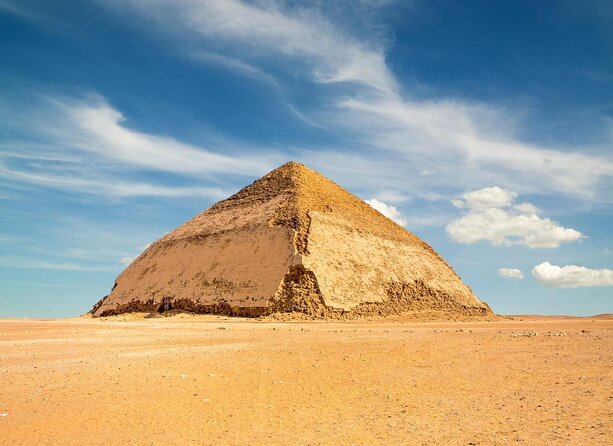
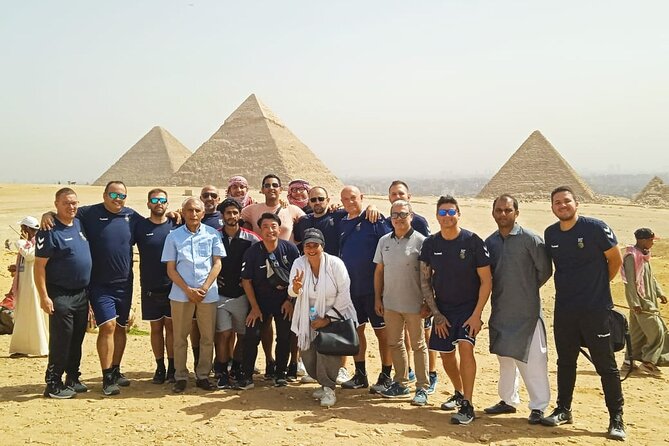
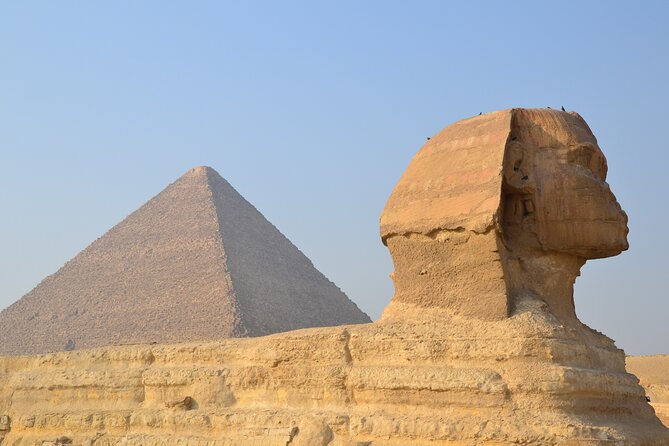
On day 2, you jump straight into the Pyramids of Giza visit. You’ll see the Pyramids of Cheops, Chechen, and Mykerinus, then the Great Sphinx and the Valley Temple. It’s one of those places where the scale hits you late, after you’ve already started walking and looking up.
Two practical notes. First, day 2 is long enough that you’ll want water and a hat ready. Second, the trip includes a nighttime desert experience: you can ride a camel or horse and then have dinner in the desert. That’s not just a photo stop; it helps break up the day and gives you an evening that feels different from another temple day.
You can also read our reviews of more tours and experiences in Egypt.


The Giza add-ons that make it feel complete
After Giza, you don’t stop there. You go on to Saqqara (Sakkara) to see the step pyramids of Djoser, which are the kind of site that helps you understand how Egyptian architecture evolved. You’ll also have a restaurant break in the middle so you’re not just surviving on snacks.
If you’re the type who wants the highlights but also likes context, this is a good match. If you only want one mega-day and nothing else, it may feel like too much. But for most first-timers, it’s exactly the right density.
Alexandria’s Library: A Big Contrast in Your Mid-Trip Mood
After Cairo’s stone-and-sand focus, Alexandria adds a change of pace. Day 3 is built around the Library of Alexandria, with the new library experience included. It’s a great way to shift from tombs and temples to ideas and texts.
Even if you don’t go deep into the debate over who founded the library originally, it’s still a striking place to visit. You’re standing in a modern structure that’s tied to the idea of Alexandria as a world meeting point. It also helps you avoid travel burnout because it’s not another endless walking loop of ruins.
One small consideration: day 3 is listed as a full 12-hour stretch. That means you’ll want to treat it like a long day, not a quick city break. Bring comfortable shoes and keep your phone charged; the day is packed.
Old Cairo’s Islamic Cairo and Coptic Cairo Stops
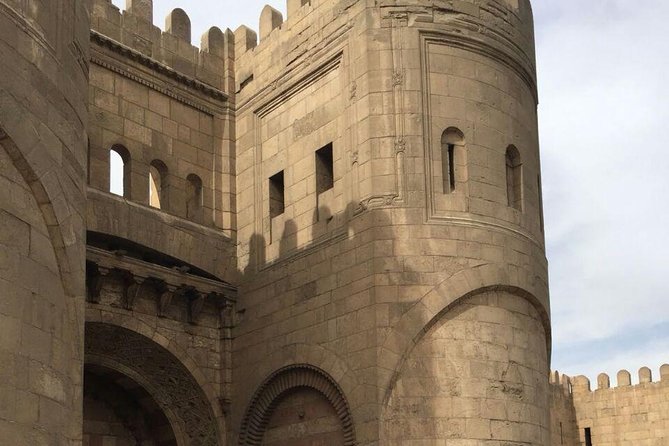
Day 4 takes you through Islamic Cairo and Coptic Cairo in a private air-conditioned vehicle. This is one of the tour’s best moves for people who want Cairo to feel more layered than just the pyramids and museums.
You’ll visit the Egyptian Museum early in the day and focus on Tutankhamen’s treasures, then continue to the Khan El Khalil area to see scenes from the ancient bazaar. Khan El Khalil is one of those places where the visual energy is immediate. It’s not calm. It’s not subtle. But it’s very much part of Cairo’s real daily texture.
A practical thought: markets are best when you don’t feel rushed. This part of the schedule is long enough that you can look around at your own speed, but it’s still within a guided flow.
Egyptian Museum + Old Cairo: A Strong Match for “I Want to Understand”
This tour doesn’t treat the Egyptian Museum as a checkbox. Day 4 positions it as a key stop right after breakfast, and it’s paired with the Islamic and Coptic areas for contrast.
If you like your history explained clearly, the Egyptology-trained guide is what makes the museum visit worthwhile. Otherwise, museums can blur together fast—especially when you’re already seeing major sites every day.
Also, entrance fees are included for the overall program. That matters in Egypt because it reduces the constant mental overhead of figuring out what’s included and what you still need to pay once you’re onsite.




Flying to Aswan: Shorter Travel, Better Temple Timing
On day 5, you fly from Cairo to Aswan. The idea here is simple: fewer hours lost in transit and more time on the sites. You arrive at Aswan International Airport, your representative is there for transfers, and you head to the Nile cruise.
Check-in happens with the help of the team, and you also get lunch onboard. Then you move into the Aswan boat trip to Agilika Island to see the Temple of Philae, dedicated to Isis. Seeing Philae from the water angle is one of the reasons people like Aswan. It feels removed from the city even while you’re close.
Overnight is in Aswan, which helps you reset before the next big morning.
Abu Simbel at 4:30 am: Yes, It’s Early
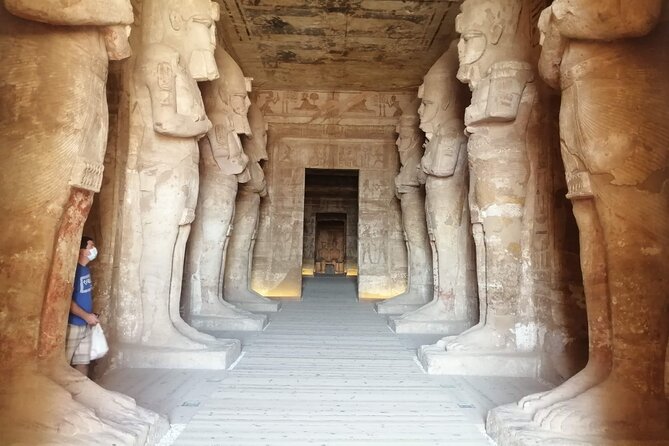
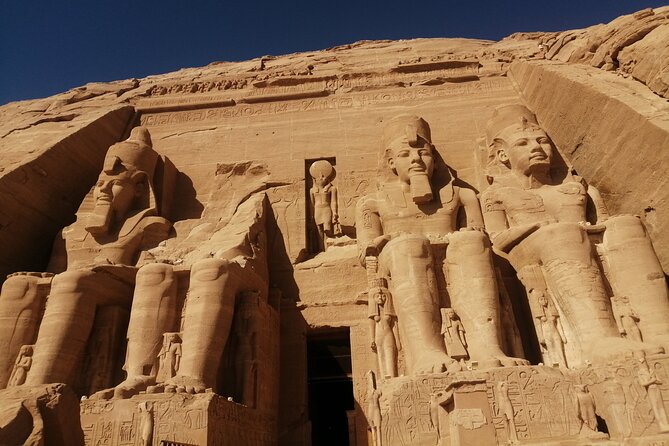
Day 6 is where this trip shows it’s not just sightseeing—it’s structured around iconic timing. You’re picked up at 4:30 am for Abu Simbel, then you’re back to the boat by 2:00 pm with lunch included onboard.
Abu Simbel is famous for a reason, but the best part of the trip plan is that they’re treating it like a major event. After Abu Simbel, you head to Kom Ombo, visit the Twin Temples of Kom Ombo, and then dinner is handled as the cruise moves toward Edfu.
One consideration: if you hate early mornings, you’ll feel Abu Simbel. But if you can handle a tough start, it’s also one of the most memorable days on the entire route.
Edfu and Kom Ombo: Two Temples, Two Different Atmospheres
On day 7, you’re in Edfu for the Temple of Horus. This temple is described as one of Egypt’s best-maintained temple experiences, and that makes a difference when you’re comparing stops back-to-back. It’s a place where carvings and layouts stay easier to read than at some sites that are more weathered or worn.
Then you sail toward Luxor and arrive around 3:00 pm. You’ll visit Karnak Temple and Luxor Temple by night. Night temple visits change the mood fast. The crowds feel different. The lighting does the work for you.
Dinner is onboard, and the day ends on a night-temple note—useful if you want the trip to feel like an adventure, not a spreadsheet.
Luxor West Bank: Valley of the Kings, Hatshepsut, and Colossi of Memnon
Day 8 starts with a west bank focus. You’ll visit the Valley of the Kings and see tombs of New Kingdom kings. Then it’s on to a stop at a handmade alabaster house. That’s a nice change from stones and sand. It’s also a way to understand how Egyptian crafts continue even when you’re deep in ancient sites.
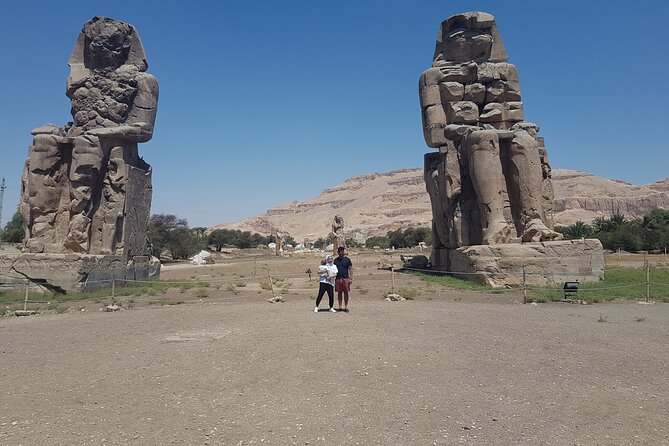
Next is Hatshepsut Temple, which is notable because it’s dedicated to the female ruler and she’s credited with its construction during the 18th Dynasty. After that, you’ll see the Colossi of Memnon, which are treated as the mortuary tomb of Amenhotep III.
Then comes a smart recovery moment: you return to your hotel and enjoy time at the swimming pool. It’s not a random perk. It’s a built-in way to cool down after a West Bank day.
Abydos and Dendera: The Egypt That Feels Slightly Less Crowded
Day 9 takes you away from Luxor for a longer stretch: first Abydos. You’ll see the temple constructed by Set I in honor of Osiris, plus key scenes connected to Set I and Ramses II. One highlight here is the Royal Lists showing the names of kings from Menes to Set Me. That kind of detail helps you connect the story threads rather than just viewing one monument after another.
There’s also mention of the mysteries of Osiris ceremony that reproduces the death and resurrection theme. Even if you don’t treat it like a live performance, the idea helps interpret what you’re looking at in the temple spaces.
Then the day continues to Dendera, dedicated to Hathor, where construction began in the reign of Nectanebo I. You’ll also stop by the Temple of Isis before heading back to Luxor.
If you want Egypt beyond the most crowded icons, this day is a win.
Hurghada Reset: Red Sea Time Plus Free Days
Days 10 through 13 shift the trip to the Red Sea. On day 10 you drive to Hurghada and get coral-reef time with options listed such as water activities and fishing. It’s a physical reset day compared to the temple days.
Then days 11 and 12 are the big breathing space: they’re structured as free days in Hurghada, with optional booking encouraged locally. Your options include Giftun Island for swimming and snorkeling, the Hurghada Grand Aquarium, the Hurghada museum, the abandoned city of ghosts in Safaga, and shopping around Hurghada Marina.
This is where you can shape the trip to your style. Want calm and beach time? Great. Want more structured activities? You can book them locally. You’re also offered VIP air-conditioned car transportation for the included movement around these options.
Day 13 depends on flight timing. You’ll have a driver waiting to take you to the airport so you can get back to Cairo and then home.
Hotels, Cruise Food, and the Pace You’re Actually Signing Up For
A big part of your comfort here is what’s included. You get 4 nights in a 5-star Cairo hotel with breakfast (B.B.), plus 3 nights full board on the Nile cruise, and additional nights in Luxor with breakfast as listed in the package.
Full board on the Nile cruise helps you avoid a common Egypt problem: you’re exhausted from long days, and then you have to solve dinner planning again. Here, meals are part of the structure.
Pacing is the trade-off. This is not a slow travel route. You’ll be moving from city to city, and your days are set up with guided temple time. If you prefer spontaneous wandering, you’ll need to carve it out during the Hurghada free blocks or at shorter market moments like Khan El Khalil.
Price and logistics: where the $3,580 value shows up
At $3,580 per person for roughly 13 days, this trip has one clear strength: it bundles the big cost drivers into the price. Entrance fees are included across the itinerary, and you also get the included domestic flights (Cairo to Aswan and Hurghada to Cairo).
That means you’re less likely to hit surprise expenses once you’re standing in front of ticket counters. One review-style theme in the feedback is exactly that point: entrance fees were already handled, so there was no repeated hassle of paying day after day.
You also get private A/C vehicle transport for the itinerary and airport arrival/departure support. In a country where traffic and timing can vary, having the transport handled matters more than people expect.
Still, remember what’s not included: international flights, tipping, and any optional tours in Hurghada. So you’ll want to budget for those, even if the core program is well covered.
Who should book this Egypt run?
This tour fits best if you want:
- The major hits from Cairo to Luxor to Aswan, without building your own puzzle
- A guided museum and temple plan with an Egyptology-trained guide
- A Nile cruise experience as a core part of the trip, not an add-on
- A realistic balance of intensity (temples) and recovery (pool time and Hurghada free days)
It might feel like too much if you want lots of silent time every day, or if early mornings are a deal breaker. Abu Simbel at 4:30 am is the obvious “brace yourself” moment.
Should you book this tour? My practical verdict
I’d book it if you want Egypt with less friction and more clarity. The included entrance fees, domestic flights, and structured temple nights remove the day-to-day stress that can drain travel energy. And the team support approach is a real selling point when schedules don’t go perfectly.
I wouldn’t book it if your travel style is slow, flexible, and lightly guided. This is a tour with momentum. You’ll be glad it’s planned, but you won’t be treating it like a choose-your-own-day situation.
If you’re ready for a very active 13 days, this one is built to deliver the big experiences in a way that feels organized, not chaotic.
FAQ
Does the tour include pickup and transportation in Egypt?
Yes. The program offers airport arrival and departure help and uses private A/C vehicles for the itinerary.
Are entrance fees included?
Yes. Entrance fees for the 13-day itinerary are included.
Which domestic flights are included?
The tour includes domestic flights from Cairo to Aswan on day 5, and from Hurghada to Cairo on day 13.
Where do you stay during the trip?
You get 4 nights in a 5-star Cairo hotel with breakfast, 3 nights full board on the Nile cruise, and additional breakfast accommodation in Luxor as listed in the package.
Is there free time in Hurghada?
Yes. Days 11 and 12 are listed as free days to discover Hurghada or relax, with activities you can book locally like Giftun Island and the Grand Aquarium.
What is not included in the price?
International flights, tipping, and any optional tours are not included.
When to ask before you go
If you tell me your travel month, your comfort level with early mornings, and whether you prefer lots of structured guidance versus free time, I can suggest whether this pace matches you well.