REVIEW · CAIRO
Egypt Tour 11 Day Cairo & Alexandria Nile Cruise & Abu Simbel Hotel & Flight Inc
Book on Viator →Operated by Look at Egypt Tours · Bookable on Viator
Temples, pyramids, and a Nile cruise in one sweep. This 11-day route strings together the big-name stops you expect and the less-obvious details you’ll remember later, with a deluxe Nile cruise plus an Egyptologist guide helping you make sense of what you’re seeing. I especially like that the plan covers Cairo’s classics and Alexandria’s Roman layers without making you live on the move all day.
That said, it’s still a high-intensity itinerary. You’ll face long sightseeing days, early starts, and ticket-based sites like the Valley of the Kings and Abu Simbel where timing matters, so plan for some fatigue and heat.
In This Review
- Key highlights at a glance
- First stop: Cairo arrival, hotel base, and getting your bearings fast
- Giza pyramids and the Egyptian Museum: two Cairo icons, one day strategy
- Saqqara’s Step Pyramid and Memphis: the quieter side of Egypt’s pyramid story
- Saladin Citadel, Khan el-Khalili, and Coptic Cairo: three identities in one Cairo day
- The flight to Luxor and the Karnak-Luxor Temple pairing: where the Nile temples feel logical
- Valley of the Kings, Hatshepsut, and Colossi of Memnon: the West Bank in full force
- Nile cruise days: Kom Ombo and Horus, plus temple layouts you can actually understand
- Abu Simbel and Philae: the UNESCO rescue story you’ll feel in your bones
- Back to Cairo, then Alexandria: Roman and medieval layers that feel like a different country
- Price and logistics: where the value really shows, and what you’ll still pay for
- Who should book this 11-day Egypt plan (and who should reconsider)
- Should you book it? My straight answer
- FAQ
- What is the duration of this tour?
- Where does the tour start and what time does it begin?
- What does the price include?
- Are flights included?
- Which major attractions have admission tickets included?
- Is pickup offered?
- Are drinks included?
- Can children join?
- What is the cancellation policy?
- Is this a private tour?
Key highlights at a glance
- Airport-to-hotel handling in Cairo so you can focus on the trip instead of paperwork
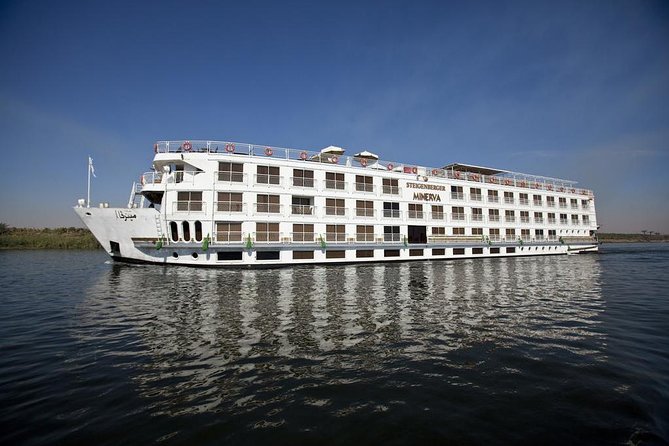
- 4 nights full board on a deluxe Nile cruise with daily buffet lunch and cruise meals included
- Giza + Egyptian Museum tickets included to cover the two Cairo must-dos in one smooth stretch
- Luxor West Bank temples in a single run (Valley of the Kings, Hatshepsut, Colossi) that’s easier than doing piecemeal
- Abu Simbel + Philae with UNESCO context on the same overall journey south
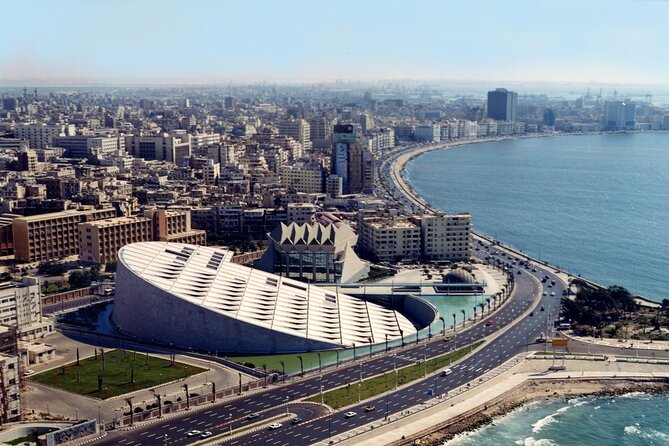
- A focused Alexandria day covering Catacombs of Kom el Shoqafa, Pompey’s Pillar, Roman theater, and Qaitbay fortress
First stop: Cairo arrival, hotel base, and getting your bearings fast
I like tours that cut down on the first-day stress, and this one does. On arrival, Look at Egypt Tours staff meet you, help with formalities, then get you transferred to your Cairo hotel. You’re not stuck figuring out transport right after a flight, and that matters because Cairo days can move quickly once sightseeing starts.
From there, the itinerary builds a strong base in Cairo. You’ll spend multiple nights in the city at a 5-star hotel (the package includes 6 nights there), so you’re not constantly checking in and out. That gives you some breathing room between heavy days, especially after the museum and Giza.
There’s also a practical rhythm to how the trip is laid out. The early days are classic Cairo: Giza and the Egyptian Museum, then Saqqara and Memphis, then Islamic Cairo plus Coptic Cairo. This works because you learn the language of Egyptian history before you move on to Luxor and the Nile. By the time you’re cruising and hopping temples, you’ll notice patterns instead of seeing random ruins.
One more detail: the tour includes round-trip private transfers and private tour style transport by vehicle. In plain terms, that usually means fewer waiting games and less wandering on your own, even though the sights themselves are still busy.
You can also read our reviews of more boat tours in Cairo



Giza pyramids and the Egyptian Museum: two Cairo icons, one day strategy
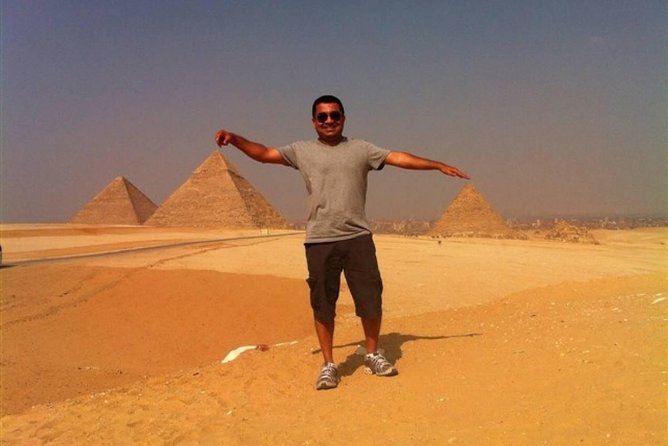
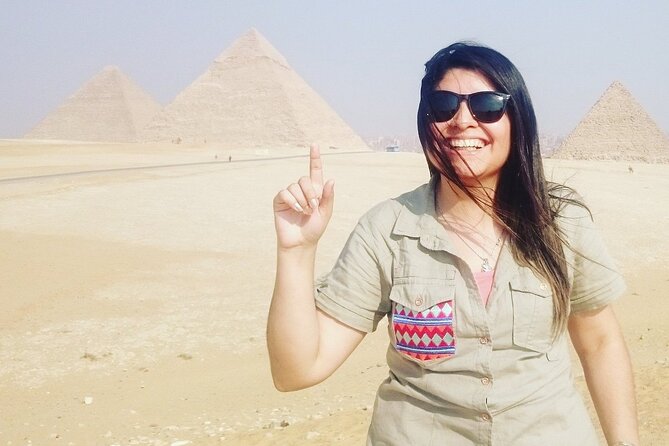
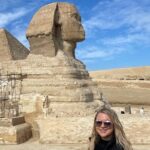
Giza is the reason many people book Egypt in the first place, and this plan handles it efficiently. You get a dedicated block for the Pyramids of Giza and the Sphinx with admission included. You can walk the plateau area, take your photos in the right place, and spend time looking beyond the big postcard views—like how the Sphinx sits at the base of the plateau and how the scale hits you in person.
Then the day adds the Egyptian Museum with admission included. The museum can feel overwhelming if you show up cold. Doing it right after Giza helps because your brain already has anchors: the pyramids, the idea of royal burials, and the whole notion of memorial building. You’ll see only part of the collection on display (the museum has far more stored), but the tour still gives you a solid, focused visit rather than a rushed stop.
What’s smart here is that both stops come with tickets included. You avoid a common headache: spending time on lines and paperwork when you’d rather be looking at stone that’s thousands of years old.
A small caution: Giza can be hot and crowded, and museum time can feel long if you’re tired. If you’re the type who likes to linger, bring water and plan to slow down inside. Also, if you’re sensitive to heat, start earlier in the day and treat midday like a rest moment even if the itinerary keeps moving.
Saqqara’s Step Pyramid and Memphis: the quieter side of Egypt’s pyramid story
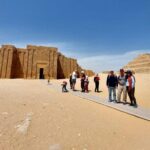
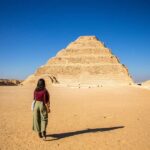
After the big Giza moment, Saqqara offers a different kind of impact. You’ll visit the Step Pyramid of Djoser and then Memphis and Sakkara. The Step Pyramid is often described as Egypt’s early major stone structure, and seeing it gives you a clearer timeline for how pyramid-building evolved. It’s also tall and imposing in a way that surprises people who expect it to feel like a smaller cousin.
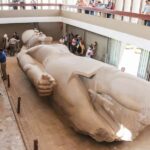
Memphis adds a different flavor. You’ll see the ruins near Mit Rahina, including the impressive massive statue of Ramses II and the alabaster sphinx of Queen Hatshepsut. Even if you don’t remember every name right away, this is the kind of stop that rewards attention. The background stories are what make it click.
Why this combination works: it’s one of the best ways to understand that Egypt wasn’t one monument. It was a chain of capitals, cult centers, and royal projects across centuries. Cairo and Giza teach the end goal; Saqqara teaches the development path.
Ticket inclusion again helps. It reduces the friction of trying to line up admissions in a packed travel schedule. You’ll still want to wear comfortable shoes. Saqqara has uneven ground and plenty of time outdoors.
Saladin Citadel, Khan el-Khalili, and Coptic Cairo: three identities in one Cairo day
Cairo isn’t only pyramids and museums. This day turns the spotlight on layers—Islamic Cairo, Christian Cairo, and the street-life in between.
You’ll start at the Saladin Citadel, also known as the Citadel of Cairo. It’s a medieval Islamic fortification with views over the city, and it helps you understand why rulers cared about high ground. Even if you’re not a big architecture person, the location itself is worth it.
Next is Khan el-Khalili, one of the best-known markets in the historic center. This is where Cairo feels like Cairo: lanes of shops, people moving, and the constant sense of everyday life happening around you. It can be hectic, but that’s also the point. Keep your expectations realistic: you’re walking a market, not a quiet museum gallery.
Then you’ll shift to Coptic Cairo, which includes several historic sites like the Babylon Fortress area and churches such as the Hanging Church and the Greek Church of St. George. This mix of sites gives you a wider view of Egypt’s religious history in one controlled visit.
Two practical tips for this kind of day:
- Plan to move slowly through Khan el-Khalili. It’s easy to get tugged into quick shopping stops.
- Consider modest clothing and comfortable walking shoes. You’ll be on your feet for multiple stops.
The flight to Luxor and the Karnak-Luxor Temple pairing: where the Nile temples feel logical
A key part of the tour’s flow is breaking Cairo sightseeing with a flight to Luxor. You’ll check out of your Cairo hotel after breakfast, then head to the airport for Luxor. This is one of the reasons the itinerary can fit so much in 11 days without turning into a full-time travel marathon.
In Luxor, you’ll hit Karnak Temple and Luxor Temple. Karnak is huge and long-lived in Egypt’s timeline, dedicated primarily to Amun with parts reaching back as early as 2000 BC. Even if you can’t name every hall on sight, you’ll feel the sheer scope. Luxor Temple is on the east bank and has its own different vibe, built around 1400 BCE. Taken together, they show you how east-bank religious life worked as a system, not just one building.
Admission is included for both, which helps you keep your focus. It’s also helpful that the tour clusters them so you can compare the scale and design choices while your brain is still in temple mode.
One caution: Karnak can be visually intense. If you try to learn everything at once, you’ll miss the big picture. Let your Egyptologist guide bring the story forward, then step back and look at symmetry, courtyards, and the way routes through the complex make sense.



Valley of the Kings, Hatshepsut, and Colossi of Memnon: the West Bank in full force

The West Bank day is where the tour really delivers an emotional hit. You’ll visit the Valley of the Kings, the Temple of Hatshepsut, and the Colossi of Memnon.
The Valley of the Kings is the burial ground of many New Kingdom pharaohs. It’s also where you learn about how fragile history is. Tutankhamen’s tomb is a major draw (you’ll learn about it), and the ticket on site typically allows visits to selected tombs on the Valley route. The tour notes that tombs have suffered from treasure hunting, flooding, and modern mass tourism effects. It’s a reminder that the experience is not just wonder, it’s conservation-aware travel.
Next is Hatshepsut’s temple. This is one of Egypt’s most interesting power stories: Hatshepsut ruled for around 16 years, using a funerary temple as part of her legacy. The tour highlights how she rose after Totmosis II, and how later events led to the destruction of related works tied to her. Even if you know the basics already, seeing the temple with that context changes how you look at the stones.
Then the day ends with the Colossi of Memnon, the two massive statues of Amenhotep III. These stand in the Theban Necropolis on the west bank and for centuries have been landmarks in their own right. They’re an easy closer if you’re tired, but still powerful because they’re so physical.
One practical thing to prepare for: this is a lot of walking and a lot of heat. If you’re prone to getting overwhelmed, use the gaps between sites for water and shade, not just quick photos.
Nile cruise days: Kom Ombo and Horus, plus temple layouts you can actually understand
This tour includes four nights on board a river cruise on a deluxe Nile cruise with full board. You’ll get daily buffet lunch on the cruise and the package includes dinner every day on the cruise only. That’s a nice trade: you spend your energy on the temples, then you have food and rest waiting.
On the cruise route, you visit two temples in the Kom Ombo and Horus area: the Temple of Kom Ombo and the Temple of Horus.
Kom Ombo is a double temple, built in the Ptolemaic dynasty period, with one half dedicated to Sobek (crocodile god) and the other associated with Horus the Elder. The point is that the same complex can hold different worship spaces. It’s a great stop for learning how Egyptians organized religious life around gods and rituals, even when dynasties changed.
Then Horus Temple is one of the best-preserved Ptolemaic temples. It’s described as atmospheric, with a roof still intact. That kind of preservation makes it easier to imagine what the site looked like in use rather than only as ruins.
Why this matters for your experience: a cruise can sometimes feel like a moving platform that only serves as transport. Here, the land stops are doing real educational work. The cruise gives you a break, but the day visits keep you engaged and moving forward.
Also, balance your day: don’t try to sketch every wall. Use your Egyptologist guide for the stories, then spend a few minutes as yourself just staring at scale.
Abu Simbel and Philae: the UNESCO rescue story you’ll feel in your bones
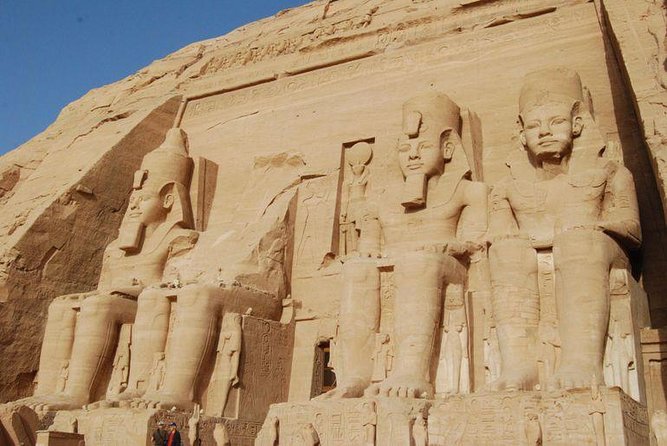
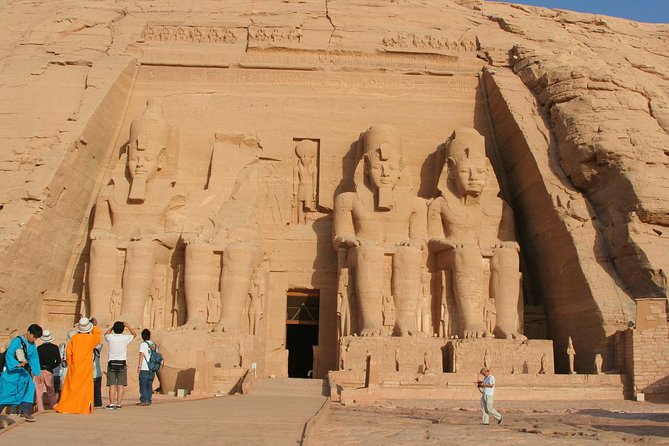
If you’re trying to pick the single most intense day, it’s likely Abu Simbel. You’ll go to the Abu Simbel Temple Complex, two massive rock temples located in Nubia near Lake Nasser. The distance is significant, and the tour duration makes it clear this isn’t a quick photo stop.
The big win is that Abu Simbel isn’t only about the temple. It’s also about survival. The tour includes Philae as well, saved from a watery fate through a UNESCO rescue project that transferred monuments block by block from Philae Island to Agilika Island. That story makes the stones feel new in a strange way. You’re not just seeing an ancient site; you’re seeing a modern decision to protect it.
Philae served as a pilgrimage center for the cult of Isis across multiple periods: pharaonic, Greek, Roman, and Byzantine, with each era leaving its stamp. That layered influence is why Philae feels different from other temple stops in Egypt. It reads like a cultural timeline written in stone.
A word of caution: days like this are physically demanding. The tour includes admissions and structured time, but you still need to bring your patience. This is one of those days where the payoff is worth it, but it’s not a day to rush through.
Back to Cairo, then Alexandria: Roman and medieval layers that feel like a different country
After breakfast, you’ll check out of the cruise and fly back to Cairo. Once you arrive, you’re transferred to your hotel to relax in Cairo. That reset matters because your itinerary then shifts to Alexandria for a full sightseeing day.
In Alexandria, you’ll visit the Catacombs of Kom el Shoqafa, described as a historical archaeological site and even considered one of the Seven Wonders of the Middle Ages. It’s a fitting contrast after Egypt’s pharaoh-era world, because it shows burial traditions mixing styles.
Then comes Pompey’s Pillar, a Roman triumphal column at the Serapeum of Alexandria. Even if you’ve seen Roman columns before, this one has the rare feeling of being part of a larger, specific Roman setting rather than a standalone monument.
You’ll also see the Ancient Roman Amphitheater. The structure is modest in size and much is in ruins, but it’s still a great look at Roman-era theater design and how galleries were built.
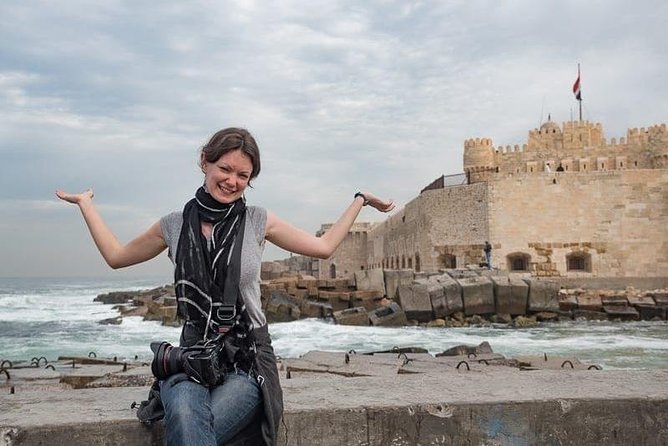
Finally, the day includes Sultan Qaitbey’s fortress on a thin arm of land extending into Alexandria’s harbor. It was built in the 14th century to defend the city, though Ottoman control came later. The location is scenic, and it also helps you understand why coastal defense mattered.
One practical note: this is a long day of walking. Build in water breaks and don’t feel you need to rush every photo. The day is packed, but the contrast between sites makes it memorable.
Price and logistics: where the value really shows, and what you’ll still pay for
The price is $2,793 per person for an 11-day package. On its face, it’s not cheap. What you get for that money is the key part: multiple hotels, a four-night deluxe Nile cruise with full board, a qualified Egyptologist guide, private transport, and several admission tickets included across major sites.
This is the value angle I like best:
- Admissions included for the big hitters (Giza, Egyptian Museum, Step Pyramid, Karnak, Luxor Temple, Valley of the Kings selections, Kom Ombo, Horus, Abu Simbel, Philae, and Alexandria sites). That cuts down on planning friction.
- Most meals included, especially cruise meals, which is where costs can sneak up when you travel independently.
- Transport handled privately, including a flight between Cairo and Luxor and the return flight after the cruise.
What’s not included is also important. Drinks aren’t included, so budget for water and any beverages you want outside the included meals.
Also, keep expectations realistic. This is a private tour/activity only for your group, not a shared coach shuffle. That can feel smoother, but it still follows a packed route. Some people love that. Others want a slower pace and more downtime. If you’re in the second group, you may end up feeling rushed.
Based on the feedback themes I’ve seen attached to similar tours, two issues can come up: guide energy and cabin location on the boat. One comment mentioned the cruise cabin being placed near the motor area and that the group needed to raise a concern. Another noted disappointment with guide motivation. If those topics matter to you, ask early about cabin assignment preferences and set a clear expectation with your guide that you want more storytelling time, not just movement between sites.
Who should book this 11-day Egypt plan (and who should reconsider)
This itinerary fits best if you want an organized hit list of Egypt’s major landmarks without building the logistics yourself. It’s ideal for:
- First-time Egypt visitors who want Cairo + Nile cruise + Alexandria in one plan
- People who like structure and want an Egyptologist guide to connect the dots
- Travelers who prefer private transfers and included tickets to reduce daily planning
It’s a weaker fit if:
- You hate long days. The itinerary stacks major sites and relies on multiple transports and flights.
- You’re highly sensitive to noise or cabin location on the cruise boat. The possibility of being assigned an unfortunate cabin is something you should address before you go.
- You want lots of downtime with minimal schedule pressure. This trip gives you rest where it can, but it’s not designed to be a slow travel vacation.
If you can handle heat, walking, and a packed calendar, you’ll likely come away with a stronger understanding of Egypt than just seeing famous photos.
Should you book it? My straight answer
Book it if you want a turn-key experience that covers Cairo’s icons, Luxor’s temple core, the Nile cruise route, Abu Simbel, and Alexandria in one coherent sweep. The combination of included admissions, deluxe cruise full board, and Egyptologist guidance is a strong value package.
Pass or adjust if you’re hoping for a relaxed pace, or if guide style and cruise cabin comfort are dealbreakers. In that case, you’ll want to communicate clearly before departure and be ready to advocate for preferences.
Either way, this route has the right ingredients for a life-list trip: huge monuments, real temple stories, and a Nile cruise that breaks up the driving days with actual onboard time.
FAQ
What is the duration of this tour?
The tour lasts 11 days (approx.).
Where does the tour start and what time does it begin?
The start time is 8:00 am.
What does the price include?
Accommodation is included for 10 nights at hotels and on the Nile cruise, along with 4 nights full board on a deluxe Nile cruise, 6 nights at 5-star hotels in Cairo, meals on the cruise (including dinner every day on the cruise only), breakfast every day, and buffet lunch on the cruise every day, plus an Egyptologist guide, private transport, and hotel/port drop-off.
Are flights included?
Yes. The itinerary includes a flight from Cairo to Luxor and a flight back to Cairo after the cruise.
Which major attractions have admission tickets included?
Admission tickets are included for stops such as the Pyramids of Giza and Sphinx, the Egyptian Museum, the Step Pyramid of Djoser, Karnak Temple, Luxor Temple, the Valley of the Kings (with a ticket covering visits to selected tombs), Kom Ombo, Horus, Abu Simbel, Philae, and Alexandria sites including Pompey’s Pillar and the Catacombs of Kom el Shoqafa.
Is pickup offered?
Yes, pickup is offered.
Are drinks included?
No. Drinks are not included.
Can children join?
Children must be accompanied by an adult.
What is the cancellation policy?
You can cancel up to 6 days in advance for a full refund. A 50% refund is available if you cancel 2–6 full days before the experience’s start time, and cancellations less than 2 full days before are not refunded.
Is this a private tour?
Yes. It is a private tour/activity, and only your group will participate.