You can see two UNESCO-heavy countries in one tidy circuit. This 14-day Egypt and Jordan trip leans on guided stops, an included Nile cruise, and the kind of door-to-door support that saves you from building a complicated itinerary.
What I like most is the mix of big-ticket icons and real downtime. You get a 3-night Nile cruise with meals built in, and you also slow down in Dahab with Blue Hole snorkeling instead of running nonstop. One thing to consider: the schedule is packed and includes add-ons with limited tickets, plus your days can run long.
In This Review
- Key Points That Make This Tour Work
- Cairo’s Big Start: Sphinx, Pyramids, and the Egyptian Museum Run
- Flying to Aswan: Philae Temple, the Old Dam, and the High Dam Story
- Nile Cruise Reality: Comfortable Days, Real Stops, and a Built-In Pace
- Luxor’s East and West Banks: Karnak, Valley of the Kings, and Hatshepsut
- Dahab on the Red Sea: A True Break Between Ancient Sites
- Back to Cairo, Then Amman: Door-to-Door Support Gets You Moving Again
- Petra Through the Siq: Treasury First, Then the Dead Sea Return Drive
- Jerash and Amman Panoramas: Roman-Style City Marvel in the North
- Value Check: What $2,345 Buys You (and What You Should Double-Check)
- Tour Service Quality: The Human Factor That Shows Up in Feedback
- Who This Tour Fits Best
- Should You Book This Egypt and Jordan Tour?
- FAQ
- Is airport pickup included?
- Are admission fees included?
- What meals are included?
- Does the tour include a Nile cruise?
- Do I need my visa and flights separately?
- Is Petra guided?
Key Points That Make This Tour Work
- 3 nights on a 5-star Nile cruise (Aswan to Luxor) with full board
- Petra guided time on the main trail for about 3 hours, plus an early start from the Siq
- Dahab snorkeling at the Blue Hole, with lunch included
- Airport meet-and-assist plus A/C vehicles for most transfers
- A free smart phone with internet for the length of the stay
- Limited-ticket options like pyramid-inside access and an optional Abu Simbel day
Cairo’s Big Start: Sphinx, Pyramids, and the Egyptian Museum Run
Your trip starts in Cairo, and right away you get the kind of help that matters when jet lag hits. There’s a meet-and-assist at Cairo International Airport and a transfer to your hotel on Day 1, with the evening left free.
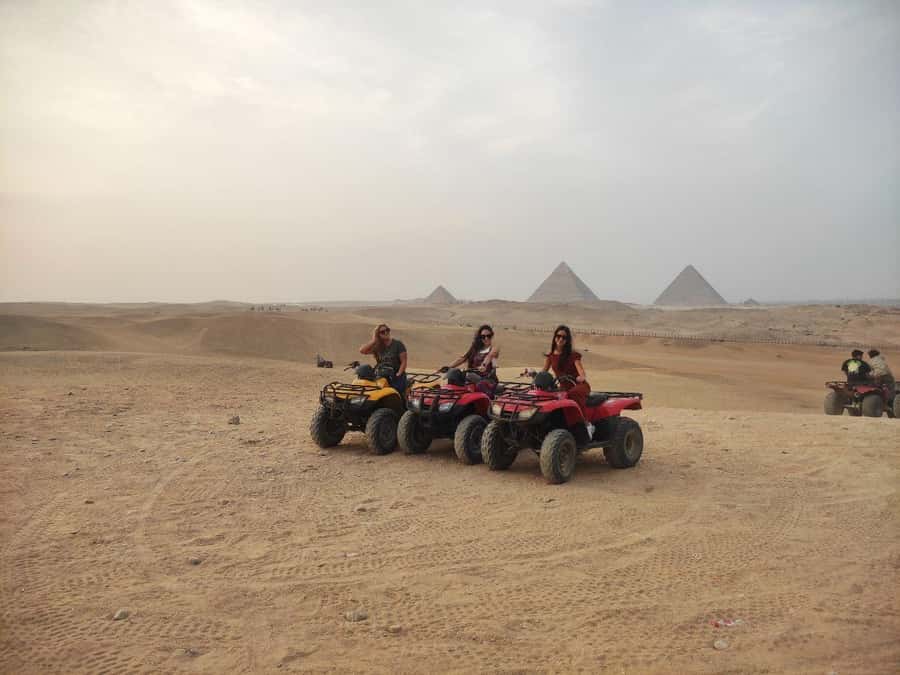
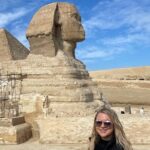
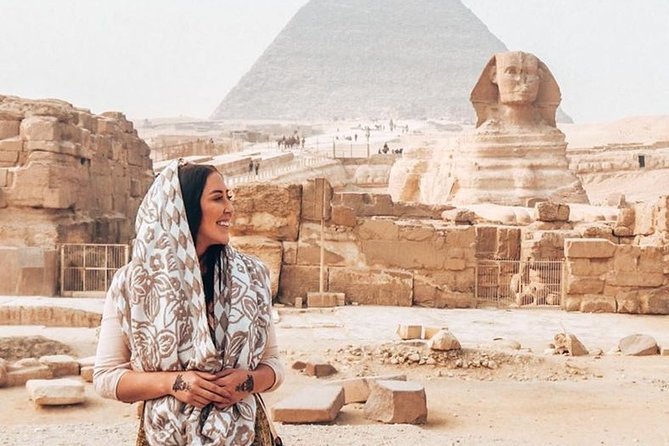
Day 2 is when the “wow” quotient jumps. You’ll head to the Sphinx and the three major pyramids tied to Khufu (Cheops), Khafre (Chephern), and Menkaure (Mycerinus). The itinerary even notes you may be able to climb down inside a pyramid if you want—just check with your guide because tickets are limited.
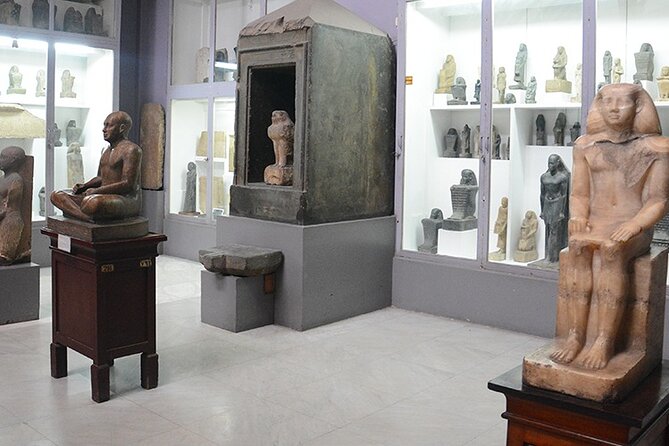
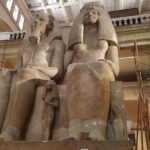
After the pyramids, you visit the Egyptian Museum, described as housing more than 250,000 antiquities. That’s a practical choice: if you’re seeing Egypt for the first time, you get a guided path to the highlights without having to hunt for what matters.
A quick reality check: Cairo days can be hot and crowded, and this kind of tour compresses a lot into one day. If you’re sensitive to heat, bring a hat and plan to drink water steadily.
You can also read our reviews of more tours and experiences in Cairo.
Flying to Aswan: Philae Temple, the Old Dam, and the High Dam Story
Next you’re on the move south to Aswan. The plan includes breakfast, then a check-out and a short crossing to Agilkia Island for the Philae Temple complex. This spot matters because the itinerary highlights why Philae ended up where it is: when the Old Aswan Dam project flooded the original area, the temple complex was moved in 1902. That gives your visit more meaning than just photos.
From there, you’ll visit the Old Dam (built 1899–1902) and then the High Dam, built between 1960–1970 for flood control, hydropower generation, and irrigation. If you like understanding how Egypt’s modern engineering shaped life along the Nile, this part turns a history stop into a living context lesson.
The tour then transitions you onto the Nile cruise ship for your home base on the water.
Nile Cruise Reality: Comfortable Days, Real Stops, and a Built-In Pace
A 3-night Nile cruise is the heart of this itinerary. You’re covered with lodging on the ship and full board (breakfast, lunch, dinner), which is one of the best “value signals” in any Egypt tour. It also means you’re not constantly thinking about meals while you’re sightseeing.
The cruise plan includes Temple visits and river stops along the way. Edfu Temple is listed as a stop, and the inclusions also mention Kom Ombo (Crocodile Temple). This is a smart pairing because these temples give you different angles on ancient Egyptian worship and mythology without requiring extra hotel moves.
One day includes an optional trip to Abu Simbel early in the morning. The itinerary calls out the Great Temple’s twice-yearly sunbeam alignment (October 22 and February 22) and notes that the statue of Ptah stays in darkness. If you can do the early start and you’re willing to be flexible, it’s often the kind of excursion that feels like you actually earned your first-day photos.
A small practical note: cruise schedules are efficient, but they can also feel timed. If you like slow mornings, you might find yourself adjusting your pace.
Luxor’s East and West Banks: Karnak, Valley of the Kings, and Hatshepsut
Luxor is where the itinerary really pulls its weight—east bank temples in the morning, then the famous west bank royal sites. After checking out, you visit Karnak Temple and Luxor Temple, both major anchors for understanding how the Egyptians built sacred space.
Then the tour heads to the west bank highlights: the Valley of the Kings, Queen Hatshepsut’s Temple, and the Colossi of Memnon. If you’re the kind of person who likes to connect the dots, this grouping helps. You see royal power in the temples, then you see it on the scale of tomb culture, then you finish with monumental statues that still look dramatic even after thousands of years.
The description also notes you’ll have your sightseeing escorted and then head to your hotel later in the day. That “later” part matters because these sites require stamina, and you’ll want the recovery time.
Dahab on the Red Sea: A True Break Between Ancient Sites

After Luxor, the tour shifts dramatically—from temples to the sea. You fly to Sharm and transfer by vehicle to Dahab, one of the easier places to feel like you’ve escaped the main route.
You’ll get three nights in Dahab with breakfast included. Day 8 includes a true free day. This is where the trip can feel different from the typical fast-sightseeing style: you can simply relax, walk into town, or organize snorkeling/diving if you want (the tour describes snorkeling and diving as options).
Then comes Day 9, your dedicated snorkeling day at the Blue Hole, described as the most famous snorkeling spot in Egypt. The itinerary also notes lunch during this Blue Hole day at a high-quality local restaurant. That’s a practical win because you don’t have to plan food logistics around a half-day water excursion.
If you plan to snorkel, pack your own essentials if you have them (sun protection, water-friendly shoes). The tour does not specify rental gear—so assume you might need to handle that locally.

Back to Cairo, Then Amman: Door-to-Door Support Gets You Moving Again
Once Dahab is done, you head back through Sharm and fly to Cairo, with a free evening and an overnight. From there you fly to Amman.
This “bridge day” approach is more than convenience. It keeps the trip from turning into a travel puzzle where you’re chasing trains, taxis, and schedules while tired. The itinerary notes meet-and-assist on arrival in Amman at Queen Alia Airport and a transfer to your hotel.
One thing to flag for budgeting: the tour data lists international flights and domestic flights as not included. Yet the itinerary shows multiple flights inside the route (Cairo to Aswan, Sharm to Dahab, Sharm to Cairo, and Cairo to Amman). I’d treat this as a “confirm it before you pay” moment. Make sure the flights in the written plan match what’s actually ticketed under your package.
Petra Through the Siq: Treasury First, Then the Dead Sea Return Drive
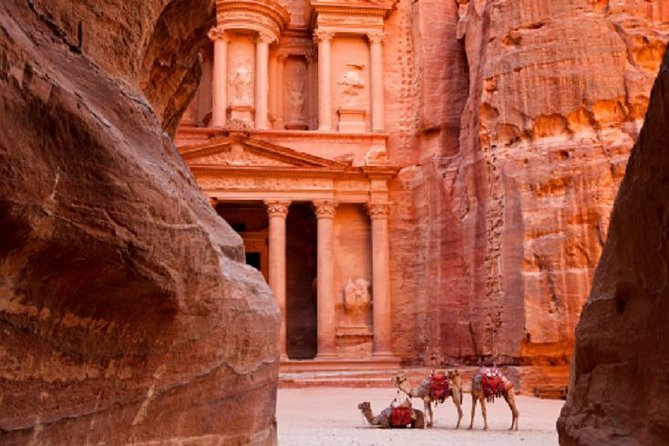
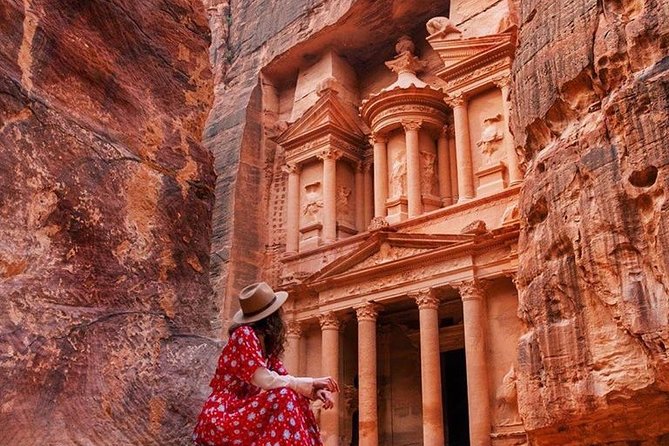
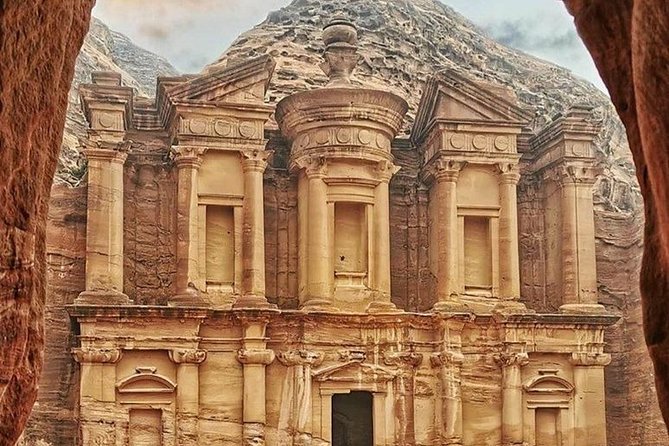
Petra is the big Jordan payoff here, and the tour makes it structured. You’ll visit on Day 12 with a walk or a short horse ride from Petra’s main entrance to the entrance of the old city, the Siq. As you move through, the itinerary describes the Treasury (Al Khazneh) appearing at the end.
A key detail: the inclusions specify a local English guide in Petra for roughly 3 hours, focused on the main trail. That’s usually the best match for first-timers. It gets you the iconic route without trying to cover every branch and niche trail (which can turn into a marathon).
After Petra, the plan drives you back through the Araba Valley to the Dead Sea region. So this day has two different styles of payoff: walking through carved rock, then switching to landscape-and-drive energy.
Jerash and Amman Panoramas: Roman-Style City Marvel in the North
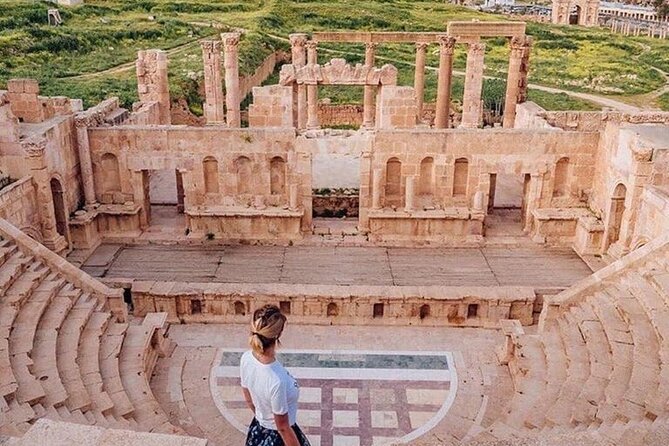
Day 13 adds one of Jordan’s strongest historical backups to Petra: Jerash. The itinerary describes it as a Greco-Roman city sometimes called the Pompeii of the East, and notes it’s the second best-preserved Roman city in the world.
You’ll visit major areas including the Hippodrome and key streets and temples like the Oval colonnade Piazza, Colonnade Streets, and the Zeus Temple. Then there’s a panoramic tour of Amman before returning to the hotel.
This is a good place to mention why guided city stops are worth it. When you move in a guided loop, you’re less likely to spend an hour walking between points guessing what you’re looking at. Even if you skip side areas, you usually come away with clearer context.
Value Check: What $2,345 Buys You (and What You Should Double-Check)
At $2,345 per person for about 14 days, the value depends on what you would otherwise pay for yourself. Here, the cost spreads across a lot of moving parts:
- Accommodation with breakfast included in Cairo, Aswan, Luxor, and Dahab (and full board on the cruise)
- A 3-night 5-star Nile cruise with meals
- Many entry fees covered for listed sights
- A lot of transfers by A/C vehicle
- Extra support tools like the free smart phone with internet access
The “mostly admission fees included” piece is a big deal in Egypt, where individual site tickets can add up fast. Add in the cruise meals, and this stops feeling like a ticket price—it feels like you’re paying for smoother logistics and less decision fatigue.
Now the caution list. Some items are not included: entry visas, international flights, domestic flights (listed as not included), travel insurance, tipping, and personal expenses. Also, the itinerary notes add-on-style experiences with limited tickets (pyramid-inside access) and an optional Abu Simbel day. Those are usually where you’ll spend extra time or money, depending on what’s available.
Finally, check cancellation/refund terms closely. There are negative posts tied to cancellation outcomes, even though the operator’s stated policy says you can cancel up to 24 hours in advance for a full refund. When money is involved, I always recommend saving receipts and email confirmations, and cancelling early if your plans are uncertain.
Tour Service Quality: The Human Factor That Shows Up in Feedback
In the feedback you shared, a consistent theme is that the handoff between airports, hotels, and guide time feels handled. Names that come up include Hassan and Tamir for strong support, plus Sherif and Ahmed for hospitality and guidance. Other names seen in feedback include Wael, Nehead, Ihmeel, and planners like Sarah Nicola, with an itinerary support role credited to Nour in at least one note.
You shouldn’t book a tour purely for names. But it does help you sense how the operator staffs real people on real schedules. This tour also includes a 24/7 emergency number and a professional English-speaking team on sightseeing days and transfers—built-in reassurance when plans change.
Who This Tour Fits Best
This package is a strong match if you want:
- Iconic highlights without building a complex plan yourself
- A mix of ancient sites + a real beach reset in Dahab
- Someone to handle the timing and ticket entry for most stops
- Fewer “figure it out” moments, especially on airport days
It’s less ideal if you hate early mornings or if you want lots of free time in each city. This itinerary moves. It’s designed to cover Egypt and Jordan in one sweep, not to let you wander for days without structure.
Should You Book This Egypt and Jordan Tour?
I’d book it if you want a high-coverage route with fewer logistics headaches, and if you value a Nile cruise that handles meals and pacing. The Petra + Jerash combo is efficient, and Dahab gives you a break that many Egypt-first itineraries forget.
Before you pay, do two quick checks: confirm whether the flights mentioned in the plan are truly included under your quote, and ask about limited-ticket options like pyramid-inside access and Abu Simbel so you know what’s realistic for your dates. If those boxes make sense, this is a solid way to see a lot—without doing the planning grind.
FAQ
Is airport pickup included?
Yes. The tour includes meet-and-assistance at Cairo International Airport, plus transfers including pickup from the airport and drop-off at Cairo International Airport.
Are admission fees included?
Most admission fees are included. The inclusions specify that current entrance fees for the listed sightseeing are included.
What meals are included?
Breakfast is included daily at the selected hotels in Cairo, Aswan, and Luxor. On the Nile cruise you get full board. Dahab is listed with breakfast, and there is also a lunch included during the Blue Hole tour.
Does the tour include a Nile cruise?
Yes. It includes 3 nights on a 5-star Nile cruise from Aswan to Luxor, listed on a full-board basis.
Do I need my visa and flights separately?
Yes. Entry visa to Egypt and international flight tickets are listed as not included, and travel insurance is also listed as not included.
Is Petra guided?
Yes. The inclusions state you’ll have a local English guide in Petra for roughly 3 hours on the main trail, plus the itinerary includes a walkthrough from the Siq to Al Khazneh.