REVIEW · HURGHADA
Day Trip to Luxor from Hurghada
Book on Viator →Operated by Reflections Travel · Bookable on Viator
Luxor hits hard even before you see a temple. This full-day trip runs from Hurghada by private A/C vehicle with an Egyptologist guide, then you’ll cover the Nile’s biggest ancient highlights on both banks.
The two things I like most are the smart “see the meaning, not just the stones” approach and the no-mess inclusions. You get the key West Bank stops (Valley of the Kings and Hatshepsut), then you finish on the East Bank at Karnak with lunch taken care of.
The one thing to consider is the pace and the distance: it’s about 12 hours, and it’s a long drive each way, so you’ll want to treat this as a focused day trip, not a relaxed stroll.
In This Review
- Quick hits before you go
- Why this Luxor day trip works so well
- The long drive from Hurghada to Luxor: what to plan for
- Valley of the Kings: tombs, afterlife beliefs, and the 500-year idea
- Hatshepsut’s temple: a first-woman-pharaoh story set at the cliff base
- Colossi of Memnon: short stop, big myth
- Karnak Temple Complex: 60 acres of Amun-Ra power
- Lunch in between banks: the underrated part of the day
- The value of this price, honestly
- Who should book this Luxor day trip
- Should you book it?
- FAQ
- Where do you get picked up for this Luxor trip?
- Is transportation private and air-conditioned?
- How long is the day trip to Luxor?
- Is there an Egyptologist guide during the tour?
- Which sites are included in the itinerary?
- Are entrance fees included?
- Is lunch included?
- Is bottled water provided?
- Is tipping included in the price?
- Can I cancel for a full refund?
- Do I receive a mobile ticket?
Quick hits before you go
- Private A/C round-trip from Hurghada keeps the day comfortable even during the long ride.
- Valley of the Kings time is built in (around two hours), with admission included.
- Hatshepsut’s temple gets a full hour, including the dramatic setting at the cliff base.
- Colossi of Memnon stop is short (about 20 minutes), so don’t plan extra wandering here.
- Karnak Temple Complex is the main payoff on the East Bank, with time for major sights plus your included lunch.
Why this Luxor day trip works so well
This tour is built for one main goal: fit the most iconic Luxor sites into a single day without turning your plan into a logistics puzzle. You start from Hurghada with pickup, ride in a private air-conditioned vehicle, and return the same way. That means less time waiting around and more time actually looking at what you came for.
I also like that the schedule feels weighted. You don’t just stop at a few photos spots. You get real time at the Valley of the Kings and at Karnak, and you get a focused pass through Hatshepsut, which is often rushed on other quick tours.
When I had Egyptologist Mohamed Awad, the details landed. He made the stories feel connected to what you’re standing in front of, from tomb traditions to the way Karnak’s design reinforces religious power.
A few more Hurghada tours and experiences worth a look



The long drive from Hurghada to Luxor: what to plan for
The day starts with pickup at your Hurghada hotel, then the drive toward Luxor takes you past big stretches of the Sahara Desert. Expect a fairly long ride; this is not a “grab coffee and go” excursion. It’s more of an overnight-in-transport kind of day, just compressed into hours.
Here’s how to make that work for you:
- Bring water (you’ll have bottled water on the tour, but it’s still worth pacing yourself).
- Wear something light but not flimsy, since Egypt sun can hit hard once you’re outside.
- Think of the first stops as your warm-up. West Bank sites shift the whole mood of the day toward tombs, afterlife beliefs, and cliffside monuments.
The return ride matters too. The overview notes a sunset over the desert on the way back, which is a nice way to close the story—temples by day, then the desert light fading on the drive.
Valley of the Kings: tombs, afterlife beliefs, and the 500-year idea
Your first major stop is the Valley of the Kings on the West Bank. This is where you get one of Luxor’s biggest messages: these tombs weren’t just graves. For hundreds of years, kings and nobles competed in scale and craftsmanship, building elaborate tombs as part of their afterlife plans.
You’ll spend about two hours here with admission included. The tour description points out that 63 royal and unroyal tombs were discovered in this area, which helps you understand why the valley feels so packed with meaning even when you’re not walking through every doorway.
What you’ll want to do during your time:
- Slow down at the most important tomb entrances and listen to the guide’s framing of the afterlife beliefs.
- Pay attention to how the valley’s role changes how you interpret each monument later. The rest of your day will feel less random because you’ve started with the “why” behind royal burial culture.
Possible drawback: even with two hours, this is still a packed day. If you’re the type who likes to linger in one place for a long time, you’ll need to accept that Luxor is a “hit the key points” kind of day trip.
Hatshepsut’s temple: a first-woman-pharaoh story set at the cliff base
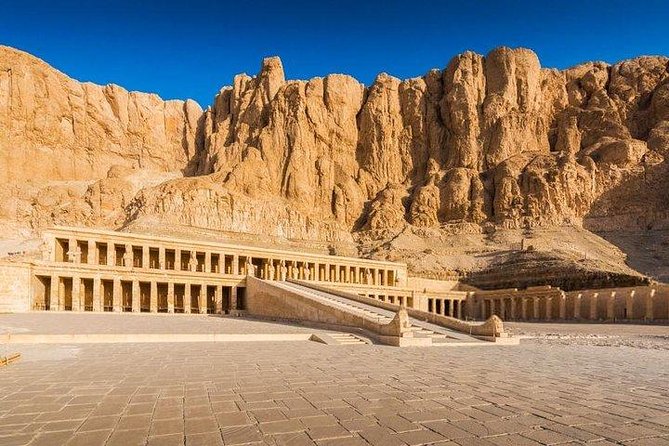
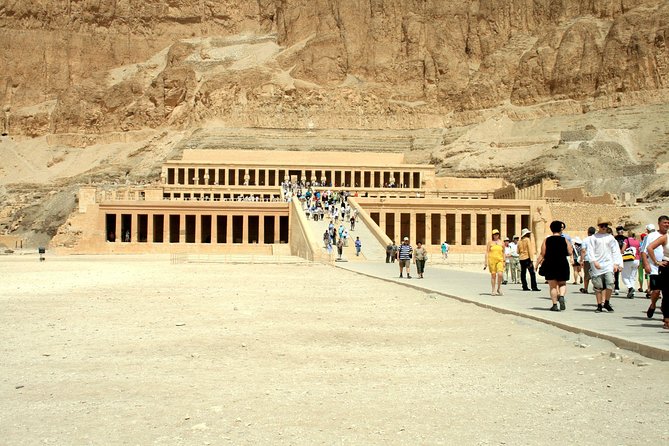
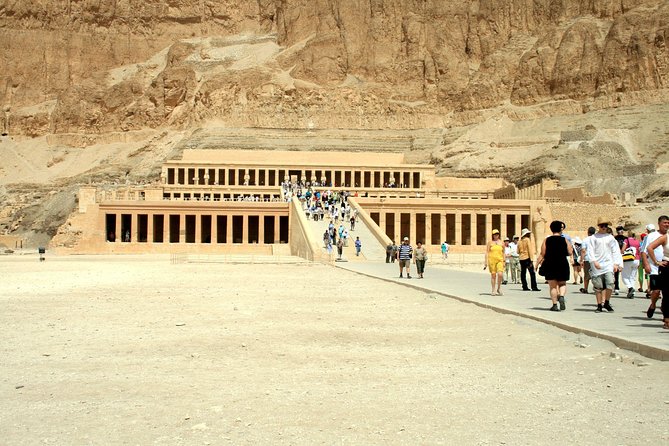
Next comes the Temple of Hatshepsut, where you’ll spend around one hour. This stop is special because it’s not just about a ruler—it’s about how Hatshepsut wanted to be remembered.
The tour highlights that Hatshepsut was the first woman pharaoh and that she sent a diplomatic expedition to the land of Punt (in modern-day Somalia). Standing at the base of towering cliffs, you can feel why her temple is so dramatic: it’s built to look strong, protected, and intentionally grand.
In the shade of the temple complex, you’ll also get the sense of how much architecture can carry politics. Even if you’re not an archaeology nerd, the guide’s stories help you connect the visual choices to real historical ambition.
Tip for your visit: use your hour for both visual attention and context listening. If you rush through just to see “the big parts,” you’ll miss why this temple still feels like a statement.
Colossi of Memnon: short stop, big myth
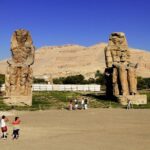
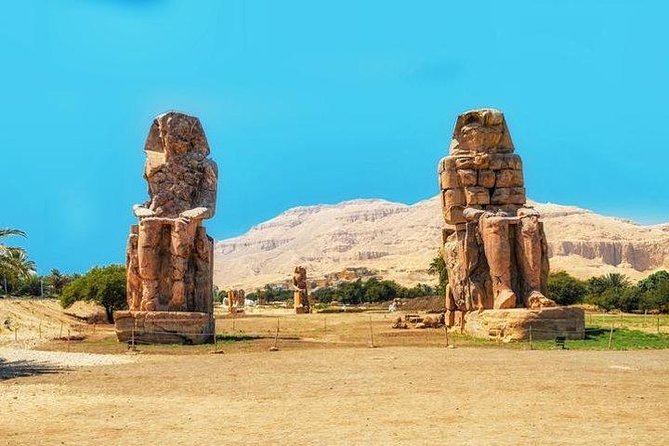
Then you’ll visit the Colossi of Memnon. This part is quick—about 20 minutes with admission included—and that’s exactly how it should be planned. These statues are impressive, but the tour doesn’t pretend they’re going to be an all-afternoon stop. It’s a way to keep momentum and move you toward Karnak.
There’s also a famous story attached to them: people in ancient times claimed to hear a sad voice coming from inside the statues after a legendary war. The explanation given here is more practical than magical—tiny holes inside the statues and friction between air and stone once contributed to a sound effect. After restoration work, the sound disappeared.
So you get two benefits in a short time:
- The visual impact of the scale.
- The way myths and physical details get mixed into a single historical legend.
Practical note: keep your time here focused. If you wander off thinking you’ll find “extra stuff,” you’ll lose time you’ll wish you’d had later at Karnak.
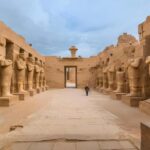





Karnak Temple Complex: 60 acres of Amun-Ra power
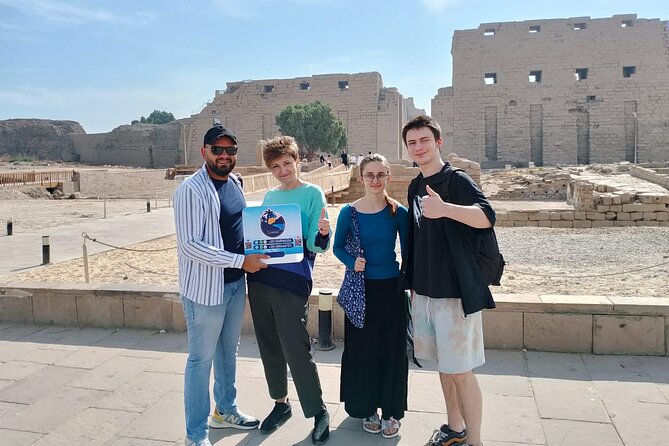
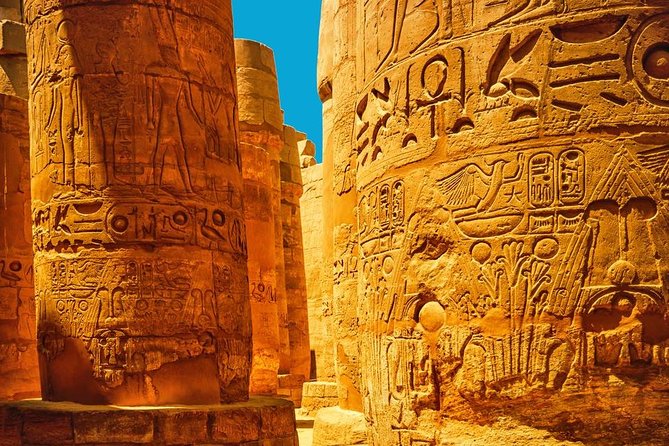
The East Bank finale is Karnak Temple Complex, and this is where your day’s scale really ramps up. You’ll have about two hours here, plus it’s the tour’s biggest time investment after the Valley of the Kings.
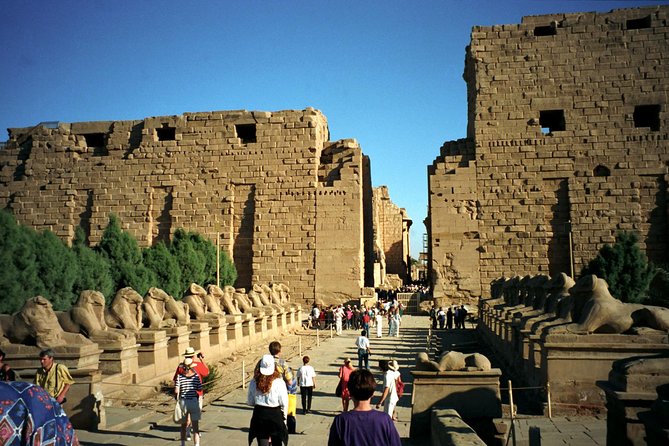
Karnak is described as the largest religious structure the world has ever known, spanning about 60 acres. That’s not just a brag number. It changes your experience: you’re not looking at one building; you’re moving through a whole system of sacred space.
The tour also tells you what to look for as you walk:
- Karnak served Amon-Ra, Mut, and their son Khonsu.
- You’ll see intricate friezes that narrate dramatic stories of ancient life.
- There’s a sacred ceremonial lake.
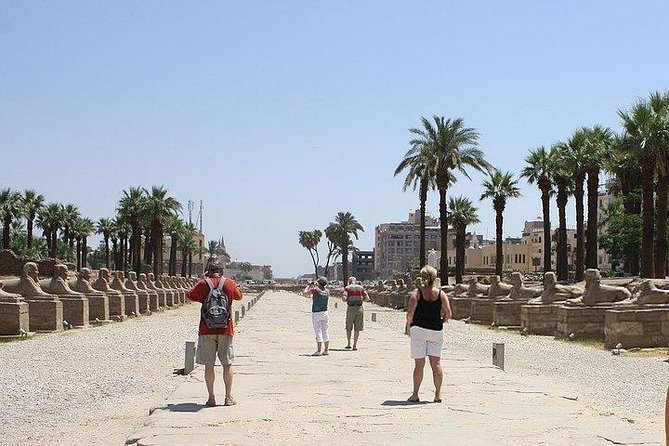
- You can walk between aisles of sphinxes that guard the temple entrance.
This is the stop where I like to slow down and let your brain “stack” the details. Karnak’s design is meant to overwhelm, not to entertain like a theme park. It’s religious architecture as authority.
From the earlier West Bank theme (tombs and afterlife beliefs), Karnak brings you into the living world of Egyptian belief—gods, ritual spaces, and the ongoing work of maintaining cosmic order through temples.
Lunch in between banks: the underrated part of the day
Between finishing the West Bank sites and reaching the East Bank, you’ll head back for lunch at a local restaurant. It’s included, and that matters more than people expect on a day like this.
Why? Because Luxor day trips can otherwise turn into a choose-your-own-adventure meal with long waits and uncertain costs. Having lunch handled means you can focus on timing and hydration, not price hunting or searching for a reliable place with food that won’t delay you.
It’s a simple break, but it helps reset you for the Karnak finish, when the sun and walking can feel more intense.
The value of this price, honestly
This tour costs $173.62 per person and is often booked about 120 days in advance, which usually signals two things: it’s in demand and it’s priced to cover real logistics.
Here’s the value math I see:
- You get private A/C transfers between Hurghada and Luxor.
- You have an Egyptologist guide throughout the scheduled stops.
- Entrance fees for the Valley of the Kings, Hatshepsut Temple, Colossi of Memnon, and Karnak are included.
- Lunch and bottled water are included.
On a day trip like this, the biggest hidden expenses are often entrances and transport. When those are bundled, you avoid the common frustration of piecing together tickets on the fly after a long drive. You know what you’re paying for, and your time stays focused on sites instead of admin.
One more fairness note: it’s still a long day. You’re paying for convenience and guided structure more than for comfort alone.
Who should book this Luxor day trip
I think this tour fits best if you want:
- A guided day that hits the headline sites on both banks.
- Private, air-conditioned transport (so you’re not stuck in a slow-moving group van).
- Included admissions and lunch, so you can walk out with fewer surprises.
It’s also a great option if you’re short on time. If you’re basing yourself in Hurghada and you want Luxor without an overnight, this gives you a strong single-day framework: West Bank tomb and temple culture, then East Bank temple power, finished with desert sunset on the ride back.
Should you book it?
Yes, if you want the classic Luxor highlights with a guide-led story and minimal ticket hassle. The strongest reason to book is the blend of time and focus: real time at the Valley of the Kings and Karnak, plus the crucial Hatshepsut stop that ties history to place.
I’d hold off or consider another style of tour if you hate long travel days, because this is still about 12 hours with a major drive both ways—and the Colossi stop is intentionally brief.
If you’re ready for a structured day trip that balances tombs, temples, and the big Karnak payoff, this is a solid bet.
FAQ
Where do you get picked up for this Luxor trip?
The tour includes pickup from your hotel in Hurghada, and it ends back at the meeting point in Hurghada.
Is transportation private and air-conditioned?
Yes. All transfers are by a private A/C vehicle.
How long is the day trip to Luxor?
It runs for about 12 hours (approx.).
Is there an Egyptologist guide during the tour?
Yes. An Egyptologist tour guide is included.
Which sites are included in the itinerary?
The tour includes the Valley of the Kings, the Temple of Hatshepsut, the Colossi of Memnon, and Karnak Temple Complex.
Are entrance fees included?
Yes. Admission tickets for the listed sites are included.
Is lunch included?
Yes. Lunch is included, served at a local restaurant.
Is bottled water provided?
Yes. Bottled water is included.
Is tipping included in the price?
No. Tipping is not included.
Can I cancel for a full refund?
Yes. You can cancel up to 24 hours in advance for a full refund.
Do I receive a mobile ticket?
Yes. Mobile ticket is listed as a feature.
You Might Also Enjoy
More 1-Day Tours in Hurghada
- 1-day trip to Cairo with flight from Hurghada / Makadi Bay / Soma Bay / El Gouna
★ 5.0 · 1,193 reviews