REVIEW · SHARM EL SHEIKH
Day trip to Luxor by plane from Sharm el Sheikh
Book on Viator →Operated by Book Tour Egypt · Bookable on Viator
One day, two ancient worlds. This Luxor trip is built around an early-morning flight, so you can hit the West Bank tombs and the East Bank temple complex in a single push, with a German-speaking guide and admissions handled. It’s one of those days where the calendar moves fast, but the sights still feel big and real.
I especially like two things. First, you travel with a German-speaking guide, and the route is explained in a way that makes the monuments easier to place. Second, you get lunch plus all admissions for the sites you visit, which saves time and hassle on the ground.
The main tradeoff is simple: it’s a long day, starting around 4:30am, with airport time both ways. If you’re the type who hates waiting around, build in patience for domestic flight schedules.
In This Review
- Key highlights worth getting excited about
- The early-morning flight that makes Luxor doable
- West Bank start: Valley of the Kings with real tomb time
- Deir el Bahary: Queen Hatshepsut’s mortuary temple
- Colossi of Memnon: quick stop, big impression
- Lunch and the shift to Karnak on the East Bank
- Karnak Temple: why the holy lake area matters
- Group size, pace, and what 20 hours really feels like
- Price and value: what $431.50 buys you
- Weather dependence and flight-linked realities
- Who this Luxor day trip suits best
- Guides can change the experience
- Should you book this Luxor day trip from Sharm?
- FAQ
- What time is pickup in Sharm el Sheikh?
- How long is the flight from Sharm to Luxor?
- What stops are included on the Luxor side of the trip?
- Are entrance fees included?
- Is lunch included?
- Is a felucca ride on the Nile included?
- Can I cancel for a full refund?
Key highlights worth getting excited about
- German-speaking guidance that connects what you’re seeing to the story of Thebes
- Valley of the Kings tomb time (three tomb visits) instead of a drive-by photo stop
- Deir el Bahary and Queen Hatshepsut on the West Bank, a major architectural moment
- Karnak Temple complex with the holy lake on the East Bank, after lunch
- Max group size of 15, which helps keep the day from feeling chaotic
- Short domestic flights that make a day trip to Luxor realistically possible
The early-morning flight that makes Luxor doable
Flying is the whole point here. You’re picked up in Sharm el Sheikh around 4:30am (start time listed as 4:00am), then transferred in an air-conditioned vehicle to the airport. The domestic flight to Luxor is about one hour, and you land around 7:00am, with a German-speaking guide waiting for you.
This setup matters because Luxor is not a city where you can casually “fit in” the big classics. The West Bank sites take time, Karnak takes time, and both are best when you’re not rushing between them like you’re trying to win a race. The plane compresses the distance, so you can spend your energy on the monuments instead of on the road.
One more practical note: with a day trip that lasts roughly 20 hours, you’ll feel the schedule. You’ll want a real breakfast before pickup if you can. And if you’re picky about sleep, choose a hotel that lets you wake quickly and get out the door without drama.
A few more Sharm el Sheikh tours and experiences worth a look



West Bank start: Valley of the Kings with real tomb time
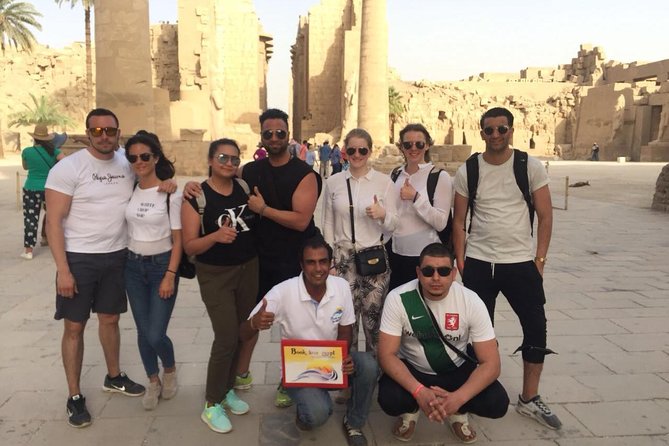
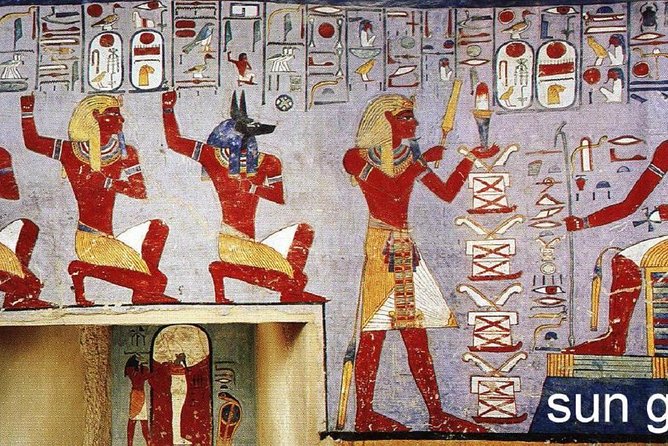
After landing, you drive across to Thebes West, and the day begins where Luxor history is at its most concentrated. Your first big stop is the Valley of the Kings, with visits to three interesting tombs.
Why this works: a tomb visit is not just about seeing a doorway. It’s about getting inside a space built to outlast time, and then realizing how much effort went into decoration and design. Three tombs is a sweet spot for a day trip—you get variety without turning it into one long fatigue-fest of similar corridors.
What to expect on a guided tomb day:
- You’ll move at a pace guided by what makes sense historically and visually.
- You’ll have context for what you’re looking at, not just dates and names.
- You should dress for the fact that you’ll be outside between tomb entrances.
This is also where the guide quality can make a big difference. In real-world experiences with this tour style, I’ve seen guides like Mahmoud bring sharp historical connections to each stop. Other guide combinations like Laila (and a Leila/Ahmed pairing) show how the explanation can feel personal—especially if you ask questions as you go.
Deir el Bahary: Queen Hatshepsut’s mortuary temple
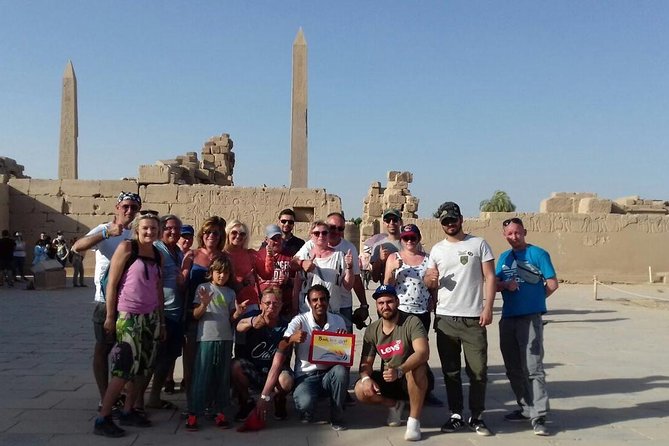
Next comes Deir el Bahary (spelled Deir el Bahary), the mortuary temple of Queen Hatshepsut. This site is a standout because it feels like the temple is part theater, part monument. Even when you’re just walking in, you get the sense that the Egyptians were using space and design to shape how power and memory are understood.
What I like about including Hatshepsut here is that it balances the tomb-heavy morning. By the time you reach Deir el Bahary, you’re shifting from underground royal afterlife settings to a carefully composed temple complex. It’s a different kind of awe: not hidden corridors, but a full architectural statement.
If you want an easy way to enjoy it more, slow down for a few minutes wherever your guide pauses to explain. When you hear why something was built where it was built, the place starts making sense. You’ll also get better at spotting the details you might otherwise miss.
Colossi of Memnon: quick stop, big impression
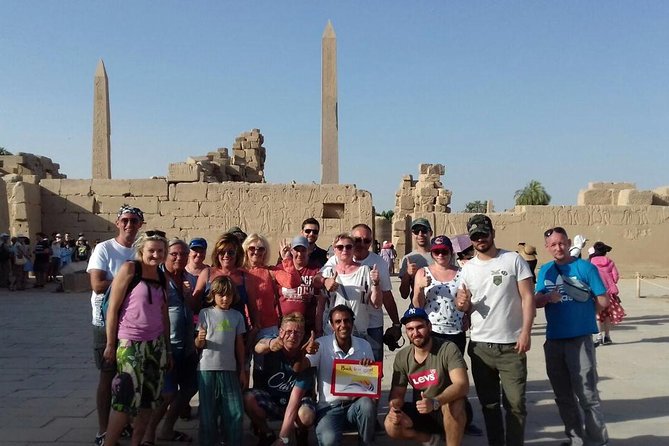
On the return from the West Bank, there’s a short stop at the Colossi of Memnon. These are the two colossal statues tied to Amenhotep III. The day doesn’t linger here, but that’s not the problem—this kind of stop is a classic pacing tool. You get the immediate visual impact, then you’re back on track for the rest of the day.
I think this works best if you treat it like a breather: stand there, take in the scale, and then let your eyes reset before you go into the next major site. Even with limited time, the statues are hard to forget.
Lunch and the shift to Karnak on the East Bank
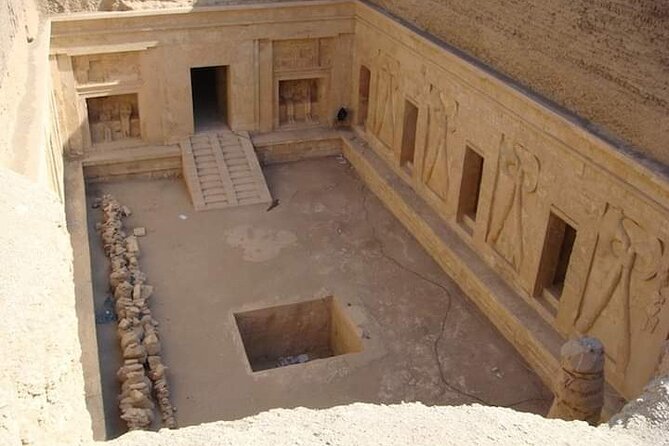
After your West Bank visits, you’ll have lunch (included). The good news: having lunch included saves time, and you don’t have to guess where to eat between major sites.
The potential downside is that lunch is part of a long day, and the setting can be basic depending on timing. For some travelers, this is the weak point of the day. So if you’re hoping for a fancy meal, set expectations accordingly. I’d treat lunch as fuel, not the highlight.
Then you’ll head back to the East Bank for Karnak Temple complex, including the area with the holy lake. Karnak is where Luxor feels like it never ends—columns, courtyards, and repeating layers of building that show how generations added to the same sacred center.






Karnak Temple: why the holy lake area matters
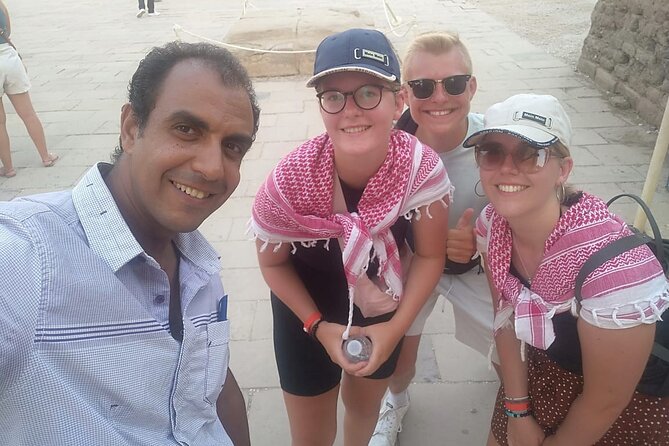
Karnak isn’t just a single building. It’s a complex, and the best way to experience it is to keep moving while still stopping when your guide points out key spots. The “holy lake” element helps you understand that this was more than sightseeing. It was designed for ritual, symbolism, and sacred order.
I love Karnak when I have someone with a good sense of flow. The guide’s job here is to help you avoid a common feeling: getting lost in details without knowing what matters most. When that happens well, you start to feel the logic of the place—why certain sections feel monumental, and how the layout guides attention.
Also, since your time is limited on a day trip, Karnak is one of the best uses of the afternoon. You’ll finish your day feeling like you saw the heart of Thebes rather than just a handful of famous stops.
Group size, pace, and what 20 hours really feels like
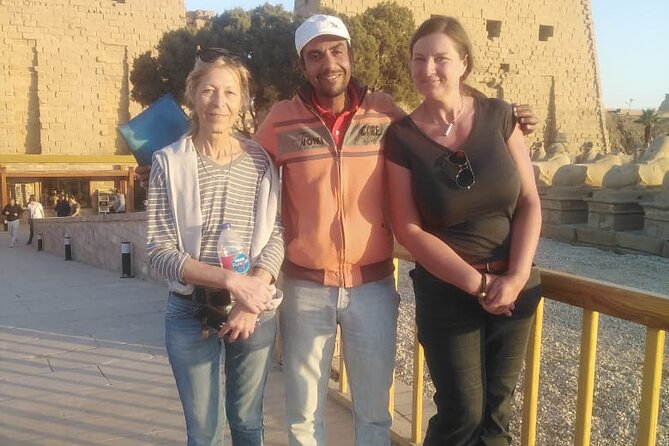
This trip runs about 20 hours total. You’ll be on the move from pickup to drop-off, and the schedule is designed to fit two banks plus flights in one go.
The group size is capped at 15 travelers, which is a real plus. Smaller groups are easier for a guide to manage, and they generally reduce the stress of crowd bottlenecks. You’ll also have a better chance to ask questions—especially in tombs and during transitions.
Just be honest with yourself: this is an early start and a late finish. If your idea of a perfect day is slow coffee and long walks, this is not it. But if your goal is to see Luxor’s heavy hitters without committing to an overnight, it’s a smart way to do it.
Price and value: what $431.50 buys you
The listed price is $431.50 per person, and the tour is commonly booked about 47 days in advance. That number can sound steep until you break down what’s included.
In this case, what you’re paying for is not just the sightseeing. You’re paying for:
- Round-trip domestic flights between Sharm el Sheikh and Luxor (timed to the day plan)
- Airport transfers in an air-conditioned vehicle
- A German-speaking guide
- Lunch
- All admissions to the attractions listed in the day’s route
So the value is strongest for you if you want everything handled and you don’t want to spend your own time buying tickets, planning routes, and trying to coordinate transport across two sides of the Nile.
If you’re comfortable DIY planning, you might spend less on logistics. But then you’re taking on the burden: booking flights, timing your day, and lining up a guide you trust. Here, the structure does that work for you.
Weather dependence and flight-linked realities
The tour requires good weather, and if it’s canceled because of poor weather, you’ll be offered a different date or a full refund. That’s the straightforward part.
The trickier part is that this experience depends on domestic flight timing and availability. In practice, that means you should keep your expectations realistic: if something goes wrong with the flight schedule, your day can feel longer or more frustrating than the ideal plan. I’ve also seen cases where people had trouble with flight availability and refunds—so if your travel plans are tight, consider choosing dates when you have flexibility.
A simple tip: don’t pair this with another must-do on the same travel day that requires you to be fresh and punctual.
Who this Luxor day trip suits best
This is a great fit if you:
- Want to see Luxor’s top sites without sleeping there
- Like guided explanations that connect what you see to what you’re looking at
- Can handle a very early start and a long travel day
- Prefer a small group (max 15)
It’s a weaker fit if you:
- Hate waiting around airports
- Want a relaxed pace with minimal switching between locations
- Are very sensitive to meal quality when the day is rushed (lunch is included, but the setting can be basic)
Guides can change the experience
One reason this kind of tour earns high scores is the human element. I’ve seen multiple guide names associated with excellent days—Mahmoud, Laila/Leila, and Mohammed Mustafa. Others include Ahmed as a driver in one standout experience, which also matters because the day starts early and you want the first transfer to feel smooth.
You can’t choose your guide here based on the information provided, but you can do your part. Be ready with questions. If you’re curious about why Hatshepsut’s temple looks the way it does, or what makes Karnak’s layout significant, ask. A good guide will steer you to the right spots instead of just reciting facts.
Should you book this Luxor day trip from Sharm?
If your goal is to see Valley of the Kings, Hatshepsut at Deir el Bahary, and Karnak Temple in one day, this trip is built for exactly that. The mix of the West Bank and East Bank hits the big landmarks in a logical flow, and the included admissions and lunch make it feel less like a hassle and more like a guided plan you can trust.
I’d book it if you’re:
- okay with a 4:30am pickup window
- comfortable with domestic flight timing
- excited by structured temple-and-tomb touring
I wouldn’t book it if you’re:
- planning a trip with no wiggle room
- expecting a leisurely day
- hoping the lunch will be a destination meal
Bottom line: for many people, the value comes from the fact that you’re not trying to cram Luxor into a DIY route. You’re buying a tight schedule that lets Luxor feel close enough for a day.
FAQ
What time is pickup in Sharm el Sheikh?
Pickup is scheduled around 4:30am (the start time is listed as 4:00am), followed by a transfer to Sharm el Sheikh airport.
How long is the flight from Sharm to Luxor?
The domestic flight is about one hour. The plan has you leaving around 6:00am and arriving in Luxor around 7:00am.
What stops are included on the Luxor side of the trip?
You’ll visit the Valley of the Kings (three tombs), Deir el Bahary (the mortuary temple of Queen Hatshepsut), the Colossi of Memnon (short stop), and Karnak Temple (including the holy lake).
Are entrance fees included?
Yes. All admissions to the attractions mentioned in the day’s route are included.
Is lunch included?
Yes. Lunch is included in the tour.
Is a felucca ride on the Nile included?
No. A felucca ride is not included.
Can I cancel for a full refund?
You can cancel up to 24 hours in advance for a full refund. If you cancel less than 24 hours before the experience starts, the amount paid is not refunded. The tour also requires good weather, and if canceled due to poor weather, you’ll be offered another date or a full refund.