REVIEW · CAIRO
Day Tour to Giza Pyramids and The Grand Egyptian Museum
Book on Viator →Operated by Egypt Via Travel · Bookable on Viator
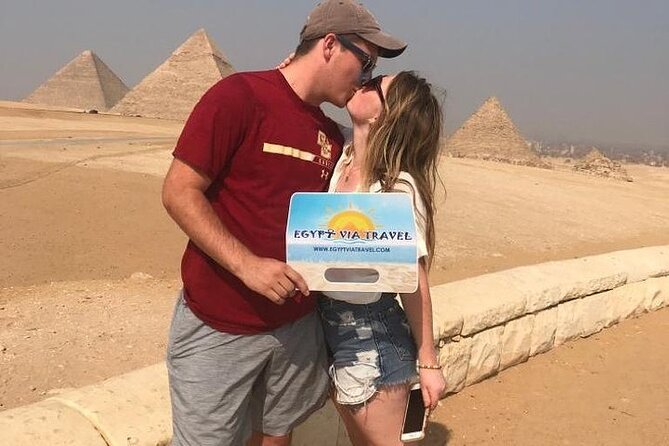
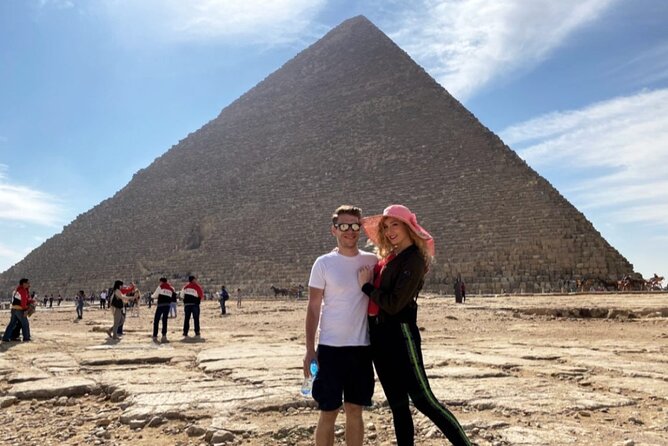
Two pyramids, one sphinx, and a camel photo. This is the kind of day that connects the view on the Giza Plateau to the artifacts behind glass at the Grand Egyptian Museum. I love the private guide (you get real explanations, not just a walk-and-look), and I also love the camel ride for those classic angles around the pyramids. One thing to factor in: entrance tickets aren’t included, so you’ll want to budget extra or confirm what you’ll pay on the day.
You’ll be picked up from your Cairo or Giza hotel and whisked around in an air-conditioned vehicle, which matters in a city where the heat can sneak up fast. The day runs about 7 to 8 hours, with lunch built in, so you’re not stuck hunting for food between the Sphinx and the museum. The biggest trade-off is time: you’ll have plenty to see, but you won’t linger forever at each stop.
In This Review
- Key things to know before you go
- The value in a $20 private day: what you get and what to check
- Morning pickup from Cairo or Giza: how to start without wasting the day
- Giza Plateau: pyramids, Valley Temple, and the Sphinx story in one route
- What I like about this pacing
- Watch-outs on this portion
- Camel ride around the pyramids: fun photos with a reality check
- Great Sphinx to the Grand Egyptian Museum: switching from street-level myths to lab-level reality
- What makes the museum portion special here
- Photo note
- Lunch Koshary in between pyramids and museum: the smart reset
- Getting the most from a private 7–8 hour day
- Price and logistics: where the value really comes from
- Who this tour fits best
- Should you book this Giza and Grand Egyptian Museum tour?
- FAQ
- What time does the tour start?
- How long is the tour?
- Is pickup and drop-off included?
- Is lunch included?
- Are entrance tickets included?
- Does the tour include a camel ride?
- Is this a private tour?
- Do I get a mobile ticket?
- Is there free cancellation?
Key things to know before you go
- Private guide + private tour setup so your time feels organized, not chaotic
- Camel ride included right around the pyramids for memorable photos
- Valley Temple to Great Sphinx route with story-focused stops, not just checkpoints
- Grand Egyptian Museum conservation labs access as part of the visit
- Koshary lunch included at a local restaurant
- Entrance tickets not included, so plan for that extra cost up front
The value in a $20 private day: what you get and what to check
At $20 per person, this tour is priced to feel like a smart deal—especially because you’re paying for a full-day format: pickup and drop-off, an air-conditioned vehicle, a guide, lunch, bottled water, and time at major sites. That’s the core value: you buy time and convenience, then spend it on the two biggest draws in the Cairo-Giza orbit.
Still, read the fine print on costs. Entrance tickets are listed as not included (including museum admission). In the overview, the tour also mentions entrance fees, so there’s a mismatch in wording. Before you go, I’d confirm what your day covers and what you’ll pay separately at the gates. That one step keeps the budget simple.
A quick practical note: the tour uses a mobile ticket. That usually means less fuss at check-in, as long as your phone battery behaves and you keep the ticket accessible.
You can also read our reviews of more museum experiences in Cairo
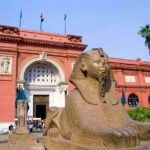
Morning pickup from Cairo or Giza: how to start without wasting the day
This tour starts early—your pickup is set for around 8:00 AM, and the day plan begins shortly after with your driver and guide collecting you from your hotel in Cairo or Giza. An early start isn’t just about being disciplined. It helps you arrive with better light and fewer crowds, and it gives you more breathing room later when you’re doing the museum portion.
Because it’s private, you won’t be waiting on other groups to move through the same route. You can also adjust the flow slightly if you’re slow on photos, fast on questions, or just need a bathroom break. The vehicle is air-conditioned, and bottled water is included—both matter more than you’d think when you’re mixing outdoor time (pyramids and Sphinx) with indoor museum time.
Giza Plateau: pyramids, Valley Temple, and the Sphinx story in one route
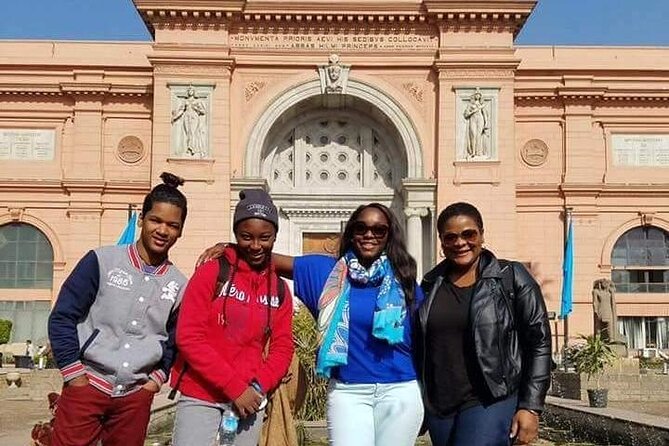
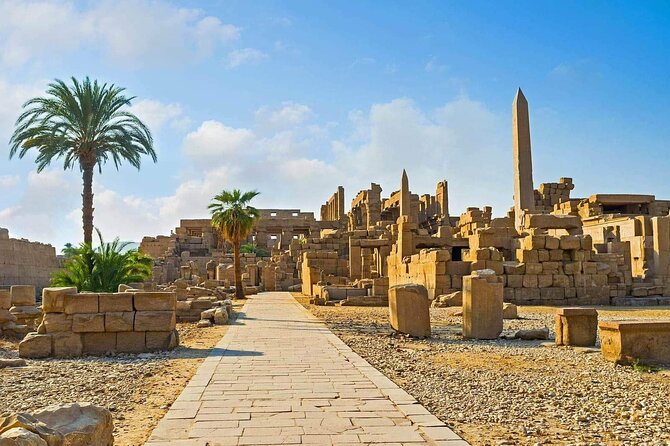
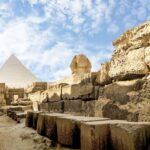
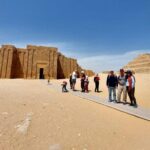
The day’s first real hit is the Giza Plateau. You’ll visit the big names: the pyramids of Cheops, Chephren, and Mykerinos, then move on to the Valley Temple of King Chephren. This sequence is useful because it connects structures to purpose. Instead of seeing the Valley Temple as a separate stop, you see it as part of the same ancient workflow tied to the king’s burial setting.
Your guide’s job here is to turn stone into meaning. At the Valley Temple, the tour frames what you’re seeing through the lens of mummification and burial practices tied to the pharaoh figure associated with Chephren. Even if you only catch part of the explanation, the big idea sticks: these weren’t random monuments. They were built as a system—temple, processional route, and pyramid complex working together.
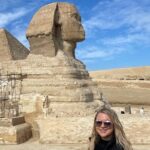
Then you go close to the Great Sphinx—lion body and the head of a pharaoh figure. The Sphinx is presented as a guardian beside the funerary complex. That framing helps you look past the obvious photo opportunity and notice things like the Sphinx’s position in the landscape and how it relates to the broader pyramid setting.
What I like about this pacing
The route flows in a way that makes sense: pyramids first, then the Valley Temple, then the Sphinx. It’s a logical arc that helps your brain build a map.
Watch-outs on this portion
This is outdoors. Plan for sun, dust, and uneven ground. If you’re sensitive to heat, take water seriously—even though bottled water is included, you’ll still feel better if you pace yourself.

Camel ride around the pyramids: fun photos with a reality check
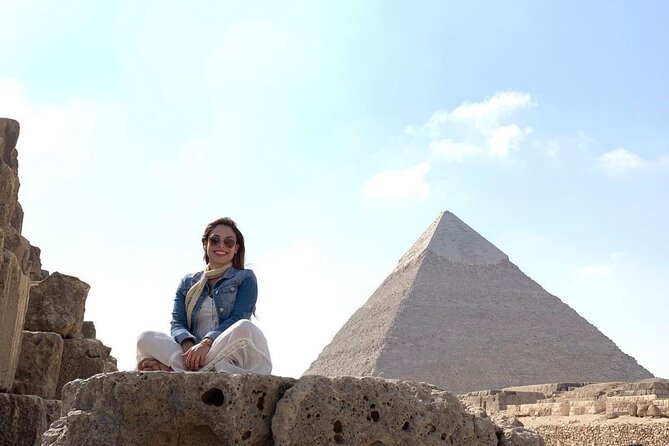
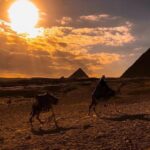
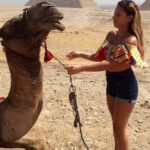
One of the tour highlights is a camel ride around the pyramids for classic photos. This is exactly the kind of activity that turns a sightseeing day into a memory, and it’s a big reason people get excited about this particular tour.
A camel ride can also be a physical experience. You’ll want comfortable clothing and closed-toe shoes with decent grip. If you have balance issues or back pain, consider whether this fits you. The tour makes the camel ride part of the plan, so it’s not something you’ll miss—just something you should approach thoughtfully.
The best value here is the photo opportunity. From the camel, you can get angles you can’t easily create on foot. The ride also tends to slow you down in a good way: instead of rushing past the pyramids, you’re positioned to really look at their scale.
Great Sphinx to the Grand Egyptian Museum: switching from street-level myths to lab-level reality
After the Sphinx, you head to the Grand Egyptian Museum. The transition is part of why this tour works. Giza is about monuments and silhouettes. The museum is about objects—how they’ve been handled, restored, and studied.
This stop is scheduled for about 3 hours, which is a helpful amount of time. Too many museum visits are either rushed (you see highlights only) or dragged out (you lose the thread). Three hours gives you a chance to follow the guide’s narrative without feeling trapped in a queue of people.
What makes the museum portion special here
This isn’t just a general gallery walk. The tour includes a private visit that features access to conservation laboratories and the Great Hall. That shift from polished display areas to conservation spaces changes the vibe fast.
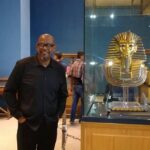
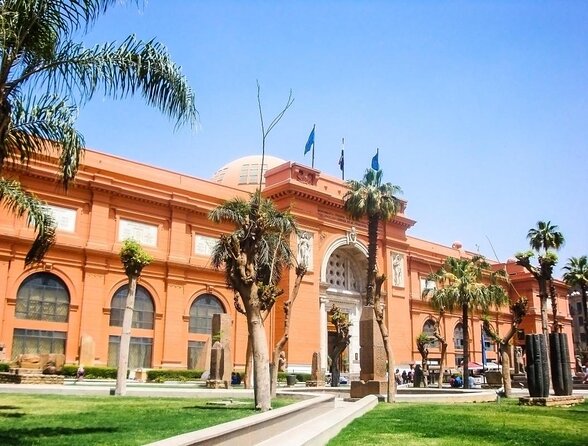
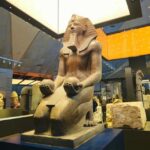
You’ll spend time looking at artifacts moved from the older Egyptian Museum collection, with mentions of King Tut artifacts and other treasures. The guide also talks about restoration work—how staff try to restore and preserve items over time. Even if you’ve seen museum displays before, conservation labs add a layer of respect: you realize how much effort goes into protecting fragile history.
There’s also attention to engineering details—described as the kind of design thinking you’d associate with ancient Egyptian engineers. The point for you: it makes the museum feel less like a warehouse of objects and more like a place where ancient and modern craft meet.
Photo note
Souvenir photo opportunities are part of the museum plan. If you care about photos, go in with a simple strategy: take wide shots first to get the layout, then switch to details. The guide’s explanations can help you choose what matters before you start snapping.
Lunch Koshary in between pyramids and museum: the smart reset
After finishing the Giza portion, the tour stops for lunch at a local restaurant. You’ll get Koshary, which the plan calls out as one of Egypt’s popular meals.
Koshary is a practical choice for a day tour because it’s filling and not fussy. You’ll appreciate that once you’re heading indoors and want energy without a heavy food coma. Lunch is also a built-in buffer. You’re not trying to solve your own meal timing between a sunrise-size itinerary and a museum schedule.
Hydration stays important. Bottled water is included on the tour, which takes away a small stress. Use it as a reminder to sip regularly instead of saving it for later.
Getting the most from a private 7–8 hour day
A full day like this is a balancing act: you’ll see two heavyweight sites (Giza and the Grand Egyptian Museum) and still need to stay present. Here’s the approach that works best for me in days like this:
- Ask questions early. The guide can connect points across stops, so your understanding improves as the day moves on.
- Pace your photos. Giza is a photo magnet. If you spend too long on one angle, the museum time can feel rushed.
- Keep your museum mindset for at least 3 hours. This tour gives you time for conservation labs and the Great Hall. Treat it like the main event, not an add-on.
Because this is private, you don’t have to fight for your place in a crowd the same way as with group tours. Still, expect lines and general busyness—especially at high-demand attractions. The driver and guide help you manage that flow.
Price and logistics: where the value really comes from
Let’s talk straight about the money. The tour is listed at $20 per person, which is unusually low for a private day with hotel pickup, a guide, lunch, and entry-time at major Cairo sites. That’s why it’s so often picked for a first Cairo trip.
But the tour also lists entrance tickets as not included. So your total cost depends on what you personally need to pay at the gates. If you’re traveling with a tight budget, that extra step matters. If you’re okay adding a bit for entry fees, the $20 price can feel like a bargain because so much of the service is included.
The included perks that add real value:
- Air-conditioned vehicle (huge comfort factor)
- Bottled water
- Lunch (Koshary)
- Private guide
- Pick-up and drop-off
If you dislike negotiating transport or dealing with multiple tickets in different places, this tour’s format does the heavy lifting. You’ll be dropped and picked where you need to be, and your guide helps you get your questions answered without guessing.
Who this tour fits best
This is a good match if you want:
- A first-time Cairo day that covers Giza plus the Grand Egyptian Museum
- A guided experience where the guide explains what you’re looking at (especially at the museum and Valley Temple)
- A bit of fun mixed into history, thanks to the camel ride
It’s also ideal if you don’t want to coordinate a half-dozen moving parts yourself: transport, timing, and ticket handling.
If you hate long days or you’re hoping for lots of free time on your own, you might find the schedule tight. This tour is built for seeing the big sites, not wandering slowly.
Should you book this Giza and Grand Egyptian Museum tour?
I think you should book it if you’re after a straightforward, high-impact day with a private guide, hotel pickup, a camel ride, and museum time that includes conservation labs—not just the easiest gallery stops.
I’d be cautious only if entrance ticket costs are a deal-breaker for your budget, since they’re listed as not included. Also, think about whether a camel ride is comfortable for you personally. If either of those is a concern, confirm the total before you lock it in.
If you’re ready for a full day that connects pyramid-scale awe to museum-scale detail, this is one of the cleaner ways to do it. And at the price point, the value is hard to ignore—as long as you plan for entrance fees.
FAQ
What time does the tour start?
The tour start time is listed as 8:00 AM, with pickup from your hotel in Cairo or Giza in the morning.
How long is the tour?
The duration is listed as 7 to 8 hours (approximately).
Is pickup and drop-off included?
Yes. The tour includes pick-up and drop-off from your hotel, using an air-conditioned vehicle.
Is lunch included?
Yes. Lunch is included, and it’s listed as Koshary at a local restaurant.
Are entrance tickets included?
No. Entrance tickets are listed as not included (including for the Grand Egyptian Museum).
Does the tour include a camel ride?
Yes. The highlights specifically include a camel ride around the pyramids.
Is this a private tour?
Yes. It’s described as a private tour/activity, and only your group participates.
Do I get a mobile ticket?
Yes. The tour lists mobile ticket as a feature.
Is there free cancellation?
Yes. You can cancel for a full refund up to 24 hours in advance of the experience start time.