REVIEW · CAIRO
Cairo Private guided Tours visit old mosques & Islamic Cairo
Book on Viator →Operated by EMO TOURS EGYPT · Bookable on Viator
Mosques in Cairo tell you how the city thinks. This private guided route focuses on Islamic Cairo’s most important sites, including al-Azhar and Amr ibn al-As, plus a lunch stop if you want it. If you travel on a Friday, you can also join prayers at al-Azhar.
I especially like how the tour gives you hotel pickup and drop-off and keeps the day moving with an air-conditioned vehicle and bottled water. I also like that entry fees are handled (admission tickets are included for the main stops), so you spend less time figuring out logistics and more time looking at what matters.
One consideration: if the first mosque on the plan is unavailable, the timing can shift and you may lose some of the advertised time there. And on at least one outing, there was extra time spent around company-linked souvenir shopping.
In This Review
- Key takeaways before you go
- Why Islamic Cairo beats a rushed picture-stop
- Price and logistics: what $45 really covers
- How the route works in real time (and what that means for you)
- Al-Azhar Mosque: the first mosque you should understand
- Al Emam Al Hussein: a holy site near the bazaar streets
- Sultan Hassan Mosque-Madrasa: scale you can’t fake
- Citadel of Cairo (Saladin): the skyline view that explains the city
- Amr ibn al-As and Old Cairo: where mosque stories begin
- Muhammad Ali Mosque and Al-Rifa’i: finish with two big impressions
- Friday prayers option: a spiritually different experience
- Guides make or break the day (choose smart questions)
- Lunch and koshary: keep it optional, keep it simple
- Should you book this private Islamic Cairo mosque tour?
- FAQ
- What is the duration of the Cairo Private guided Tours visit old mosques & Islamic Cairo?
- How much does the tour cost?
- Does the tour include hotel pickup and drop-off?
- Is the tour private?
- Are entry fees included?
- Which mosques and monuments are included?
- Is lunch included?
- Can I join prayers on Fridays?
- What’s included besides the guide?
- Is free cancellation available?
Key takeaways before you go
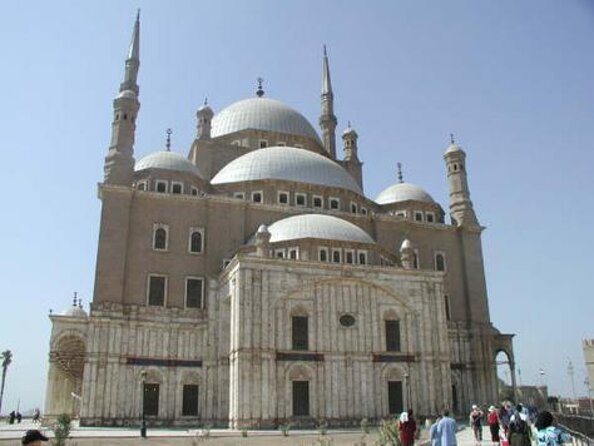
- Five flagship mosques in one focused afternoon: a clean route through Islamic Cairo without wasting half your day in transit
- Optional Friday prayer at al-Azhar: adds a real-world, spiritual moment if your dates line up
- Amr ibn al-As and Old Cairo context: you go back to the earliest mosque story in Egypt and Africa
- Saladin’s Citadel stop for city-scale perspective: a medieval government-era setting above the streets
- Lunch is your choice: koshary-style comfort food is available, but not baked into the ticket
- Guide quality is the secret sauce: people consistently highlight guides like Marwa, Essam, Ismail, Jasmine, and Yousef
Why Islamic Cairo beats a rushed picture-stop
Cairo’s pyramids get the headlines, sure. But Islamic Cairo is the place where the city’s daily rhythms make sense—through call to prayer, courtyard life, carved stone, and the sheer scale of religious architecture.
This tour is built for people who want more than photos. You spend your time inside major mosques and related sites, where you can actually see how different periods in Egypt’s Islamic story look in stone and layout. If your plan has just a couple days in Cairo, this kind of route helps you come away with clear mental landmarks instead of a blur of street names.
You can also read our reviews of more guided tours in Cairo


Price and logistics: what $45 really covers
At $45 per person for about 6 hours, this is aimed at the sweet spot between value and convenience. You’re paying for a private guided day with hotel pickup and drop-off (Cairo or Giza) and an air-conditioned vehicle with bottled water. You’re also getting entry fees/tickets included for the listed mosque and monument stops.
That matters because Islamic Cairo sites can be time-and-energy heavy. When admissions are handled for you, you can keep your pace steady and focus on the visuals and the explanations.
One practical note: lunch is optional. The tour includes time for a local meal stop (often koshary), but it’s not automatically included in the price.
How the route works in real time (and what that means for you)
The schedule runs as a sequence of major stops, typically 30 minutes to 2 hours each depending on the site. The day is designed so you see the biggest names while still leaving space for walking, photos, and a short pause to reset.
Here’s the flow in plain terms:
- You start with al-Azhar as the anchor of Islamic Cairo.
- Then you move to the Hussein complex near the bazaar area.
- After that comes Sultan Hassan, one of the standout architectural monuments in the historic district.
- You head to the Citadel of Cairo for a government-and-fortress perspective.
- You finish in Old Cairo with Amr ibn al-As, then continue to Muhammad Ali Mosque and Al-Rifa’i Mosque.
If you’re the type who likes to linger, the shorter stops can feel fast. If you prefer a guided sampler that builds a solid understanding of where everything fits, this pacing is a good match.
Al-Azhar Mosque: the first mosque you should understand
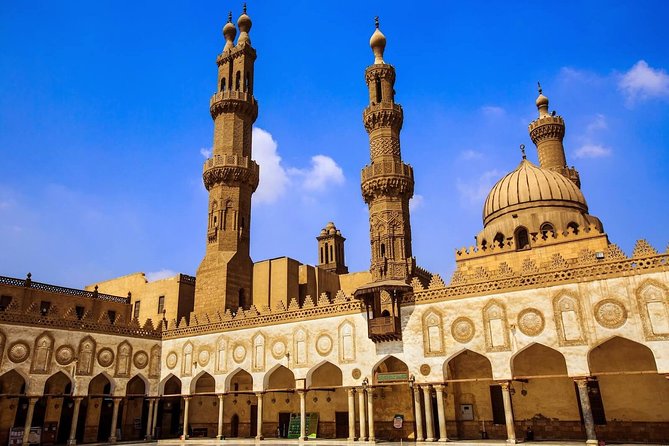
You begin at al-Azhar Mosque, commissioned in 970 and known simply as al-Azhar in Egypt. It’s often described as the first mosque established in Cairo, and it’s a major spiritual and educational center in the city’s Islamic world.
You’ll want to treat this stop as more than a “see it” moment. It’s where your guide’s explanations can help you read the whole neighborhood. When you understand why al-Azhar matters, the later stops feel less random—each site starts to connect to a bigger story of Cairo’s development.
The time block is about 2 hours, which gives you room to look around without feeling rushed. Admission is included, so you can spend your energy observing instead of negotiating tickets.
Al Emam Al Hussein: a holy site near the bazaar streets
Next is the Sayyidna Hussein Mosque, originally built in 1154 and later reconstructed in 1874. It’s named after Prophet Muhammad’s grandson, Hussain ibn Ali, and it’s regarded as one of Egypt’s holiest Islamic sites.
This stop is also practical because it sits close to the Khan El-Khalili area and the Al-Hussain district. That’s where you can get a better sense of daily life around major shrines—shopfronts, browsing, and the feeling that the mosque complex isn’t isolated from the city.
The planned time here is shorter (around 30 minutes). But the payoff is that you’re pairing a major religious site with the surrounding street atmosphere, including chances to spot traditional stalls and handicrafts.
You can also read our reviews of more private tours in Cairo




Sultan Hassan Mosque-Madrasa: scale you can’t fake
Then you hit Mosque and Madrasa of Sultan Hassan, built between 1356 and 1363 during the Bahri Mamluk period. The monument is famous for its massive size and innovative architectural components, and it remains one of Cairo’s most impressive historic landmarks.
You’ll likely feel this as soon as you arrive. Even with limited time (about 30 minutes on the schedule), the building’s scale and presence do the work. When your guide points out structural details and the logic behind the layout, the complex starts to make sense fast.
This is also a key link to your next two stops, because the broader plan later echoes earlier Mamluk-era prominence in the way other rulers used religious architecture.
Citadel of Cairo (Saladin): the skyline view that explains the city
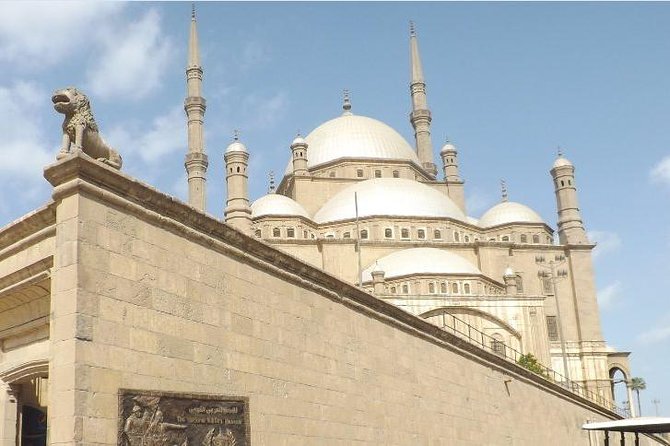
The itinerary includes Cairo Citadel, also called the Citadel of Saladin. This medieval Islamic-era fortification was built by Salah ad-Din and later expanded over centuries, serving as the seat of government and residence of rulers for nearly 700 years (from the 13th to the 19th centuries).
You’re paying attention not just to buildings, but to position. The citadel sits on a promontory of the Mokattam hills, overlooking Cairo and dominating the skyline. That high point gives you a different kind of understanding than staying at street level.
The planned time here is about 1 hour, and that’s enough to see the fortress logic, take in the views, and reset before the final mosque cluster.
Amr ibn al-As and Old Cairo: where mosque stories begin
Next comes Mosque of Amr ibn al-As, also called the Mosque of Amr. It traces back to 641–642 AD, connected to the early founding of the capital area of Fustat. It’s described as the first mosque ever built in Egypt and the whole of Africa.
Here’s a useful detail that helps you plan mentally: the mosque is an active place of worship, and when prayers aren’t happening it’s open to visitors and tourists. That means timing matters a bit, and your guide can help you manage expectations.
The time in this stop is about 30 minutes. Even in that short window, the value is context: you’re not just seeing another pretty mosque; you’re standing at the beginning of a long Islamic timeline in Egypt.
Muhammad Ali Mosque and Al-Rifa’i: finish with two big impressions
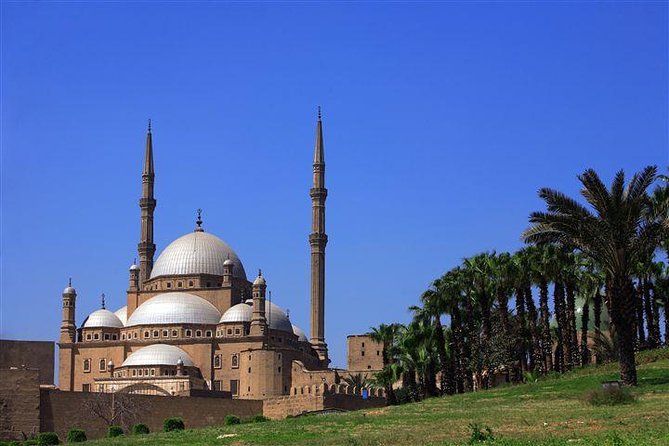
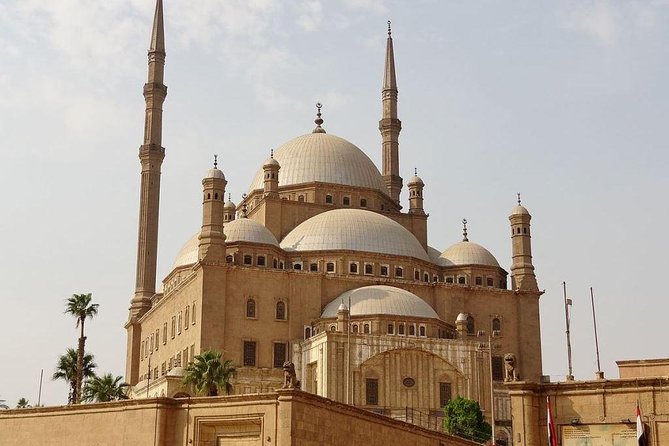
Your last mosque run includes Mosque of Muhammad Ali, often called the Alabaster Mosque because its outer walls are covered by alabaster stone. The itinerary gives this stop about 30 minutes, which is enough to take in the look and understand why it’s a visual magnet.
Then you go to Al-Rifa’i Mosque, located opposite the Mosque-Madrassa of Sultan Hassan. The building was conceived as an architectural complement to the older structure, part of a wider effort by 19th-century rulers to connect themselves with earlier Islamic-era glory and to modernize Cairo.
These two stops work well as a closing act. Early on, you’re learning the origins and the core sacred sites. Near the end, you’re seeing how later rulers used religious monuments to frame power, memory, and identity.
Friday prayers option: a spiritually different experience
On Fridays, the tour offers the option to join prayers at al-Azhar. This can shift the feel of the day from sightseeing into something more grounded and present.
If you’re curious about how worship actually happens in a living historic center, this is a big draw. Just remember that prayer times can shape how the schedule feels on the ground, so your guide’s flexibility matters.
Guides make or break the day (choose smart questions)
The biggest theme in the feedback is guide impact. People specifically praised guides by name—Marwa for making Friday prayer a highlight, Essam for strong dedication and deep understanding, Ismail for punctuality and itinerary flexibility, Jasmine for an unforgettable Islamic Cairo perspective, and Yousef for turning the day into more of a hangout with a smart local than a rigid tour.
You can use that to your advantage. Ask your guide to:
- explain what you’re seeing right now, not what was built centuries ago in isolation
- connect the stops so the city feels mapped, not random
- help you plan where to focus your photos so you don’t waste time
One caution from real-life experience: when the first site is unavailable, you might feel the schedule tighten. If you want the most value, ask your guide early how they’ll handle substitutions and what you’ll still get to see fully.
Lunch and koshary: keep it optional, keep it simple
There’s an included lunch stop option with classic Egyptian cuisine like koshary. Since it’s not automatically included in the tour price, this is really a flexible moment to refuel without turning your whole afternoon into a food detour.
If you’re sensitive to timing, decide in advance whether you want lunch or prefer to take quick breaks and keep moving. Either way, bottled water is included, which helps you stay comfortable between sites.
Should you book this private Islamic Cairo mosque tour?
Book it if:
- you want a guided, structured route through major Islamic sites without juggling tickets
- you’re drawn to seeing al-Azhar and the “beginning” mosque story of Amr ibn al-As
- you can use the Friday prayer option and want that extra layer of meaning
- your priority is understanding the city, not just ticking names off a list
Skip or reconsider if:
- you get frustrated when plans change at the last minute and you need a guaranteed, uninterrupted schedule at the first stop
- you strongly dislike detours into souvenir shopping, especially if they cut into time at the monuments
Overall, this tour is best for people who like clarity. In a single afternoon, you build a mental map of Islamic Cairo—then you leave with sites that actually connect in your head, not just in your photo library.
FAQ
What is the duration of the Cairo Private guided Tours visit old mosques & Islamic Cairo?
It runs for about 6 hours (approx.).
How much does the tour cost?
The price is $45.00 per person.
Does the tour include hotel pickup and drop-off?
Yes. Hotel pickup and drop-off are included for hotels in Cairo or Giza.
Is the tour private?
Yes. It’s described as a private tour/activity, so only your group participates.
Are entry fees included?
Yes. Entry fees are included, and admission tickets are listed as included for the stops.
Which mosques and monuments are included?
The itinerary includes Al-Azhar Mosque, Al Emam Al Hussein Mosque, Mosque and Madrasa of Sultan Hassan, the Cairo Citadel, Mosque of Amr Ibn Al-As, Mosque of Muhammad Ali, and Al Rifai Mosque.
Is lunch included?
Lunch at local restaurants (like koshari) is optional, not included in the listed cost.
Can I join prayers on Fridays?
There is an option to join prayers at Al-Azhar on Friday tours.
What’s included besides the guide?
In addition to the tour guide, it includes an air-conditioned vehicle, bottled water, and mobile ticket.
Is free cancellation available?
Yes. You can cancel for a full refund if you cancel at least 24 hours before the experience start time.