REVIEW · CAIRO
Cairo : Luxor East and West Banks Tour by Overnight Sitting Train Rounded trip
Book on Viator →Operated by Egypt Best Holidays · Bookable on Viator
Sitting still for tombs can feel like magic. This Cairo to Luxor East and West Banks trip strings together a first-class overnight train plus a tightly run guided day of monuments. A licensed guide you might be paired with is Khalad el sassy, and his Egypt storytelling gets high praise for making the sites click fast.
What I like most is the way the tour gives you a real West Bank hit up front: the Valley of the Kings tombs and the Temple of Queen Hatshepsut at Deir el Bahari. The second big plus is how the day is organized in air-conditioned comfort, with hotel and station transfers handled so you’re not spending your limited time figuring out logistics.
The main thing to watch is cost creep: entrance fees aren’t included, and the overnight ride is in a first-class seated setup unless you pay to upgrade to a sleeper. If you’re picky about comfort, plan ahead.
In This Review
- Key Points Worth Knowing Before You Go
- Overnight Train Setup: From Cairo or Giza to Luxor by First-Class Seat
- Day 1 Cairo Pickup and the Overnight Ride: What the First Hours Feel Like
- Luxor West Bank: Valley of the Kings, Hatshepsut at Deir el Bahari, and Colossi of Memnon
- Valley of the Kings: Tombs of Pharaohs You’ve Actually Heard Of
- Deir el Bahari: Temple of Queen Hatshepsut
- Colossi of Memnon: Mortuary Temple at a Massive Scale
- Karnak Temple and Luxor Temple: East Bank Power After the Tombs
- Karnak Temple Complex: A Huge Site That Makes Sense With a Plan
- Luxor Temple: Finish the Day With a Big Final Image
- Day 3 Arriving Cairo: What Happens After You Land Back
- Price and Value: Is $244 Fair for an Overnight Cairo–Luxor Package?
- The Guides, the Pace, and Why Coordination Matters in Luxor
- Who Should Book This Luxor East and West Banks Tour?
- Should You Book This Cairo–Luxor Overnight Train Tour?
- FAQ
- Are entrance fees included for the sightseeing?
- What train do I ride during the Cairo–Luxor and Luxor–Cairo journey?
- Is hotel pickup included?
- Do I get picked up when I return to Cairo on Day 3?
- Can the tour use another transport option instead of the train?
- Does an international student card help with costs?
Key Points Worth Knowing Before You Go
- Overnight first-class train, round trip means you save a hotel night and still arrive in Luxor in time for daytime monuments
- Valley of the Kings lineup includes tombs associated with Tutmosis I, Tutmosis III, Tut-Ankh-Amon, Ramssess VI, Mrenptah, and Amonhotep II
- Deir el Bahari stop for Hatshepsut gives you context for Egypt’s only female ruler featured in this route
- Karnak Temple complex on the East Bank includes the Hypostyle Hall and the Temple of Amon with papyrus-shaped columns
- Entrance fees are paid on-site in Egyptian pounds, and an international student card can cut them by 50%
- Small-group feel (max 15) keeps the pace active without turning the day into a stampede
Overnight Train Setup: From Cairo or Giza to Luxor by First-Class Seat
This tour is built around one smart move: you leave Cairo (or Giza) and travel overnight by first-class VIP seated train, then get a full monuments day the next morning. The pickup-and-drop approach is clear-cut: you’re picked up in Cairo and dropped at the train station, and later you’re dropped at the Luxor station to catch the return train.
On the way to Luxor, the ride is scheduled as about 9 hours. The key value here isn’t luxury bragging; it’s that you use your night for transportation instead of burning daylight. If you hate “wasting the day,” this is exactly the kind of plan that protects your time.
One practical detail: you’ll travel with a mobile ticket, and service taxes and fees connected to the train and parking are included. That usually means less surprise paperwork on the ground, which matters when you’re bouncing between station, vehicle, and monuments.
If you’re concerned about sitting for that long, you have options. The train can be changed to a bus without extra cost, and you can upgrade to a sleeper train for $150 extra per person (round trip). That upgrade is the difference between “I survived” and “I slept enough to enjoy the next day.”
You can also read our reviews of more tours and experiences in Cairo.


Day 1 Cairo Pickup and the Overnight Ride: What the First Hours Feel Like
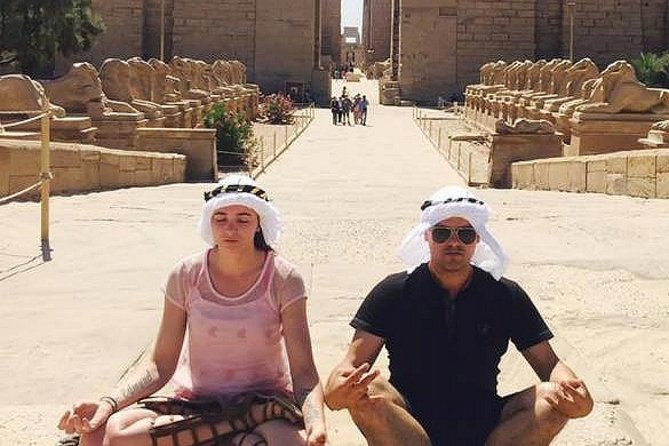
Day 1 starts with pickup at your hotel in Cairo or Giza. From there it’s straight to the train station so you can catch the overnight departure.
The tour’s structure is simple: no sightseeing on this first day beyond the travel itself. The point is to get you to Luxor while it’s still morning. For many people, that means less stress than a day-trip plan that stacks up museum hours and travel time on the same calendar day.
Bring a camera, since your “day two” photos will likely start with tomb gates and end with huge temple columns. Also plan for the reality that you’ll be leaving Cairo, then waking up in Luxor for a long guided day. A little snack planning and a layer for the train can make a big difference, even if nothing specific is promised about onboard comfort.
Luxor West Bank: Valley of the Kings, Hatshepsut at Deir el Bahari, and Colossi of Memnon
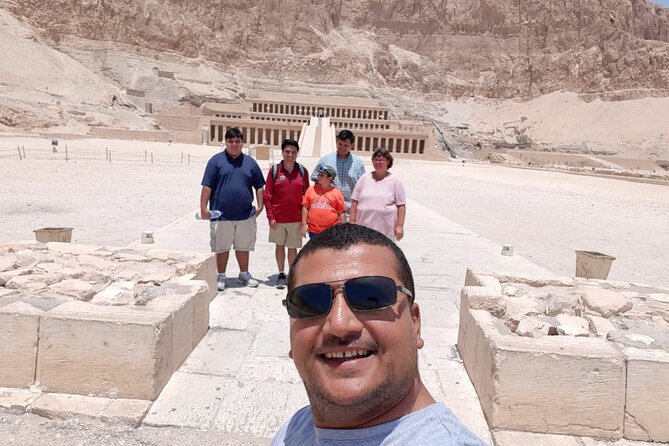
Day 2 is where the trip turns into a full-on Upper Egypt hit. You meet your licensed guide at the Luxor train station, then head out by private air-conditioned vehicle. The route is deliberately sequenced from West Bank tombs toward East Bank temples, so you’re moving with the logic of the monuments.
Valley of the Kings: Tombs of Pharaohs You’ve Actually Heard Of
The West Bank begins with the Valley of the Kings, and this isn’t a vague “temples and tombs” stop. The route specifically calls out tombs linked with Tutmosis I, Tutmosis III, Tut-Ankh-Amon, Ramssess VI, Mrenptah, and Amonhotep II.
Why I like this approach: the Valley feels overwhelming unless you have a guide who can put names and timelines to the setting. With this lineup, you’re not just looking at rock-cut chambers—you’re connecting the architecture to who ruled and why those burials mattered.
A possible drawback: tomb visits can add up quickly. Even when the time per stop looks manageable, you’ll want your brain ready for concentration. Wear comfortable shoes and keep your expectations realistic: you’re seeing major sites, not trying to photograph every stone like a documentary crew.
Deir el Bahari: Temple of Queen Hatshepsut
Next comes the Temple of Queen Hatshepsut at Deir el Bahari. The route centers on why she mattered—she’s the only female ruler of Ancient Egypt highlighted in this itinerary.
This stop is special because it isn’t just a tomb-adjacent site. It’s a temple built to proclaim authority and legitimacy, and your guide’s job is to help you see that purpose in the architecture. If you like when a place has a clear “why,” you’ll probably enjoy this one a lot.


Colossi of Memnon: Mortuary Temple at a Massive Scale
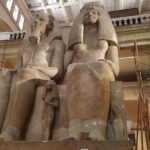
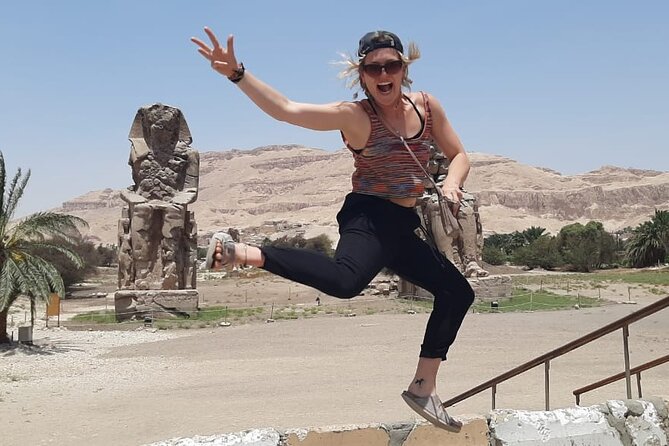
Then you head to the Colossi of Memnon, where you’ll discover the mortuary temple of Amenhotep III through these monumental statues. The visit is scheduled at about 40 minutes, which is often enough time to take in scale and understand what you’re actually looking at.
Even in a fast schedule, this stop works because the statues do the teaching for you. They’re big, they’re recognizable in photos, and they help you keep a sense of “wow” between longer temple complexes.
Karnak Temple and Luxor Temple: East Bank Power After the Tombs
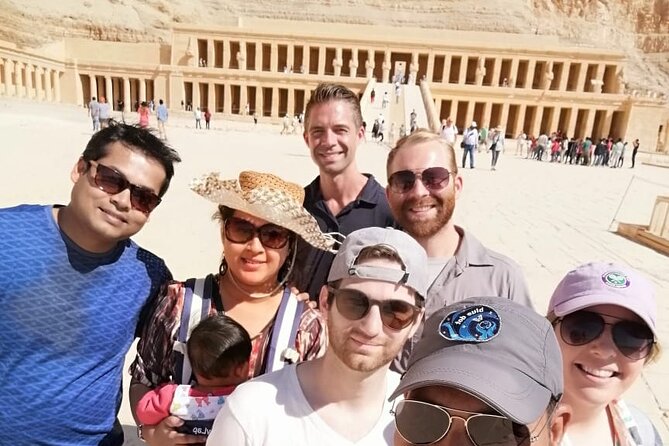
After the West Bank sequence, the tour crosses to the East Bank for the temple heavyweights. This is where the “Egypt” feeling often turns from awe to clarity, because you’re finally seeing the religious center of power, not just the royal afterlife planning.
Karnak Temple Complex: A Huge Site That Makes Sense With a Plan
The tour spends about 2 hours at Temple of Karnak, and it gives you a useful framework. The complex was originally dedicated to Amon Ra, with Mut and Khanoum as connected figures. Later, around 30 additional kings added touches, which explains why parts of the complex feel different from each other.
You’ll hear about major highlights such as the Hypostyle Hall, described as one of the world’s great architectural achievements, and the Temple of Amon with its giant papyrus-shaped columns. If you’re the type who likes to know what’s important before you arrive, this itinerary setup helps you target your attention instead of getting lost in the size.
A common issue on days like this is simply fatigue—your feet and your patience both take a hit. The Karnak experience will feel better if you pace yourself and don’t try to “cover everything.” Focus on the signature areas your guide flags, and you’ll leave with actual memories, not just photos of stone.
Luxor Temple: Finish the Day With a Big Final Image
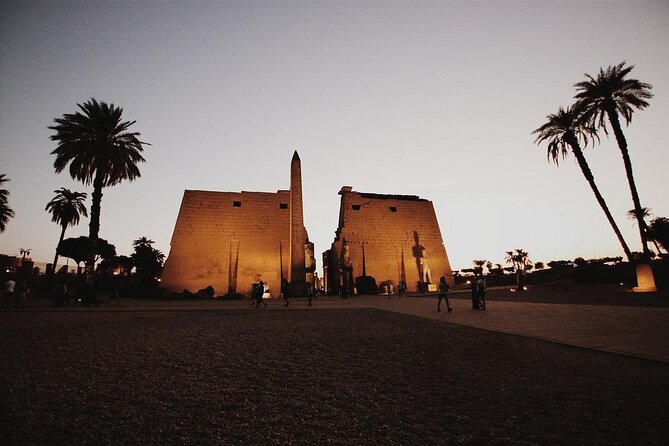
The day wraps with Luxor Temple, scheduled around 1 hour 30 minutes. This is a solid closer because it transitions from the grand scale of Karnak to another major temple space on the same side of the river.
By the end of the day, you’re taken back to the station to catch the overnight train returning to Cairo. That part matters: you don’t have to negotiate transport at the end of a long day. It’s one of those details that can save your mood more than you’d expect.
Day 3 Arriving Cairo: What Happens After You Land Back
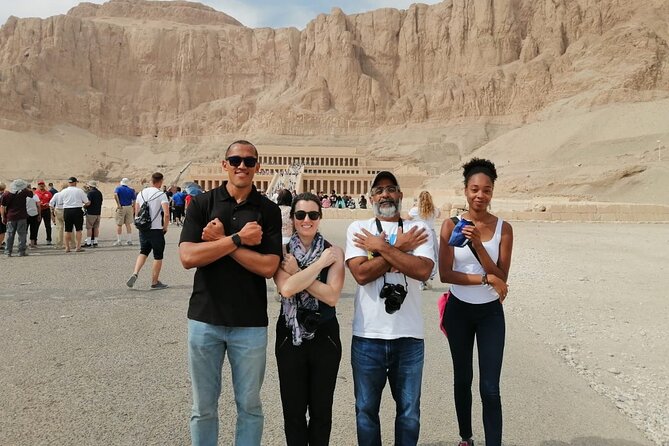
On Day 3, you arrive at the Cairo train station. The tour notes that there’s no pickup service at this point by default, though it can be requested for extra cost.
So I’d plan around that. If you’re heading straight to a hotel, arrange your onward transport in advance so you’re not hunting. It’s the final friction point in the whole trip, and it’s easy to handle if you’re prepared.
Price and Value: Is $244 Fair for an Overnight Cairo–Luxor Package?
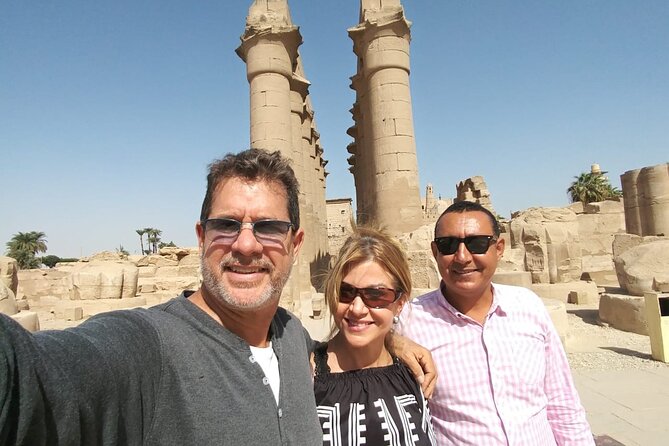
At $244 per person, this isn’t a “cheap and cheerful” outing, but it also isn’t just paying for sightseeing you could do on your own. The price is tied to what can be hard to stitch together: round-trip first-class seated train, Cairo-to-Luxor and Luxor-to-Cairo station transfers, air-conditioned private vehicle touring, an expert guide (multiple languages), and included service/taxes/fees tied to movement and parking.
Here’s how I’d judge value in real terms:
- If you’d otherwise spend time hunting for trains, sorting transfers, and hiring a guide for a short window, the package makes a lot of sense.
- If you’re traveling solo with flexibility and you don’t mind doing logistics yourself, you might find the overall cost feels steep—especially once you add entrance fees.
- Entrance fees are not included, so your final spend depends on what you choose to pay and whether you can use discounts.
One practical money saver is the international student card. It can give 50% off entrance fees in Egypt. Since entrances are paid on-site in Egyptian pounds, you’ll want some cash exchange planned before your big monument day.
Also worth knowing: some stops are marked as free in the schedule (like Colossi of Memnon and parts around the travel), but the tour still lists sightseeing entrance fees as not included overall. I’d budget for entrance costs rather than hoping everything is free.
And comfort counts. If an overnight seated train isn’t your thing, the $150 sleeper upgrade is the lever that turns this from “solid” into “pleasant.” If you’re the type who values sleep, you’ll probably decide early.
For an extra bit of context, the tour shows high satisfaction: a 4.8 rating and about 90% recommending. That lines up with the biggest praised elements—strong guiding and smooth coordination.
The Guides, the Pace, and Why Coordination Matters in Luxor
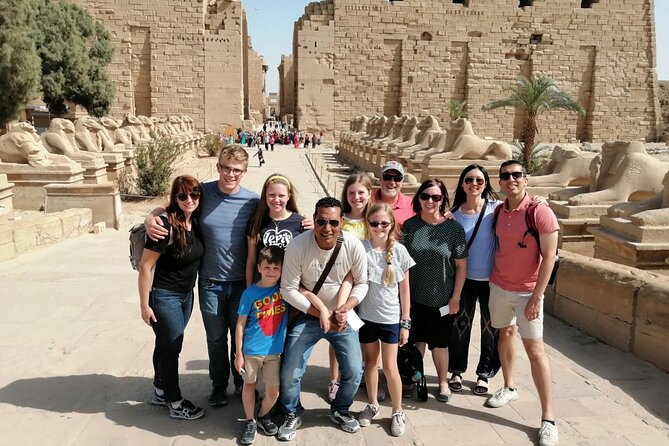
The most praised part of this kind of Luxor day is rarely one single monument. It’s the way the guide keeps your understanding organized while your schedule stays tight.
A guide name that comes up is Khalad el sassy, praised for strong Egypt knowledge and the ability to make the stories land while you’re actually standing in front of the stones. That matters because sites like Karnak and the Valley of the Kings can feel like “lots of stuff” unless someone turns it into a guided map in your head.
Pace is another underappreciated value point. This route uses hotel and station transfers and doesn’t ask you to invent timing on the fly. That’s huge on days where you’re moving between West Bank and East Bank, dealing with heat, and still trying to take photos that look good rather than hurried.
Group size is max 15, which is a sweet spot for tours like this. Big groups can turn everything into walking behind someone’s shoulder. Smaller groups tend to feel more like a guided conversation, even when the day runs long.
Who Should Book This Luxor East and West Banks Tour?
This trip fits best if you want:
- An efficient first-time Luxor experience with the biggest West Bank and East Bank monuments
- Less worry about trains and transfers, since the core logistics are handled
- A guided day with a licensed guide at the train station, then private vehicle touring
It also fits well if you’re on a time budget. You’re basically squeezing a classic Luxor two-sides itinerary into a compact window by using the overnight train.
I’d think twice or upgrade the ride if:
- You strongly dislike overnight sitting, unless you add the sleeper train option
- Entrance fees would be a major strain for your budget, especially if you don’t have the student discount
Families can join as long as children are accompanied by an adult, but you’ll want to make peace with a long day of walking and a night of sitting.
Should You Book This Cairo–Luxor Overnight Train Tour?
If your priority is seeing the “must” sites without playing transport Tetris, I think you should book it. The blend of overnight travel plus a guided monuments day is built for people who want results, not just sightseeing selfies.
Book it especially if you value the West Bank-to-East Bank arc: Valley of the Kings → Hatshepsut at Deir el Bahari → Colossi of Memnon → Karnak → Luxor Temple. That sequence helps you build a coherent picture of ancient Egyptian power, from tomb planning to temple worship.
Just go in with two smart expectations: entrance fees are extra, and comfort depends on whether you stick to the first-class seated train or upgrade to the sleeper. If you handle those, this is the kind of Luxor trip that feels efficient and memorable for the right reasons.
FAQ
Are entrance fees included for the sightseeing?
No. Entrance fees to the sightseeing are not included. You’ll pay entrance fees on the sightseeing in Egyptian pounds.
What train do I ride during the Cairo–Luxor and Luxor–Cairo journey?
The package includes first-class VIP seated train tickets for the round trip Cairo–Luxor–Cairo. You can also upgrade to a sleeper train for $150 extra per person (round trip).
Is hotel pickup included?
Yes for the Cairo side before departure. The tour includes pickup and drop-off at the train station in Cairo and Luxor, with transfers by air-conditioned vehicle.
Do I get picked up when I return to Cairo on Day 3?
There is no pickup service by default at Cairo train station after arrival, but it can be requested for an extra cost.
Can the tour use another transport option instead of the train?
The train can be changed to a bus if you want without any extra cost. In special cases, the operator may change the sitting train to a VIP bus without extra cost.
Does an international student card help with costs?
Yes. Your international student card gives a 50% discount for entrance fees in Egypt, and those fees are paid on the sightseeing.