REVIEW · CAIRO
Cairo Layover Giza Pyramids & Sphinx with private tour Guide
Book on Viator →Operated by GEM Explore Egypt · Bookable on Viator
Pyramids in a few hours can feel unreal. This private Cairo layover tour is built for getting you from Cairo International Airport to the Giza Plateau fast, with a guide keeping things organized and moving.
What I love most is how airport pickup removes the usual taxi and vendor headache, and how the plan focuses on the big moments: Cheops, Khafre’s valley area, and the Great Sphinx close-up.
One thing to plan for: if you want to enter inside the pyramids, you’ll need a separate extra ticket, and the visit timing depends on that choice.
In This Review
- Key highlights at a glance
- Airport pickup to Giza in one smooth 4–5 hour block
- Giza pyramids stops: Cheops, Khafre valley temple, and Menkaure sights
- Pyramids of Giza: Cheops, Chephren, and the valley temple idea
- Great Pyramid of Cheops (Khufu): the “still-standing wonder”
- Khafre’s Pyramid: a second-highest classic plus causeway and valley areas
- The smaller Menkaure pyramid: granite detail and scale perspective
- Panoramic view: six pyramids in one photo-ready pause
- Do you want inside the pyramids? Ticket rules and what to expect
- Great Sphinx and the photo strategy that keeps you sane
- Camel ride and lunch: only if you pick the option
- Guides like Ali, Amany, Maged, and Wael: history plus photo help
- Price and value of a private $55 layover tour
- Who should book this, and who might want a different plan?
- Should you book this Cairo layover pyramid and Sphinx tour?
- FAQ
- How long is the Cairo layover Giza pyramids and Sphinx tour?
- Is this tour private or shared with other groups?
- Do I get pickup and drop-off at the airport?
- Where does the guide meet me at the airport?
- Are the entry tickets included for the pyramid area?
- Can I enter inside the pyramids on this tour?
- Is a camel ride included?
- Is lunch included?
- What if I need to cancel?
Key highlights at a glance
- Airport-meet practicality: guide meets you outside the arrival lounge, not inside.
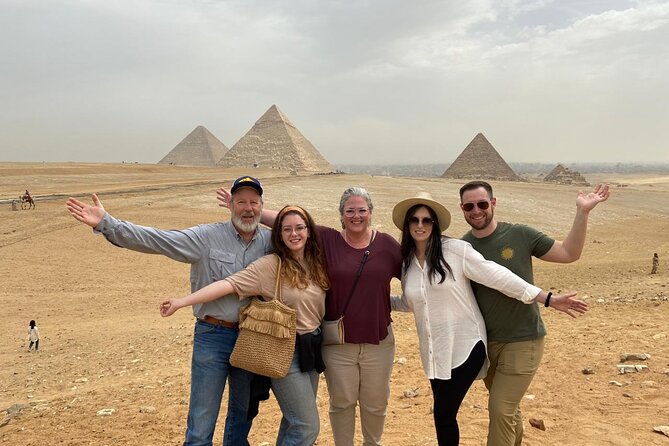
- Private, no-chaos pace: just your group, with time to pause for photos.
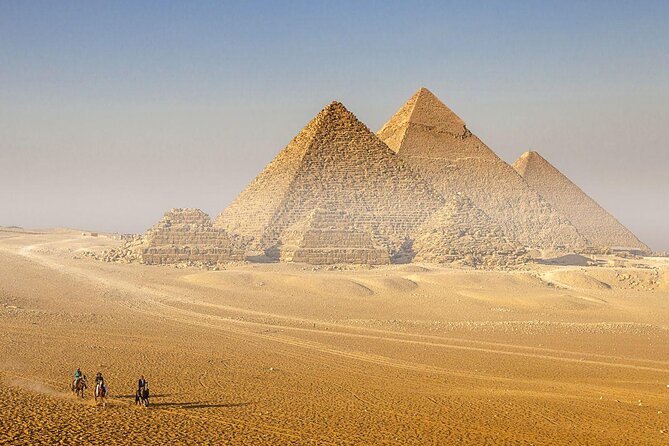
- Pyramid complex focus: Cheops, Khafre’s valley temple, and Menkaure views.
- Sphinx time with photo help: enough room to frame shots and ask questions.
- Optional camel ride and lunch: only included if you choose that option.
Airport pickup to Giza in one smooth 4–5 hour block
This is the kind of tour I like for layovers because it treats your time like currency. You get pickup and drop-off from Cairo International Airport (and airport hotels, if that’s how your booking is set), and you travel in an air-conditioned vehicle. That matters more than it sounds—Giza is busy, and the last thing you want is spending half your day negotiating rides.
The tour duration is about 4 to 5 hours, and the start time is flexible (usually coordinated around your flight timing). That’s a sweet spot: long enough to feel like you actually visited, short enough to keep your day from unraveling.
Also, the guide meeting point is specific: the Egyptologist waits outside the arrival lounge as per the requested pickup time. That detail is small, but it reduces the stress of wandering around the airport while your taxi clock runs.
You can also read our reviews of more guided tours in Cairo


Giza pyramids stops: Cheops, Khafre valley temple, and Menkaure sights
Once you reach Giza, the route makes sense. You don’t just park at one viewpoint and call it a day—you move through key areas in a logical flow.
Pyramids of Giza: Cheops, Chephren, and the valley temple idea
The first major stop covers the Pyramids of Giza and the surrounding complex. You’ll see the Pyramid of King Cheops (Khufu), Chephren (Khafre), and Mykerinos (Menkaure) from the areas that make them easiest to understand in context.
Then you continue to the Valley Temple of Khafre. This is one of the most meaningful stops because it explains the royal-religious function of these places. The valley temple is tied to the process of mummification and the movement of the king’s body as part of the burial sequence—so the story isn’t just architecture, it’s purpose.
Great Pyramid of Cheops (Khufu): the “still-standing wonder”
Next comes the Great Pyramid of Cheops. It’s described as the only ancient Seven Wonders that still stands, and at this point you’ll have time to walk and take it in without rushing. You also learn what makes this site feel layered—there are notes about nearby elements such as a valley temple area (buried under the modern village) and details about the materials found in the area.
Two hours here is a good chunk. It lets you stand back, step closer, and reframe your photos as the light changes.
Khafre’s Pyramid: a second-highest classic plus causeway and valley areas
After Cheops, you move to Khafre’s Pyramid, the second highest in the complex. What’s emphasized here is that the complex is still in relatively good condition, so you can actually read the shapes and relationships between the spaces.
The plan also includes time to explore Khafre’s valley temple and causeway. In practical terms, this helps you move beyond the postcard version of the pyramids and start seeing the design as a connected route.
You can also read our reviews of more private tours in Cairo




The smaller Menkaure pyramid: granite detail and scale perspective
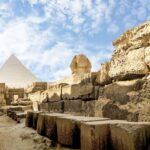
There’s also a stop for Menkaure’s pyramid, the smallest on the plateau, about 61 meters high. The standout detail is about the granite outer layer on the lower part—granite quarried from Aswan, about 1,000 kilometers away. That’s the kind of fact that gives you an instant “wait, how did they do that?” moment, and it makes the stone itself feel like part of the human story.
Panoramic view: six pyramids in one photo-ready pause
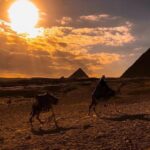
Then you get a panoramic view of the pyramids and the city of Giza, with about 30 minutes for photos. This is smart because you can finally step back and see the whole layout as a set. It’s also flagged as the best place for a short camel ride, if you opted for that add-on.
Do you want inside the pyramids? Ticket rules and what to expect
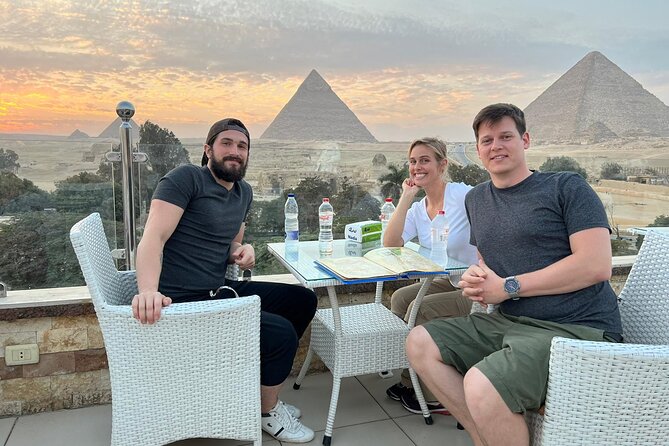
Here’s the key planning point: you can visit the pyramid area and see the monuments, but entering inside the pyramids requires a special ticket separate from the main area entry. The guide can help you with the process.
This matters for two reasons:
- It affects how much time you’ll spend on the inside vs. outside.
- It changes your expectations of what the tour can guarantee, because the interior part isn’t included automatically.
If you’re the type who wants one inside experience for the memory, factor that into your schedule and energy level. If you’d rather focus on views, scale, and photography, you can still have a full “pyramids day” without needing interior access.
Also, the tour includes time blocks per site (for example, Khafre’s pyramid stop is about 30 minutes), so you’ll want to decide early how strongly you feel about inside entry.
Great Sphinx and the photo strategy that keeps you sane
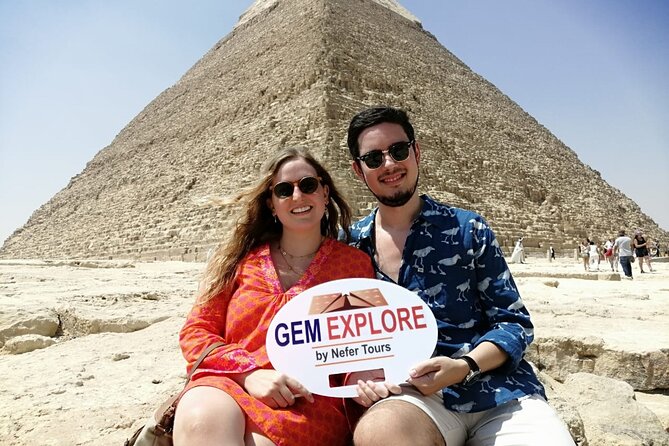
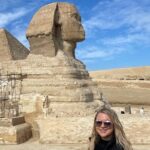
After the pyramid circuit, you end at the Great Sphinx, the guardian figure with a lion body and the head associated with Khafre. You’ll have time for close-up viewing and photos, with assistance from a representative.
One thing that stands out from the overall approach is that the guide focus isn’t just history. It’s also shot planning: getting you to better angles, avoiding the dead time where you’re stuck waiting for people to shuffle, and using the fact that the Sphinx area has multiple “good moments” depending on your position.
You’ll also get a reminder that the Sphinx is inside the pyramid area ticket context. Translation: don’t count on it being treated like a standalone ticket stop. Build your day around the idea that you’re in one site complex, not separate random attractions.
Finally, after the Sphinx, the return to Cairo International Airport is straightforward, and the tour is designed to finish cleanly so your flight doesn’t become a stress test.
Camel ride and lunch: only if you pick the option
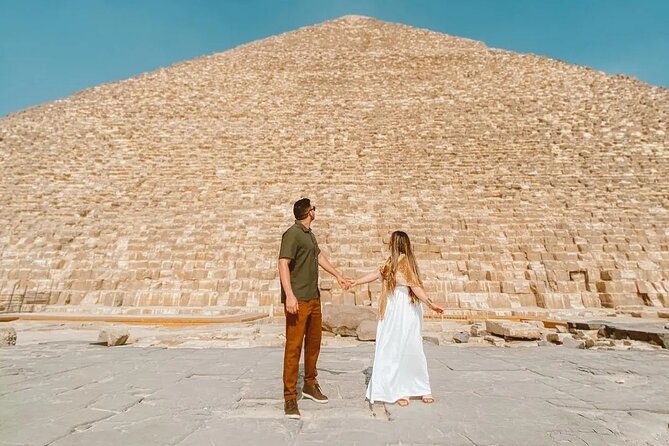
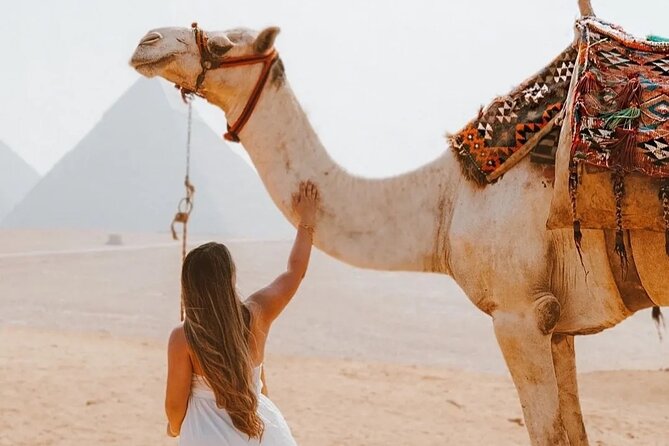
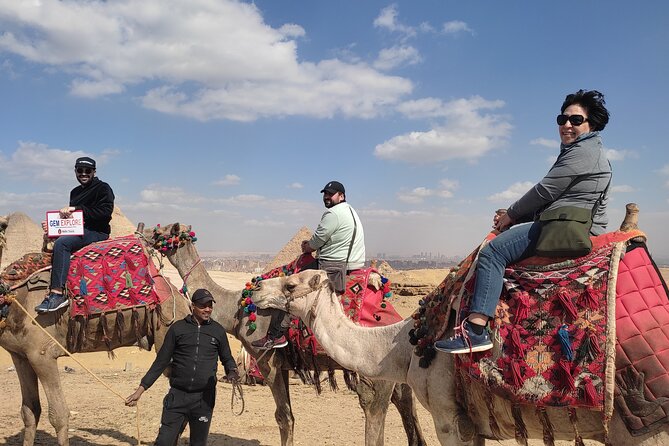
This tour can include a camel ride and lunch, but only if you select that option when booking. In other words, the “baseline” experience is pyramids and Sphinx; the camel ride is an added bonus.
From a practical standpoint, I like that it’s optional. Camels can be fun, but they can also be hot and uncomfortable depending on the day and your tolerance. If you choose the option, you’ll usually do the camel ride during the panoramic photo stop—that’s where the views help justify the ride.
Lunch is also included when you pick the option. The itinerary doesn’t describe a specific restaurant or menu details, so the safest expectation is simply that you’ll have a meal included with the chosen add-on.
If you don’t choose the add-on, you still get a complete Giza experience without feeling like you missed a core “must-do.”
Guides like Ali, Amany, Maged, and Wael: history plus photo help
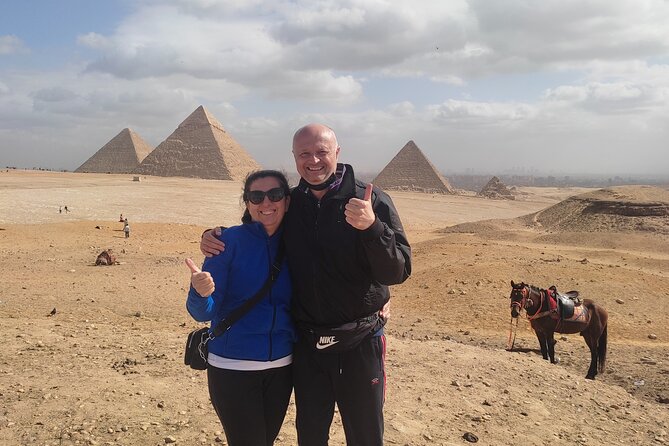
This is where this tour quietly earns its top ratings. The guides are repeatedly praised not just for facts, but for making the experience easier to navigate—especially when you’re dealing with big crowds and lots of noise around major sights.
You’ll see names show up again and again in real experiences: Ali gets called out for being helpful, informative, punctual, and even for getting great group photos. Amany is praised for being patient and for explaining how the pyramids were made, plus she’s mentioned as an excellent photographer. Maged stands out for professionalism and for skipping the lines, along with steering people away from typical tourist traps. Wael is mentioned in the context of having a professional, considerate day with strong guiding.
There’s also a consistent theme: guides help you avoid the “grabby” parts of the area. They don’t just point and move. They guide where to stand, when to step away from chaos, and how to get photos that don’t look like they were taken in a crowd.
If you care about photography, you’ll probably appreciate this most. Several accounts highlight that guides actively help with shots, including holding children so everyone can get the view and pictures.
Price and value of a private $55 layover tour
Let’s talk value in a real way.
At $55 per person, what you’re buying is not only access to the Giza Plateau, but also:
- Private guiding during a short window
- Round-trip airport transfer in an air-conditioned vehicle
- Area entry fee (with the important caveat about inside-pyramid tickets)
- Bottled water
- Taxes and services fees included
For a layover day, that’s the bargain. The alternative is usually cobbling together a ride, figuring out timing, and then getting delayed by the classic “everyone wants your attention” atmosphere around the pyramids. When your schedule is tight, paying for coordination is often cheaper than paying for wasted time.
Is it the cheapest option? It might not be. But it’s designed for the kind of traveler who would rather spend money to buy calm: a clear pickup plan, a focused route, and a guide who helps you stay oriented.
Also, the tour is commonly booked about 16 days in advance, which is a hint that people planning flights know this is a good slot to lock early.
Who should book this, and who might want a different plan?
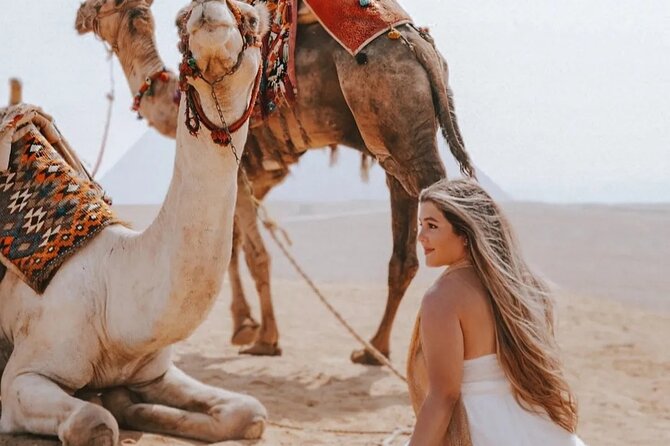
This private tour is a strong match if:
- You’re on a Cairo layover and need a structured day
- You want an organized route through major Giza sights without the hassle of sorting taxis
- You care about photos and want help finding good spots
- You prefer a guided, story-based experience rather than wandering
It may be less ideal if:
- You want a long, slow exploration with lots of museum-style time or multiple extra add-ons
- You’re expecting the inside-pyramid experience to be included automatically (it isn’t—an extra ticket is required)
If you’re traveling as a group that wants flexibility and faster decisions, private guiding is a real advantage here. You can move based on your interests rather than everyone else’s pace.
Should you book this Cairo layover pyramid and Sphinx tour?
If you want a high-impact Giza day without turning your layover into a logistical scramble, I’d say yes, book it. The biggest reasons are the airport pickup structure, the private format, and the fact that the plan hits the essential stops: pyramids, Khafre’s valley area, panoramic views, and the Sphinx with real photo time.
The only “pause and think” item is inside-pyramid access. Decide whether you truly want to go inside. If you do, plan for the extra ticket. If you don’t, you can still leave with the full impression of Giza.
FAQ
How long is the Cairo layover Giza pyramids and Sphinx tour?
It runs about 4 to 5 hours, depending on your selected timing and visit flow.
Is this tour private or shared with other groups?
It’s private. Only your group participates.
Do I get pickup and drop-off at the airport?
Yes. Pickup and drop-off are included from Cairo International Airport (and airport hotels, as stated).
Where does the guide meet me at the airport?
The guide waits outside the arrival lounge, not inside, at the requested pickup time.
Are the entry tickets included for the pyramid area?
Yes, the area entry fee is included, but note that entering the pyramids from inside requires a separate ticket.
Can I enter inside the pyramids on this tour?
You can, but the inside entry requires a special ticket separate from the main admission. The guide will assist.
Is a camel ride included?
A camel ride is included only if you choose the option that adds camel ride and lunch.
Is lunch included?
Lunch is included when you select the option that includes lunch (it’s not described as included in the base plan).
What if I need to cancel?
Free cancellation is available up to 24 hours in advance for a full refund.