REVIEW · CAIRO
Cairo: Archeological Day-Trip to Alexandria
Book on GetYourGuide →Operated by Ramses tours · Bookable on GetYourGuide
A day trip to Alexandria hits fast. You’ll go from the Kom el Shoqafa catacombs to the Library of Alexandria and finish with sea-air sights like Abou al-Abbas Mosque and the lighthouse site. The trade-off is that it’s a packed schedule, and a few stops are mostly exterior views or limited time, especially if you’re hoping to linger.
I like how this tour mixes big-ticket monuments with quieter archaeology, so you get more than just the famous postcard shots. I also like that it’s guided from start to finish with transport included, which matters because Cairo-to-Alexandria travel takes time. If you hate rushing, plan for a quicker pace and bring patience for traffic.
One more note before you go: Alexandria is a day of walking and heat. You’ll be in the sun, in stairways, and around sites where you may not be allowed inside everything—so comfortable shoes and a sun hat are not optional.
In This Review
- Key highlights you’ll feel right away
- A 12-hour Alexandria sprint: what the schedule really means
- Kom el Shoqafa catacombs: the architecture that explains itself
- Library of Alexandria and the statues you can find in seconds
- Roman Alexandria at street level: Kom el-Deka, Serapeum, and the theater zone
- Pompey’s Pillar, Qaitbay Citadel, and lighthouse history on the waterline
- St Mark’s Church: the oldest church stop changes the mood
- Montaza Royal Palace Gardens: Farouk’s seaside escape
- Corniche, the old harbor, and the funfair curiosity by Abou al-Abbas Mosque
- Stanley Bridge and the naval memorial: fast views, good context
- Price and value: is $85 fair for this route?
- Who this day trip suits best (and who should rethink it)
- A few practical tips that make the day go smoother
- Should you book this Cairo-to-Alexandria day trip?
- FAQ
- How long is the Alexandria day trip from Cairo?
- Where does the tour pick you up from?
- Is there a maximum group size?
- What languages are available for the live guide and audio?
- Which sites are part of the itinerary?
- Can you enter the excavation areas?
- What should I bring for the day?
- Is the Library of Alexandria always open?
Key highlights you’ll feel right away
- Kom el Shoqafa catacombs: a multi-culture burial complex that feels like stepping into a secret world
- Library of Alexandria stop: statues in the open court plus museums inside the complex (when open)
- Roman-era ruins around Kom el-Deka and the Serapeum: history with real layout, not just plaques
- St Mark’s Church: the oldest church on the list, with a very different atmosphere than the archaeological sites
- Montaza Palace Gardens: royal seaside grounds with photo-worthy views
- Corniche and harbor area: an easy moment to slow down and watch the Mediterranean rhythm
A 12-hour Alexandria sprint: what the schedule really means
This is a long day: about 12 hours from Cairo, with pick-up from your Cairo accommodation (or an airport option). The upside is simple—you can see a lot of Alexandria’s top sights without getting stuck planning buses, timings, and ticket queues.
The downside is equally simple. You’re moving between neighborhoods, and Alexandria sites don’t all give you the same amount of time. Even when the itinerary looks perfectly balanced on paper, traffic and site access can tighten the minutes on the ground.
The tour runs with a small group (maximum 10 travelers), and you’re in an air-conditioned vehicle. That helps on the drive, especially if you’re going outside of peak spring weather.
You can also read our reviews of more tours and experiences in Cairo.

Kom el Shoqafa catacombs: the architecture that explains itself

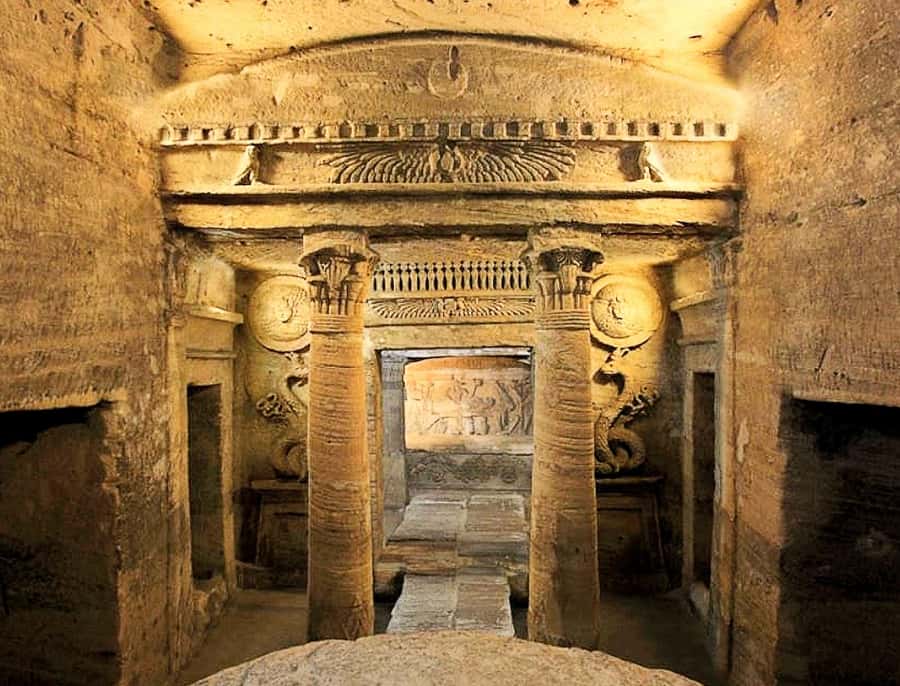
The day starts by going underground at the Catacombs of Kom el Shoqafa—a subterranean necropolis that surprises people. What makes it memorable is the mix of Egyptian, Greek, and Roman design elements in one place, so the site doesn’t feel like a single culture’s echo. It feels like a crossroads.
You’ll get guided access to see a masterpiece burial complex, with the story of how it was discovered: a donkey fell into the ground and revealed what had been hidden. That little detail turns the visit from a random “walk through tunnels” stop into a detective-style moment.
Practical note: catacombs mean stairs and a real indoor/underworld vibe, so comfortable shoes matter a lot. Also, expect it to be cooler underground than outside, but still not “comfortable” if you’re dressed for a beach day.
Library of Alexandria and the statues you can find in seconds

Next comes the Library of Alexandria experience. Even if the building itself isn’t fully what you pictured, the open-court setting helps: you can see statues of Alexander the Great and Ptolemy the First, including Ptolemy’s story tied to the underwater discovery in Cleopatra’s sunken city.
What you’ll like most is that you’re not only looking at one display. The tour also includes museum impressions inside the library complex, so you can connect the “big idea” of the library to the objects and context around it.
There’s one schedule reality to know: the Alexandria Library is closed on Fridays and public holidays, and the Reading Hall has an extra ticket option. If your travel dates land on a closure day, you’ll want to confirm what your tour day emphasizes instead.
Tip: treat this stop like a “get your bearings” visit. You’ll walk away understanding why Alexandria mattered as a learning hub long before the current building opened.
Roman Alexandria at street level: Kom el-Deka, Serapeum, and the theater zone
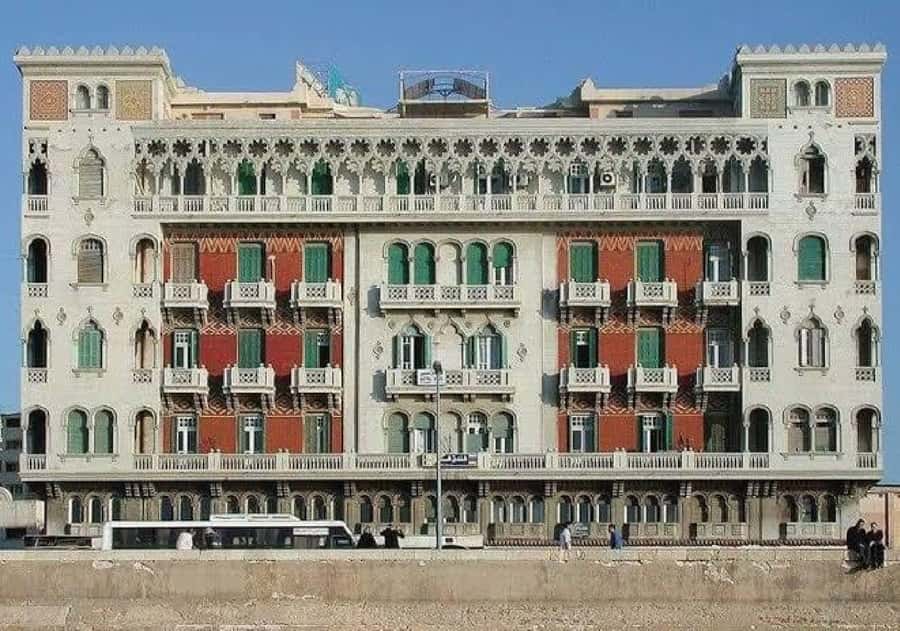
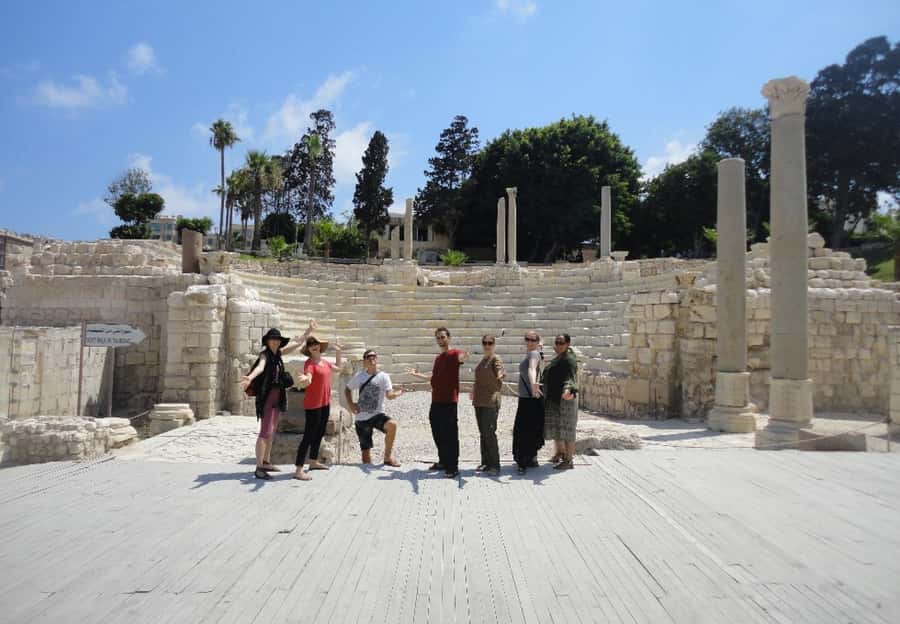
After the library, you move into the Roman Alexandria layer—places where you can still picture how the city functioned. The itinerary includes a guided walk area tied to Kom el-Deka (the Roman theater) and also the Serapeum of Alexandria.
These stops are valuable because they’re not just monuments standing alone. You’re seeing archaeology presented as part of an urban map, where you can connect structures to the everyday city life around them.
One important expectation: some excavation areas are not allowed to be entered, so you may get an exterior view rather than full access inside. That doesn’t make it worthless—it just means you should bring the right mindset: slow down for details from the permitted edges and let your guide explain what you can’t step into.
If you’re hoping for a long “archaeology wander,” this tour is more of a curated walk than an all-day dig. The upside is that you see the main nodes without getting lost.
Pompey’s Pillar, Qaitbay Citadel, and lighthouse history on the waterline
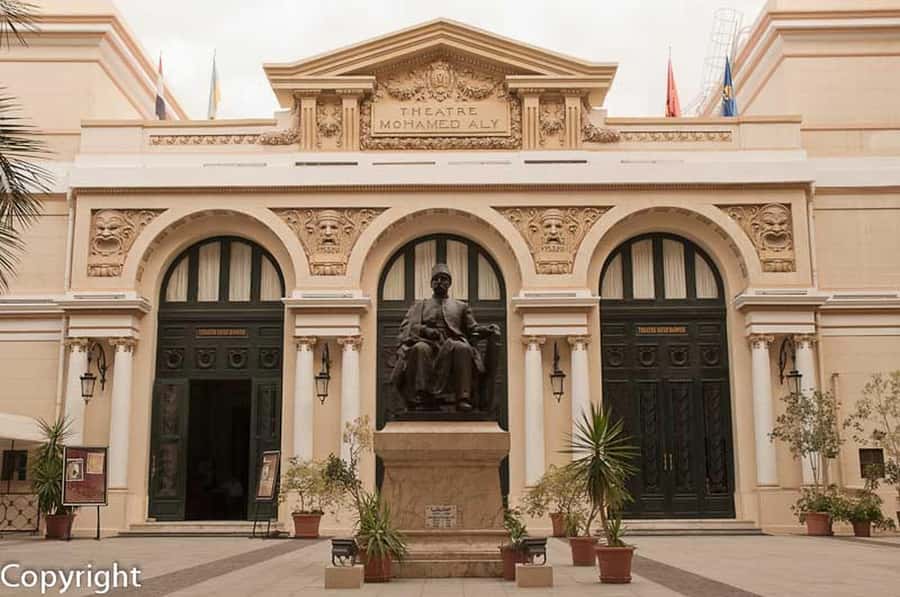
You’ll pass Pompey’s Pillar for a photo stop. Even if you only get a quick glance, it works as a visual anchor—proof that Alexandria’s Roman layers keep showing up in the modern streetscape.
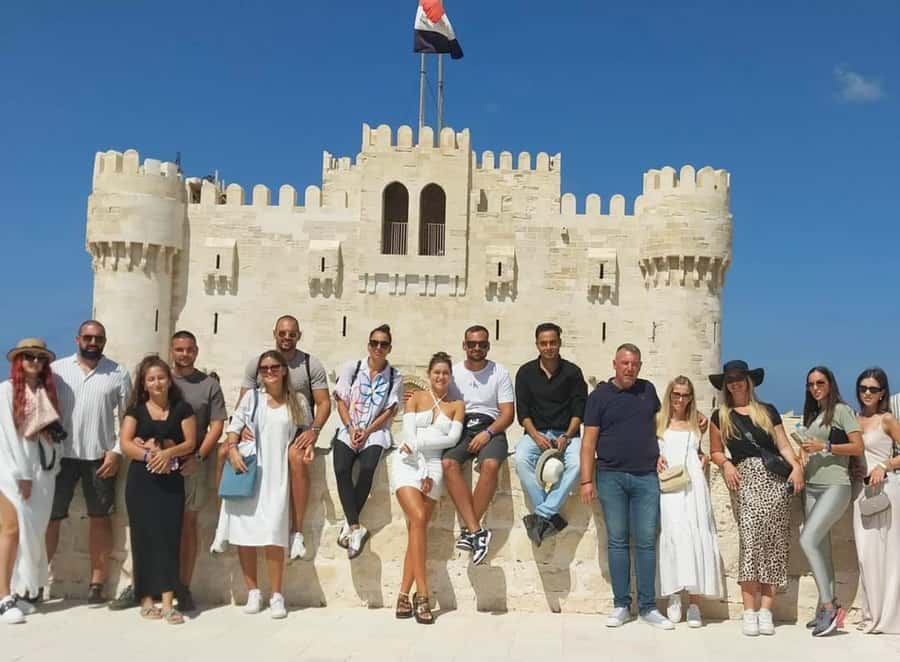
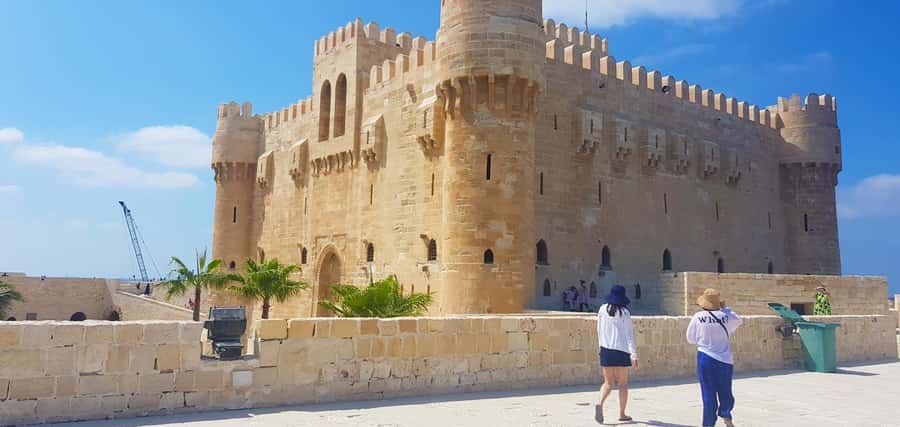
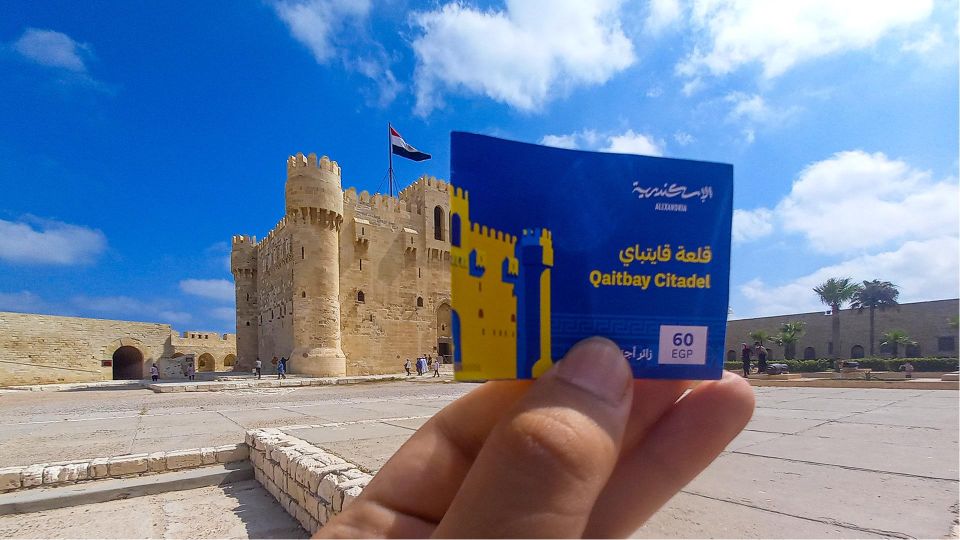
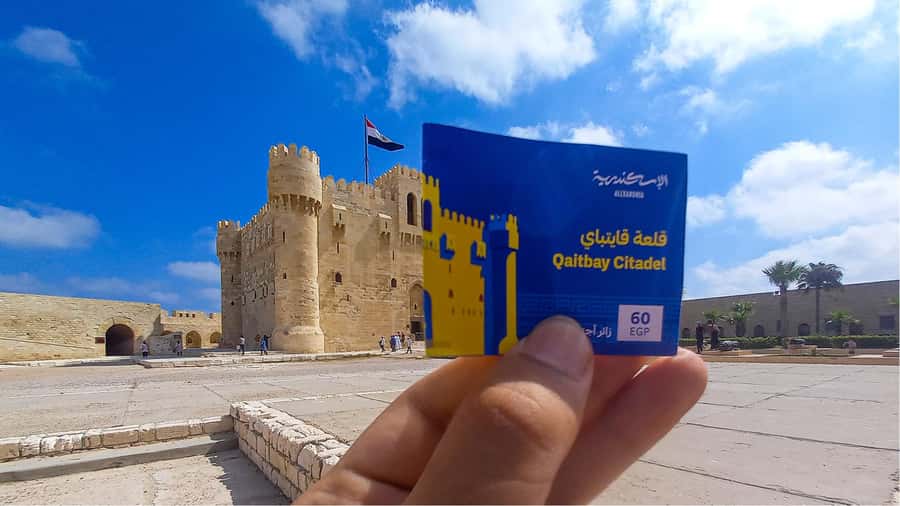
Then comes Qaitbay Citadel, built on the same site associated with the ancient Lighthouse of Alexandria (one of the Seven Wonders of the ancient world). Standing near the sea-facing setting gives you the right feeling: a lighthouse was never just a building. It was a navigation tool for ships and a symbol meant to be seen from far away.
Do keep expectations realistic. Some versions of this day feel like you see the citadel more from the outside or with limited time inside. One reason is simple: the day is already packed, and the route needs to keep moving.
If you really want to explore Qaitbay slowly, consider adding extra time in Alexandria after your day trip—this is the kind of place that rewards lingering.


St Mark’s Church: the oldest church stop changes the mood
A major highlight on this tour is the Church of St. Mark, described as the oldest church in Africa. This is a change of pace after tunnels, ruins, and palace gardens.
Instead of trying to reconstruct ancient streets from stone remnants, you’re stepping into a place that has a living spiritual identity. The contrasts are what make this day-trip feel complete: architecture from different eras, different purposes, and different ways people used space.
If you’re the type who likes “one site that isn’t archaeology,” this is your moment.
Montaza Royal Palace Gardens: Farouk’s seaside escape
Then you hit the green and the sea with the Montaza Royal Palaces Gardens. This stop matters even if you’re not a palace person, because it’s where you slow down. You can take photos and absorb the scale of royal grounds that once belonged to King Farouk, the last monarch of Egypt.
What you’ll feel here is mood. Alexandria isn’t only stone and history; it’s also a coast city with breezes and long sightlines.
The tour doesn’t position Montaza as a museum crawl. It’s more of a walk-through of the gardens’ atmosphere and a chance to step away from the intense heat and tight schedules of the earlier stops.
Corniche, the old harbor, and the funfair curiosity by Abou al-Abbas Mosque
One of the most charming parts of the route is how it mixes monumental and everyday Alexandria. You’ll stop at Abou al-Abbas al-Mursi Mosque, described as Alexandria’s largest and among its prettiest, with intricate design and large facades that are easy to photograph.
The mosque also works as a moment of quiet within the day. Once you’ve spent time underground and among ruins, this kind of open, spiritual space gives your brain a break.
Outside the mosque you might notice something surprising: an old funfair where children play on very antique rides and eat candy floss. It’s a small scene, but it adds humanity to the day—you’re not only watching history, you’re seeing how Alexandria lives now.
After that, the tour continues toward the corniche and the old harbor, where you can see fishing boats, men fishing, and traditional fishermen working nets. If you want one “cinematic” walk that doesn’t require ticket lines, this is usually it—just remember it’s still part of a busy schedule, so you may not get a long stroll.
Stanley Bridge and the naval memorial: fast views, good context
You’ll pass the Alexandria Unknown Naval Soldier Memorial and then see the Stanley Bridge, an architectural span across the Mediterranean.
These aren’t always the longest stops in the day, but they give you context for Alexandria’s modern identity. A bridge crossing water and a memorial for sailors help you connect today’s city to the sea-centered reason Alexandria has always mattered.
If you’re short on time in Alexandria, these quick views still help you “read” the waterfront correctly.
Price and value: is $85 fair for this route?
At $85 per person for a 12-hour guided day trip, the value comes from the bundle: professional guide, transport in an air-conditioned vehicle, and entrance fees if you pick the option that includes them. You also get skip-the-ticket-line and audio guide support in many languages.
This is not a bare-bones bus tour. The small group size (up to 10) and the guided explanations are part of what you’re paying for, especially on sites like catacombs, where a quick “walk and guess” would miss a lot.
If you’re someone who would otherwise spend money on taxis plus time stuck in queues, this price starts to look more reasonable. You’re buying time-saving and interpretation, not just admission tickets.
That said, this tour isn’t designed for maximal entry access. Some excavation zones are exterior-only, and Qaitbay may get limited time depending on the flow of the day. If your top goal is “spend hours inside everything,” you might feel slightly compressed.
Who this day trip suits best (and who should rethink it)
This tour suits you if you want one smart day to understand Alexandria’s main layers: burial mysteries, library ambition, Roman city remains, Christian heritage, and seaside royal gardens.
It’s also a good fit if you’re visiting Cairo and don’t want to plan an overnight trip just to sample Alexandria. The round-trip organization makes the drive feel manageable, and your guide helps stitch the stops into one coherent story.
Rethink it if you’re the type who needs lots of slow time at museums, insists on entering every site, or gets easily irritated by tight timing. This is a “see a lot, keep moving” format.
A few practical tips that make the day go smoother
Bring what you’d bring for Egypt in real life: sunglasses and a sun hat. Add comfortable shoes because you’ll be in catacomb stairs and on uneven surfaces around archaeology.
For food, plan for a lunch stop, but treat it as a flexible part of the schedule since lunch is described as optional in the general day flow. If you’re sensitive to meal timing, you might want to carry a small snack just in case.
Finally, plan for the long drive. Even when everything goes smoothly, the Cairo-Alexandria commute eats hours and traffic can stretch the pace.
One extra safety-minded note: on very long return drives, conditions can matter. If you’re traveling during a major seasonal period like Ramadan, it’s worth asking the operator about having enough driving support for the return trip.
Should you book this Cairo-to-Alexandria day trip?
Book it if you want the best chance in one day to connect Alexandria’s standout sites into a single guided route. The combination of Kom el Shoqafa, the Library of Alexandria, St Mark’s Church, Roman areas around Kom el-Deka/Serapeum, and the seaside mood at Montaza is a strong “high coverage” mix for a first visit.
Skip it—or plan extra time in Alexandria—if your priority is deep entry access and long wandering at just one or two places. This is designed to keep the day moving, and some stops will be limited.
If you do book, choose it for the guide-led flow, the transport convenience, and the small-group format. That’s where the $85 becomes more than a ticket price—it becomes a time-saver that helps you understand Alexandria fast and without hassle.
FAQ
How long is the Alexandria day trip from Cairo?
The duration is about 12 hours.
Where does the tour pick you up from?
Pickup is included from your Cairo accommodation. There is also an option for pickup from Ahlan Cairo airport. If you’re in Heliopolis (airport area), 06th of October, or similar areas, there is a supplement.
Is there a maximum group size?
Yes. The tour has a maximum of 10 travelers.
What languages are available for the live guide and audio?
A live tour guide is available in English, French, Spanish, Italian, Arabic (subject to availability). An audio guide is included and is available in many languages, including English, French, Spanish, Portuguese, and others.
Which sites are part of the itinerary?
The route includes the Library of Alexandria, Catacombs of Kom el Shoqafa, Roman areas around Kom el-Deka and Serapeum, Qaitbay Citadel (lighthouse site), Montaza Royal Palace Gardens, passing the Alexandria Unknown Naval Soldier Memorial and Stanley Bridge, visiting Abou al-Abbas al-Mursi Mosque, and visits including St Mark’s Church and external views of old Roman city excavations.
Can you enter the excavation areas?
Some excavation sites are not allowed to be entered. You’ll enjoy external views in those areas.
What should I bring for the day?
You should bring comfortable shoes, sunglasses, and a sun hat.
Is the Library of Alexandria always open?
No. The Library of Alexandria is closed on Fridays and on every public holiday. The Reading Hall has an extra ticket option.