REVIEW · CAIRO
Cairo: All-Inclusive Giza Pyramids & Egyptian Museum Tour
Book on GetYourGuide →Operated by Nice Tours · Bookable on GetYourGuide
Four hours of Giza magic and museum time. This all-inclusive tour strings together the big icons—Pyramids of Giza and the Egyptian Museum—with a practical flow that’s ideal for first-timers who want major hits without wrestling with public transport. A professional English guide keeps the day moving and adds context that helps the monuments click.
I especially like the hands-on moments: seeing Khufu, Khafre, and Menkaure up close, then getting that classic camel ride viewpoint for pyramid photos. You’re also not starting from scratch, because entrance fees and transportation are handled, so you can focus on the sights.
One thing to consider: the 4-hour promise can feel tight, and if your guide adds shopping stops, the pace can stretch or feel detoured. If you want straight pyramids then museum, ask up front.
In This Review
- Key things to look for
- How This Giza and Museum Combo Delivers Value at $70
- Pickup, Guide Style, and Language: What Will Actually Shape Your Day
- Giza Plateau: Seeing Khufu, Khafre, and Menkaure Up Close
- The Great Sphinx (Abu al-Hawl): How the Icon Gets Its Meaning
- Camel Ride Timing: Pyramid Views Without the Chaos
- Egyptian Museum Power Moves: King Tut and the Mummy Rooms
- Lunch With Pyramid Views: Included, But Not Always Worth Waiting For
- Price and Timing Reality Check: When 4 Hours Feels Like 6
- Should You Book This Tour? Who It Fits Best
- My Decision Guide: Book It If You Can Confirm No Detours
- FAQ
- What’s included in the Cairo Giza and Egyptian Museum tour?
- Is the tour really 4 hours long?
- Will I skip the ticket line?
- Does the tour include camel riding?
- Does the tour cover King Tutankhamun artifacts at the Egyptian Museum?
- Is the Royal Mummy Room included?
- What languages are available for the guide?
- Where does pickup happen?
- What’s the cancellation policy?
Key things to look for
- Hotel pickup + private air-conditioned vehicle keeps the day low-stress
- Giza Plateau access to all three major pyramids (Khufu, Khafre, Menkaure)
- Great Sphinx walk-by with its local name Abu al-Hawl (Father of Terror)
- Camel ride across the desert for quieter pyramid views and photos
- Egyptian Museum highlights including King Tut treasures and royal mummies (if available)
- Lunch with pyramid views plus a guide who handles the major “how did this happen?” questions
How This Giza and Museum Combo Delivers Value at $70
At $70 per person, this tour is priced like a classic “greatest hits” package. What makes it feel like value is what’s included: private transportation, entrance fees, a professional guide, camel ride, and lunch. For Cairo, where logistics can eat time, bundling the hard parts is the point.
The duration is listed as 4 hours, but in real life, that can vary depending on pickup timing, entry flow, and how much time you spend at each stop. Still, the overall design is smart: do the outdoor monuments first while you still have energy, then shift into the museum when you want indoor focus.
This is best if you want to leave Cairo with clear memories: pyramids, Sphinx, camel views, and the museum’s must-see names. It’s not best if you’re trying to do a slow, deep museum study session without time pressure.
You can also read our reviews of more museum experiences in Cairo
Pickup, Guide Style, and Language: What Will Actually Shape Your Day
You’ll start with pickup from your hotel in Cairo or Giza, then meet your guide and head out in a private air-conditioned vehicle. The tour is built around a live Egyptologist style guide (listed as professional and available in multiple languages), plus the convenience of having entrance fees handled.
Language matters more than people expect. One review experience flagged that English quality wasn’t strong enough for what the person wanted to learn. Other guides stood out for clear explanations—names that came up include Ahmed Rabeca, Mona, Mohammed Wagih, and Sabrin. You can’t guarantee any one of those, but you can set yourself up: request the language you’re most comfortable with and be clear that you want history explained at a pace you can follow.
Also, pay attention to how the day is guided. Some versions of tours include extra stops that feel like detours. If you don’t want that, ask a simple question before you roll: do we only go to the pyramids, Sphinx, camel ride, and museum, or are there additional marketplace stops? It’s the easiest way to protect your time.
Giza Plateau: Seeing Khufu, Khafre, and Menkaure Up Close
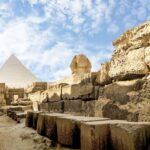
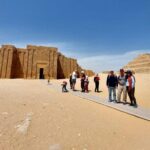
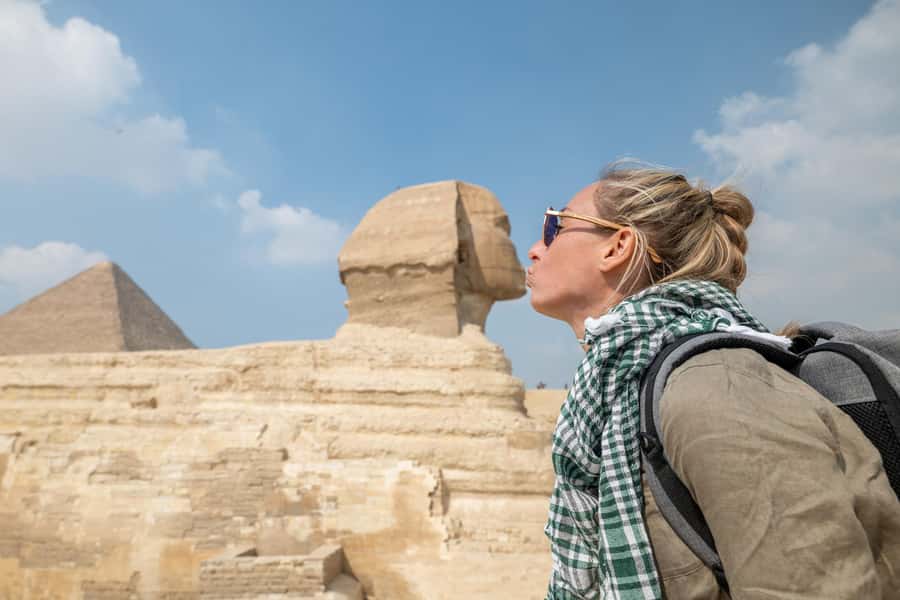
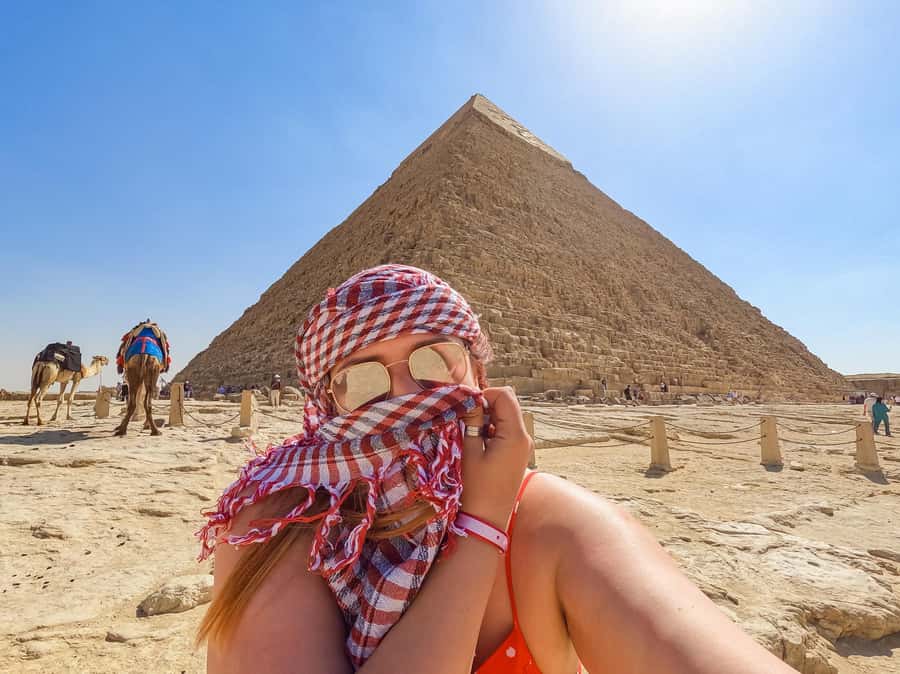
The Giza Plateau is the main event. You’ll visit the pyramids of Khufu, Khafre, and Menkaure, built more than 4,500 years ago and still visually dominant in every direction you look. The guide’s job here is to help you understand what you’re seeing: purpose, construction ideas, and the royal figures linked to each pyramid.
What I like about this stop on a guided format is that it helps you read the scene. Without context, pyramids can feel like just three huge shapes. With a good guide, you start noticing how the complex is laid out, how the monuments relate to each other, and why the names matter.
Practical advice:
- Wear shoes you trust. Even short walks on stone and uneven ground can be annoying.
- Bring sun protection. Egypt does not negotiate.
- Have your camera or phone ready for quick picture moments, because some of the best angles are brief.
If you’re a first-timer, this is the part you’ll remember most clearly. Seeing all three major pyramids in one organized block is a big deal.
The Great Sphinx (Abu al-Hawl): How the Icon Gets Its Meaning
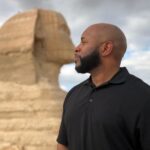
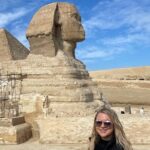
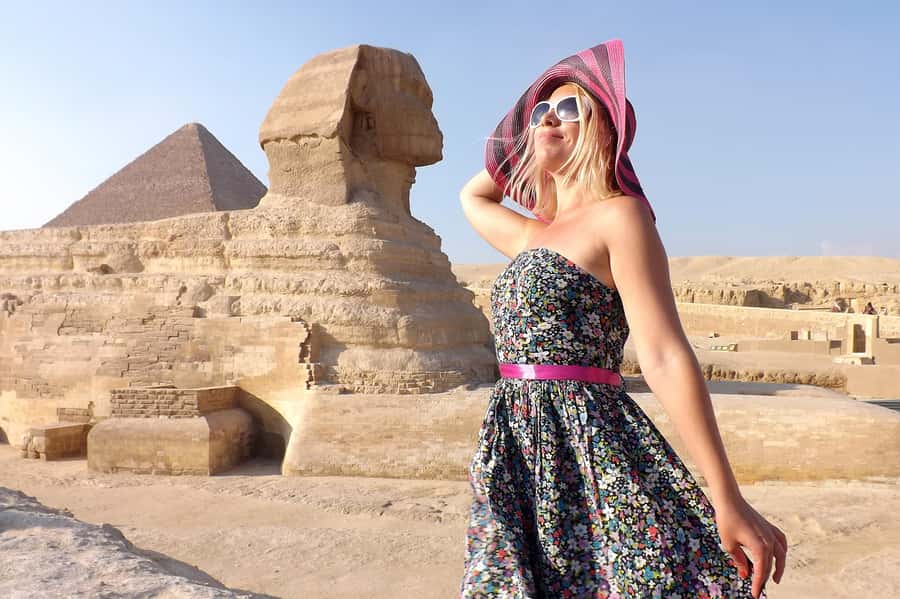
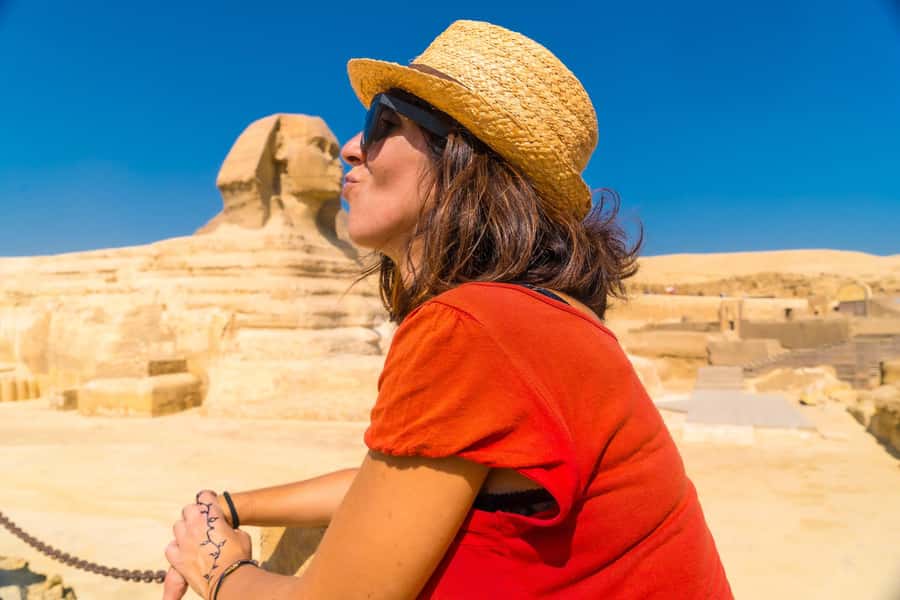
After the pyramids, you’ll head down to the Great Sphinx, carved from a single block of limestone. The Sphinx is famous not just for its size, but for what it came to represent—royal power and protection.
You’ll also hear the local name Abu al-Hawl, often described as Father of Terror. That’s the kind of detail that makes the Sphinx feel less like a photo background and more like a symbol with a human story behind it.
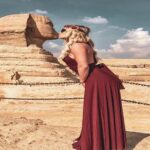
Photo tip that matters: don’t just shoot from one spot. Move a little, change angles, and aim for compositions where the Sphinx links visually with the surrounding monuments. If you’re used to modern landmarks with fences and straight front views, the Sphinx can feel more dramatic because you’re seeing it from the side as well.
Crowds can be real, so a guide who can manage where you stand helps you get shots without losing your patience.
Camel Ride Timing: Pyramid Views Without the Chaos
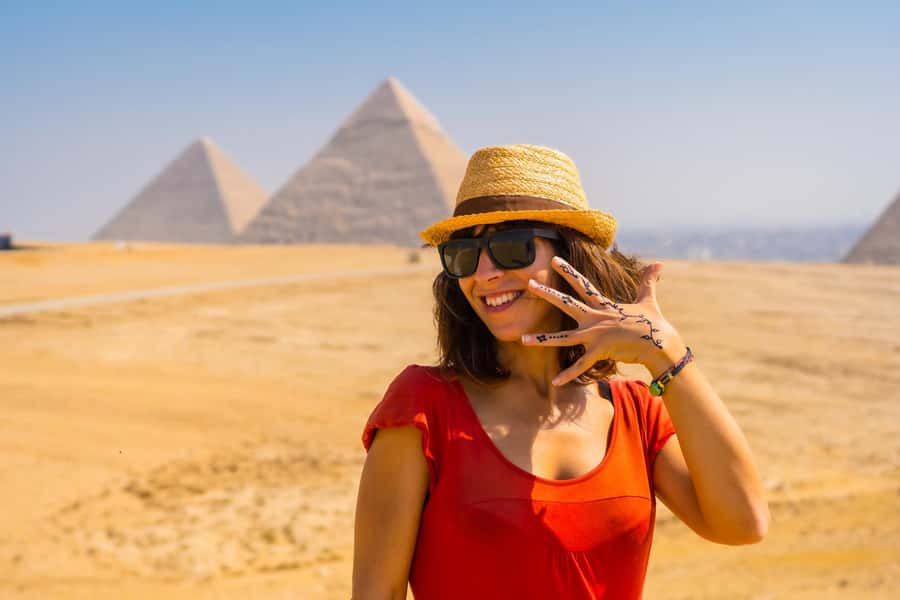
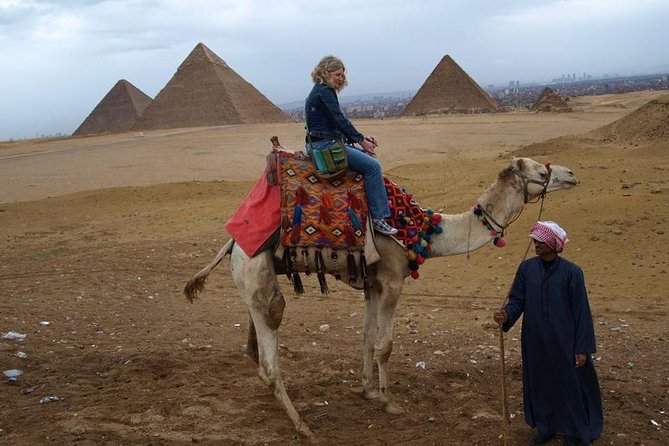
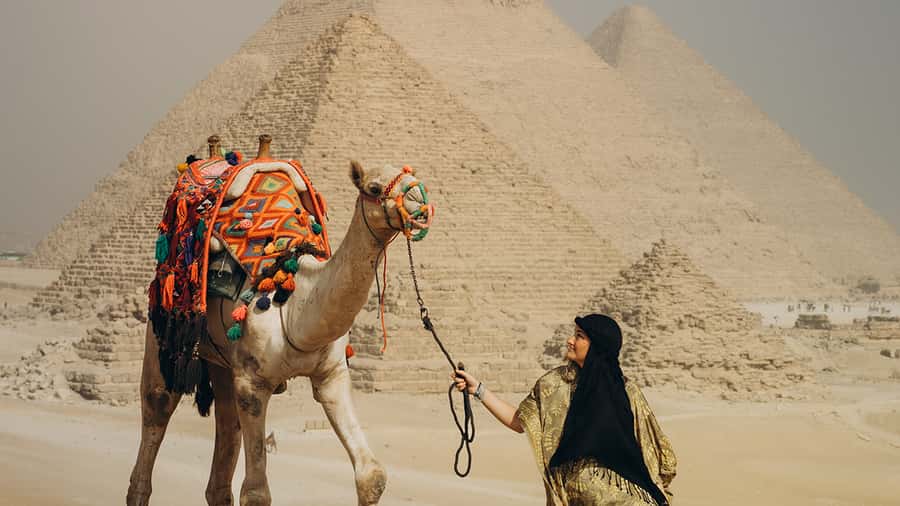
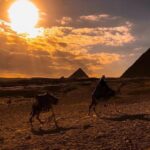
Next comes the camel ride—one of the best “you’re really here” moments on the itinerary. The idea is simple and effective: ride through the desert for a panoramic view where you can take in all three pyramids from a quieter vantage point.
This is also where the tour earns its keep, because it creates a viewpoint most people don’t get on their own schedule. You’re not just looking at the pyramids; you’re seeing how they sit in the broader Giza area.
A few comfort tips:
- Long sunlight exposure is common. Hydrate if you can.
- Wear something you don’t mind getting a little dusty.
- Keep expectations realistic: camel rides are part ride, part souvenir moment, and part photo opportunity.
If you’re the type who likes one or two standout experiences rather than constant stops, this is the part that tends to deliver the most payoff.

Egyptian Museum Power Moves: King Tut and the Mummy Rooms
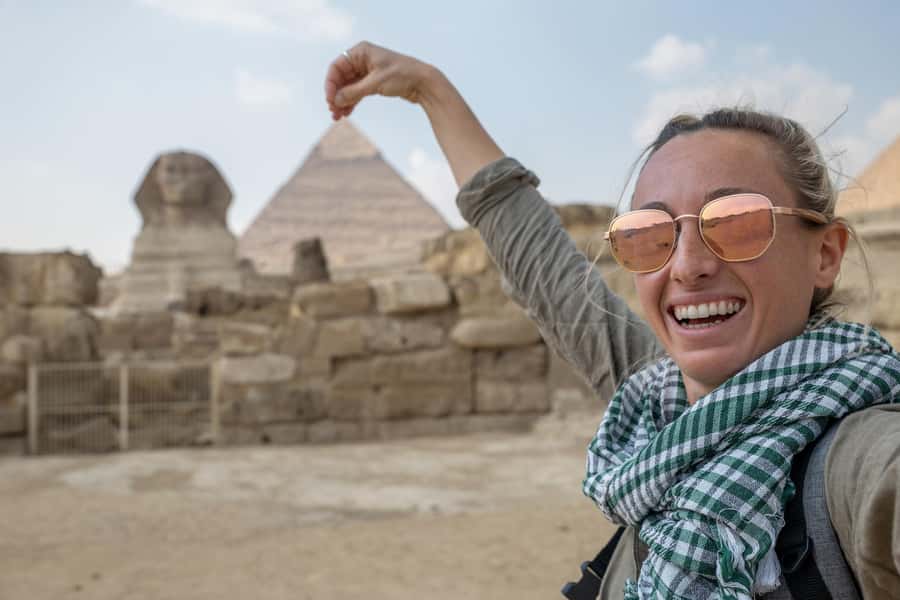
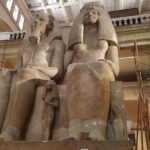
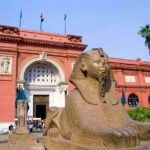
After Giza, the tour shifts to downtown Cairo and the Egyptian Museum. You’re stepping into a huge collection—over 120,000 artifacts spanning thousands of years. That sounds overwhelming, so the guided approach matters. The best value here is knowing where to spend your limited time.
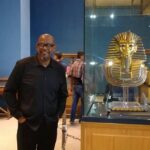
You’ll focus on the highlights: royal mummies, statues, and the treasures connected to King Tutankhamun—including his golden mask and sarcophagus. If it’s available, you may also visit the Royal Mummy Room for a closer look at ancient rulers.
Here’s how to get the most out of this portion if you care about the museum:
- Decide what your must-see items are before you arrive (King Tut items, mummies, major statuary).
- When the guide points out something, listen first, then photograph. It’s easy to get distracted and miss context.
- If you have limited time in Cairo that day, say it clearly. A tighter museum experience beats a long detour.
One caution from real-world experience: if your schedule runs behind, museum time can shrink fast. The museum is large enough that “rushed” feels like a real word, not a complaint.
Lunch With Pyramid Views: Included, But Not Always Worth Waiting For
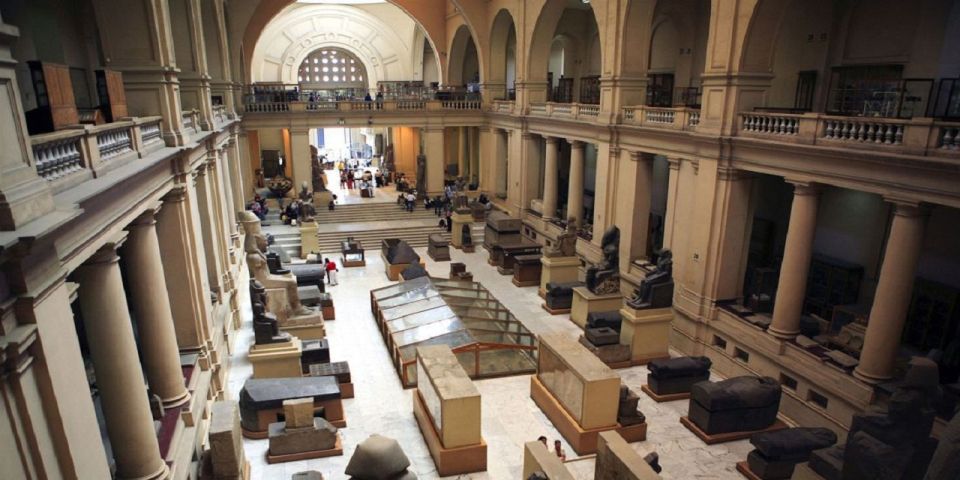
Your tour includes lunch in a local restaurant, and it’s presented as a chance to eat without losing the vibe of the day. Depending on the timing, lunch can be a pleasant reset after the outdoor heat and walking.
But lunch is still time. If you’re a museum-first person, you might feel lunch competes with your ideal pace. One traveler opted out of lunch and transportation home due to needing museum time. That’s a hint: if you want more museum focus, check how lunch affects your plan.
What to do:
- If you’re not hungry, don’t pretend. Ask whether it’s possible to keep it short.
- If you are hungry, treat it as part of the experience: Egypt is more than monuments.
The good news: lunch is part of the package, so you won’t be figuring out where to go while you’re tired.
Price and Timing Reality Check: When 4 Hours Feels Like 6
The tour advertises a 4-hour duration, but timing in Cairo depends on the day’s pace: pickups, entry lines, walking speed, and how long you want at each stop. If you’re traveling with a tight schedule, build in a buffer.
One bigger issue is shopping detours. In at least one experience, the tour felt rushed after being pulled to art and perfume/spice-style stops. The guide was friendly, but the detour cut into learning time and reduced museum time.
So here’s my practical recommendation:
- Ask whether any stops are planned beyond pyramids, Sphinx, camel ride, and museum.
- If shopping is part of the routine, tell them clearly you do not want it.
- If you want a guided museum focus, tell them you’ll need enough time at the Egyptian Museum.
If you do that upfront, you protect the value of the tour: time saved, major sights covered, and a guide who helps you understand what you’re looking at.
Should You Book This Tour? Who It Fits Best
Book this tour if you:
- Want a single organized day covering pyramids, Sphinx, camel ride, and the Egyptian Museum
- Prefer a guide to handle entrance logistics and explain key ideas
- Like a clear “greatest hits” itinerary more than a slow museum marathon
- Appreciate value bundling: transportation, fees, camel ride, lunch, taxes
Skip it (or rethink it) if you:
- Want maximum time inside the Egyptian Museum and hate time pressure
- Are sensitive to schedule changes and want no detours of any kind
- Plan to spend most of the day learning quietly rather than seeing everything quickly
If your priority is photos, this tour can be very photo-friendly—especially with the camel ride viewpoint. If your priority is deep explanation, you’ll want a guide whose English matches your expectations, so confirm language needs before going.
My Decision Guide: Book It If You Can Confirm No Detours
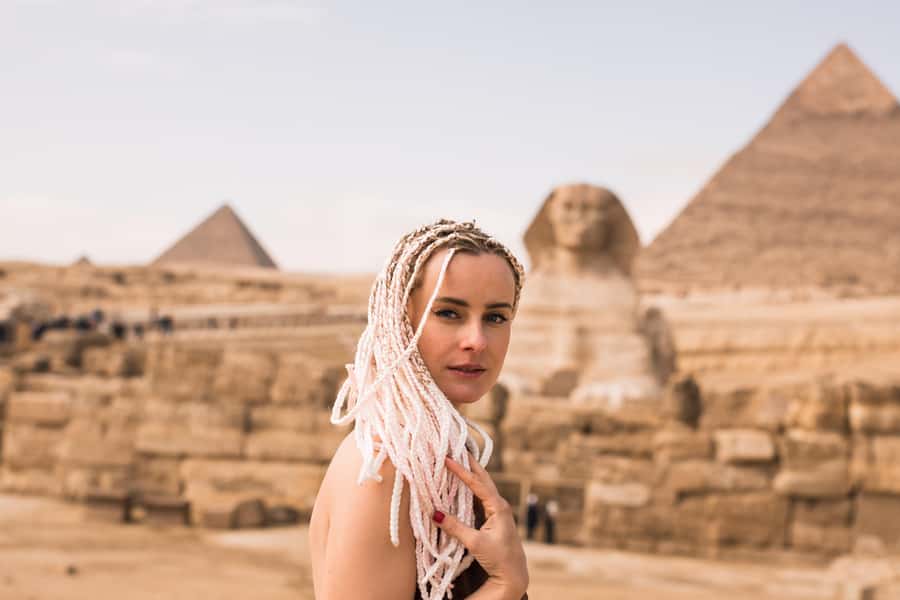
This tour earns a strong recommendation as a first Cairo “wow day.” The pyramids and Sphinx are the big draw, the camel ride adds a memorable angle, and the museum gives you the key names—King Tut items and royal mummies—without forcing you to plan every step.
But I’d book with one condition: confirm that the day stays focused on the monuments and museum, not marketplace stops. If your tour stays on track, the included extras at $70 are hard to beat. If it adds detours, you’ll feel the pinch fast.
FAQ
What’s included in the Cairo Giza and Egyptian Museum tour?
The tour includes private air-conditioned transportation, entrance fees, a professional English guide, lunch at a local restaurant, a camel ride, and all taxes.
Is the tour really 4 hours long?
The duration is listed as 4 hours, but your exact timing can vary based on pickup timing and pacing through the stops.
Will I skip the ticket line?
Yes, the tour includes skipping the ticket line.
Does the tour include camel riding?
Yes, a camel ride is included.
Does the tour cover King Tutankhamun artifacts at the Egyptian Museum?
Yes. The tour includes seeing King Tutankhamun treasures, including his golden mask and sarcophagus.
Is the Royal Mummy Room included?
It may be included if it is available.
What languages are available for the guide?
The guide is available in Arabic, English, French, German, and Spanish.
Where does pickup happen?
Pickup is available from hotels in Cairo or Giza. Pickup or drop-off from an airport, train station, Nasr City, Heliopolis, or New Cairo is available as an add-on.
What’s the cancellation policy?
Free cancellation is available up to 24 hours in advance for a full refund.