REVIEW · CAIRO
Best top rated Giza Pyramids and Sphinx Half Day Tour From Cairo
Book on Viator →Operated by Pyramids Land Private Tours · Bookable on Viator
Giza in half a day? It works. This private tour packs the Great Pyramid of Cheops and the Great Sphinx into a smooth, guided morning, with air-conditioned pickup and a route built around seeing the big monuments without the usual hassle.
What I like most is the chance to slow down with a real Egyptologist-style guide and hear the stories behind Khufu, Khafre, and Menkaure while you’re actually standing in front of the stones. I also like that your day isn’t just walking—there’s a camel ride plus lunch, so the tour feels like a complete outing instead of a quick photo dash.
The main thing to plan for: entrance fees aren’t included, and if you add anything like going inside a pyramid, your total cost goes up. Also, budget a little patience near the sites, where selling is common around entrances.
In This Review
- Key Things to Know Before You Go
- Why This Half-Day Giza Tour Feels Different
- The 9:00am Flow: How the Route Works in ~4 Hours
- Stop 1: Great Pyramid of Cheops (Khufu) — Your Anchor Point
- Stop 2: Khafre’s Pyramid — Short Look, Big Impact
- Stop 3: Menkaure Pyramid — The Final Piece of the Trio
- Stop 4: Great Sphinx — 30 Minutes to Actually Look
- The Guide Makes or Breaks the Day
- Camel Ride and Lunch: Nice Extras, But Know What You’re Buying
- Photos, Souvenirs, and the Not-So-Magical Corners
- Price and Value: Is $59 Worth It?
- Who This Tour Fits Best
- Quick Practical Tips That Pay Off
- Should You Book This Giza Pyramids and Sphinx Half Day Tour?
- FAQ
- Is this tour private?
- How long does the Giza Pyramids and Sphinx tour take?
- What time does the tour start?
- What’s included in the tour price?
- Are entrance fees included?
- Do I need a ticket before I go?
- Is the tour suitable for children?
- What is the cancellation policy?
Key Things to Know Before You Go
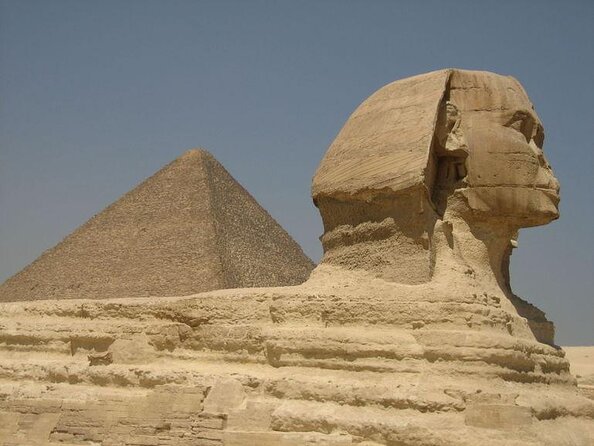
- A private, 4-hour route that focuses on the three pyramids plus the Sphinx, not a long bus crawl across Giza
- Egyptologist-guided explanations that make the names Khufu, Khafre, and Menkaure feel real
- Camel ride included, so you don’t need to scramble to find it separately
- Round-trip private transfer in an air-conditioned vehicle, which matters in Cairo’s heat
- Lunch included, so you’re not spending your half day hunting food
- Entrance fees are extra, so check what you plan to do before you arrive
Why This Half-Day Giza Tour Feels Different
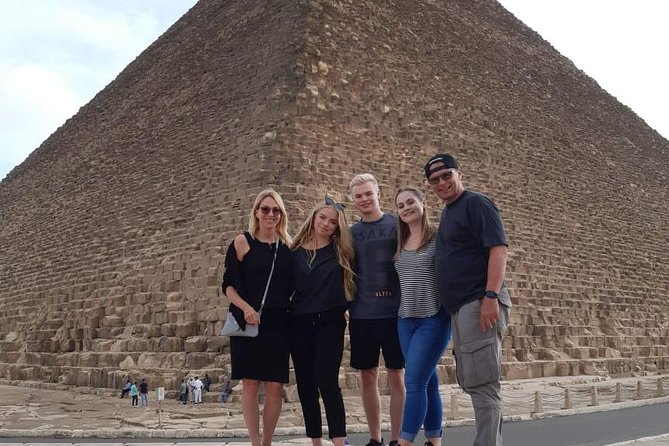
I love Giza most when it’s guided with a purpose. Otherwise, the place can turn into a blur of stone and selfies. This tour is built to give you a logical path: start at the largest pyramid, quickly move through the other two, then shift toward the Sphinx and the connected valley temple area.
What makes it more satisfying is the private setup. You’re not stuck waiting for a group to untangle itself every time someone wants one more angle. You get attention, room to ask questions, and a pace that fits a half day. Guides such as Fatima Mohammad and Manar are specifically mentioned for turning the sightseeing into stories you can actually remember.
You also get a nice “real day” rhythm. You’re not just there for monuments; you’re getting bottled water, lunch, and a camel ride. That means you spend your energy on the sites instead of logistics.
You can also read our reviews of more tours and experiences in Cairo.

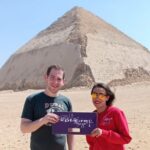
The 9:00am Flow: How the Route Works in ~4 Hours
The tour starts at 9:00am and runs about 4 hours. That timing is helpful because it gives you daylight to read the sites and take in the scale, but it also keeps you from losing half your day to crowds and heat.
Here’s how the visit usually moves, based on the planned stops:
Stop 1: Great Pyramid of Cheops (Khufu) — Your Anchor Point
You’ll spend about 1 hour at the Great Pyramid of Cheops. This is the big one—the last surviving Ancient Wonder—so treating it like an anchor makes sense. Even if you’ve seen photos, being there in person hits differently. The stones feel too large to be real.
Drawback to expect: the tour time is fixed. If you want to spend extra time inside, it can eat into your hour. The tour also notes that admission is not included, so you’ll want to be ready for official ticket costs at the start of your visit.
The upside is that with a guide, you don’t just look up and move on. You can learn how Khufu’s pyramid fits into the broader funerary system—how a pyramid wasn’t only a monument, but part of a whole plan tied to the pharaoh’s beliefs.
Stop 2: Khafre’s Pyramid — Short Look, Big Impact
Next is Khafre’s Pyramid, about 15 minutes. That short stop may sound rushed, but it’s enough to see the shape and compare it to the Great Pyramid. This is also where the value of a guided comparison really shows—your guide can point out how the three pyramids relate, rather than leaving you to guess.
One practical note: even a short stop can feel long if the heat is strong. Wear breathable shoes and use your water. (Bottled water is included, which helps.)
Stop 3: Menkaure Pyramid — The Final Piece of the Trio
Then you’ll move to Menkaure’s Pyramid for another 15 minutes. The key here is what you’ll do during that time: don’t just stand and shoot. Use the brief window to observe details and get a sense of why the trio makes sense as a group.
If you’re the type who likes to connect dots, this is where your guide’s story-building matters. The pyramids aren’t isolated landmarks—they’re linked by purpose and by who was buried where.
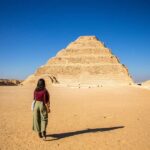
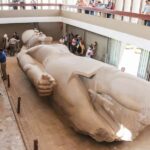
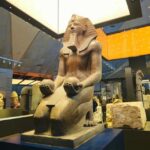

Stop 4: Great Sphinx — 30 Minutes to Actually Look
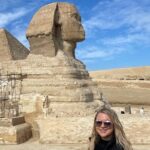
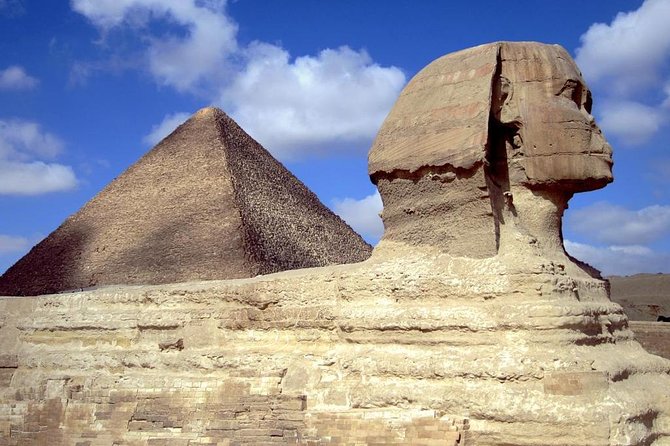
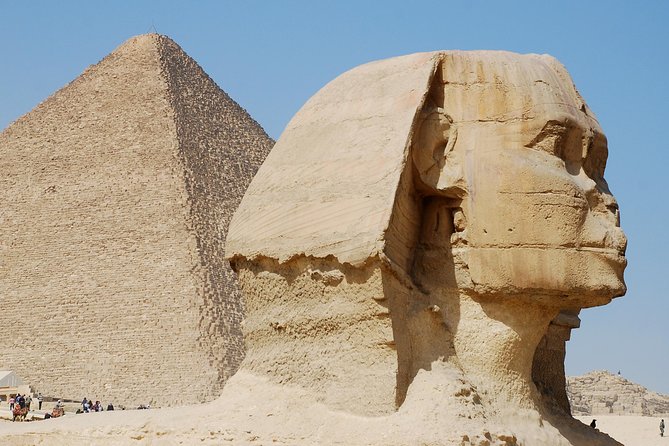
Finally, you’ll reach the Great Sphinx for about 30 minutes. The Sphinx is one of those places where your brain keeps trying to understand it from multiple angles at once. It’s not just big—it’s weird in the best way: a human-headed statue carved right beside the pyramids.
You’ll also hear about the valley temple connection. That valley temple is part of the funerary complex, so it helps to see it as more than a backdrop. It was designed for rituals tied to the burial and the ongoing cult around the pharaoh.
The Guide Makes or Breaks the Day
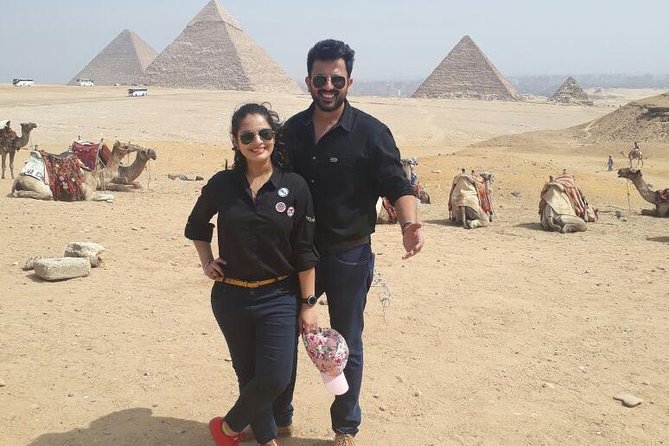
With tours like this, the guide isn’t a bonus. It’s the point. What stands out across the best experiences is story quality and responsiveness. Names that come up again and again include Fatima Mohammad, Manar, and guides such as Mohamed and Michael, with descriptions like excellent storytelling, answering questions, and guiding you with a calm, organized approach.
I’d treat this as a “learn while you look” tour. You’ll get the names, the purposes, and the details that make the pyramids feel less like museum exhibits and more like an ancient machine with a job to do.
A good sign: some guides are also described as not pushing add-ons hard. That matters because around Giza, extra stops and shop pitches can eat time and patience. A guide who keeps you focused means you spend your 4 hours where it counts.
Camel Ride and Lunch: Nice Extras, But Know What You’re Buying
Two inclusions can make the difference between a good tour and a satisfying one:
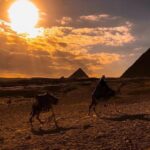
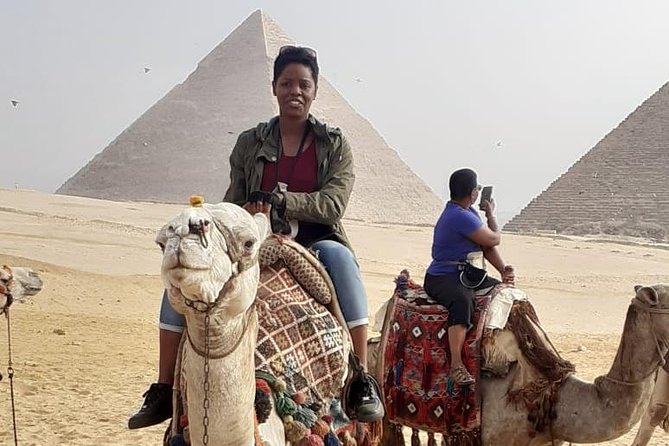
Camel ride included. This isn’t the kind of thing you want to treat like a throwaway. If you go for it, approach it as an experience that takes some coordination and time. If you dislike animal rides, you might consider skipping it, but the tour does list it as part of the included package.
Lunch included at a good quality restaurant. In Cairo, eating can be either quick and basic or time-consuming and expensive. Having lunch slotted into the tour value helps you keep momentum. It also means you’re less likely to be hungry and cranky at the Sphinx, which is not a great place to test your patience.
Photos, Souvenirs, and the Not-So-Magical Corners

Let’s talk reality. Around the pyramids, you’ll see constant opportunities for posed shots and vendor activity. One experience notes that some photo moments can feel a bit cheesy, like the typical holding-a-pyramid style pictures and playful Sphinx poses.
My advice: do the photos you actually want, but don’t let them steer your attention away from the sites. The Great Pyramid is the star, and the Sphinx is the moment you’ll remember long after the camera part.
Also be smart about shopping. One caution from an experienced guide-orientation perspective: avoid pressured, low-value purchases like things sold near the pyramids that can be overpriced for what they are, including papyrus-style items or scent shops. If you want souvenirs, pick them intentionally, not because someone tries to rush you.
Price and Value: Is $59 Worth It?
At $59 per person, this tour can be a solid value if you compare the whole package. You’re getting:
- A private tour
- An Egyptologist-style guide
- Round-trip private transfer in an air-conditioned vehicle
- Bottled water
- Camel ride
- Lunch
- Mobile ticket (which helps keep things straightforward)
The catch is the one budget line item you can’t ignore: entrance fees aren’t included. That means your final cost depends on what sites/tickets you select, and whether you choose to go inside a pyramid.
So here’s how I’d judge it: if you’d otherwise pay for a guide, transportation, and lunch separately, this can come out more reasonable than piecing it together. If you’re very cost-sensitive and only want the absolute bare minimum outside viewing, you might find a cheaper option—but you’ll likely give up comfort and guidance.
Who This Tour Fits Best
This half-day format is best for:
- You want the “big hits” of Giza without committing to a long full-day plan
- You’d rather spend time learning than negotiating logistics
- You appreciate air-conditioned comfort and don’t want your schedule crushed by slow group travel
- You want a private guide who can answer questions as you walk
It’s also a good choice if you have limited time in Cairo or you’re doing multiple activities in one day.
If you’re planning to spend lots of extra hours going inside monuments and you like a slow, unstructured stroll, the 4-hour cap might feel tight. In that case, consider building more time into your day.
Quick Practical Tips That Pay Off
Bring:
- Comfortable, grippy shoes (the grounds can be uneven)
- Sun protection and sunglasses (even in a half day)
- Cash or card for entrance fees, since they’re not included
Ask your guide:
- What tickets you’ll need before you step in
- How to time any optional add-ons so they don’t steal from the Sphinx
And mentally prepare:
- You’ll be in a high-traffic, highly commercial area. Keep your focus on what you came for.
Should You Book This Giza Pyramids and Sphinx Half Day Tour?
If you want an organized, private route that hits the Great Pyramid, the other two pyramids, and the Sphinx with a guide who can turn names into context, I think this is a smart pick. The biggest reason is the combination of included comfort (transfer, water, air-conditioning), included food (lunch), and included experience (camel ride), all within a tight 4-hour window.
I’d only hesitate if your budget depends on skipping entrance fees and you plan to avoid any extras. In that case, the “not included” tickets can surprise you at the gate.
Bottom line: for most first-timers, this is a well-paced way to see Giza without losing your day to transport, confusion, or overly salesy detours.
FAQ
Is this tour private?
Yes. It’s listed as a private tour/activity, meaning only your group participates.
How long does the Giza Pyramids and Sphinx tour take?
The duration is about 4 hours (approximately).
What time does the tour start?
The start time is 9:00am.
What’s included in the tour price?
The tour includes bottled water, a professional guide, a private tour, round-trip private transfer, transport by air-conditioned vehicle, a camel ride, and lunch.
Are entrance fees included?
No. Entrance fees are not included.
Do I need a ticket before I go?
The tour includes a mobile ticket, and confirmation is received at booking.
Is the tour suitable for children?
Children must be accompanied by an adult.
What is the cancellation policy?
You can cancel for a full refund if you cancel at least 24 hours in advance of the experience’s start time. Free cancellation applies under that timing rule.