REVIEW · ASWAN
4 Days Nile Cruise From Aswan To Luxor
Book on Viator →Operated by Adoro viajar a Egipto · Bookable on Viator
Four days on the Nile feels surprisingly full. This 5-star, full-board cruise strings together Aswan to Luxor temple highlights with guided stops and easy transfers, plus lively onboard evenings that go beyond the basics. I like how the day-to-day plan keeps you moving without the usual Egypt transport headaches.
What I really like are the hands-on moments: the Philae Temple motorboat ride is part of the experience, not an add-on. And the guide team (often led by Ibrahim) is known for being attentive, punctual, and very strong at explaining what you’re seeing—plus helping with photos so you get the shot, not just the view.
One consideration: site entry fees and other extras are not included, and in Luxor your exact East Bank timing can depend on when the ship arrives (sometimes Karnak and Luxor Temple happen the same afternoon, sometimes they’re split). Plan for that flexibility so you don’t feel rushed.
In This Review
- Key Highlights You’ll Actually Care About
- A 4-Day Aswan to Luxor Cruise With Less Stress Than DIY
- Meet-and-Greet Transfers and a Guide Who Adds Context
- Day 1 in Aswan: Philae Temple by Motorboat and an Easy First Evening
- Sailing to Kom Ombo and Edfu: Temple Views Right on the River
- Day 3 in Luxor: Karnak and Luxor Temple on the East Bank
- Karnak Open-Air Museum: More Complex Than One Temple
- Luxor Temple: New Kingdom Power With Royal Touches
- Day 4 West Bank Classics: Colossi of Memnon to Hatshepsut and Kings Valley
- Deir el Bahari and the Temple of Hatshepsut
- Valley of the Kings: Tomb Country and the “Place of Truth”
- What Full Board Covers on This Nile Cruise (and What You’ll Pay Extra)
- Price and Value: Is $500 Fair for 4 Days?
- Who This Cruise Suits Best (and Who Might Prefer Something Else)
- Should You Book This 4-Day Nile Cruise?
- FAQ
- What cities does this cruise connect?
- How long is the cruise?
- Is pickup and drop-off included?
- What meal plan is included?
- Are site entrance fees included?
- Does the tour include the Philae Temple motorboat?
- Are drinks included during meals?
- What language is the Egyptologist guide?
- How many people are in the group?
- Is cancellation free?
- Is this experience dependent on weather?
Key Highlights You’ll Actually Care About
- Small group (max 15 travelers) keeps the pace comfortable at ruins.
- Meet-and-greet in Aswan and Luxor reduces the start-and-end scramble.
- Philae Temple includes the motorboat ride for the classic island approach.
- Evening entertainment is built in (folkloric show and a galabia party are included).
- Luxor timing can shift depending on arrival by 3:00–3:30 PM.
- Guide Ibrahim is repeatedly praised for clear explanations and photo help.
A 4-Day Aswan to Luxor Cruise With Less Stress Than DIY
A Nile cruise is the easiest way to see a string of ancient sites without constantly changing buses, guides, and schedules. In four days, you get a focused route: Aswan up to Kom Ombo, then on to Luxor, with guided time at major temples and monuments.
The value here is the balance between structure and freedom. You’re not stuck only in a seat—excursions include time to walk, look closely, and take pictures—while the cruise handles the long-water transport between stops.
You can also read our reviews of more boat tours in Aswan
- 4-Days Nile Cruise From Aswan To Luxor including Abu Simbel and Hot Air Balloon
★ 5.0 · 3,142 reviews
Meet-and-Greet Transfers and a Guide Who Adds Context
One of the best parts of a guided cruise is how little energy it takes to start. You can be picked up from your hotel, Aswan airport, or railway station, and you’ll also have help when ending in Luxor (airport/railway station or hotel transfer).
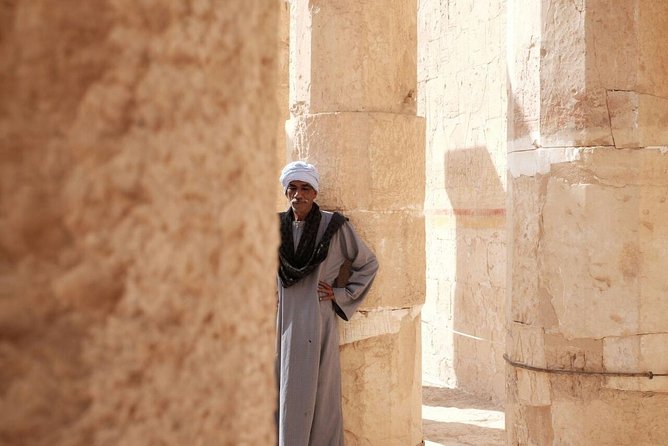
Your Egyptologist guide is part of the deal on excursions, and the guide team is described as strong across English, Spanish, and Portuguese. In the field, that matters: temple carvings are easier to read when someone explains what you’re looking at before you walk through it.
Also, Ibrahim comes up again and again in positive feedback. The recurring theme is practical attention—good timing, clear explanations, and help with photos and video content—so you spend less time wondering where to stand and more time actually absorbing the sites.
Day 1 in Aswan: Philae Temple by Motorboat and an Easy First Evening
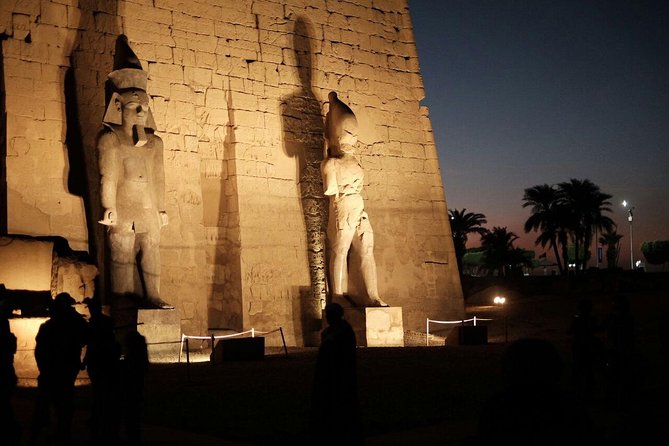
Day one starts with pickup and getting you onto the ship before lunch. If your arrival into Aswan is early, the tour notes that you won’t be forced to wait around until check-in time—cruise check-in is listed as 12:00 PM, so the plan aims to keep you moving instead of baking in heat.
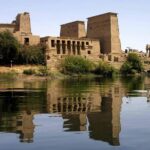
After lunch on board, you visit Philae Temple, one of Egypt’s most photogenic island temple complexes. You’ll cross by small motorboat, which is a big deal because it changes how you experience the site. Instead of arriving by foot and getting one flat viewpoint, you get that approach over water that immediately sets the scene.
Philae has a story that makes the stones feel alive. The temple was originally threatened when the High Dam project threatened to submerge it, and it was reconstructed on Aglika Island. That relocation effort preserved the temple complex’s appearance and layout, so you’re not just looking at ancient art—you’re also seeing a monument that survived a modern crisis.
Dinner is on board, followed by a folkloric show. If you’ve been to Egypt before, you’ll recognize the pattern: after a full day outdoors, these onboard cultural evenings are a friendly way to rest your legs without feeling like the day was only sightseeing.
Quick reality check: the Philae admission ticket itself is not included, so you’ll want to budget for entrance fees separately.
Sailing to Kom Ombo and Edfu: Temple Views Right on the River
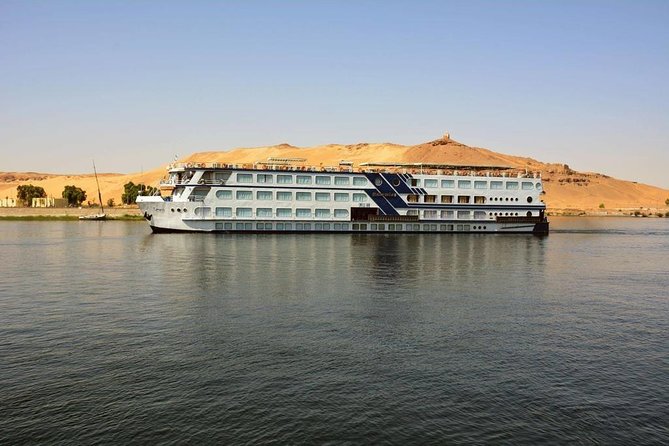
Day two begins with breakfast on board, then you have free time with an optional Abu Simbel add-on if you want the long detour. After that, the day settles into the core cruise rhythm: lunch on board, then sailing for nearly three hours while you enjoy deck time.
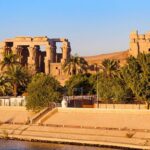
When you arrive at Kom Ombo, you visit the Temple of Kom Ombo, a site that feels different from many others because it’s right near the riverbank. It was dedicated to Sobek Raa (the crocodile god) and Horus the Elder, and it’s tied to the Ptolemaic dynasty era, with construction dated to around 180 B.C during a period of Roman influence.
What makes Kom Ombo worth your attention is how it reads as a river-stop temple rather than a distant landmark. You’re not walking forever to feel the place—you can see the Nile, and that proximity is part of the atmosphere.
After temple time, dinner is on board, and the evening includes a galabia party. This is one of those “yes, it’s touristy” moments that can still be fun if you go in with the right attitude: think music, dancing, and a chance to mingle rather than a museum-style performance.
You overnight in Edfu town.
Day 3 in Luxor: Karnak and Luxor Temple on the East Bank
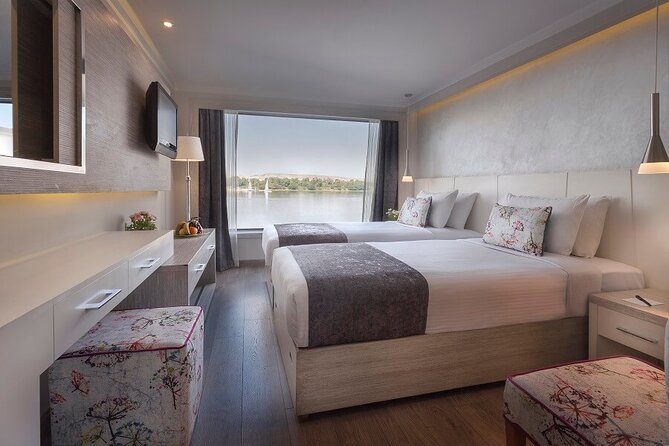
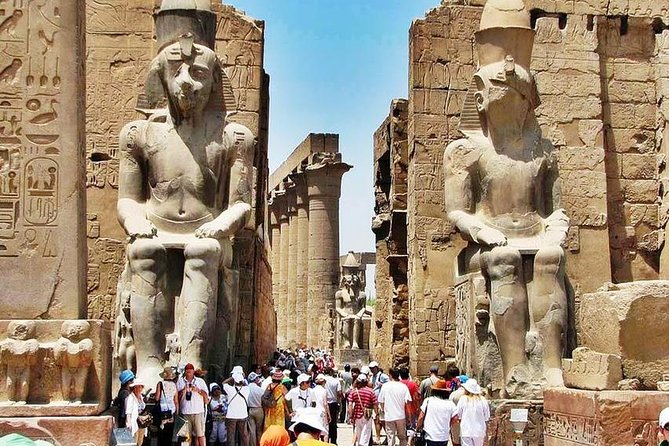
By late afternoon, you arrive in Luxor and start your guided temple run on the East Bank. The day is built around two major stops: Karnak first, then Luxor Temple.
A few more Aswan tours and experiences worth a look


Karnak Open-Air Museum: More Complex Than One Temple
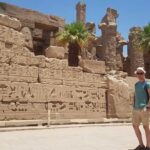
Karnak isn’t a single temple. It’s a huge complex of sanctuaries, kiosks, pylons, and obelisks. It’s associated with the Theban Triad—Amun, Mut, and Khonsu—and it reflects the long importance of this religious center in ancient Egypt.
Here’s the practical benefit of having an Egyptologist guide: Karnak can blur into “big ruins everywhere” if you don’t know what to notice. With explanations, you start seeing the logic—temple sections, roles of different structures, and why certain gods and pharaohs mattered here.
Luxor Temple: New Kingdom Power With Royal Touches
After Karnak, you visit Luxor Temple, largely built under Amenhotep III and later completed with additions credited to Tutankhamon and Ramses II. One interesting detail is that Ramses II raised and decorated the first pylon, with scenes tied to the military battle of Kadesh.
Luxor Temple is often easier to appreciate than Karnak because it feels more “focused” even though it’s still grand. At this point, you’ll likely appreciate the pace shift: less scanning for overall layout, more time noticing carvings and how the temple was designed to impress.
Timing note that matters: if your cruise arrives by 3:00 or 3:30 PM, you may have a chance to visit both Karnak and Luxor Temple on the same afternoon. If not, the plan allows for seeing one of them the next day. Either way, the goal is to reduce stress, not cram you into an unrealistic sprint.
Dinner and overnight are on board in Luxor.
Day 4 West Bank Classics: Colossi of Memnon to Hatshepsut and Kings Valley
Day four is the big West Bank sweep: you’ll move from sunrise-photo opportunities to tomb country.
After breakfast, you check out and get a photo stop at the Colossi of Memnon. These are two towering twin statues associated with Amenhotep III, plus smaller figures carved near the feet. They’re famously named Colossi of Memnon, partly due to a phenomenon connected to one of the statues after an earthquake—an added layer that makes them feel more “story-like” than just stone.
There’s also an optional hot air balloon ride mentioned as available, but that’s your call. If you like a sky view early in the day, it can be a fun contrast to all the ground-level temples.
Deir el Bahari and the Temple of Hatshepsut
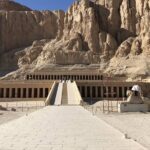
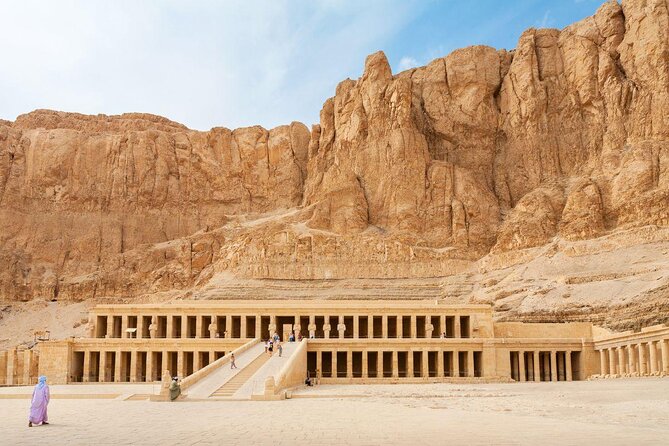
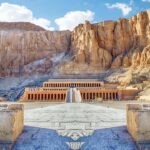
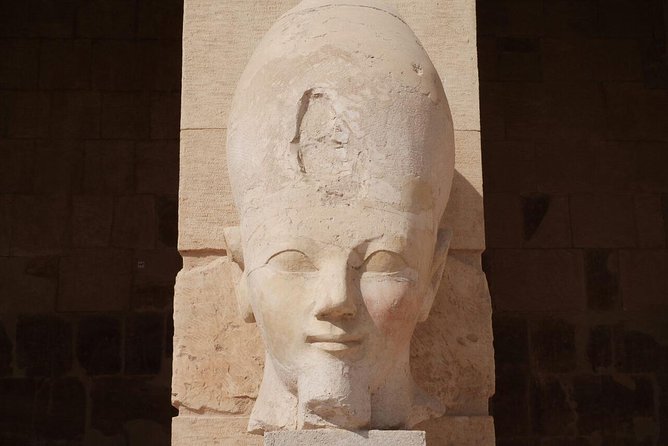
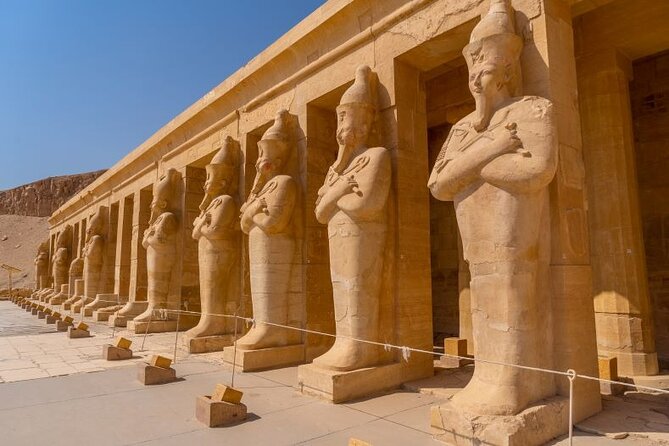
Next is the Temple of Hatshepsut at Deir el Bahari, famous for its layered terraces rising from the desert plain up toward the cliffs. It’s strongly associated with Queen Hatshepsut’s story and the temple’s connection with her nephew.
Even if you’ve seen photos, it can still land differently in person because the design uses the terrain. The guide help here is practical: knowing what each terrace and section is meant to communicate makes it easier to appreciate why the place looks the way it does.
Valley of the Kings: Tomb Country and the “Place of Truth”
Then you head to the Valley of the Kings, described as the Great Place of the Truth. You’ll have time to look around and see tombs connected to kings such as Merneptah, Ramses III, and Ramses VI.
The key thing to know before you go: the Valley of the Kings is less about one dramatic building and more about a sacred geography. With the guide explaining what you’re seeing, tomb sites stop feeling like random holes in the rock and start feeling like a structured choice of sites for immortality.
Afterward, you transfer to Luxor railway station, airport, or your hotel.
One important note: lunch is not included on day four, so either plan to budget for it or grab something on the way depending on your departure timing.
What Full Board Covers on This Nile Cruise (and What You’ll Pay Extra)
This cruise is sold as full-board, and in practice that usually means meals are handled for most of your days. You’re included for 3 breakfasts, 3 lunches, and 3 dinners.
Where people get surprised is the details around drinks and extra comfort. Water during meals or WiFi on the Nile cruise are not included. Bottled water is included during outings outside the cruise ship, which is a nice touch for temple visits.
Also, site entrance fees are not included. That’s a big “read the fine print” item on any Egypt tour because it affects your final budget even when the cruise price looks attractive on paper.
Tipping is also not included. That’s normal in this kind of travel, but it’s smart to keep cash set aside for guide/driver/crew so you don’t scramble on the day.
Price and Value: Is $500 Fair for 4 Days?
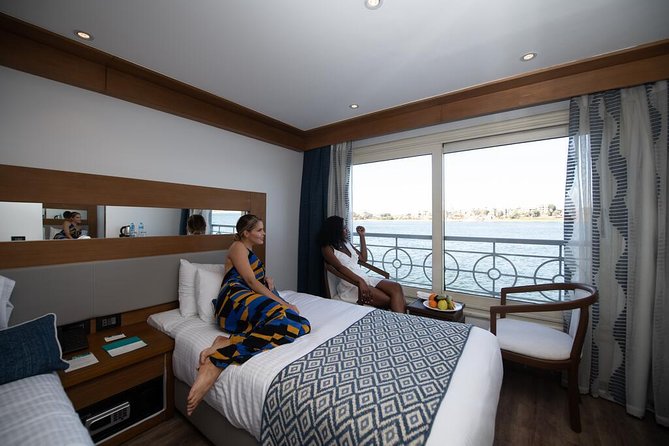
At $500 per person, you’re paying for a lot of moving parts to be managed: a 5-star cruise for about three nights, guided excursions with an Egyptologist, and organized transfers from pickup through drop-off. For many people, the value isn’t just the price tag—it’s the time saved and the mental load removed.
You should still budget realistically for what isn’t included:
- Entrance fees for temples and monuments
- Drinks during meals
- Tips
- Any optional excursions like Abu Simbel or hot air balloon
If you want guided temple time with less logistical hassle than DIY travel between Aswan and Luxor, this price tends to make sense. If you’re the kind of traveler who hates set schedules and wants to control every minute, you might feel that you’re paying for guidance you may not fully use.
Who This Cruise Suits Best (and Who Might Prefer Something Else)
This is a strong fit if you:
- Want the classic Aswan to Luxor temple route in a compact 4-day window
- Like being guided at ruins instead of piecing it together alone
- Prefer a smaller group experience, with a maximum of 15 travelers
- Enjoy onboard evenings (folkloric show and galabia party are included)
It might be less ideal if you:
- Have very tight preferences about which sites you want and exactly when (Luxor timing can shift based on arrival)
- Don’t want to plan for extra costs like entrance fees and tips
- Need a completely flexible day-to-day schedule
Should You Book This 4-Day Nile Cruise?
My take: this one is worth considering if your priority is a guided, low-stress route through Egypt’s heaviest hitters—Philae, Kom Ombo, Karnak, Luxor Temple, Hatshepsut, and the Valley of the Kings—without constant ground transport.
Before you book, I’d do two quick checks:
- Make sure you’re comfortable paying for entrance fees on top of the cruise price.
- Decide whether you’d like the optional extras (Abu Simbel and hot air balloon). If not, that’s fine, but it helps you judge whether the cruise price feels like a good match for your travel style.
If you show up ready for temples, walking, and story-focused guiding, you’ll likely leave with that rare combo: photos that look good and a better grasp of what those stones meant.
FAQ
What cities does this cruise connect?
It runs from Aswan to Luxor, with the route including stops such as Aswan, Kom Ombo, and Luxor.
How long is the cruise?
The duration is listed as about 4 days.
Is pickup and drop-off included?
Yes. You get meet-and-greet service at arrival and departure, with transfers by air-conditioned vehicle.
What meal plan is included?
You get full-board with 3 breakfasts, 3 lunches, and 3 dinners. Lunch on day four is not included.
Are site entrance fees included?
No. Entrance fees to historical sites are not included, so you should budget for them separately.
Does the tour include the Philae Temple motorboat?
Yes. The Philae Temple motorboat is included.
Are drinks included during meals?
No. Water or drinks during meals are not included, and WiFi on the Nile cruise is also not included.
What language is the Egyptologist guide?
The guide is listed as available in English, Spanish, and Portuguese.
How many people are in the group?
The maximum group size is 15 travelers.
Is cancellation free?
Yes. You can cancel up to 24 hours in advance for a full refund.
Is this experience dependent on weather?
Yes. It requires good weather, and if it’s canceled due to poor weather, you’ll be offered a different date or a full refund.
You Might Also Enjoy
More 4-Day Experiences in Aswan
More Boat Tours & Cruises in Aswan
- 4-Days Nile Cruise From Aswan To Luxor including Abu Simbel and Hot Air Balloon
★ 5.0 · 3,142 reviews
More Tour Reviews in Aswan
- 4-Days Nile Cruise From Aswan To Luxor including Abu Simbel and Hot Air Balloon
★ 5.0 · 3,142 reviews