REVIEW · CAIRO
2 Days In Giza And Cairo. (Including lunch)
Book on Viator →Operated by Egypt Royal Tours · Bookable on Viator
Pyramids feel unreal until you slow down. This two-day private plan strings together Cairo and Giza in a way that feels less like a sprint, with a guide who explains what you’re seeing as you go. You’ll start early, ride in an air-conditioned vehicle, and cover the big hits: pyramids, the Sphinx, Saqqara, Memphis, the Egyptian Museum, the Citadel and the Muhammad Ali Mosque.
I love the front-door pickup and drop-off from any hotel in Cairo. It removes one of the biggest headaches in this city, since getting across Cairo on your own can turn into a whole separate tour.
The second thing I like is the way the schedule builds in real context: you’re not just dropped at monuments, you’re walking through the why behind them. One possible drawback is that the day is still packed, so if your guide moves fast, the tour can feel rushed. If you want more time for photos or a slower pace at one site, you’ll need to ask for it during the day.
In This Review
- Key highlights at a glance
- A smarter way to see Cairo and Giza: two consecutive days
- Hotel pickup, air-conditioned rides, and how the private format helps
- Day 1 at the Giza Plateau: Great Pyramids, Sphinx views, and valley temple time
- Saqqara’s Step Pyramid: the world’s oldest major stone structure
- Memphis and Ramses II: Old Kingdom power in a more grounded setting
- Dahshur’s Bent and Red Pyramids: the story of experiments
- Day 2 in the Egyptian Museum: King Tut’s mask and the spotlight on royal collections
- Salah El-Din’s Citadel and the Mosque of Muhammad Ali: Ottoman style with political drama
- Khan al-Khalili: marketplace browsing with a guide’s reality check
- Price and value: what $300 includes, and what that buys you in practice
- Who should book this tour, and who might want a different pace
- Should you book 2 Days in Giza and Cairo? My call
- FAQ
- What time does the tour start?
- Is pickup from my hotel included?
- Is this a private tour?
- Are admission tickets included?
- Are meals included?
- How do I get the tickets?
- Is the tour air-conditioned?
- What’s included in the price, and what’s not?
Key highlights at a glance
- Private guide explanations that help you connect pyramids, Old Kingdom Memphis, and Islamic Cairo instead of treating them like random stops
- Hotel pickup and drop-off plus air-conditioned vehicle rides to reduce Cairo-Giza friction
- All admission tickets included for every listed site, so you’re not stopping to manage entry fees
- Two included lunches at “nice restaurants,” which matters when your days start early and run long
- Egyptian Museum focus on King Tut’s collection, including the famous golden mask
A smarter way to see Cairo and Giza: two consecutive days
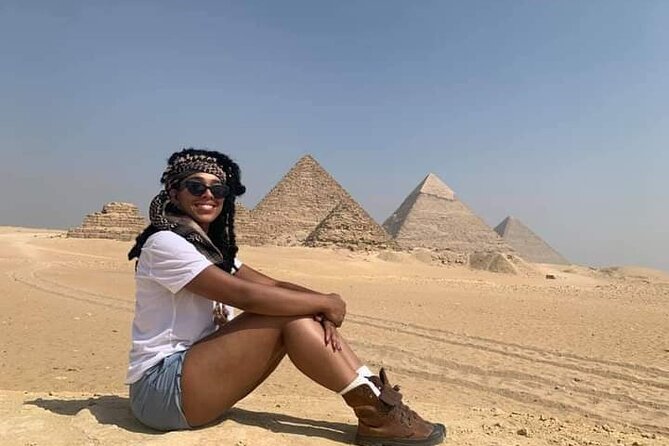
Cairo and Giza get famous for a reason. They also get overwhelming fast. A lot of itineraries smash everything into one day, which can make you feel like you’re checking boxes instead of understanding what you’re looking at. This tour’s main win is simple: it gives you two full-day blocks so you can actually process the sights.
Day 1 leans heavy on the pyramid world. You start on the plateau of Giza for the Great Pyramids and the Sphinx area, then you head to Saqqara for the Step Pyramid and related monuments, move on to Memphis for Old Kingdom highlights, and finish with Dahshur for two dramatic pyramid experiments. Day 2 shifts to Cairo proper, building toward the Egyptian Museum’s King Tut collection, then layering in Ottoman-era architecture at the Citadel, and ending in Khan al-Khalili, where you can browse and soak up street life.
You’re also working with a private setup. That’s important here, because the difference between a good visit and a frustrating one often comes down to how your guide handles time, crowd movement, and your questions.
A few more Cairo tours and experiences worth a look
Hotel pickup, air-conditioned rides, and how the private format helps
The tour begins at 8:00 am, with pickup offered from your hotel in Cairo and return drop-off at the end. That sounds small on paper, but it changes your whole experience. You don’t need to navigate meet-up points, figure out transport logistics, or lose time on back-and-forth travel.
You’ll also ride in an air-conditioned vehicle between stops. Cairo heat can flatten your energy by midday, and the pyramid plateau days especially reward having cooled time between major sites.
Because it’s private, the guide can steer the visit around what you care about—history, photography, or just not getting lost. In the feedback I reviewed, guides like Hala, Mohammed, Mo, and Haitham came up repeatedly for keeping things smooth and making the day feel easier than self-guiding.
One more practical detail: you get a mobile ticket, which usually helps on the logistics side when you’re moving quickly from place to place.
Day 1 at the Giza Plateau: Great Pyramids, Sphinx views, and valley temple time
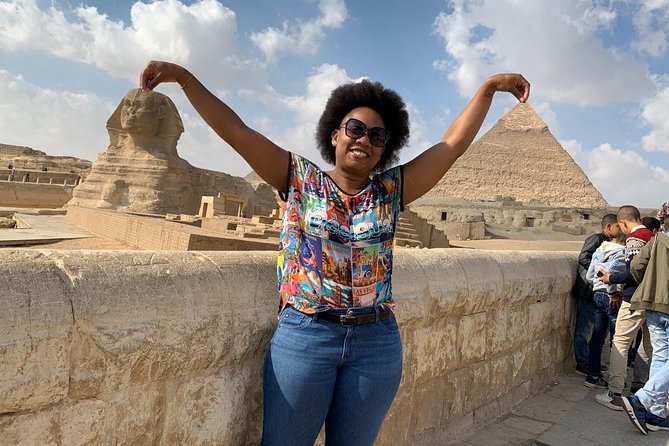
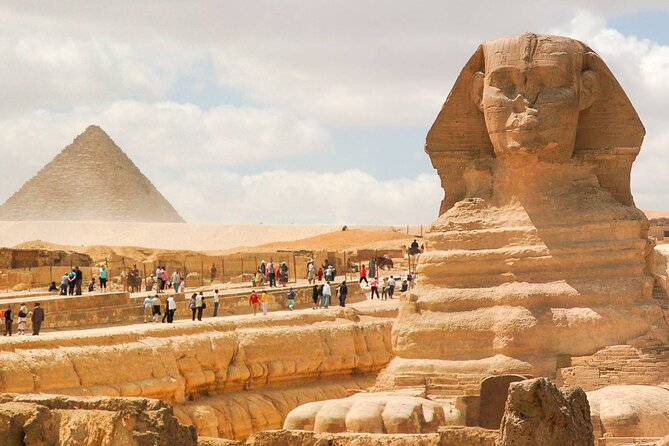
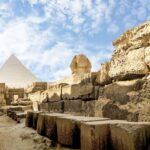
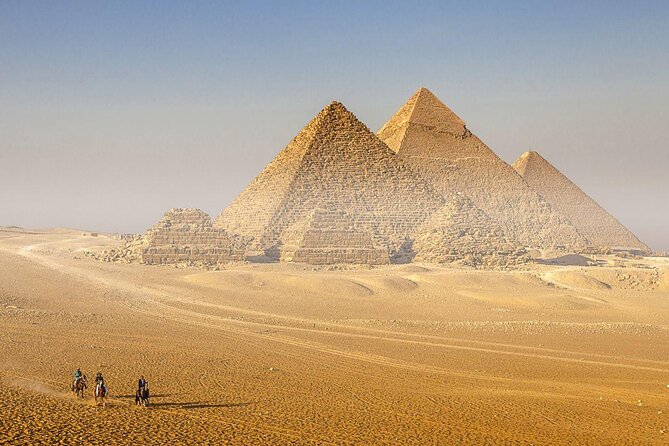
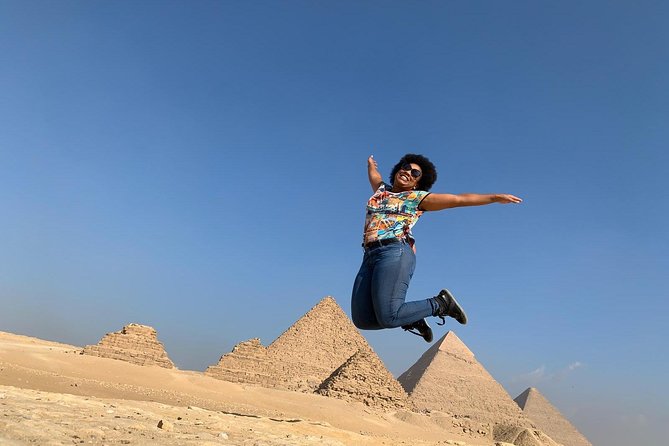
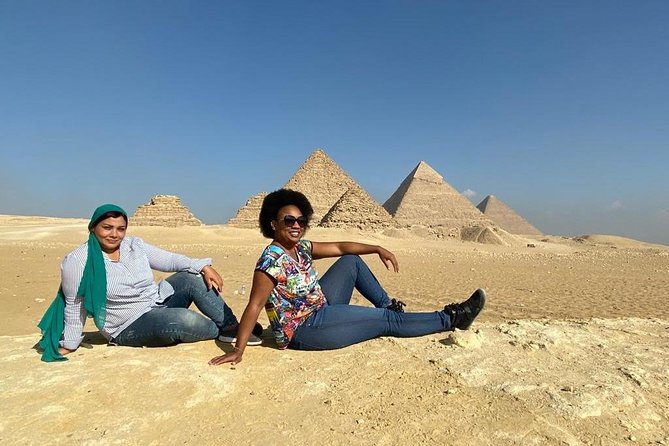
Your first major stop is the Pyramids of Giza area. Expect the classic sequence: a look at the Great Pyramids (Cheops, Chephren and Mycerinus) from the plateau, then the tombs of high officials and royal relatives nearby. This is the part of the trip where you should slow down, even if the tour schedule feels busy. The plateau views give you scale—how huge these structures are and how they sit in the desert edge.
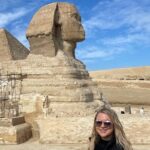
The stop also includes the Valley Temple and the Great Sphinx area. The Sphinx is one of those sights where it’s easy to feel like you’ve “seen it” because it’s in a thousand photos. Up close, the experience changes. You can appreciate the placement, the way it anchors the whole composition at Giza, and why people keep circling back for sunset and night stories.
Time on this stop is listed as 3 hours, with admission included. That’s a good amount for first-time visitors, as long as you’re ready for walking on uneven ground and exposure to the sun.
Tip for making the most of it: if you’re serious about photos, decide what you want to capture early—pyramid faces, Sphinx from different angles, or panoramic shots—then ask your guide where the best views are as you arrive. You’ll waste less time shuffling around later.
Saqqara’s Step Pyramid: the world’s oldest major stone structure
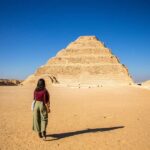
After Giza, you head to Saqqara, home to the Step Pyramid of King Djoser (Zoser). This stop is special because it’s not only a pyramid you can see. It’s a turning point in design. This is described as the world’s oldest major stone structure, built in the 3rd Dynasty. Your guide’s explanations matter here, because you’re looking at early monumental stone building—basically the “prototype” stage that paved the way for later Egyptian pyramid engineering.
You’ll also see the pyramid of King Teti from the 6th Dynasty and mastabas (tombs) of officials connected to the complex. This is where the site starts feeling less like one single monument and more like a whole sacred landscape.
The tour lists 2 hours for Saqqara, with admission included. That’s usually enough to walk the core areas and get the story without feeling like you’re rushed into the exit.
If you tend to lose attention on museum-like sites, Saqqara is a good choice for you. The whole place reads as “construction history.” You can stand, look at what’s in front of you, and let the guide connect the details to the bigger timeline.
Memphis and Ramses II: Old Kingdom power in a more grounded setting
Next up is Memphis, described as founded by King Menes and as the capital of Egypt during the Old Kingdom for thousands of years. This is an essential contrast to Giza. Giza feels like a royal monument plateau. Memphis feels like an operating capital—rule and culture layered over generations.
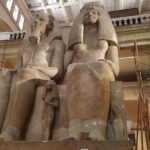
At this stop, you’ll see the Statue of Ramses II and the Alabaster Sphinx of Memphis. Those two objects give you a tangible way to understand how Old Kingdom memory carried forward into later reigns.
Lunch lands here, and you’re given 1 hour at a nice restaurant. It’s a genuine comfort break in a day that’s otherwise built around outdoor sites.
Practical note: Memphis is more spread out than the “stand and stare” parts of Giza. Wear shoes that handle walking and dust, and plan to stay hydrated. The guide will handle the flow, but you’ll still be moving.
A few more Cairo tours and experiences worth a look




Dahshur’s Bent and Red Pyramids: the story of experiments
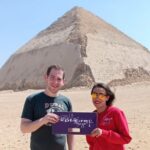
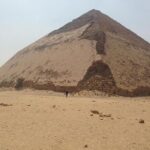
To close Day 1, you go to Dahshur for the Bent Pyramid and the Red Pyramid. This part of the tour is more interesting than people expect, because the Bent Pyramid is described here as a failed attempt to build the true pyramid—built for King Snefru, father of Khufu and founder of the 4th Dynasty.
That “experiment” framing makes Dahshur feel like a living lab in the early pyramid era. The Bent Pyramid’s shape and the lesson behind it are exactly the kind of detail that your guide can explain so you don’t just see another pyramid silhouette.
The tour lists 2 hours here with admission included, and then your guide drops you back at your hotel after the day is finished.
Day 2 in the Egyptian Museum: King Tut’s mask and the spotlight on royal collections
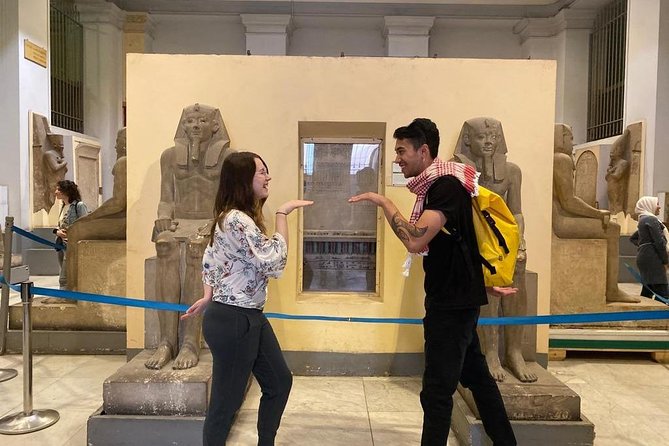
On Day 2, you start at the Egyptian Museum in Cairo (listed as 3 hours). This stop is the tour’s indoor anchor, and it’s timed well if you want a break from heat.
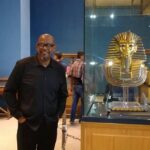
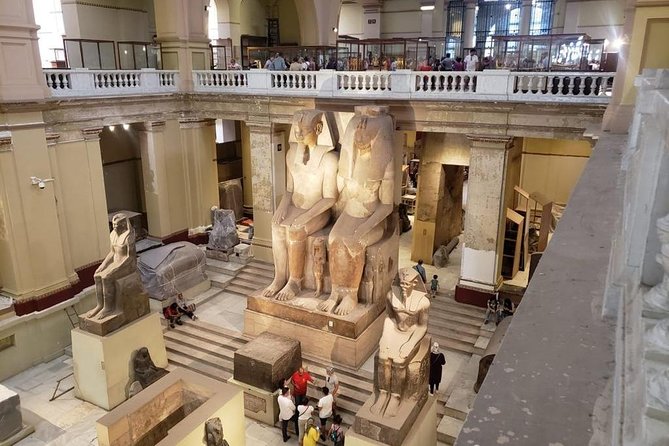
The museum focus includes the collection of King Tutankhamen, including the famous golden mask of the boy king. You’ll also see the collection of the princes Yuya and Thuya, described as the great-grandparents of King Tut. That family link matters. It helps you see the artifacts as part of a human story, not only as a set of objects behind glass.
In the feedback, guides such as Mo and Haitham were praised for making the museum visit feel organized and not overwhelming. The museum can be a maze, even with a plan, so having someone guide your attention is a real value.
Because the museum stop is 3 hours, you should be able to do the major Tut-related pieces without sprinting. If you’re the kind of visitor who wants more time reading every label, you might need to ask your guide how much flexibility you’ll have once the core explanation is done.
Salah El-Din’s Citadel and the Mosque of Muhammad Ali: Ottoman style with political drama
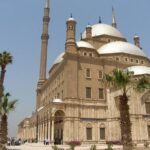
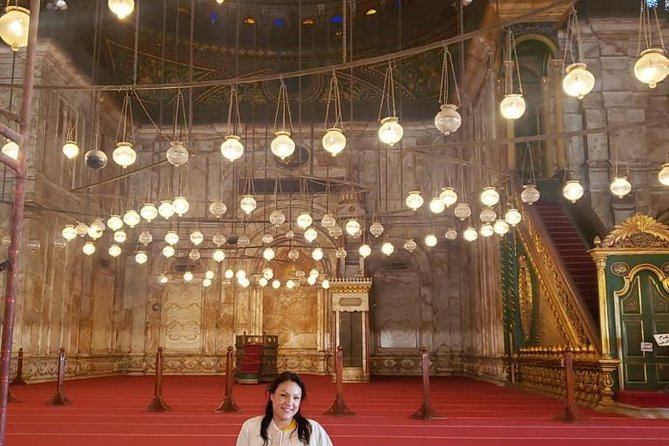
After the museum, you go to Cairo Citadel of Salah El-Din, built in 1182 AD. From there, you visit the Alabaster Mosque of Mohamed Ali Pasha, built in 1848 AD by Turkish architect Youssef Bushnok. The tour description adds a twist that makes this stop more than a photo stop: the mosque is designed in Ottoman style, and Muhammad Ali is said to have built it to challenge Ottoman power, even matching the emperor’s mosque concept.
That’s the sort of detail that a good guide turns into an easy story: architecture as messaging. You’re looking at stone and design choices that were meant to project authority.
Lunch happens during this segment too, at a “nice restaurant,” then you continue on to your next stop. The time listed here is 2 hours, with admissions included.
This is also the stop where you’ll benefit most from a respectful dress approach. Since you’re visiting a mosque, plan to cover shoulders and knees, and keep something light for later in the day if you want to feel comfortable inside.
Khan al-Khalili: marketplace browsing with a guide’s reality check
The final major stop is Khan El Khalili, an open market described as built in the days of the Mamluk Sultan Barqouq in the 14th century AD. It’s labeled as the oldest and biggest market in the Middle East and connected to Islamic Cairo.
This is your chance to switch gears from monuments to everyday Cairo. You can browse shops, look at crafts, and watch how the market works as a living place rather than a museum stop.
The tour allocates 2 hours here with admission included, then you return to your hotel.
In the feedback I saw, guides like Ahmed Hadida and Hala were singled out for making the market time easier—especially for handling “what to do and what not to do” so you don’t end up overwhelmed. If you care about shopping, your guide can help you compare value and keep you from wasting time chasing the first price you hear.
Also, do yourself a favor: set expectations before you go in. Khan al-Khalili is not a quiet stroll. It’s a sensory experience. If you want calm, aim for a slower pace within your 2-hour window instead of rushing in at full speed.
Price and value: what $300 includes, and what that buys you in practice
At $300 per person for about two days, the pricing works best if you value time and problem-solving. This tour includes:
- an air-conditioned vehicle
- an expert guide
- entry/admission tickets for every listed site
- two lunches
- pickup and drop-off from hotels
- a mobile ticket
- a private group setup
What you’re paying for isn’t just access to monuments. You’re paying for the parts that normally cost effort: navigating Cairo, managing site flow, and translating each stop into a story that makes sense in your head.
If you tried to do this on your own, you’d likely spend more time coordinating transport and admissions and less time learning why each stop matters. The tour’s structure keeps you moving, but in a guided way.
The main trade-off is that a private plan still follows a schedule. If you expect lots of free roaming without direction, this may not match your style. If you want a smooth, guided “best of Cairo and Giza” experience with fewer logistics headaches, it’s strong value.
Who should book this tour, and who might want a different pace
This tour is a great match if you:
- want to see the big Giza sites plus Saqqara and Memphis
- like museum visits with context, especially around King Tut
- value convenience like hotel pickup/drop-off
- prefer a guide because you’d rather learn the story than wander the wrong way
It may not be your ideal pick if you:
- hate structured timing and want total freedom
- need lots of quiet time at one site without the push to move on
- are very sensitive to walking and outdoor sun exposure (you will spend time outdoors)
If you do book, your best strategy is simple: tell your guide what you want most at the start. If pyramids are your priority, say so. If you care more about Islamic Cairo or the museum, flag that. A guide who understands your top two goals can help you manage the “packed day” feeling.
Should you book 2 Days in Giza and Cairo? My call
I’d book this tour if you want the practical win of a private guide, plus ticket and lunch coverage, and you want your Giza-to-Cairo story told in order instead of as a random list.
I’d hesitate only if you’re the type who needs a slow, independent rhythm. This isn’t that kind of trip. It’s a well-guided circuit with set stops, and it will feel full.
If you do book, go in with one clear request: ask your guide to give you enough unhurried moments for photos and questions. Done right, this is one of the easiest ways to connect pyramids, Memphis, and Cairo’s layered eras in just two days.
FAQ
What time does the tour start?
The start time is 8:00 am.
Is pickup from my hotel included?
Yes. Pickup is offered from any hotel in Cairo, and you’re also dropped off back at the end of the tour.
Is this a private tour?
Yes. It’s a private tour/activity, and only your group will participate.
Are admission tickets included?
Yes. Entry and admission tickets are included for all mentioned sites.
Are meals included?
Yes. Lunch is included twice during the two days.
How do I get the tickets?
You’ll receive a mobile ticket.
Is the tour air-conditioned?
Yes. You’ll travel by air-conditioned vehicle between the sights.
What’s included in the price, and what’s not?
The price covers the vehicle, expert guide, entry/admissions, and two lunches. Personal expenses and tipping are not included.