REVIEW · ASWAN
Top Day Tour To Luxor From Aswan
Book on Viator →Operated by Emo Tours Egypt · Bookable on Viator
Luxor in a single day, then back to Aswan. This tour strings together the West Bank tombs, Hatshepsut’s dramatic temple, and the East Bank giants like Karnak and Luxor Temple, all with a qualified Egyptologist guide telling you what you’re looking at.
I like two things right away: you get hotel pickup and drop-off plus a private A/C ride, which keeps your energy for the sites. And the price is built around the big stuff—entrance fees for the main stops, a professional guide, and bottled water.
One consideration: the schedule lists pickup at 7:00 pm in Aswan and arrival in Luxor around 10:00 am, so you’ll want to double-check your exact pickup time and pacing so it matches your expectations. Also, lunch is marked as optional, so plan for food on the day.
In This Review
- Key Things to Know Before You Go
- Why Luxor From Aswan Feels Like the Right Shortcut
- Price and Value: What You’re Really Paying For
- The West Bank Start: Valley of the Kings and the Tomb-World
- Deir el Bahari and Hatshepsut’s Temple: Power in Stone on the Cliffs
- Colossi of Memnon: Two Statues, Lots of Stories
- Karnak Temple Complex: The Scale Test
- Luxor Temple: Kingship Reborn on the East Bank
- The Drive Through the Nile Valley and the Guide’s Impact
- What Stops You Should Prioritize If You Have Limited Energy
- Who This Tour Suits Best
- Should You Book This Aswan to Luxor Day Tour?
- FAQ
- How long is the tour?
- What is the price per person?
- What’s included in the tour price?
- Are entrance tickets included?
- Is lunch included?
- Do I get picked up from my hotel?
- How far is the drive from Aswan to Luxor?
- Is it cancellable for a full refund?
Key Things to Know Before You Go
- Qualified Egyptologist guide: you’re not just touring rooms—you’re getting explanations tied to the place and its purpose.
- West Bank focus first: you start with the Valley of the Kings, then move to Deir el Bahari and the Colossi of Memnon.
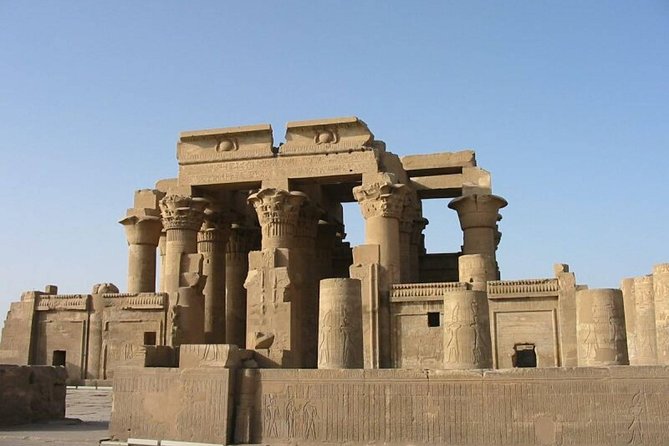
- Karnak plus Luxor Temple on the East Bank: you’ll see two different scales of sacred space in one day.
- Entrance fees included (basic area only): fewer add-ons, more time watching and learning.
- Long day with major drives: it’s about distance and site-to-site timing as much as monuments.
Why Luxor From Aswan Feels Like the Right Shortcut
Aswan to Luxor is a classic “big move, big payoff” trip. You’re doing the famous Thebes circuit without having to piece it together yourself, and you’re getting context as you go—what mattered, what changed over time, and why these places look the way they do.
What helps most is the order. You tackle the West Bank first, when the Valley of the Kings and Deir el Bahari set your brain in “burial and afterlife” mode. Then you cross to the East Bank for Karnak and Luxor Temple, where the feeling shifts to living worship and the power of kingship.
One more practical point: this is scheduled as an all-in-one day tour with guided stops, so the timing is tight. If you want a leisurely, no-pressure museum pace, you might prefer a slower multi-day rhythm in Luxor. If you’re happy to move briskly and see the essentials, this one-day format is a solid fit.
You can also read our reviews of more tours and experiences in Aswan.
- 4-Days Nile Cruise From Aswan To Luxor including Abu Simbel and Hot Air Balloon
★ 5.0 · 3,142 reviews

Price and Value: What You’re Really Paying For
At $140 per person, the best “value” part isn’t just the guide—it’s how the cost lines up with what you’d pay on your own. This includes hotel pickup and drop-off, a private tour, entrance fees to the listed sites, and bottled water.
The main trade-off is lunch. The highlights mention an included lunch, but the details also list lunch at a local restaurant as optional. So I’d treat lunch as “plan to pay if it isn’t covered,” and confirm it with the operator when you book.
Also, this is listed as a private activity where only your group participates. That matters in Egypt because the difference between waiting on a crowd versus moving with your guide can be the difference between enjoying the temples and feeling rushed.
The West Bank Start: Valley of the Kings and the Tomb-World
The morning begins with the Valley of the Kings, the burial landscape of ancient Thebes. You’ll spend about 2 hours here with admission included, and your guide will connect what you see to the logic behind royal tomb placement and decoration.
A helpful way to approach this stop is to think of it as an archive of choices. Even if you don’t go deep into every tomb name, you’re still seeing how the pharaohs wanted the afterlife to work. The tour highlights several major royal burials you may hear about during your visit, including well-known names like Tut-Ankh-Amon and Ramssess VI, plus Tutmosis I, Tutmosis III, King Mrenptah, and Amonhotep II.
What you’ll likely love most is the contrast: the Valley is not a single temple with one big front door. It’s an entire plan of burial intentions spread across a dramatic setting. With a guide, it becomes understandable fast—why specific tombs matter and how the story of Thebes becomes visible stone by stone.
Potential drawback: you’re moving through a historic site that rewards patience, but the schedule is built for covering multiple stops. If you’re the kind of person who wants extra time in one tomb, you may wish the tour had more flexibility.
Deir el Bahari and Hatshepsut’s Temple: Power in Stone on the Cliffs
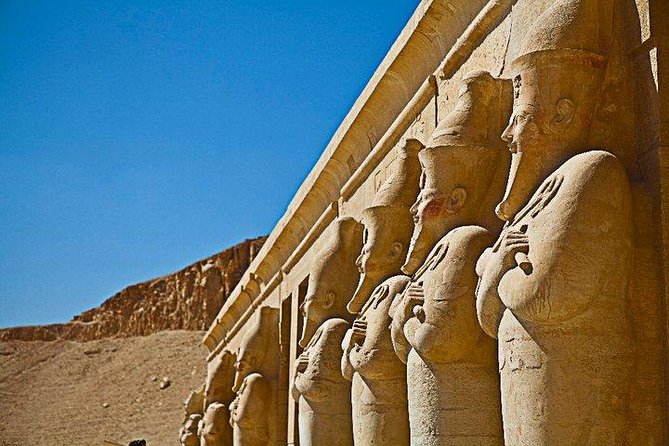
Next comes Temple of Hatshepsut at Deir el Bahari, also called El Dir El Bahari. Your time here is around 2 hours, again with admission included. This is one of the most visually striking stops of the day because it’s cut into the cliffside and designed to impress.
The story element is huge. Hatshepsut is described as the pharaonic woman who ruled for about 20 years in the 18th Dynasty (around 1490–1469 B.C). Even if you’ve heard the name before, this visit helps you connect her reign to a physical legacy you can still read in architecture today.
Then you move on toward the Colossi of Memnon area, where you’ll see remnants of the mortuary temple of Amenhotep III. This is where the day starts to show its structure: not just “see monuments,” but “follow Theban power across reigns.”
One practical note: Deir el Bahari can feel exposed depending on conditions. Wear breathable layers and plan for strong sun. Your guide and the pace will help, but your body still has to handle the day.
Colossi of Memnon: Two Statues, Lots of Stories
The Colossi of Memnon are two massive stone statues of Amenhotep III. The tour gives about 30 minutes here, with admission included. It’s short, but it’s not random—this stop helps you understand how the Theban necropolis became known far beyond Egypt.
The statues were “famous” in the ancient Greek and Roman world too, with Roman-era inscriptions in Greek and Latin recorded between about AD 20 and 250. The tour information also points out a key confusion that became part of the legend: the northern statue was linked to the name Memnon, even though that identification isn’t historically straightforward.
If you like details, this is a fun stop because it shows how monuments can take on new meanings across time. You’re standing in one story, hearing another, and watching how later cultures interpreted the original intent.
If you’re hoping for a long, slow wander, 30 minutes might feel tight. But if you’re doing this as part of a full-day circuit, that short burst is usually the right “breather” between the big temple complexes.
- 4-Days Nile Cruise From Aswan To Luxor including Abu Simbel and Hot Air Balloon
★ 5.0 · 3,142 reviews
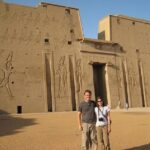


Karnak Temple Complex: The Scale Test
Karnak is where the day turns into “how big can worship get” mode. You’ll spend about 1 hour here with admission included.
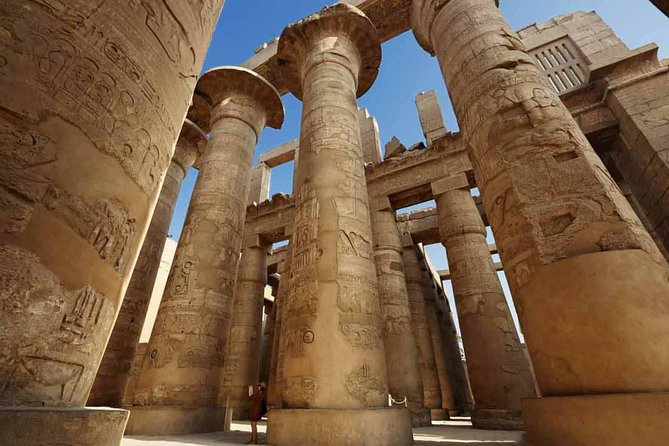
Karnak isn’t a single temple. It’s a huge complex of temples, pylons, chapels, and related buildings. The tour notes construction spanning from the Middle Kingdom (starting with Senusret I) through the New Kingdom and continuing into the Ptolemaic era. What you see today mostly reflects the New Kingdom period, so the place feels like a layered city of sacred architecture.
It’s also tied to worship of Amun, and the complex is described as the main place of worship of the Theban Triad, with Amun as the head. That matters because it helps you interpret what you’re looking at. Without context, Karnak can feel like “big stones.” With context, it becomes a map of why power and ritual mattered.
A practical drawback: with only about an hour, you won’t see every corner. The value of a guide is deciding what to prioritize in that time. When the guide is strong, you leave Karnak feeling like you understood the complex’s purpose, not just its size.
Luxor Temple: Kingship Reborn on the East Bank
Your final major stop is Luxor Temple, on the East Bank. You’ll get about 1 hour here, with admission included.
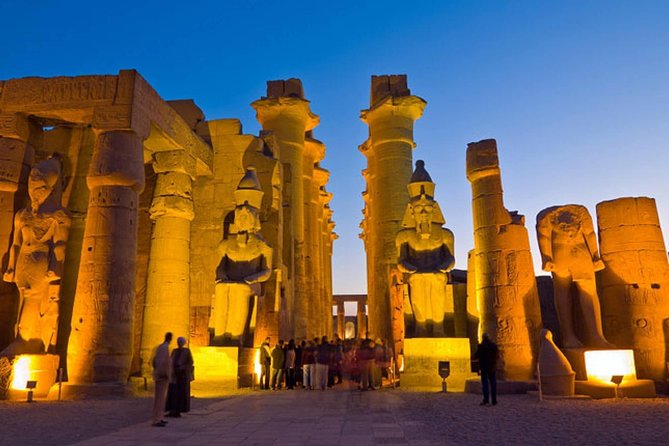
Luxor Temple is constructed around 1400 BCE and is described as being dedicated to the rejuvenation of kingship, unlike some other Theban temples that focused more directly on a cult god or a deified pharaoh in death. Your guide will help you connect this difference to the feel of the site—less “afterlife burial” and more “living legitimacy.”
It’s also one of Luxor’s two primary temple complexes on the East Bank, with Karnak as the other. Doing both in one day gives you a useful comparison: Karnak as worship on a monumental scale, and Luxor Temple as a more direct expression of kingship tied to the surrounding city.
This is a good ending stop because you’re back in a more central feeling zone compared to the tomb valleys. When the day is done, you usually feel you’ve seen the heart of ancient Thebes rather than just a scattered list of ruins.
The Drive Through the Nile Valley and the Guide’s Impact
The tour includes a private A/C vehicle and a long transfer distance—your itinerary mentions about 280 km north from Aswan to Luxor. There’s time built in for the road, and you’ll get views as you go, including traditional villages along the Nile Valley.
This kind of driving can be either a nuisance or part of the experience. If you treat the ride as downtime—water, shade, and a little people-watching—it works. If you’re the type who hates long transit days, you may need a good plan for comfort.
Your guide is the other big variable, and the good news is that this tour is designed around a true Egyptologist style of narration. In past outings on this itinerary, guides such as Mohamed Hashimi, Ayman, Ahmed, Ashraf, and Ghada Khalaf were credited with keeping the visits educational and enjoyable, and some even helped with photos for families. That’s not guaranteed, but it signals the tour’s focus: explanation, not just movement.
Two small comfort notes for you: bring a hat and water (bottled water is included), and be ready for heat. One guide example mentioned dealing with Ramadan conditions without food and water, which is a reminder that the day can be demanding. If you’re traveling during a month with daytime restrictions, plan your own hydration and needs carefully.
What Stops You Should Prioritize If You Have Limited Energy
You’re covering five major sites, so you should decide what “success” looks like for you. Here’s how I’d set your priorities:
- If you want the most story-per-minute, focus on Valley of the Kings first, because tomb context makes a huge difference.
- If you want the most dramatic architecture, prioritize Deir el Bahari and the cliff setting.
- If you like how ancient Egypt traveled through time into Greek and Roman imagination, don’t skip the Colossi of Memnon details.
- If you want sheer scale and ritual planning, set your expectations for Karnak as a “big picture” visit, not a finish-every-corner day.
- If you want a satisfying end, let Luxor Temple close the theme of kingship.
You’ll still see all the stops, but thinking this way helps you enjoy each one more.
Who This Tour Suits Best
This tour is a strong match if you want:
- A guided, first-time Luxor highlight route from Aswan
- A single-day plan that includes the big East and West Bank sites
- Entrance fees handled and explained by a professional Egyptologist guide
It’s also a good choice for families, since the guide support and photo help can make the day feel less stressful. It may be less ideal if you need lots of downtime, or if you’re sensitive to long transit and a packed schedule.
Should You Book This Aswan to Luxor Day Tour?
I’d book it if your goal is a high-value Luxor overview with real guidance. The price looks fair because you’re getting hotel pickup and drop-off, entrance fees, and an Egyptologist-led route that hits the West Bank and East Bank heavyweights in one go.
I’d pause before booking if timing matters to you more than coverage. The itinerary lists pickup at 7:00 pm with arrival around 10:00 am, which could mean an overnight-style transfer or a schedule typo. Confirm your exact departure time, and confirm whether lunch is truly covered for you.
If you get those answers straight, this tour is an efficient way to see why Luxor earned its reputation: tombs, temples, and the story of Thebes in one long but well-planned day.
FAQ
How long is the tour?
The duration is listed as approximately 13 hours.
What is the price per person?
The tour price is $140.00 per person.
What’s included in the tour price?
Included items are entrance fees to the mentioned places, hotel pickup and drop-off, a private tour, a professional Egyptologist guide, and bottled water.
Are entrance tickets included?
Yes. Entrance fees are included for the historical sites listed in the itinerary, and the entry fees are described as including the basic area only.
Is lunch included?
Lunch at a local restaurant is listed as optional, so you should expect to pay for it unless your schedule confirms otherwise.
Do I get picked up from my hotel?
Yes. The tour includes pickup offered from your hotel or Nile cruise in Aswan, with the activity ending back at the meeting point.
How far is the drive from Aswan to Luxor?
The itinerary states the transfer is about 280 km north from Aswan to Luxor.
Is it cancellable for a full refund?
Yes. There is free cancellation, and you can cancel up to 24 hours in advance for a full refund.
You Might Also Enjoy


More Tours in Aswan



More Tour Reviews in Aswan
- 4-Days Nile Cruise From Aswan To Luxor including Abu Simbel and Hot Air Balloon
★ 5.0 · 3,142 reviews