REVIEW · SHARM EL SHEIKH
Sharm El Sheikh: Trip to Luxor & Tutankhamun Tomb by Plane
Book on GetYourGuide →Operated by FTS Travels · Bookable on GetYourGuide
Luxor in one day is only possible with flights. This Sharm El Sheikh to Luxor trip is built for real sightseeing: you get guided time at Karnak, the Valley of the Kings, Hatshepsut’s temple, and the Memnon Colossi, with lunch included. One heads-up: it’s a long, very sun-heavy day, and you should expect heat and long walks.
I also love how the tour keeps the day structured around the big-ticket sites, so you’re not guessing what matters. Guides like Waleed, Doa, Aziz, Omran, and Nana are known for clear explanations and staying on schedule. If you dislike crowds at popular tombs or you want a slow pace, this fast format may feel like a sprint.
In This Review
- Key things I’d circle before you book
- Flying from Sharm El Sheikh: the time-saver that shapes the whole day
- Karnak Temple Complex: where the columns do the talking
- The Valley of the Kings: entering three tombs that still feel personal
- Hatshepsut’s Mortuary Temple: Deir el-Bahari’s cliffside drama
- Memnon Colossi: two 60-foot statues that have outlasted empires
- Tutankhamun’s tomb (optional add-on): the most famous “small space” in Luxor
- Lunch in Luxor: included, but plan for preferences and heat
- Getting around Luxor: private air-conditioned comfort between major sites
- Shopping pressure and how to handle it without stress
- Price and value: is $343 a good deal?
- Who should choose this Sharm to Luxor flight day trip
- Should you book this tour?
- FAQ
- FAQ
- Is round-trip transportation by plane included?
- What’s included besides the flights?
- Is Tutankhamun’s tomb included?
- Do I get hotel pickup and drop-off in Sharm El Sheikh?
- Are drinks included with lunch?
- Do I need a visa?
- Is the tour suitable for everyone?
Key things I’d circle before you book
- Fly round-trip from Sharm El Sheikh to Luxor, so you lose far less time to the road.
- Karnak Temple East Bank includes the Avenue of Sphinxes and the Great Hypostyle Hall with 134 columns.
- Valley of the Kings tombs: you enter three different tombs and see hieroglyphs up close.
- Mortuary Temple of Hatshepsut at Deir el-Bahari: dramatic cliffside architecture.
- Memnon Colossi: two 60-foot statues that have guarded this area for thousands of years.
Flying from Sharm El Sheikh: the time-saver that shapes the whole day
This is a day trip with an important advantage: you’re not spending your precious hours bouncing on a bus. You fly Sharm El Sheikh to Luxor and back on domestic routes, then move around Luxor with private air-conditioned transportation. That matters because Luxor sightseeing is mostly walking, heat, and “don’t miss this” stops. Flights buy you more time at the sites, not in transit.
Pickup in Sharm is also built for a smooth start. You’re collected from the hotel main entrance (street-side), and your pickup time is confirmed 24 hours before by email or WhatsApp. Plan to be outside 10–15 minutes early. One practical note: service can run a little behind sometimes, so keep a little buffer in your mindset.
Because this is a flight-based day, I think of it as a “get your tickets and documents sorted early” kind of tour. You bring your passport or ID card, and the operator requires a passport copy for permissions. If you’re traveling with an e-visa, keep your documentation handy; airport processes can be picky.
Who this helps most: anyone who wants the Luxor classics without sacrificing a full night in Egypt’s ancient capital.
You can also read our reviews of more tours and experiences in Sharm El Sheikh.



Karnak Temple Complex: where the columns do the talking
Karnak is the kind of place that makes you recalibrate your sense of scale. You start on the East Bank at one of the largest religious complexes ever built, and the layout is designed for you to move from one jaw-drop moment to the next.
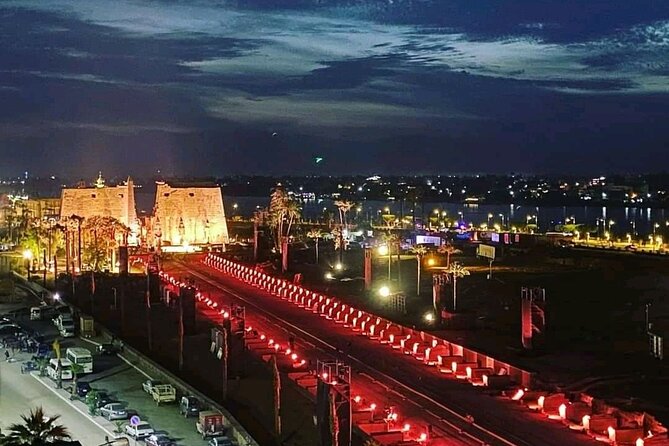
You’ll walk along the Avenue of Sphinxes, which is short in distance but big in effect. Then comes the main event: the Great Hypostyle Hall, famous for its 134 massive columns. Even if you’ve seen photos before, being under those towering columns is different. They pull your eyes upward, and suddenly the temple stops feeling like “ruins” and starts feeling like a functioning place of ceremony.
You’ll also see towering obelisks connected to rulers including Queen Hatshepsut and Thutmose I. The guides usually help you understand what you’re looking at—how different pharaohs added their mark over time—so Karnak feels like a story, not a pile of stones.
The main drawback: Karnak can get crowded, and the walking is sun-exposed. Comfortable shoes help, and your best move is to keep an eye on shade breaks during slower moments.
The Valley of the Kings: entering three tombs that still feel personal
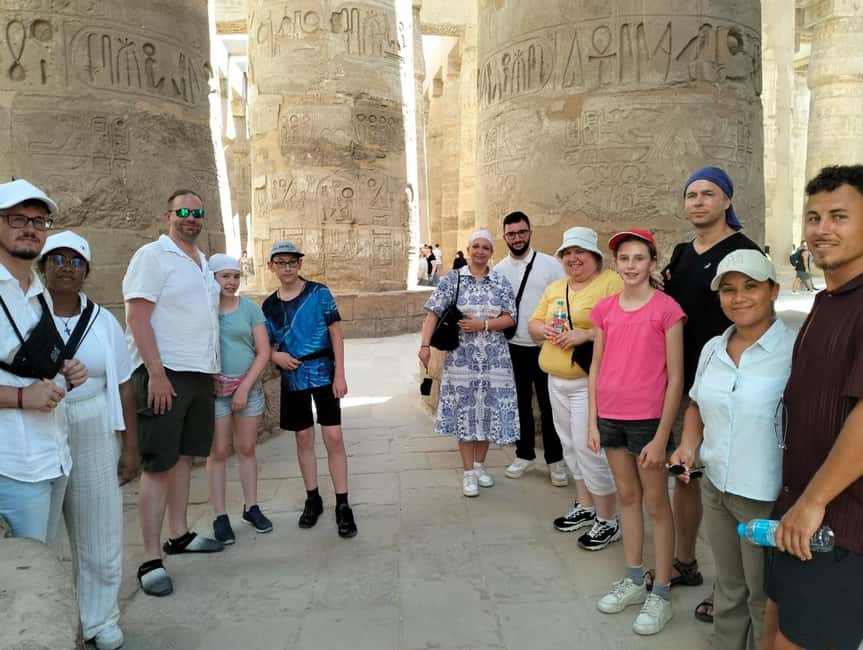
The West Bank of Luxor is where the day turns from “big monuments” to “human stories.” The Valley of the Kings is the royal burial ground of Egypt’s New Kingdom pharaohs, and the atmosphere inside the tombs is the real wow.
On this tour, you enter three different tombs from various dynasties. The point isn’t just to check boxes; it’s to compare styles, burial layouts, and the way tomb art survives. Hieroglyphs and burial chambers have endured for over 3,000 years, and that longevity makes the scenes feel strangely immediate.
You’ll also get a guided approach to understanding what you’re seeing. In this kind of tight schedule, a good guide helps you notice details you would otherwise miss—things like how the tomb design supports the ritual purpose of the space.
What to consider: tomb interiors can be dim. Bring patience if your camera struggles with low light, and keep your expectations realistic: you’ll see a lot, but you won’t spend unlimited time in one tomb.
Hatshepsut’s Mortuary Temple: Deir el-Bahari’s cliffside drama
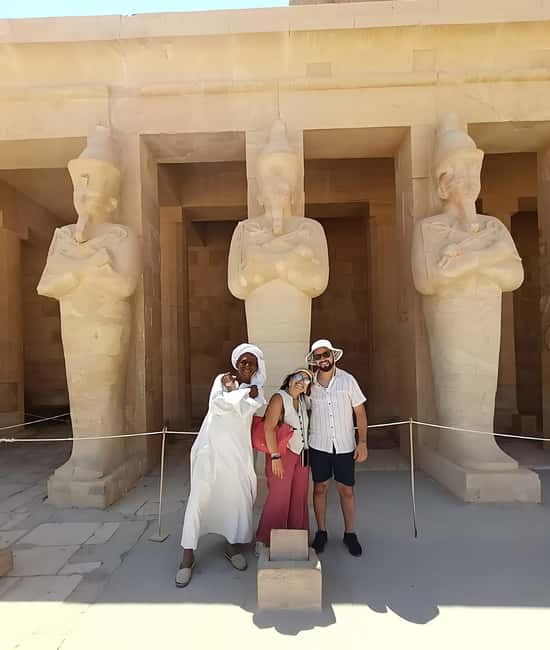
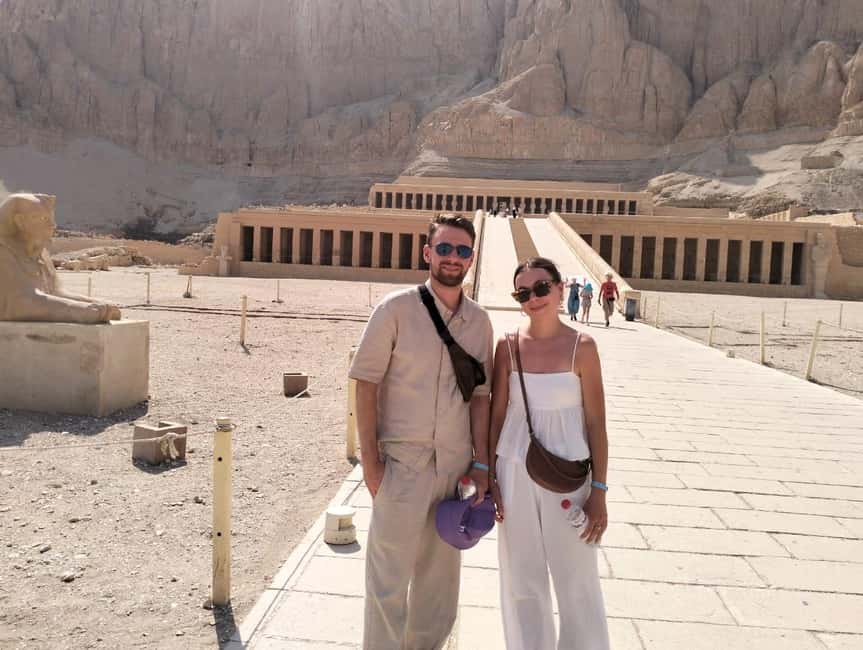
At Deir el-Bahari, the mortuary temple of Queen Hatshepsut is carved into limestone cliffs, and it’s one of the most visually striking stops of the day. You’re not only looking at architecture—you’re watching the landscape get used as a statement.
This temple is tied to Hatshepsut’s reputation as one of the most successful female pharaohs. The design helps you understand the “power + ceremony” vibe of the period. It’s also a nice contrast to the Valley of the Kings: less sealed, more open views, with the cliffs giving you a sense of scale.
Practical tip: if you’re prone to heat fatigue, this is a good place to slow down and take a moment. You’ll want to protect your energy for the rest of the West Bank route.
Memnon Colossi: two 60-foot statues that have outlasted empires
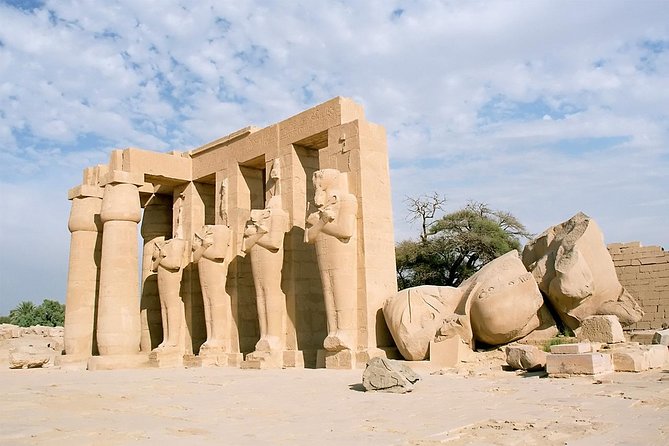
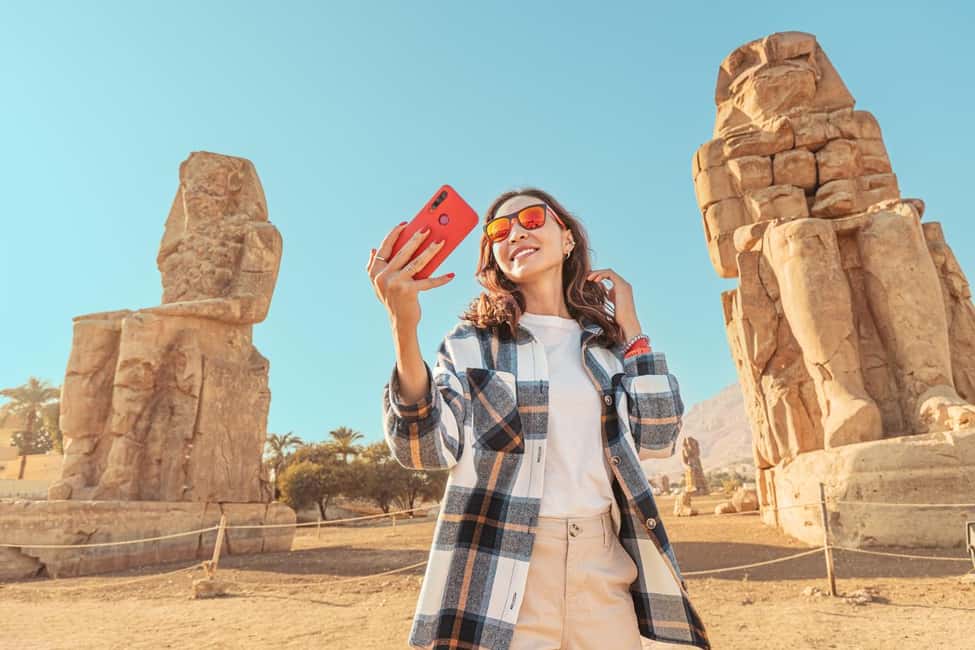
Then you hit the famous Colossi of Memnon. These are two enormous statues, each around 60 feet tall, and they’ve guarded the Theban Necropolis for over 3,400 years. The statues once marked the entrance to the mortuary temple of Amenhotep III.
Standing near them is a different kind of feeling than Karnak. Karnak overwhelms you with complexity. The Memnon Colossi overwhelm you with mass. They’re simple, severe, and hard to ignore.
Photo value: This stop is strong for images because you can frame the statues from several angles, and the scale is obvious even in wide shots.



Tutankhamun’s tomb (optional add-on): the most famous “small space” in Luxor
If you choose the option for Tutankhamun’s tomb, this becomes the emotional centerpiece of the day. In the Valley of the Kings, you’ll visit the tomb connected to Howard Carter’s famous discovery in 1922. You’ll also see mention of the golden sarcophagus that once held the pharaoh’s mummy.
This stop matters because Tutankhamun’s story is globally known. But visiting the tomb in person adds a second layer: you start feeling the difference between “legend” and “where history happened.” Even with strict site rules and time limits, it’s the kind of visit that sticks.
Important consideration: access can depend on the specific option you selected. If Tutankhamun is why you’re doing this trip, double-check that the tomb visit is included in your booking.
Lunch in Luxor: included, but plan for preferences and heat
Lunch is included at a local restaurant in Luxor. On paper, that’s a win. In real life, it means you can keep the day moving without hunting for food yourself.
From the experience reports I saw, lunch quality can vary by departure. Some people describe a clean buffet with options like fish, chicken, vegetables, and salads. Others found it less exciting and suggested bringing a backup meal from your hotel. That tells me one thing: if you’re picky about food or you hate surprises, consider a simple lunch box as a safety net.
Also, drinks at the restaurant are not included. You’ll want to stay hydrated, especially with long outdoor stretches under strong sun.
Getting around Luxor: private air-conditioned comfort between major sites
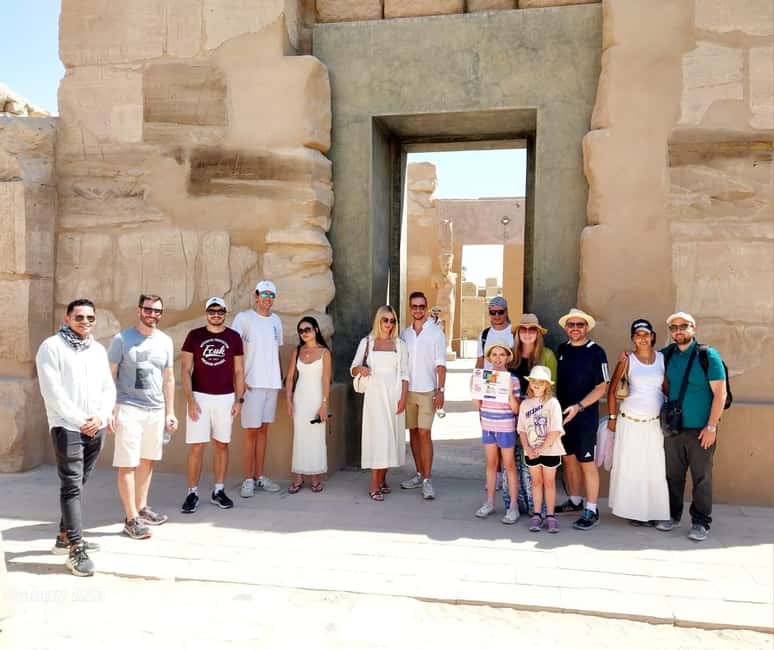
Between stops, you’ll use private transportation, and it’s a real relief. Luxor’s sites aren’t far in map terms, but they can feel far when you’re walking in the heat. Having air-conditioned rides gives you a chance to reset—especially after dim tomb interiors.
This tour is also designed to keep your day efficient. You go from Karnak (East Bank) to the West Bank route (Valley of the Kings, Hatshepsut’s temple, Memnon Colossi), then back toward your flight.
A small but smart tip from experience: keep your flight ticket stub or any return documents the staff give you. Some travelers found it useful later for getting through airport checks smoothly. If you’re unsure, ask the guide what you’ll need before you leave any counter.
Shopping pressure and how to handle it without stress
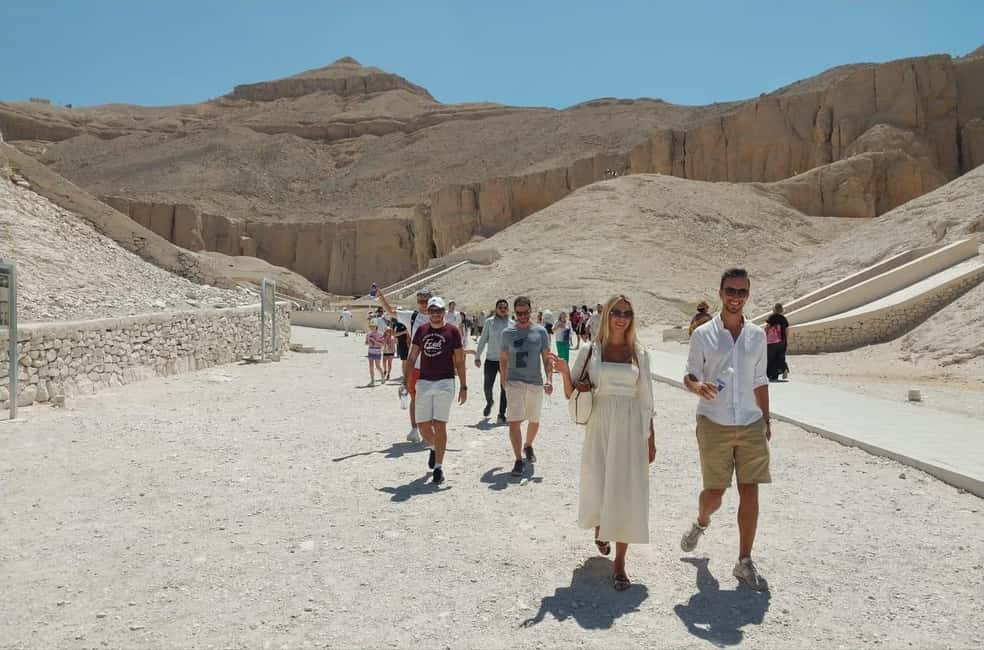
One real-world aspect of many Egypt day tours: you may make stops connected to art, perfume, or other shops. Some people loved the browsing. Others felt it was a bit pushy. If you don’t want shopping time to eat into your sightseeing mood, handle it early and calmly.
My approach would be:
- Decide your budget before you arrive.
- Treat shop stops as optional sightseeing breaks, not a mandatory mission.
- If you’re not buying, just be polite and move on.
You still get the main monuments—these shop stops are usually a “time divider,” not a replacement for temples and tombs.
Price and value: is $343 a good deal?
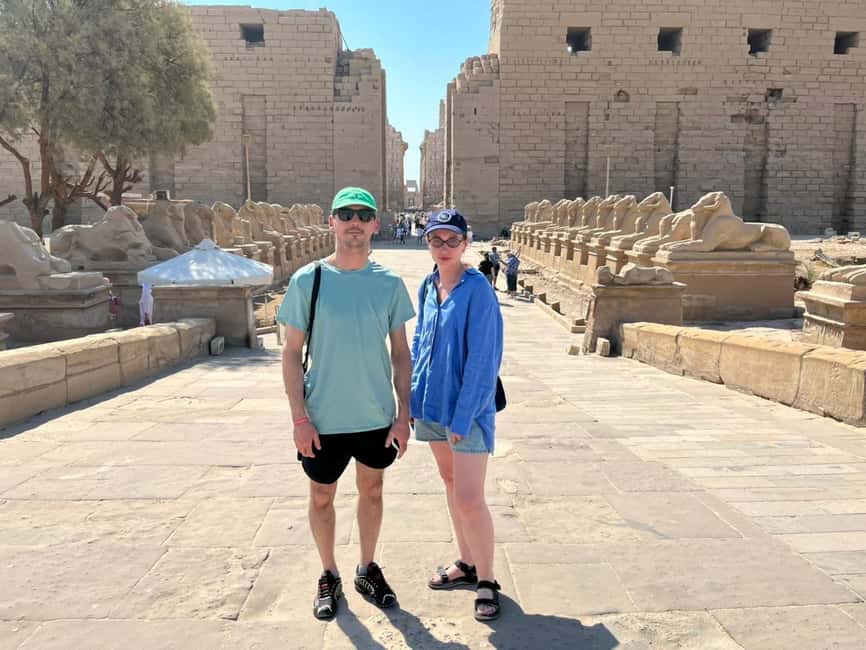
At about $343 per person, this tour isn’t the cheapest way to see Luxor. The value comes from the package: round-trip domestic flights, private air-conditioned transport, a professional Egyptologist guide, lunch, and entrance fees to the listed sites (based on your selected program).
If you tried to DIY this, the hard part wouldn’t just be money. It would be coordination. Flights, airport procedures, site timings, language, and ticketing add up fast. Here, someone handles those moving pieces so you can focus on the archaeology.
So, is it worth it?
- If you want the big Luxor highlights in one day without losing half your time to roads, yes, it often feels like good value.
- If you’re the type who wants slow mornings, long museum-style wandering, and no schedule pressure, you might prefer a slower overnight trip.
Who should choose this Sharm to Luxor flight day trip
This is a strong fit if you:
- Want Karnak, the Valley of the Kings, Hatshepsut, and the Memnon Colossi without an overnight stay.
- Like guided context, especially in tombs where details matter.
- Can handle an early start and a long, sun-heavy day.
It’s not suitable for pregnant women, people with mobility impairments, or people with pre-existing medical conditions based on the tour’s guidance. If any of those apply, it’s worth choosing a different format.
Language options are available (English, French, German, Italian, Russian, Spanish), so you should be able to match your comfort level.
Should you book this tour?
I’d book it if your priority is Luxor’s most famous monuments—and you’re doing it from Sharm El Sheikh. The flight format is the big win, letting you spend your energy where it counts: Karnak’s columns, the Valley of the Kings tombs, Hatshepsut’s cliffside temple, and Memnon’s towering statues. Add the Tutankhamun tomb option if it’s high on your personal list.
I’d hesitate if you’re extremely heat-sensitive, dislike structured itineraries, or you know you’ll be unhappy if shop stops appear on the day. Also, do yourself a favor: pack comfortable shoes, plan for sun, and bring a realistic attitude about how much you’ll see in one day.
If you want a high-impact Luxor day with real guidance (not just transport), this trip hits the right notes.
FAQ
FAQ
Is round-trip transportation by plane included?
Yes. The tour includes domestic flights from Sharm El Sheikh to Luxor and return.
What’s included besides the flights?
You get private air-conditioned transfers during the day, a professional Egyptologist guide, lunch at a local Luxor restaurant, and entrance fees for the sites in the program you choose.
Is Tutankhamun’s tomb included?
It’s included if the Tutankhamun Tomb option is selected. It is described as a special highlight in the Valley of the Kings.
Do I get hotel pickup and drop-off in Sharm El Sheikh?
Yes. The tour includes hotel pickup and drop-off in Sharm El Sheikh, with pickup at the hotel main entrance (street-side).
Are drinks included with lunch?
No. Drinks at the restaurant are not included.
Do I need a visa?
A visa is only mentioned as required if you need it for Cairo travel. The stated cost is $35 USD, paid in cash onsite.
Is the tour suitable for everyone?
No. It is not suitable for pregnant women, people with mobility impairments, or people with pre-existing medical conditions.