REVIEW · CAIRO
Private Full-Day Tour Visiting Giza Pyramids, Egyptian Museum and Old Market
Book on Viator →Operated by EMO TOURS EGYPT · Bookable on Viator
Pyramids, museum, and old Cairo in one day. This private, full-day route is interesting because it stitches together Giza’s big icons with a classic downtown museum stop and then closes with Cairo’s market energy. You also get enough flexibility to shape the pace, without feeling like you’re trapped in a rigid script.
I especially like the free hotel pickup and drop-off, which makes a long day in Cairo much easier on your nerves and energy. I also like that the tour is built around the main sites with basic entrance covered, so your day is less about ticket wrangling and more about seeing what you came for.
The main consideration: it’s a long, full-day schedule, and extras like going inside pyramids and lunch aren’t automatically included the same way at every stage. If you want specific add-ons, you’ll need to plan for them (and possibly confirm what your exact option covers).
In This Review
- Key highlights you’ll care about
- Price and Value: Why $8 Can Still Make Sense (With a Budget Reality Check)
- The 8:00 AM Pickup and the Cairo-Giza Timing Trick
- Giza Plateau: What You’re Really Walking Through
- Great Pyramid (Khufu) and the Big Outside-Details Game
- Menkaure and Khafre: Faster Stops, Better Comparisons
- The Sphinx: 73 Meters of Symbol Meets Real Stone
- Egyptian Museum Time: How to Use 3 Hours Without Feeling Lost
- Khan el-Khalili: Old Market Energy, Crafts, and Real-World Shopping Tips
- Panoramic View and Quick Plateau Re-Checks
- The Lunch Reality: Optional Koshari and How to Plan It
- Flexibility: Customizing Without Breaking the Day
- Who Should Book This Private Giza and Cairo Day
- Should You Book This Tour?
- FAQ
- How long is the full-day tour?
- What time does the tour start?
- Is pickup and drop-off included?
- What stops are included in the day?
- Are entrance fees included, including inside the pyramids?
- Can I cancel for free?
Key highlights you’ll care about
- Private means your own pace: your party stays together with a dedicated guide and transfers.
- Basic access is included: entry covers the main areas, while pyramid interiors are extra.
- Egyptologist explanations help you see details: you’ll hear context tied to what you’re standing in front of, not just dates on a sign.
- Early start beats the worst crowds and heat: an 8:00 am start helps keep Giza manageable.
- Khan el-Khalili is a real break: after monuments, you get crafts, workshops, and a historic bazaar walk.
- Panoramic/photo moments are built in: you get at least one pull-off-style view stop to regroup and shoot.
Price and Value: Why $8 Can Still Make Sense (With a Budget Reality Check)
At $8 per person, the value feels almost too good to be true, and the only way it works is because the tour focuses on the big-ticket places where entrance is handled at the “basic area” level. You’re not paying for luxury extras here. You’re paying for the vehicle, transfers, and getting you through a packed day without constant logistics stress.
What you should budget for is the stuff that commonly sits outside the base package: tipping, personal expenses, any optional pyramid interior tickets, and lunch if you want the restaurant stop. The tour also includes bottled water, which is small but genuinely useful when you’re moving between sites in strong sun.
If you want to make this trip feel worth every minute, do a quick decision in advance: Are you set on an inside-pyramid visit, or are you happy seeing the exteriors, Sphinx area, and panoramic viewpoints? That one choice will shape your spending and how smoothly the day flows.
You can also read our reviews of more private tours in Cairo


The 8:00 AM Pickup and the Cairo-Giza Timing Trick
This is set up as a private, full-day outing running about 8 to 10 hours, starting at 8:00 am. Pickup is offered from Cairo or Giza, with free hotel pickup and drop-off, and the day ends back at your meeting point or your hotel.
The timing matters. Giza looks best in clear light, but Cairo traffic can be chaos, and you’ll want your morning hours for actual sightseeing, not sitting in a van watching the clock. Having pickup arranged means you skip the awkward hunt for a driver or trying to guess which route is least painful.
You should also plan for a lot of moving around. Even when the tour groups stops into chunks, you’ll still be walking, standing, climbing small rises, and moving between photo points. Bring sunglasses, sun protection, and comfortable shoes that can handle uneven stone.
Giza Plateau: What You’re Really Walking Through
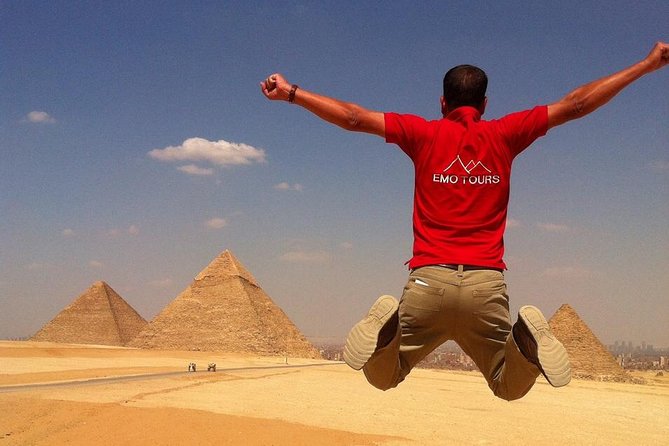
The day’s foundation is the Giza Plateau, part of the UNESCO Pyramid Fields in the Western Desert edge of the Nile Valley. This limestone plateau sits about 60 meters above sea level, and it’s not just three pyramids—this area also includes cemeteries and the remains of a workers’ village.
One underrated thing here: the plateau itself gives you scale. Once you’re up there, the pyramids stop being “postcards” and start looking like massive engineering projects laid into the desert. If you’re the type who likes to understand what you’re seeing, use your guide to point out how the complex fits together—valley views, temple areas, and the way the layout guides movement.
Also note the practical reality: entrance included here is basic area access. That means you’ll see the key exterior areas and viewpoints. If you want to go into any pyramid, you’ll need optional tickets and extra time.
Great Pyramid (Khufu) and the Big Outside-Details Game
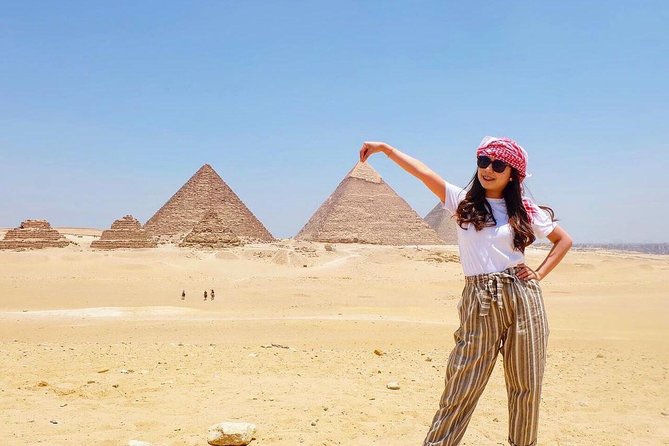
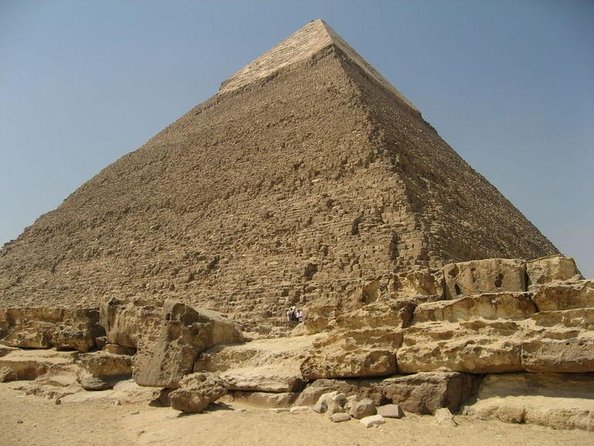
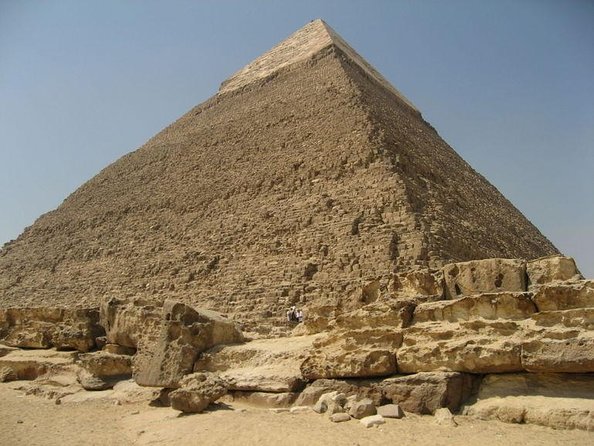
The route builds through the major pyramids, starting with the Great Pyramid of Khufu (Cheops). It’s the oldest and largest of the three on the Giza Plateau, and it’s also the only one of the ancient Seven Wonders still standing in a largely intact way.
You’ll likely spend around an hour at the complex focus area. That time is usually enough for the “wow” factor and to notice exterior details—especially if you’re nudged by an Egyptologist guide who explains what to look for and why.
Here’s a smart approach for your photos and attention: don’t try to photograph everything from the same angle. Ask your guide where you can get a clean look at the pyramid face, then stand back to absorb the whole shape. The Great Pyramid is visually different depending on distance, and the best shots often come from steps back—not phone-in-hand inches away.
Menkaure and Khafre: Faster Stops, Better Comparisons
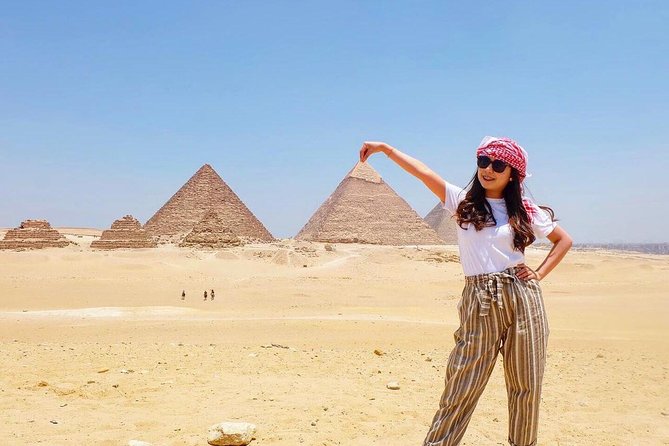
After Khufu, you’ll move through the other two: Menkaure and Khafre. Menkaure’s pyramid complex includes a valley temple, a causeway, a mortuary temple, and the king’s pyramid. Khafre’s complex includes valley temple areas and a Sphinx temple zone tied to the overall layout.
These stops are shorter—about 30 minutes each in the plan—so they work best as comparison moments. Menkaure gives you a sense of how the complex reads as a system, not just a single landmark. Khafre lets you connect what you saw earlier to the Sphinx area and the temple associations.
A practical suggestion: use these quicker stops to zoom in on proportions and surroundings. If you already know the basic facts, let your guide focus you on what changes from one pyramid to the next—positioning, sightlines, and how the landscape shapes the experience.
You can also read our reviews of more museum experiences in Cairo




The Sphinx: 73 Meters of Symbol Meets Real Stone
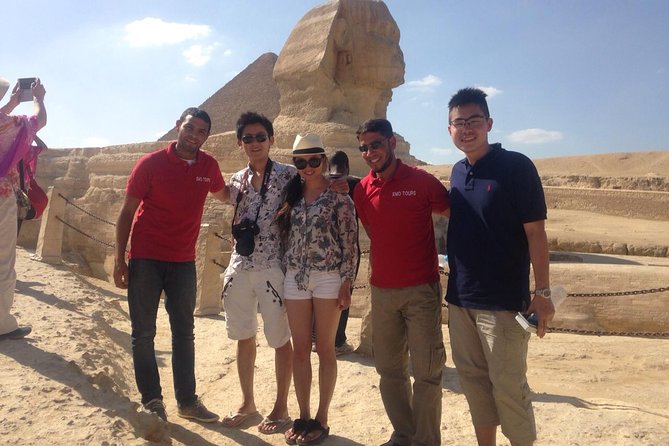
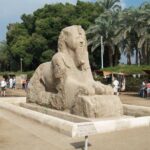
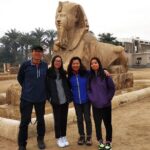
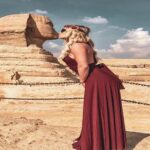
The highlight everyone remembers is the Great Sphinx of Giza—a limestone statue of a reclining sphinx with a human head and a lion body. It faces east-to-west across the plateau, and the face is commonly believed to represent Khafre.
You’ll typically have around an hour at the Sphinx area. That’s enough time to get the iconic view without rushing, and to understand why the Sphinx is more than a backdrop. It’s an anchor point for the entire Giza story, and the way it sits in the landscape is part of what makes it feel eerie even today.
If you like concrete details, here are a few you’ll hear mentioned: the Sphinx measures about 73 meters long (paw to tail), roughly 20 meters high (base to head top), and about 19 meters wide at the rear haunches. Those numbers are big, but seeing them in person makes the scale feel real fast.
Also, ask your guide how restoration is discussed and why the original shape is described in layers of block work. That kind of explanation adds texture to the experience without slowing you down.
Egyptian Museum Time: How to Use 3 Hours Without Feeling Lost
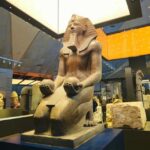
Your downtown stop is the Museum of Egyptian Antiquities—Cairo’s long-running powerhouse museum experience. It’s described as the oldest archaeological museum in the Middle East and houses a huge collection spanning from the Predynastic Period to the Greco-Roman era.
You’ll have around 3 hours inside. That’s enough time to see major pieces, but not enough to read everything wall-to-wall. So the best plan is to decide what you want before you walk in.
Use the guide to build your “must-see list” on the spot. If you get a guide like Essan, for example, you may enjoy how he guides attention to important statues and helps you connect objects to the broader story. The museum is easier when someone gives you a path and tells you what to focus on first.
A small but important context point: the museum building itself is part of the experience. The architect won an international competition in 1895, and the museum opened in 1902, inaugurated by Khedive Abbas Helmy II. You can appreciate that this isn’t just a warehouse of artifacts—it’s a historic landmark in downtown Cairo.
Khan el-Khalili: Old Market Energy, Crafts, and Real-World Shopping Tips

After the museum, you’ll head into Khan el-Khalili, one of Cairo’s most famous souqs in the historic center. The market is described as established as a trade center in the Mamluk era and named for one of its historic caravanserais.
You’ll typically have about 1 hour here. That’s not long enough to shop deeply, but it’s perfect for soaking up the vibe, browsing crafts and workshops, and picking up small souvenirs without spending half your day on bargaining.
If you want this stop to feel fun instead of exhausting, set a limit in your head. Pick one or two categories you actually want—like handmade crafts or themed keepsakes—then stick to those. In a market like this, the easiest win is self-control. Your guide can also help you navigate the sales push and keep you moving toward what interests you.
Also, the museum-to-market transition is a smart way to break up the day. Your eyes go from stone monuments to colorful shopfronts and street textures, and that reset helps you keep energy for the final photo moments.
Panoramic View and Quick Plateau Re-Checks
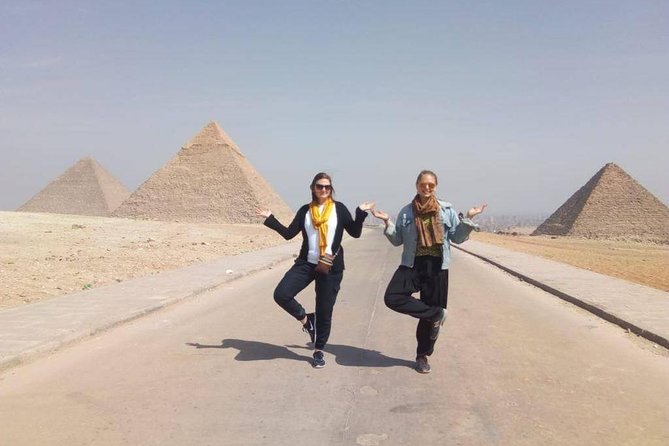
The day includes extra time for plateau views and a panoramic viewpoint stop. This is where you regroup, catch different angles, and get photos that feel more “architectural” than “standing in front of a monument.”
You’ll see the pyramids from another perspective, and the idea is simple: you get a fresh look after you’ve already walked around key points. That helps you connect what you learned from your guide to what your camera shows you.
There’s also a shorter plateau time block in the schedule, which can work like a breather. Use it to re-orient yourself on the ground: where the Sphinx sits relative to the pyramids, how the complex spreads across the plateau, and why certain sightlines feel dramatic.
If you’re photo-focused, ask your guide for the best light timing within the day. If you’re not, use these moments to slow down, drink water, and let your brain catch up to your eyes.
The Lunch Reality: Optional Koshari and How to Plan It
Lunch is listed as optional, often described as koshari at local restaurants. Some versions of the day plan talk about lunch being included in transfers, so the most practical approach is to treat lunch as “likely available,” but confirm what’s actually part of your option.
If lunch matters to you, decide whether you want a sit-down meal today or if you prefer to snack and save time. This tour is already packed, so a long meal can squeeze other parts of the day.
If you have dietary needs, you’ll have the best outcome by speaking up early. In the experiences shared with this operator, guides have adjusted choices for vegetarian needs and even aligned meals to kosher-style options. You don’t need to be fancy here—just tell your guide what to avoid and ask what nearby places can handle it.
Flexibility: Customizing Without Breaking the Day
The tour is advertised as private, and that’s the real freedom. You can typically ask to shift pace—stay longer near the Sphinx, shorten the bazaar time, or focus more on photo stops.
But with a day running 8 to 10 hours, flexibility has limits. You’re still working within travel time, site entry windows, and the order that keeps you from backtracking too much.
A smart way to use customization: choose one “extra focus” for yourself. Maybe you care most about pyramid exteriors and want time for angles and explanations. Or maybe you want the museum objects to be your priority and keep the market browsing tighter.
If your guide includes someone like Samara or Shimaa, you may find they’re particularly good at steering you toward prime importance stops and keeping you comfortable while balancing your requests.
Who Should Book This Private Giza and Cairo Day
This tour fits you best if you want a single-day checklist that still feels personal. It’s a good pick for first-timers who don’t want to coordinate Cairo transit, and for people who like structured time with a guide who can explain what you’re seeing.
It’s also ideal if you enjoy photo opportunities and want help finding the best angles. In examples shared with this operator, guides have acted as personal photo assistants and have helped fend off unwanted vendor attention, which can make your experience less stressful.
This might not be the best choice if you hate long days or you want a deep, slow museum visit with lots of reading. For that, you’d need a longer stay in downtown Cairo. Here, the museum is more of a “choose your highlights” kind of visit.
Also, watch for mismatch risk. The tour description mentions additional ancient-city areas like Memphis and Saqqara, but the day plan you’ll likely run is focused on Giza plus Egyptian Museum plus Khan el-Khalili. When you book, ask your operator to confirm exactly what’s included in your selected option.
Should You Book This Tour?
Yes—if you want a private way to hit the pyramids and Sphinx, plus the Egyptian Museum and Khan el-Khalili, without spending your day solving transportation puzzles. The combination of included basic entrances, free hotel pickup/drop-off, and an Egyptologist-style guide explanation makes it a strong value for the price.
I’d say book it with two clear goals: decide in advance whether you want pyramid interior tickets, and confirm lunch expectations for your option. Once you do that, this is one of those days that compresses a lot of Cairo into a manageable plan—so you get to spend more time looking up at stone wonders and less time figuring out what comes next.
FAQ
How long is the full-day tour?
The tour runs about 8 to 10 hours.
What time does the tour start?
Start time is 8:00 am.
Is pickup and drop-off included?
Yes. The tour offers hotel pickup and drop-off, and it ends back at the meeting point (with drop-off at your hotel area).
What stops are included in the day?
You’ll visit the Giza pyramids area, the Sphinx area, the Egyptian Museum, and Khan el-Khalili (Old Market), with additional plateau/panoramic view time.
Are entrance fees included, including inside the pyramids?
Entrance tickets are included for the main/basic areas. Entry fees are described as basic area only, and inside any of the pyramids is not included (optional extras).
Can I cancel for free?
Yes. Free cancellation is available up to 24 hours in advance for a full refund.