REVIEW · CAIRO
Private 3-Days Tours in Cairo.
Book on Viator →Operated by Egypt Royal Tours · Bookable on Viator
Cairo can feel like a lot at once, so this private, ticketed 3-day plan is a smart way to stay on track. I like how it handles the big practical stuff up front: private round-trip pickup from your hotel and daily air-conditioned transport mean you spend less time guessing and more time looking. A possible drawback: the days are full, so you’ll want solid energy for long sightseeing blocks starting around 8:00 am.
What really stands out is the value side of the deal. With admission fees and lunch included (and a guide steering you through each stop), you avoid the usual add-on surprises that can creep into an Egypt itinerary. The other consideration is that a few items are optional or extra ticketed in places, so you should plan to budget a bit for those choices.
In This Review
- Key takeaways before you book
- Why this Cairo-and-Alexandria tour is such a practical win
- Giza pyramids, Valley Temple, and the Sphinx on day one
- Step Pyramid of Djoser in Saqqara: the “other” pyramid morning
- Memphis and the Ramses II statue: where Egypt’s story gets political
- The Sound & Light show at Giza: a classic add-on, timed well
- Day two in Cairo: Egyptian Museum first, then Old Cairo’s layers
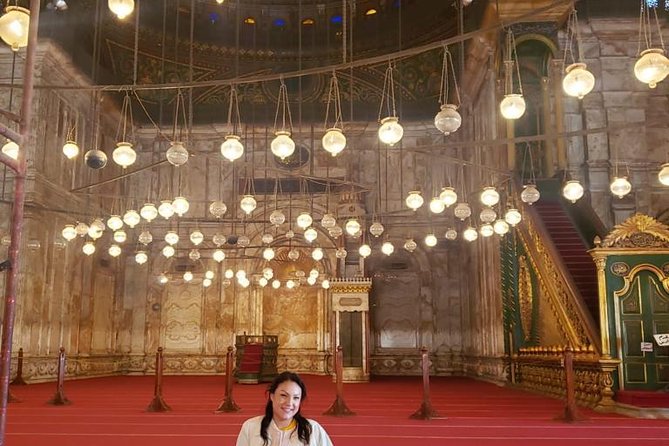
- Citadel of Salah El-Din and Mohamed Ali’s Alabaster Mosque
- Coptic Cairo: Hanging Church, Abu Serga, Ben Ezra, and the Coptic Museum
- Alexandria day trip: Roman catacombs, Pompey’s Pillar, and Qaitbay
- Pompey’s Pillar: a name with confusion
- Qaitbay Citadel and a included lunch
- Roman Theater and Bibliotheca Alexandrina: the day’s final two anchors
- Price and value: what you’re really paying for at $450
- Who this tour fits best (and who might want something else)
- The guide factor: why your experience improves when questions get answered
- Should you book this Private 3-Days Tour in Cairo?
- FAQ
- What is the tour duration?
- What time does the tour start?
- Is pickup from my hotel included?
- Does this private tour include admission fees and lunch?
- Are accommodations included?
- Can I visit the Mummies Hall?
- What’s the cancellation rule?
Key takeaways before you book
- Private vehicle + hotel pickup keeps transfers simple and comfortable
- Admission fees and lunch included helps you control your total cost
- Giza + Saqqara + Memphis on day one gives you the best “wow” concentration
- Egyptian Museum and Old Cairo on day two covers two major eras without rushing blindly
- One guided Alexandria day trip gives you Roman and coastal highlights with less stress
- Guides like Hala tend to be proactive with questions and details, making the experience feel cared for
Why this Cairo-and-Alexandria tour is such a practical win
This 3-day private package is built for travelers who want structure but still like the feeling of flexibility. You’re not locking yourself into a package hotel. Instead, you bring your own accommodation, and the tour company provides what matters most for Cairo: a guide, entrance tickets, lunch, and private air-conditioned transfers.
That matters because Cairo is the kind of city where “I’ll figure it out later” can cost time. Here, you’re met at your hotel and moved to each main site in a planned rhythm. The tour is also explicitly private, so your group stays together rather than weaving through a larger crowd schedule.
One more thing I appreciate: it’s not just “pyramids and done.” You get Cairo’s museum and old religious quarters on day two, then you pivot to Alexandria for a totally different vibe—Roman-era sites, coastal history, and the Bibliotheca Alexandrina.
You can also read our reviews of more private tours in Cairo


Giza pyramids, Valley Temple, and the Sphinx on day one
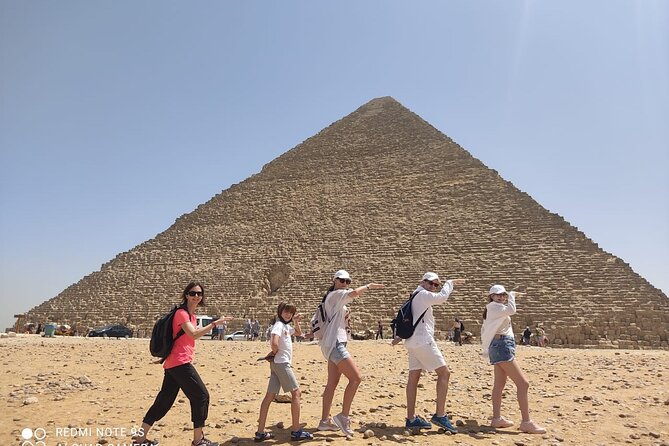
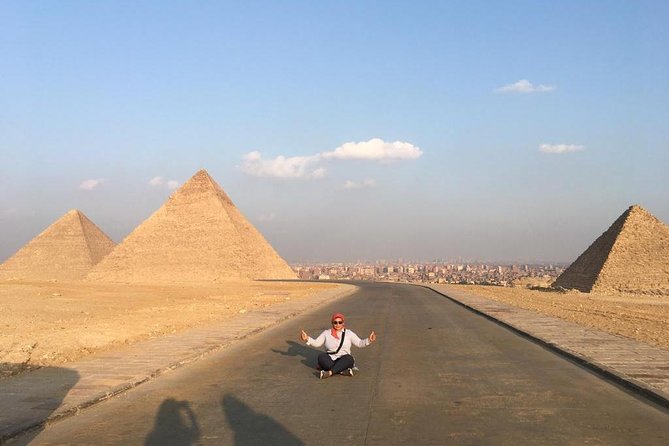
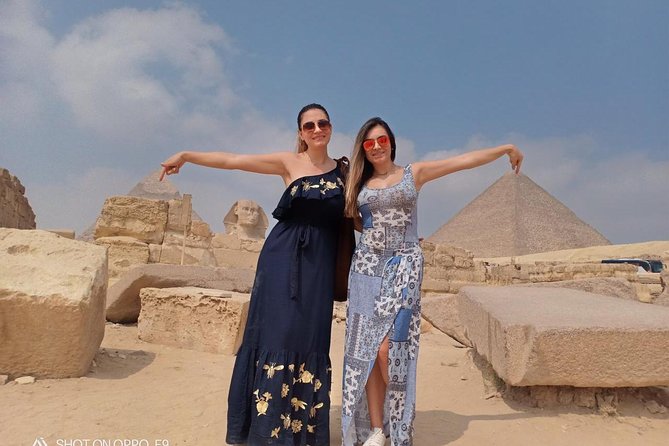
Your first day is a powerhouse: about 3 hours at the Giza plateau with admission included. You’ll see the Great Pyramids of Giza, including Cheops, Chephren, and Mycerinus. From the panoramic area, you get time to take pictures before you move into the next part of the complex.
Then you shift to the Valley Temple and the Great Sphinx. This pairing is the right choice for first-timers because it adds context beyond the famous silhouette. You’re not only looking at monuments; you’re stepping through the parts of the area that help explain how ancient Egyptians organized space and ritual around the pyramids.
Practical tip: go in with a simple goal—try to spot the scale clues. Notice how the pyramids sit in relation to the temples and how the Sphinx fits into the broader setting. The more you look for those connections, the more the site makes sense.
Step Pyramid of Djoser in Saqqara: the “other” pyramid morning
After Giza, you head to Saqqara for about 2 hours at the Step Pyramid of King Djoser (Zoser). This stop is valuable because it gives you a different kind of pyramid story. You’re seeing the world’s oldest major stone structure, tied to the 3rd Dynasty—a far earlier phase of Egypt’s monumental building.
A lot of itineraries treat Saqqara like an optional add-on. Here, it’s placed right in the middle of day one, which makes it feel like a headline. You also gain perspective: once you’ve seen Saqqara’s step design, the “smooth-sided” pyramids at Giza feel like the next chapter, not just more of the same.
Memphis and the Ramses II statue: where Egypt’s story gets political
Next comes Memphis (about 1 hour), founded by King Menes and known as a capital for over 3,000 years. Even if you’re not a hardcore Old Kingdom fan, this stop helps connect the dots. The pyramids aren’t just isolated monuments—they connect to long-running centers of rule and culture.
You’ll see the Statue of Ramses II and the Alabaster Sphinx of Memphis. This is a good moment to slow down and look at how later rulers and earlier sacred places share the landscape. It’s one more way to understand that Egypt’s history didn’t “freeze” after the pyramids—it kept building, expanding, and reusing meaning.
If you like photo stops, this portion is often the easiest to pace. It’s not as sprawling as Giza, so it can feel more “human scale.”
The Sound & Light show at Giza: a classic add-on, timed well
Your day wraps back near your hotel for a rest, then you go to the Sound & Light show in the Pyramid’s area (about 1 hour, admission included). This isn’t for everyone, but it can be a genuinely useful way to process what you just saw.
Even if you don’t read every artifact label, a show format gives your brain a timeline. It also breaks up the day so you’re not going straight from monuments to dinner without a pause.
The key is expectations. Think of it as a storytelling tool, not an academic lecture.

Day two in Cairo: Egyptian Museum first, then Old Cairo’s layers
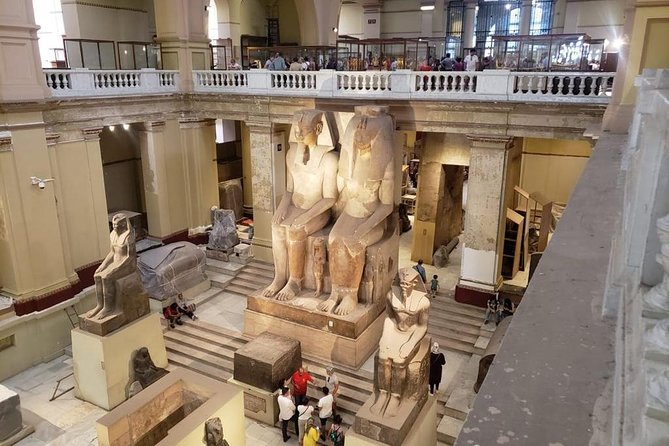
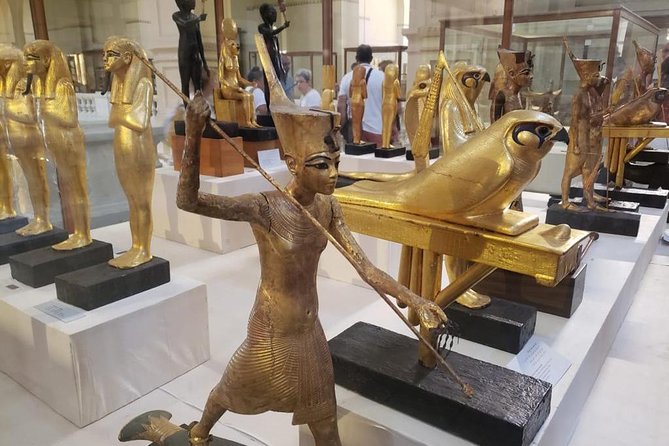
Day two starts at the Egyptian Museum of Antiquities (about 2 hours, admission included). The big draw is the collection tied to King Tutankhamen, including the famous golden mask of the boy king. You also get the option of visiting the Mummies Hall, but note this is for an extra ticket purchasable on sit.
That optional nature is good. If you’re tired or short on time, you can focus on what’s already included. If you’re curious, you can pay for the mummies experience without changing the tour schedule.
Citadel of Salah El-Din and Mohamed Ali’s Alabaster Mosque
After the museum, you’ll head to the Cairo Citadel and the Alabaster Mosque of Mohamed Ali (about 1 hour, admission included). This stop gives you a useful shift from ancient Egypt to later monumental power and architecture. From the citadel, the viewpoint aspect helps you get your bearings—you can start to understand how Cairo sits beyond the museum walls.
Practical tip: dress for the mosque and plan for sun. Even in Egypt’s rhythms, midday can feel intense.
Coptic Cairo: Hanging Church, Abu Serga, Ben Ezra, and the Coptic Museum
Coptic Cairo is one of those areas where “one stop” turns into multiple layers. Your tour includes several major sites:
- the Hanging Church (St Virgin Mary Church), built in the 7th century above a gateway in the old Roman fortress
- Abu Serga, an early 20th-century church described as the only round church in Egypt, tied in local tradition to the holy family’s stay
- the Ben Ezra Synagogue
- the Coptic Museum with about 16,000 ancient artifacts on display, including icons and books
You’re given about 2 hours for this segment, which is long enough to actually look around. The courtyard and interior screens at the Hanging Church make this stop feel more than just a quick photo. And with Abu Serga’s round form and the Ben Ezra Synagogue beside it, the neighborhood reads like a living map of faith history, not just architecture.
If you’re the type who likes asking questions, this is where a good guide matters a lot. The best ones help connect why the sites are arranged this way and how each era left its mark.
Alexandria day trip: Roman catacombs, Pompey’s Pillar, and Qaitbay
Day three is your Alexandria shift, and it’s structured as a full day with multiple Roman and Mediterranean stops. It starts with the Catacombs of Kom el Shoqafa (about 1 hour, admission included). These are described as the largest Roman cemetery with three levels cut in rock from the second century, combining Egyptian, Greek, and Roman style influences.
You’ll also learn the story of how it was discovered—when legs of a donkey fell off into the shaft leading to the find in 1900. It’s the kind of detail that makes the place feel less like a “site” and more like a real slice of history that was hiding in plain sight.
Pompey’s Pillar: a name with confusion
Next is Pompey’s Pillar (about 1 hour, admission included). This is a memorial platform tied to a Roman emperor story of famine relief, but you’re also told that the traditional name is a misidentification: it’s more complicated than the label you might see at first glance.
I like this stop because it teaches you how history can get flattened over time. You see the monument, but you also get the context that it wasn’t always understood correctly.
Qaitbay Citadel and a included lunch
Then you visit the Citadel of Qaitbay (about 1 hour, admission included). It’s built on the site of the ancient pharaohs lighthouse of Alexandria. It was fortified by Mamluk Sultan Qaitbay to defend Egypt’s north border from Ottoman attack, and the fort later changed hands during campaigns involving the French and then the British fleet.
After that, you’ll have lunch at a nice restaurant (lunch included as part of the package). This timing is good because it keeps the day from becoming purely site-walking. You’ll likely appreciate the reset before the later stops.
Roman Theater and Bibliotheca Alexandrina: the day’s final two anchors
Your next stop is the Alexandria Ancient Roman Theater (about 1 hour, admission included). It was discovered in 1960 when workers were cleaning sand and piles to build government buildings. The description includes pupils’ room-like spaces used for teaching and lectures, which is a nice detail because it turns the theater into a reminder that Roman public spaces weren’t only for performances.
Finally, you go to Bibliotheca Alexandrina (about 1 hour, admission included). The site is described as built by King Ptolemy I and completed by Ptolemy II, but the original library was burned during struggles involving jealous conflict between Caesar and Ptolemy XIII. The modern building gives you a bridge between the ancient story and today’s attempt to revive the idea of learning in Alexandria.
Then you return to Cairo. After a day like this, that drive back is exactly where the “organized plan” part pays off.
Price and value: what you’re really paying for at $450
At $450 per person for a 3-day private tour, the headline number is only half the story. The stronger value argument here is what’s included:
- Private air-conditioned transfers every day, round-trip from your hotel
- A tour guide throughout the planned stops
- Entrance fees for the listed sites
- Lunch (3 meals) included
- Even the optional-feeling Sound & Light show is included for this plan
That means your money goes toward the things that usually require planning and negotiation: entry tickets, guide time, and transportation. If you’ve ever tried building Giza + museum + Coptic Cairo + Alexandria by yourself, you know how quickly the “I’ll just handle it” approach turns into hours of messaging, ticketing, and re-checking.
The one cost warning is that some items are not automatically included. The Mummies Hall is explicitly described as an extra ticket you can buy on site. Also, tipping is not included.
If you’re comparing this to cheaper tours, the question to ask is simple: are they truly private, and does the admission + lunch math get handled for you? This package is clearly built around doing that work.
Who this tour fits best (and who might want something else)
This is a strong fit if you:
- want a private setup and don’t want to juggle multiple guides or ticket lines
- prefer a structured plan but still like the feeling of flexibility with your guide
- care about broad coverage: pyramids and Saqqara, then Cairo museum and Old Cairo, then Alexandria’s Roman highlights
It might be less ideal if you:
- want a slow, wandering trip with minimal scheduling
- hate timeboxed itineraries and long days (this one starts early and moves each day)
The guide factor: why your experience improves when questions get answered
From the available feedback, a big theme is the guide experience. You’ll get someone friendly who answers questions and keeps things organized. The name that comes up in the most positive way is Hala, described as going above and beyond and helping guests feel like everything was taken care of.
Even when the sites are famous, what makes Cairo click is interpretation: why certain structures matter, how different eras connect, and what details to look for so you’re not just staring at a wall of stone. This tour is built around that guide-led context, not just drop-offs.
Should you book this Private 3-Days Tour in Cairo?
I’d book it if you want the efficient route through Cairo’s biggest hits—Giza, Saqqara, Memphis, the Egyptian Museum, Coptic Cairo, and Alexandria—without turning your trip into a logistics project. The included entrance fees and lunches make it easier to keep your budget under control, and the private transport reduces the Cairo fatigue factor.
I’d think twice if you’re hoping for a relaxed pace. This is a full itinerary with multiple major stops each day, including a day trip to Alexandria.
If you like learning in real time, ask questions, and want a guide to handle the “how do we get there” part, this tour has the kind of structure that lets Cairo feel exciting instead of exhausting.
FAQ
What is the tour duration?
The tour is 3 days (approx.).
What time does the tour start?
The start time is 8:00 am.
Is pickup from my hotel included?
Yes. The tour includes daily round-trip transportation from your hotel using a private air-conditioned vehicle.
Does this private tour include admission fees and lunch?
Yes. Entrance fees and lunch are included for the stops listed in the itinerary.
Are accommodations included?
No. This experience is designed so you exclude accommodation and book your own lodging.
Can I visit the Mummies Hall?
The itinerary includes the Egyptian Museum, and it notes that the Mummies Hall is extra and can be purchased on site.
What’s the cancellation rule?
There is free cancellation up to 24 hours in advance for a full refund, and the experience requires good weather (with an alternative date or full refund if canceled due to poor weather).