REVIEW · ASWAN
Luxury 4-Day 3-Night Nile Cruise from Aswan to Luxor
Book on Viator →Operated by Egypt Unlimited Tours · Bookable on Viator
Temples, boats, and a whole pile of ancient Egypt. This 4-day, 3-night luxury Nile cruise from Aswan to Luxor is set up for people who want big-name sights with guided context and minimal logistical stress. You’ll move from Aswan’s landmarks to Philae’s Isis focus, then on to Kom Ombo, Edfu, the West Bank tombs, and finally Luxor Temple and Karnak—with meals onboard between the monuments.
I especially like that you’re not just looking at ruins; you have an Egyptologist steering the story. I also like the practical package feel: entrance fees are included, and the tour includes private vehicle transfers door-to-door. One thing to factor in is that drinks (and alcohol, if you want it) aren’t included, and the hot air balloon add-on costs extra.
In This Review
- Key points at a glance
- A luxury Nile cruise that actually simplifies your days
- Your onboard base: full-board comfort and a steady routine
- Day 1 in Aswan: High Dam, Philae, and the granite that built empires
- Aswan High Dam: big modern engineering beside ancient stakes
- Temple of Philae: the cult of Isis across ages
- Unfinished Obelisk: when stone refused to cooperate
- Elephantine Island and felucca time on the Nile
- Day 2: Kom Ombo and Edfu, where temple layouts explain beliefs
- Kom Ombo: Horus the Elder and Sobek side by side
- Edfu Temple: one of Egypt’s best-preserved big interiors
- Galabya party evening
- Day 3 West Bank Luxor: tombs, Hatshepsut, and a quick Memnon photo stop
- Valley of the Kings: tombs built over centuries
- Deir el Bahari (Hatshepsut): architecture that looks deliberate for a reason
- Colossi of Memnon: quick stop, great photo angle
- Optional hot air balloon over Luxor
- Day 4 East Bank: Luxor Temple and Karnak, then back to Cairo
- Luxor Temple: a home for Amu-Re
- Karnak Temple: the world’s largest temple complex
- Price and value: what $800 covers, and where you’ll spend extra
- Who this Nile cruise fits best (and who should look elsewhere)
- A quick reality check: timing, pacing, and comfort expectations
- Should you book this Aswan to Luxor luxury cruise?
- FAQ
- How many days and nights is the cruise?
- What’s included in the $800 per person price?
- Are entrance fees included?
- Do you get pickup and private transfers?
- Is the felucca ride included?
- Is the hot air balloon included?
- Are drinks included with meals?
- Is there an extra charge during peak season?
- Do I need a passport, and can I cancel for free?
Key points at a glance
- Egyptologist-led visits with major entrances handled for you
- Private vehicle, door-to-door transfers that keep your days efficient
- Felucca ride around Elephantine Island and Kitchener Botanical Island
- A full Aswan-to-Luxor sight circuit from Philae to Karnak
- Optional hot air balloon over Luxor for extra cost
- Full-board meals onboard plus 2 bottled mineral water daily
A luxury Nile cruise that actually simplifies your days
If you’ve ever tried to stitch together Egypt sites on your own, you know how much time gets eaten by finding tickets, arranging drivers, and figuring out what you’re looking at. This cruise does that work for you. You get a qualified Egyptologist guide, a private deluxe air-conditioned vehicle for transfers, and a day-by-day rhythm that keeps you moving through the most iconic places without feeling frantic.
The “luxury” part here isn’t just soft beds. It’s the fact that your day is structured around guided stops, then you shift back to the boat for meals and downtime. That means you can focus on details that matter—like why certain temples are aligned the way they are, or why Edfu’s roofed interior feels so different from open-air ruins.
You can also read our reviews of more boat tours in Aswan
- 4-Days Nile Cruise From Aswan To Luxor including Abu Simbel and Hot Air Balloon
★ 5.0 · 3,142 reviews
Your onboard base: full-board comfort and a steady routine
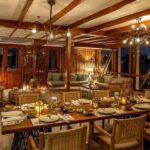
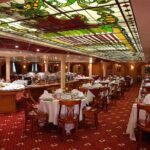
This is a 3-night stay with full board, meaning breakfast (3), lunch (3), and dinner (3) are included. You’ll also have 2 bottled mineral water each day—small detail, big help when you’re out touring under strong sun.
The boat also gives you a predictable rhythm. Many days end with dinner onboard and an evening program; for example, after visiting Edfu, you can enjoy a Galabya party on the same tour day. It’s not required to love it, but it’s a fun way to break up the heavy history-with-a-capital-H energy.
Day 1 in Aswan: High Dam, Philae, and the granite that built empires
Day 1 starts with a practical welcome in Aswan: your guide picks you up from the Aswan airport, then you launch into a full city and monument day.
Aswan High Dam: big modern engineering beside ancient stakes
First stop is the Aswan High Dam, built across the Nile between 1960 and 1970. It’s a reminder that this region’s story isn’t only ancient. The dam shaped life along the Nile and changed how water and settlements work—so it’s a smart opening before you go back to pharaohs and temples.
Temple of Philae: the cult of Isis across ages
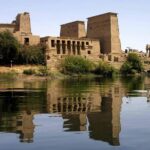
Next comes Philae Temple, visited by motor from the Aswan area. The site is linked to the cult of Isis—and what I like here is the time span. Philae was revered from pharaonic times through Greek, Roman, and Byzantine periods, with each ruler adding their own touches. You’re not just seeing one era; you’re seeing layered reuse.
A few more Aswan tours and experiences worth a look

Unfinished Obelisk: when stone refused to cooperate
Then you’ll visit the Unfinished Obelisk. Aswan was the source of ancient Egypt’s finest granite, used for statues, temples, pyramids, and obelisks. This is the kind of stop that feels small on the clock but sticks in your brain because you’re seeing a project mid-flight, not a finished monument.
Elephantine Island and felucca time on the Nile
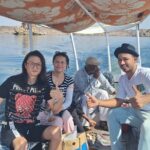
The afternoon shifts to a more relaxed view: a felucca ride around Elephantine Island and Kitchener Botanical Island, plus time near the Agha Khan Mausoleum. This is a great breather between intense temple stops. You’ll get a calmer, human-scale feel for the Nile corridor before you settle into the boat for onboard lunch and dinner.
Day 2: Kom Ombo and Edfu, where temple layouts explain beliefs
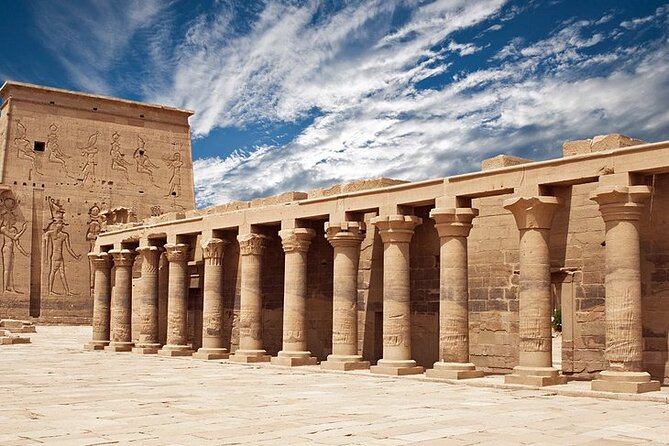
After breakfast, you sail to Kom Ombo. Then you switch into “temple-reading mode,” because this day is about how two deities share one place—and how Edfu’s preservation story gives you a rare sense of what the interior may have felt like.
Kom Ombo: Horus the Elder and Sobek side by side
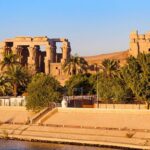
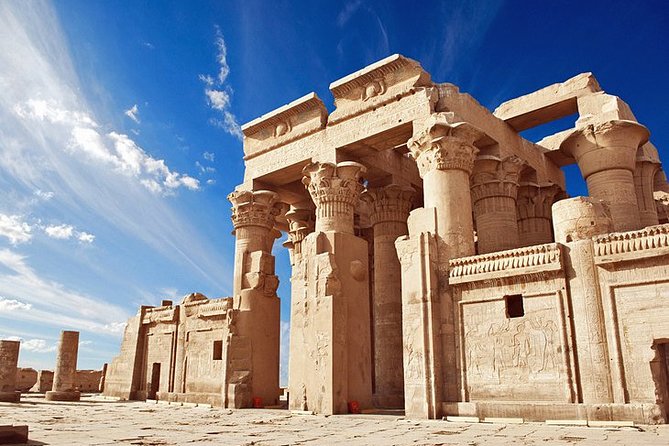
Kom Ombo’s temple is the star, dedicated to Horus the Elder (Haroeris) and Sobek. The setting matters too: irrigated sugar-cane fields surround the area, and the tour context notes the displaced Nubian communities affected by the creation of Lake Nasser. That adds a real-world layer to what can otherwise feel like “just ruins.”
If you’re wondering what to expect from the temple itself, plan on a structured guided visit with enough time to appreciate the unique layout. Even if you don’t love history lectures, a good guide helps you spot what to look for.
Edfu Temple: one of Egypt’s best-preserved big interiors
After lunch onboard, you visit Edfu Temple. This is a Ptolemaic temple built between 237 and 57 BC, dedicated to Horus—the avenging son of Isis and Osiris. The standout detail is preservation: desert sand filled the area after the pagan cult was banned, and that sand protected the temple. The roof remains intact, and that makes the space feel unusually atmospheric compared with many open-air sites.
I like that this stop is long enough to feel meaningful without turning into an all-day blur. Edfu works best when you slow down and look up at the carved surfaces, columns, and the interior shape that the roof encloses.
Galabya party evening
After dinner, you enjoy a Galabya party and then overnight. It’s a light moment in the middle of serious stonework sightseeing, and it also keeps you from hunting for entertainment when you’re already tired from the day.
Day 3 West Bank Luxor: tombs, Hatshepsut, and a quick Memnon photo stop
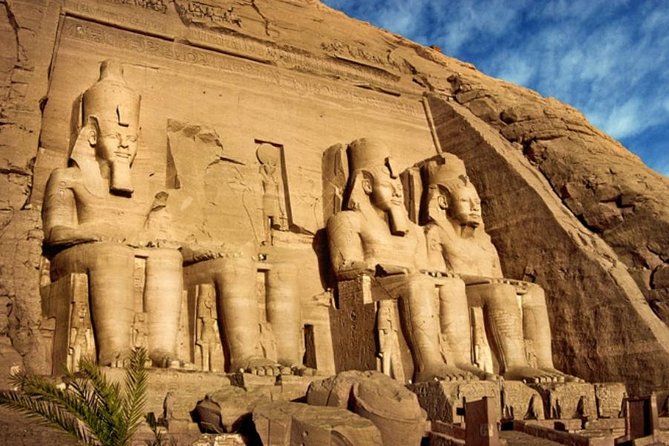
Day 3 goes to Luxor’s West Bank—an area famous for tombs and mortuary temples. Breakfast is on board, then you head out for a set of stops that cover multiple eras of the New Kingdom story.
Valley of the Kings: tombs built over centuries
Your first stop is the Valley of the Kings, also called the Valley of the Gates of the Kings. This is where rock-cut tombs were carved for pharaohs and powerful nobles across nearly 500 years, from the 16th to the 11th century BC. It sits opposite modern Luxor within the Theban Necropolis, and the guide context includes the two main valleys—East Valley and West Valley.
This is where an Egyptologist pays off. If you only see tomb entrances, you might miss the bigger point: why these places were chosen, and what the monuments were trying to preserve for eternity. With a guide, you learn how the site fits into the larger Thebes landscape.
Deir el Bahari (Hatshepsut): architecture that looks deliberate for a reason
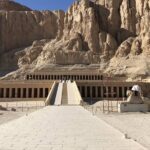
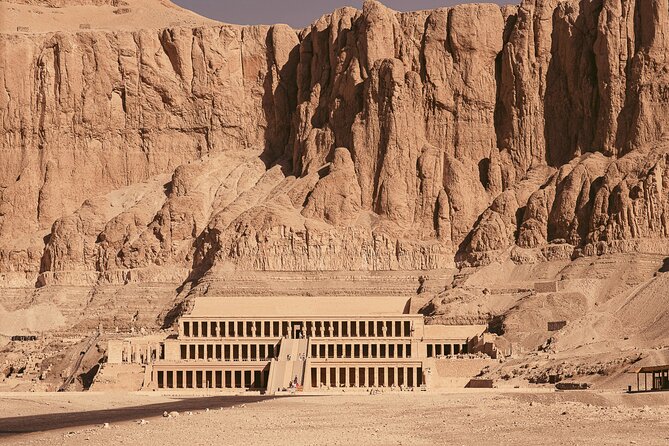
Next is Temple of Hatshepsut at Deir el Bahari. The setting is under massive cliffs near the Nile’s west bank, and the temple is dedicated to Amon-Ra. The key detail I’d highlight is the design: it was created by an architect named Senemut, and it uses a classical-style layout with colonnaded terraces, pylons, courts, and a hypostyle hall. Inside, you’ll see areas like the sun court, chapel, and sanctuary.
If you’ve ever felt like Egyptian temples are mostly “stand and stare,” Hatshepsut is one of the better places to reset your eyes. It’s structured in a way that rewards patient looking.
Colossi of Memnon: quick stop, great photo angle
Then you stop at the Colossi of Memnon. This is shorter—think panoramic photos and a walk-by—about long enough to get a sense of scale. Even in a quick time window, these colossal statues leave an impression because they’re so massive and so still, while everything around them has changed.
Optional hot air balloon over Luxor
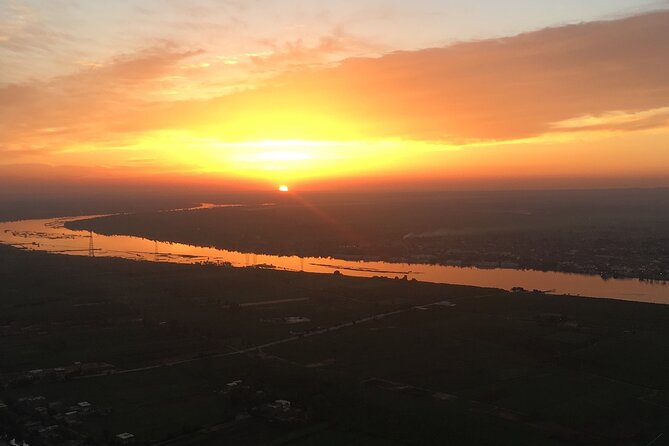
There’s an optional hot air balloon add-on (extra cost) listed as a 2-hour activity. It isn’t included, so if you want it, budget for it separately. If you don’t, you still get a full guided day without needing to make hard choices.
Day 4 East Bank: Luxor Temple and Karnak, then back to Cairo
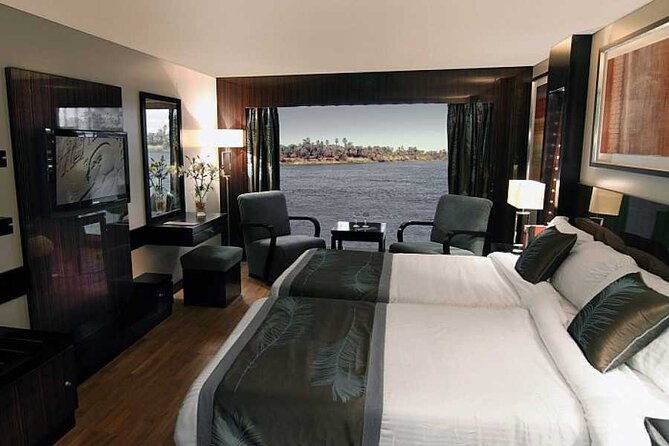
Your final day focuses on Luxor’s East Bank, where temple complexes dominate the skyline.
Luxor Temple: a home for Amu-Re
After breakfast, you visit Luxor Temple, dedicated to Amu Re. This stop is listed at about 1.5 hours, which is a good length for a guided circuit. You’ll get context for how the temple functioned and how it relates to the wider system of places you saw earlier.
Karnak Temple: the world’s largest temple complex
Then comes Karnak, described as the largest temple in the world. Karnak can be overwhelming on your own. With a guide, you’re more likely to understand what you’re seeing—major axes, monumental structures, and the way the complex grew over time.
Plan to spend your energy here. This is the day’s main “big rock” of stone and symbolism, and Karnak is where you’ll likely feel the scale most strongly.
After the service ends, you’ll be transferred to Luxor Airport to fly back to Cairo.
Price and value: what $800 covers, and where you’ll spend extra
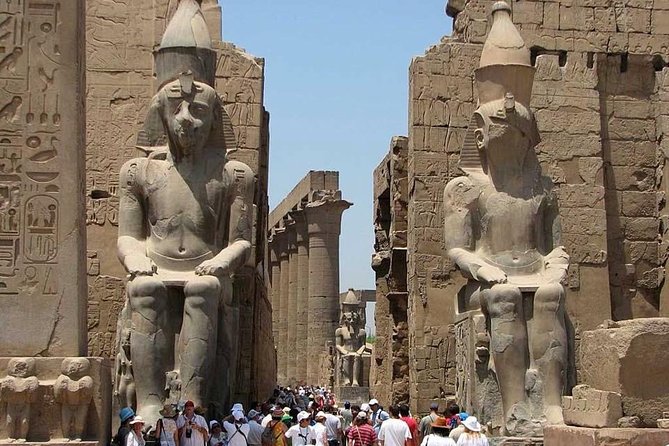
At $800 per person, you’re paying for a full package: 3 nights accommodation on a full-board basis, an Egyptologist guide, private tours, and private deluxe air-conditioned transport for the sights. You also get all entrance fees for the sights mentioned, plus service charge and taxes, and daily bottled water.
That matters because Egypt site costs can add up fast when you book each stop separately. Here, the price is built to reduce decision fatigue. You aren’t constantly asking what the fee is, where to buy it, and whether your ticket includes the right areas.
Where you should expect extra spending is clearly flagged:
- Drinks and alcoholic drinks aren’t included
- The hot air balloon is optional and costs extra
- Peak period adds a fee: USD 200 per person from Dec 20 to Jan 2
Also note that the tour is often booked well ahead—on average about 153 days. If you want specific dates (especially around holidays), I’d start planning earlier rather than later.
Who this Nile cruise fits best (and who should look elsewhere)
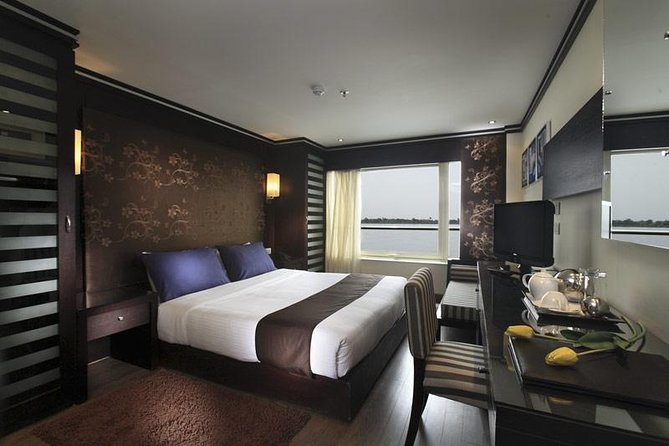
This cruise is a strong match if you want:
- Iconic Nile monuments in one trip without building your own logistics
- A guided experience where you learn what you’re seeing, not only where to stand for a photo
- A private setup where your group stays together
- Meals and comfort handled onboard during transit days
It can be less ideal if you’re the type who likes maximum free time with zero structure. The days are full, with scheduled tours each day. You’ll have some flexibility to explore, but this isn’t a slow, week-long drift where you can ignore the clock.
A quick reality check: timing, pacing, and comfort expectations
This trip is built around daily monument time, then boat time. That usually works well because the boat becomes your reset button. You’ll likely come back with temple dust on your clothes and a headache from constant standing—then dinner and sleep fixes that problem for the next day.
A nice detail is the way the tour supports real-world movement. In particular, Egyptologist Ahmed Mahmoud has been specifically noted for more than temple talk, including help with tour scheduling and even taxi coordination to the airport, plus advice for how to spend time until your flight. That kind of hands-on attention reduces the awkward gaps that can happen during travel.
Should you book this Aswan to Luxor luxury cruise?
I think this is worth booking if you want major sights with guidance, entrance fees handled, and a private, structured itinerary that takes the stress off your shoulders. The combination of Philae, Kom Ombo, Edfu, the West Bank sites, and then Luxor Temple and Karnak is a very efficient route for first-time visitors.
If you do book, plan your budget for drinks and the optional balloon, and check whether your travel dates fall into Dec 20–Jan 2 peak pricing. Also bring a passport that’s current and valid, since that’s required for travel day.
If your travel style likes a clear plan with a great guide and comfort between stops, this Nile cruise is a strong choice.
FAQ
How many days and nights is the cruise?
It’s a 4-day experience with 3 nights onboard.
What’s included in the $800 per person price?
You get 3 nights of accommodation on a full-board basis, an Egyptologist guide, a private tour, private deluxe air-conditioned vehicle transport, 2 bottled mineral water daily, all entrance fees for the sights mentioned, service charge and taxes, plus breakfast (3), lunch (3), and dinner (3).
Are entrance fees included?
Yes. All entrance fees for the sights mentioned are included.
Do you get pickup and private transfers?
Yes. Pickup is offered, and you’ll have door-to-door transfers by a private deluxe air-conditioned vehicle, including pickup from Aswan airport.
Is the felucca ride included?
Yes. The itinerary includes a felucca ride around Elephantine Island and Kitchener Botanical Island.
Is the hot air balloon included?
No. The hot air balloon is optional and not included in the base price.
Are drinks included with meals?
No. Drinks are not included, including alcoholic drinks (which are available to purchase).
Is there an extra charge during peak season?
Yes. There’s an additional fee of USD 200 per person from Dec 20 to Jan 2.
Do I need a passport, and can I cancel for free?
Yes, you need a current valid passport on the day of travel. You can cancel for a full refund up to 24 hours in advance of the experience start time.
You Might Also Enjoy
More VIP Experiences in Aswan

More Boat Tours & Cruises in Aswan
- 4-Days Nile Cruise From Aswan To Luxor including Abu Simbel and Hot Air Balloon
★ 5.0 · 3,142 reviews
More Tour Reviews in Aswan
- 4-Days Nile Cruise From Aswan To Luxor including Abu Simbel and Hot Air Balloon
★ 5.0 · 3,142 reviews