REVIEW · HURGHADA
From Hurghada Individual excursion to Luxor & the Valley of the Kings
Book on Viator →Operated by Zakharious Tours · Bookable on Viator
Luxor at dawn feels unreal. This Hurghada-to-Luxor excursion is interesting because it gets you into the big sights early, with dawn-at-Karnak timing and Egyptologist-led explanations that make the ruins feel specific instead of generic. The one catch is the schedule: you’ll leave around 5:00 a.m., and the day runs long (about 14 hours total), with a big chunk of driving each way.
What you get for your money is clear and practical: comfortable air-conditioned transport, a small private-style group (max 8 people), hotel pickup, lunch included, and entrance fees covered for the sites you actually visit, plus a mobile ticket. In the feedback, the Egyptologist makes a huge difference, with names like Marian, Gerges, Naschaat (also heard as Nasch/Nash), Obi, and Ismail showing up again and again for clear German explanations.
In This Review
- Key things that make this Luxor day work
- Why the 5:00 a.m. pickup matters more than you think
- Karnak Temple at East Thebes: big, but your guide makes it readable
- Valley of the Kings: understanding Sechet-aat before you enter
- Colossi of Memnon: a short stop with a clear payoff
- Deir el Bahari and Hatshepsut: the west bank’s best-preserved feeling
- Lunch, entrance fees, and the cost you don’t have to manage
- Price and logistics: $221, private style, max 8 people
- What kind of traveler should choose this day trip?
- Should you book this Hurghada to Luxor tour?
- FAQ
- What time is pickup in Hurghada?
- How long does the drive take from Hurghada to Luxor?
- How many people are in the group?
- How long is the excursion?
- What entrance tickets are included?
- How is the Valley of the Kings visit handled?
- Is lunch included?
- Are drinks included with lunch?
- Does the tour offer hotel pickup?
- What if weather is bad or I need to cancel?
Key things that make this Luxor day work
- Early start for Karnak so you’re not fighting the biggest waves of tour groups
- Egyptologist guide time throughout, so you’re not just reading signs
- Valley of the Kings with real tomb context plus 3 burial chambers included
- Smart pacing: Karnak + Valley + Memnon + Hatshepsut in one, long but structured day
- Value built in with lunch and entrance fees already included
- Small group size (max 8) while staying private for your party
Why the 5:00 a.m. pickup matters more than you think
This tour starts early, roughly around 5:00 a.m., with pickup from your Hurghada hotel. You’re headed to Luxor in a comfortable, air-conditioned small bus, and the ride takes about 4 hours past the Nile valley—fields, homes, and the everyday rhythm of people living along the river.
That early departure isn’t just for show. It gives you a shot at seeing Karnak Temple at a calmer time of day, when the light is better and the day doesn’t feel instantly crowded. It also means you arrive with your energy still intact, before heat and crowds start stacking up.
The drawback is straightforward: you’re signing up for a long day. Expect the full experience to run about 14 hours, and you’ll be getting back to your hotel around 4:00 p.m. after the west bank stop. If you’re the type who likes a slow morning and naps are non-negotiable, this might feel like a lot. If you’re excited by early-sunlight archaeology, it’s a great fit.
You can also read our reviews of more tours and experiences in Hurghada.


Karnak Temple at East Thebes: big, but your guide makes it readable
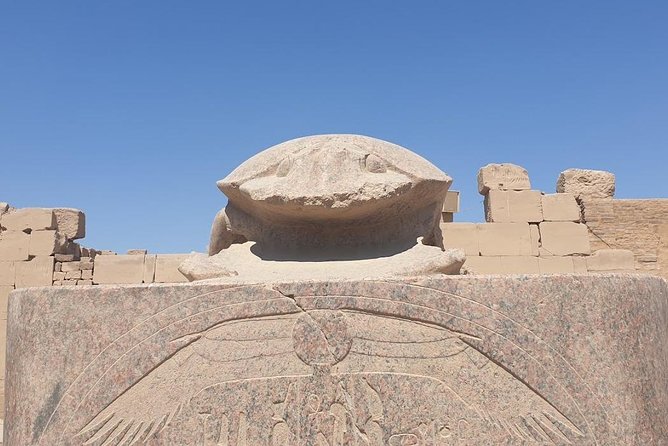
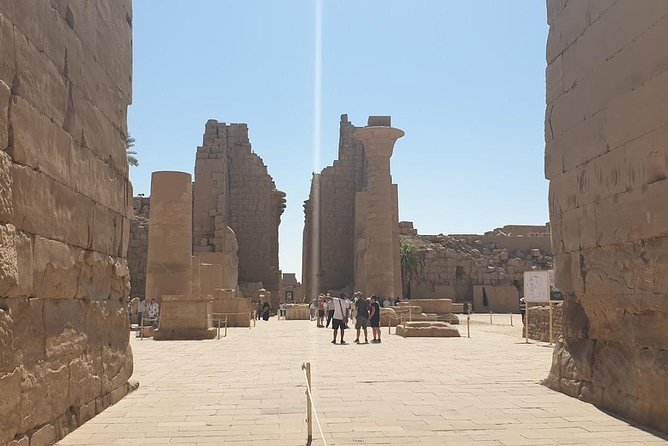
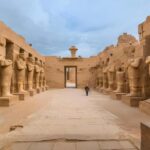
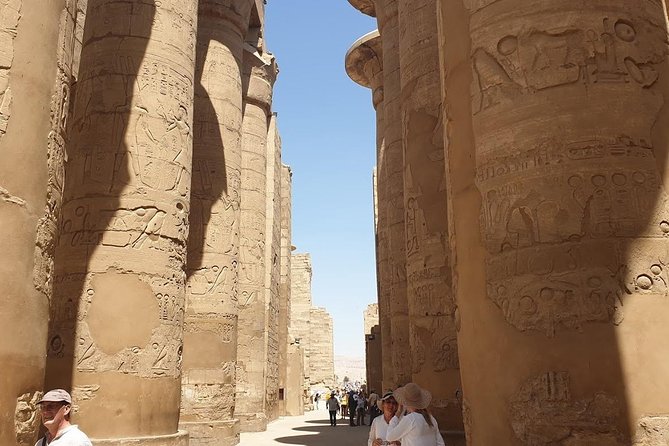
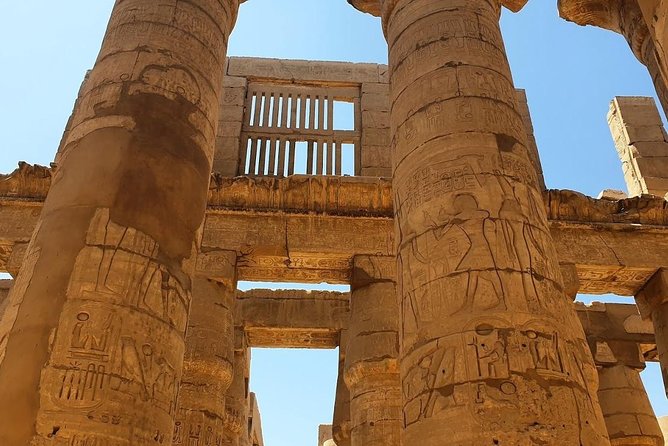
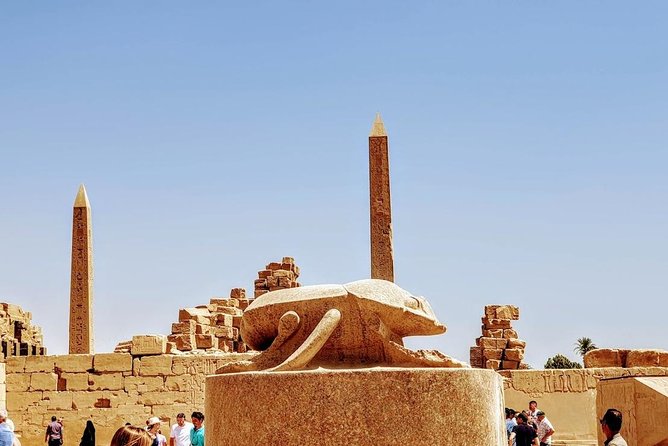
Karnak Temple is the largest temple complex in Egypt on the eastern bank of the Nile, and it can be overwhelming if you just wander. This is where the Egyptologist support pays off.
You’ll spend about 2 hours at Karnak with your guide, and the key is not only what you see, but how you learn to see it. With an Egyptologist explaining what different parts were for—ceremony areas, sacred spaces, and how the temple grew over time—you’re less likely to feel like you’re walking through a pile of columns.
In the feedback, the German-speaking guides (including Marian, Gerges, Naschaat, Obi, and Ismail) are repeatedly praised for making historical details stick. You’re not just getting facts; you’re getting a sense of why the complex was laid out the way it was, and what to notice as you move from one area to the next.
A practical note: Karnak is a walking stop. You’ll want comfortable shoes, sun protection, and water. Drinks aren’t included with lunch, so plan on buying what you need for the day. The tour does include entrance fees for the activities, though, so you can focus on the walking and learning instead of ticket logistics.
Valley of the Kings: understanding Sechet-aat before you enter
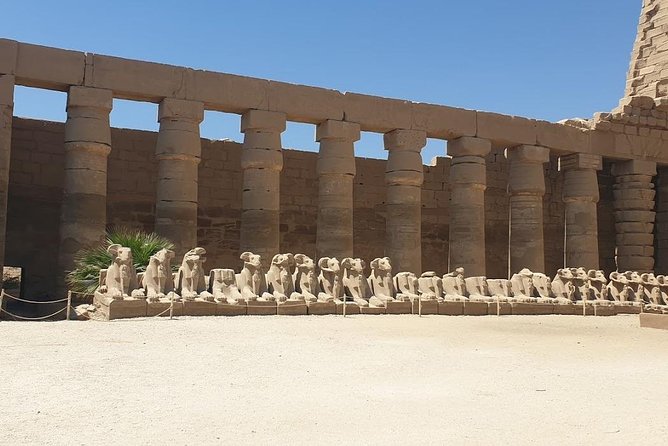
After lunch, you drive to the west side for the Valley of the Kings, about 5 kilometers northwest of Luxor. Here’s the useful context your guide can bring to life: in ancient times, the valley was called Sechet-aat, or the large field. Today you can still see the results of a very focused royal strategy—over 70 graves carved into rock.
The New Empire rulers you’ll associate most with the valley were active around 1550 to 1069 BC, covering roughly 18 to 20 dynasties. The valley’s survival story is part of the drama too: mummies were later moved during the 22nd dynasty to help protect them, and graves were hidden elsewhere. Then, in 1922, the tomb of Tutankhamun was discovered largely intact, which is why so many people connect the valley with that single name.
In this tour, you don’t just look around the entrance area. You get visits to 3 burial chambers. That matters, because it keeps your time from turning into a rushed “look at a doorway, take a photo, repeat” loop. Three chambers give you enough variety to see how different tomb spaces feel—while staying inside the time you need for the rest of the day.
One thing to consider: tombs can feel cooler than the sun outside, but the day is still long. You’ll appreciate pacing and a guide who can keep the explanation flowing without turning the visit into a slow crawl. This tour’s structure is designed for that: you get about 2 hours total in the valley area.
Colossi of Memnon: a short stop with a clear payoff
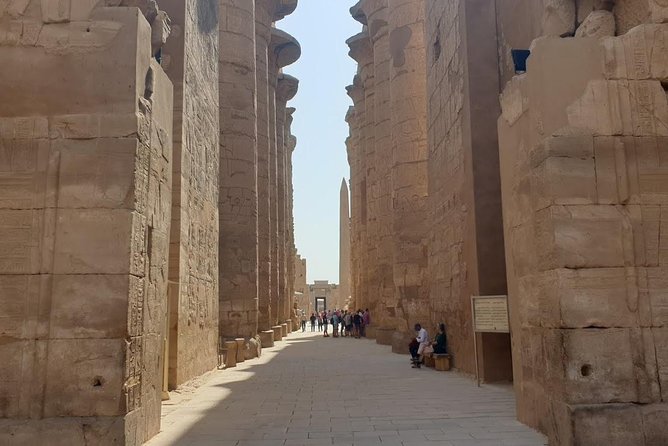
After Karnak, you continue to the Colossi of Memnon for about 10 minutes. It’s a quick moment in the middle of a long day—but it’s also a stop with real visual impact.
These are two adjacent statues known in Arabic as el-Colossat or es-Salomat. They represent King Amenophis III, seated on a throne facing toward the Nile. The statues are still impressive: around 18 meters high including the base, even though they’re centuries old.
Because the stop is brief, it helps to go in with the right expectation. You’re not going to linger for a full photo session and another explanation marathon. Instead, you’re getting a visible “you’re really in Thebes now” anchor between major sites.
If your group likes quick stops that don’t eat time, this one lands well. If you hate being rushed, you might wish this were longer—but the schedule is clearly built to protect time for Karnak and the west bank temples, which are the day’s headline acts.
Deir el Bahari and Hatshepsut: the west bank’s best-preserved feeling
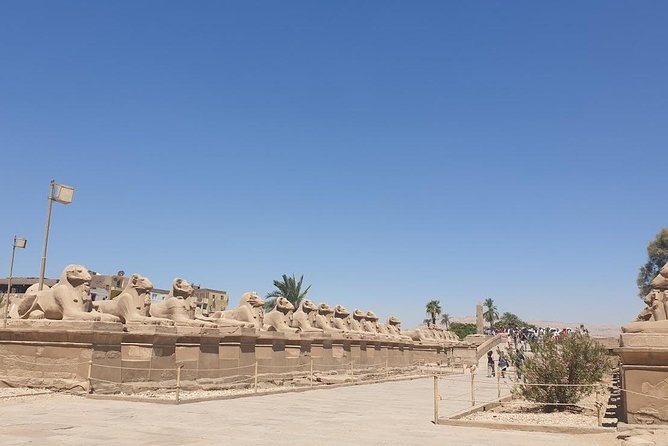
The day finishes at the terrace temple complex of Hatshepsut at Deir el Bahari, around 4:00 p.m. before you drive back. You’ll have about 1 hour here, and the focus is the mortuary temple built for Hatshepsut, associated with Egypt’s 18th dynasty.
Hatshepsut’s reign is often dated to 1479 to 1458 BC, and your guide can connect her to her spouse Thutmoses II. The name Hatshepsut means something along the lines of The first of the noble women who embraced Amun, which helps you understand why the temple isn’t just architecture—it’s a statement of rule and religious identity.
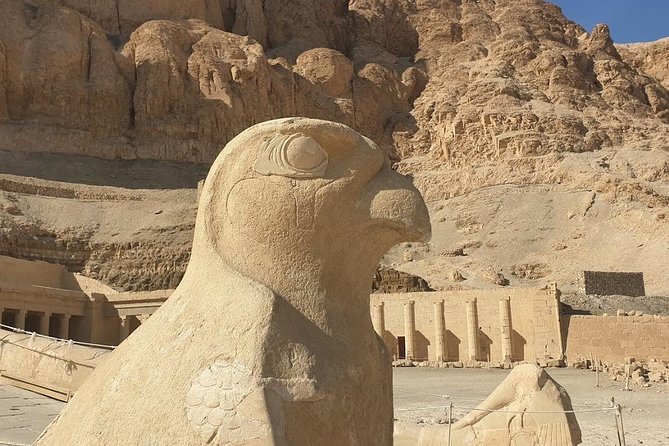
What makes this stop special is the preservation and material. The temple is made of limestone and is described as the best preserved temple on the west bank in Thebes. You’ll notice the terrace structure as you walk in—layered spaces and the wide open views that make the whole setting feel dramatic even if you’re not a big “dramatic history” person.
A practical thing: the west bank is part of that wide, sun-exposed route you’ve already been doing all day. Bring sun protection, and plan for a last stretch when you might be tired. The payoff is that Hatshepsut gives you a different feel from the tomb valley: more open, more architectural, less underground.





Lunch, entrance fees, and the cost you don’t have to manage
One reason this day trip feels smoother than DIY Luxor is what’s included. You get lunch, private transportation, and a tour guide by an Egyptologist, plus all entrance fees for the sites listed in the plan. That’s a big part of the value at $221.00 per person.
Drinks at the restaurant aren’t included, so you’ll still want to budget a little extra for water and other drinks during the day. But by covering entrance fees and doing the ticket-and-entry handling for you, the operator reduces the “wasted time tax” that can sneak into Egypt trips.
This also helps when you’re visiting huge, high-demand places like Karnak and the Valley of the Kings. You’re spending your energy on the sites themselves, not on sorting out logistics on the ground.
In the feedback, lunch quality gets called out as excellent, and that’s not a small detail on a 14-hour day. A good meal helps you enjoy the afternoon tomb and temple time instead of rushing just to get it over with.
Price and logistics: $221, private style, max 8 people
Let’s talk value without pretending you’re not paying for the experience.
At $221 per person with hotel pickup, air-conditioned transport, an Egyptologist guide, lunch, and entrance fees included, you’re not just buying a bus ride. You’re paying for structured time in Luxor: the right sequence, a guide who can explain what you’re looking at, and the setup that helps you move through major sites without unnecessary delays.
The tour operates as private for your group, and the day is also kept small, with a maximum of 8 people. That combo tends to make a difference. With fewer people, it’s easier for the guide to keep everyone on the same track and answer questions without the group feeling like a factory line.
Timing matters here too. You’re being picked up from Hurghada and returning the same day, so you’re trading flexibility for a single, high-impact day. If you’d rather take it slower in Luxor and add more sites (or you want a calmer pace at the tombs), then a multi-day plan could suit you better. This option is for people who want Luxor highlights in one go.
What kind of traveler should choose this day trip?
This tour is a strong fit if you:
- want Karnak + Valley of the Kings + Hatshepsut without building a schedule yourself
- like history explained in plain terms by a German-speaking Egyptologist
- prefer small-group comfort (max 8) while still feeling like it’s your own private outing
It may be less ideal if:
- you hate very early starts or long days (the pickup is around 5:00 a.m., total around 14 hours)
- you’re hoping for lots of free time at each site instead of a guided sequence
Should you book this Hurghada to Luxor tour?
I’d book it if your goal is a high-value Luxor day with expert context and minimal hassle. The standout combination is early Karnak, meaningful Valley of the Kings tomb time (3 burial chambers), and an end stop at Hatshepsut’s temple that feels like a proper wrap-up to the story of Thebes.
If you’re deciding between this and a self-planned day, the biggest reason to choose the tour is simple: you’re paying for an Egyptologist and for the “don’t-mess-around” logistics that help you actually enjoy the sites. If you’re deciding based on comfort, the small group cap helps, and the included entrance fees and lunch reduce stress.
FAQ
What time is pickup in Hurghada?
Pickup is around 5:00 a.m.
How long does the drive take from Hurghada to Luxor?
The trip to Luxor takes about 4 hours.
How many people are in the group?
It’s a private tour for your group, and it’s also run as a small group with a maximum of 8 people.
How long is the excursion?
The duration is approximately 14 hours.
What entrance tickets are included?
Entrance fees for the listed activities are included, covering Karnak Temple, Valley of the Kings chambers, Colossi of Memnon, and Hatshepsut’s temple.
How is the Valley of the Kings visit handled?
You visit 3 burial chambers in the Valley of the Kings.
Is lunch included?
Yes, lunch is included.
Are drinks included with lunch?
No, drinks in the restaurant are not included.
Does the tour offer hotel pickup?
Yes, pickup is offered.
What if weather is bad or I need to cancel?
The experience requires good weather. You can cancel for a full refund up to 24 hours in advance of the start time. If it’s canceled due to poor weather, you’ll be offered another date or a full refund.